Carpenter Ants in California: Identification, Season and Prevention
Quick Answer: Yes, carpenter ants are common in California, with 5,955 verified GBIF sightings concentrated in Santa Cruz, Los Angeles, Calaveras, Monterey, and San Diego counties. Activity peaks from April through July. These ants do not eat wood, but they excavate damp or decaying timber for nests, which makes them a structural pest rather than a health threat.
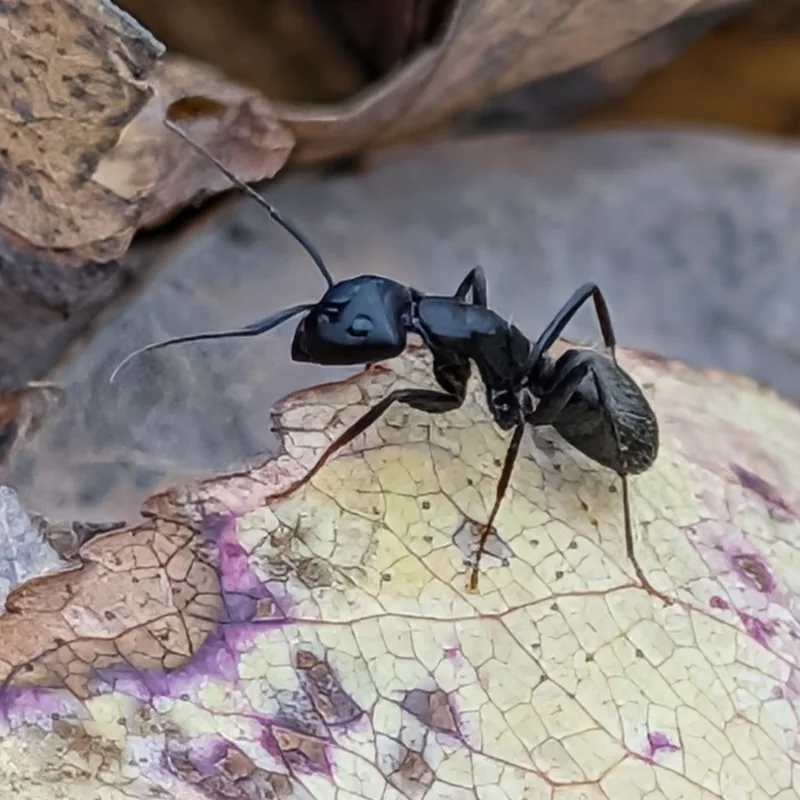
When Carpenter Ants Are Most Active in California
Now (November): Lower Outdoor ActivityVerified California Counties, Species & US Range
Counties with Verified Observations
- Santa Cruz
- Los Angeles
- Calaveras
- Monterey
- San Diego
- Tulare
- Marin
- Santa Clara
- San Mateo
- Sonoma
Species Recorded in California
| Species | Scientific Name | GBIF Records |
|---|---|---|
| Bicolored Carpenter Ant | Camponotus vicinus | 1,444 |
| (Western) black carpenter ant | Camponotus modoc | 922 |
| Camponotus semitestaceus | Camponotus semitestaceus | 495 |
How California Compares to Neighboring States
Note: Wildlife does not follow state or county lines. GBIF totals reflect verified citizen and museum records, so low counts in a neighboring county do not guarantee absence.
How to Identify Carpenter Ants
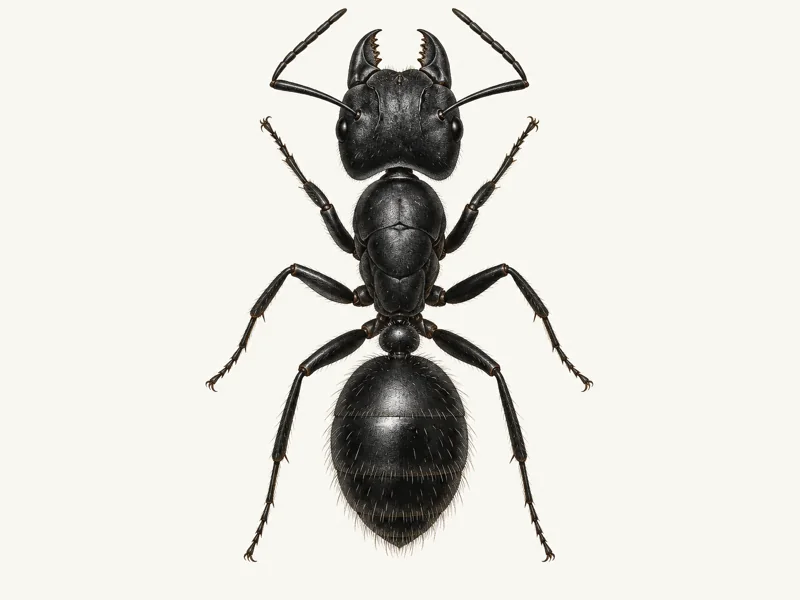
Annotated Anatomy Key (Carpenter Ant)
- Elbowed antennae: Sharply bent antennae on a broad heart-shaped black head (straight in termites).
- Rounded black thorax: Evenly arched wingless thorax without spines; workers vary widely in size (6–13 mm).
- Single waist node: EXACTLY ONE distinct small node (petiole) pinching the narrow waist.
- Silky matte abdomen: Plump black gaster lightly dusted with pale golden-gray hairs; excavates damp wood.
Carpenter Ants Field Checklist
- Large black, red-and-black, or brown ant with a smoothly rounded thorax profile
- Elbowed antennae and a single narrow waist node (petiole)
- Excavates smooth galleries in damp wood rather than eating wood like termites
- Pushes out piles of coarse sawdust-like frass mixed with dead insect fragments
Side-by-Side Look-Alike Comparisons
Carpenter Ants Size at True Relative Scale
Quick Answer: Yes, carpenter ants are common in California, with 5,955 verified GBIF sightings concentrated in Santa Cruz, Los Angeles, Calaveras, Monterey, and San Diego counties. Activity peaks from April through July. These ants do not eat wood, but they excavate damp or decaying timber for nests, which makes them a structural pest rather than a health threat.
Where Carpenter Ants Live in California
Anyone asking whether there are carpenter ants in California can find the answer in the record: they occur across much of the state. California's range of habitats suits them well. These include Mediterranean coastal zones, arid inland deserts, and alpine mountain areas spanning USDA zones 5a through 11a.
GBIF occurrence data show the most sightings in these counties:
- Santa Cruz, where coastal redwood and oak forests offer plenty of moist, decaying wood
- Los Angeles, which has dense housing next to canyons and landscaped yards
- Calaveras, in Sierra Nevada foothill woodlands
- Monterey, with its cool, humid coastal forests
- San Diego, where coastal scrub and suburban landscaping meet
California Carpenter Ant Identification
Three recorded species account for most of what homeowners see:
- Bicolored Carpenter Ant (Camponotus vicinus): A widespread western species with a reddish-brown thorax and a dark gaster (abdomen). It often nests in stumps, logs, and structural wood.
- (Western) black carpenter ant (Camponotus modoc): A large, mostly black ant, common in forested and mountain areas. It is a frequent cause of structural damage in the West.
- **Camponotus semitestaceus:** A paler, yellowish-to-brown species that usually nests in soil, under stones, and in drier habitats.
All carpenter ants have a smoothly rounded thorax when seen from the side and a single node, or bump, at the waist. Workers vary in size within the same colony, from about 1/4 inch to more than 1/2 inch long.
When Carpenter Ants Are Most Active in California
California carpenter ant season peaks from April through July. Warming temperatures in spring drive foraging, and colonies release winged swarmers (reproductives) to start new colonies. Swarmers seen indoors during these months often point to an established nest nearby.
Carpenter ants forage mostly at night, so homeowners may notice trails after dusk along fences, utility lines, or foundation edges. In mild coastal areas, limited activity can continue into fall. At higher elevations, colonies go quiet through winter.
Look-Alikes Frequently Mistaken for Carpenter Ants
Several California insects are often confused with carpenter ants. Getting the ID right decides which treatment approach makes sense.
- Termites: Winged termites have straight antennae, a thick waist, and four wings of equal length. Carpenter ants have elbowed antennae, a pinched waist, and front wings longer than the hind wings. Termites eat wood and leave mud tubes or pellets. Carpenter ants leave coarse, sawdust-like "frass" mixed with insect parts.
- Flying Ants: Many ant species swarm in spring and summer. Carpenter ant swarmers are usually larger and have the rounded thorax profile described above.
- Fire Ants: Red imported fire ants, found in parts of Southern California, are smaller, reddish, and aggressive. They build soil mounds and have a two-segmented waist. Their stings are painful. Anyone with a severe reaction should call US Poison Control at 1-800-222-1222 or seek medical care.
- Pavement Ants: These are small, dark brown ants about 1/8 inch long. They have grooved heads and two waist nodes, and they nest under slabs and sidewalks rather than in wood.
How to Keep Carpenter Ants Out of Your California Home
Knowing how to prevent carpenter ants in California starts with Integrated Pest Management (IPM). University cooperative extension guidance emphasizes removing the moisture and access points that attract colonies before turning to chemicals.
Non-Chemical Steps First
- Fix moisture problems: Repair leaky roofs, plumbing, gutters, and window seals, and replace water-damaged wood.
- Trim vegetation: Keep tree limbs and shrubs from touching the roof or siding, since they serve as ant highways.
- Move firewood and debris: Store firewood off the ground and away from the house. Remove old stumps and wood scraps.
- Seal entry points: Caulk gaps around utility lines, vents, and foundation cracks.
- Maintain a dry perimeter: Keep mulch a few inches from the foundation and adjust sprinklers so they don't soak siding.
Targeted Treatment
If ants persist, slow-acting baits placed along foraging trails can reach the colony. Always follow the EPA-registered product label exactly. Avoid spraying trails before baiting, because sprays can scatter workers without killing the queen.
When to Call a Licensed California Pest Professional
- Winged swarmers appear indoors, especially in spring
- Frass piles collect below walls, beams, or window frames
- Rustling sounds come from inside walls at night
- Large worker ants keep appearing indoors for weeks
- You can't tell whether the damage comes from ants or termites
Choose a pest control company licensed by the California Structural Pest Control Board for any work involving structural infestations.
IPM Prevention Checklist for California Homes
- Repair roof leaks, clogged gutters, and plumbing drips that soften structural wood
- Trim tree branches touching rooflines or siding
- Store firewood elevated and away from exterior walls
 EXCLUSION BLUEPRINT
Inspect eaves, screens, door sweeps, foundation cracks, and utility penetrations around California homes before peak season.
Carpenter Ants in California: Frequently Asked Questions
Are there carpenter ants in California?
Yes. They are common statewide, with 5,955 verified GBIF sightings. Santa Cruz, Los Angeles, Calaveras, Monterey, and San Diego counties lead the records.
When is carpenter ant season in California?
Activity peaks from April through July, when foraging increases and colonies release winged swarmers.
Which carpenter ant species live in California?
Recorded species include the Bicolored Carpenter Ant (Camponotus vicinus), the (Western) black carpenter ant (Camponotus modoc), and Camponotus semitestaceus.
Do carpenter ants damage California homes?
They can. Carpenter ants hollow out damp or decaying wood to build nests, so their danger level is structural. Fixing moisture problems early is the best defense.
Sources & Verification
- Penn State Extension — Carpenter Ants
- University of Minnesota Extension — Carpenter Ants
- GBIF Global Biodiversity Occurrence Records
Data refreshed · Editorial & GBIF Methodology