Carpenter Ants in Oklahoma: Identification, Season, and Prevention
Quick Answer: Yes, carpenter ants (Camponotus) are common in Oklahoma, with 1,047 verified GBIF sightings statewide. Activity peaks from April through July, and the ants can damage structural wood when colonies nest in moisture-softened lumber. Moisture control, exclusion, and sanitation are the first line of defense.
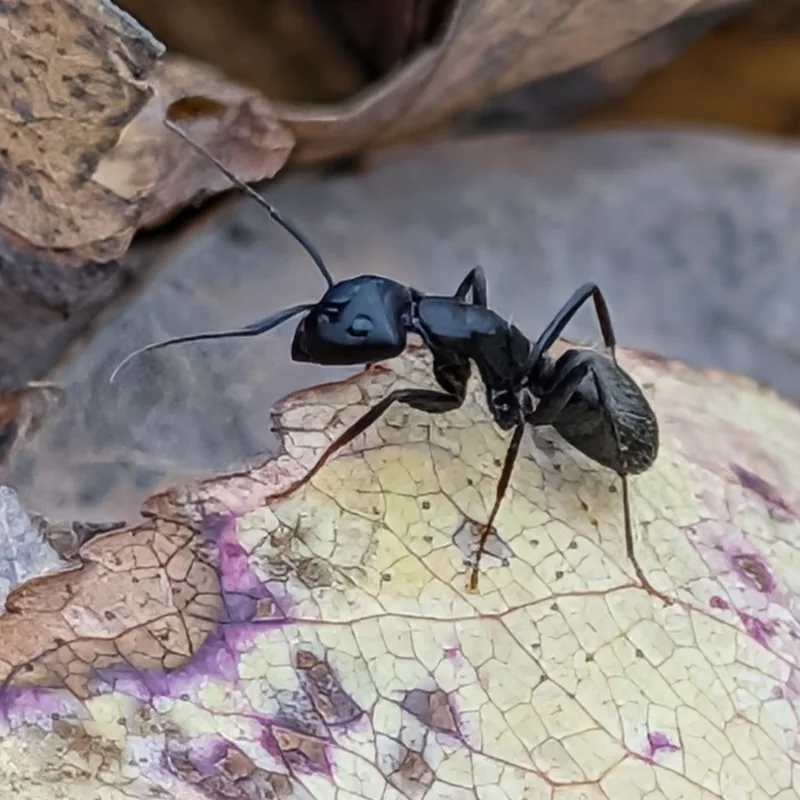
When Carpenter Ants Are Most Active in Oklahoma
Now (November): Lower Outdoor ActivityVerified Oklahoma Counties, Species & US Range
Counties with Verified Observations
- Tulsa
- Cleveland
- Oklahoma
- Rogers
- Mayes
- Wagoner
- Comanche
- Noble
- Payne
- McCurtain
Species Recorded in Oklahoma
| Species | Scientific Name | GBIF Records |
|---|---|---|
| Black Carpenter Ant | Camponotus pennsylvanicus | 665 |
| American Carpenter Ant | Camponotus americanus | 161 |
| Chestnut Carpenter Ant | Camponotus castaneus | 91 |
How Oklahoma Compares to Neighboring States
Note: Wildlife does not follow state or county lines. GBIF totals reflect verified citizen and museum records, so low counts in a neighboring county do not guarantee absence.
How to Identify Carpenter Ants
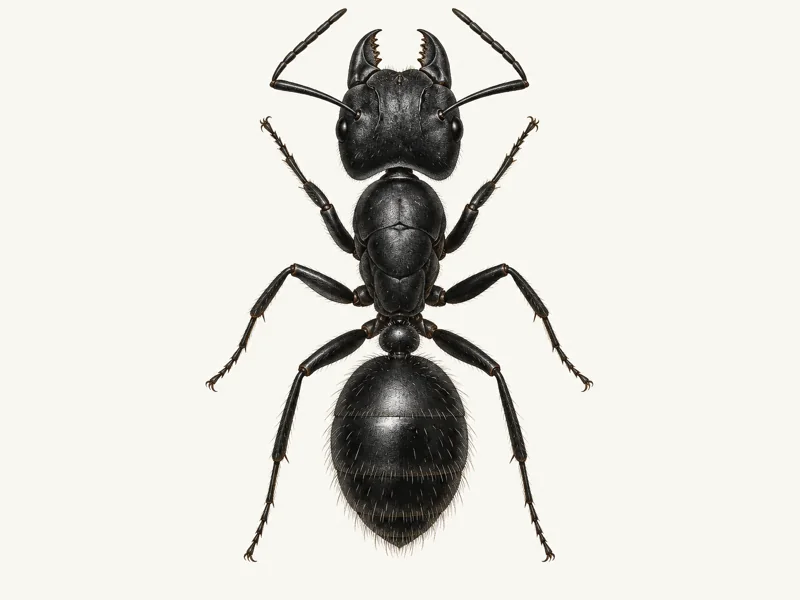
Annotated Anatomy Key (Carpenter Ant)
- Elbowed antennae: Sharply bent antennae on a broad heart-shaped black head (straight in termites).
- Rounded black thorax: Evenly arched wingless thorax without spines; workers vary widely in size (6–13 mm).
- Single waist node: EXACTLY ONE distinct small node (petiole) pinching the narrow waist.
- Silky matte abdomen: Plump black gaster lightly dusted with pale golden-gray hairs; excavates damp wood.
Carpenter Ants Field Checklist
- Large black, red-and-black, or brown ant with a smoothly rounded thorax profile
- Elbowed antennae and a single narrow waist node (petiole)
- Excavates smooth galleries in damp wood rather than eating wood like termites
- Pushes out piles of coarse sawdust-like frass mixed with dead insect fragments
Side-by-Side Look-Alike Comparisons
Carpenter Ants Size at True Relative Scale
Quick Answer: Yes, carpenter ants (Camponotus) are common in Oklahoma, with 1,047 verified GBIF sightings statewide. Activity peaks from April through July, and the ants can damage structural wood when colonies nest in moisture-softened lumber. Moisture control, exclusion, and sanitation are the first line of defense.
Where Carpenter Ants Live in Oklahoma
People often ask, are there carpenter ants in Oklahoma? The records say yes. GBIF sightings cluster in Tulsa, Cleveland, Oklahoma, Rogers, and Mayes counties, which fits the wetter, more wooded eastern half of the state. Oklahoma spans USDA zones 6a to 8a, moving from humid subtropical in the east to semi-arid plains in the west.
Three species are recorded in the state:
- Black Carpenter Ant (Camponotus pennsylvanicus)
- American Carpenter Ant (Camponotus americanus)
- Chestnut Carpenter Ant (Camponotus castaneus)
Outdoors, colonies nest in dead trees, stumps, firewood piles, and rotting logs. Indoors, they favor wood damaged by leaks, such as window frames, roof edges, porch posts, crawl spaces, and wall voids near plumbing.
When Carpenter Ants Are Most Active in Oklahoma
The Oklahoma carpenter ant season peaks from April through July, when GBIF sightings are highest. Foragers leave the nest at night to find food, so many homeowners notice them after dark in kitchens and bathrooms. Winged reproductives may appear in spring as colonies mature.
Ants seen indoors in cold months can point to a heated nest inside the structure. Entomology guidance from university extension programs notes that carpenter ants do not eat wood. They excavate it to make smooth galleries for the colony.
Oklahoma Carpenter Ant Identification
Workers vary in size, and a single colony often has large and small workers. Look for these features:
- Black, reddish, or two-toned bodies, depending on species
- A single node between the thorax and abdomen
- An evenly rounded thorax profile when viewed from the side
- A circle of short hairs at the tip of the abdomen
- Bent (elbowed) antennae
Other clues include coarse sawdust-like frass pushed out of small holes, and faint rustling sounds in walls.
Look-Alikes Frequently Mistaken for Carpenter Ants
Several Oklahoma insects get confused with carpenter ants. Correct identification matters because the treatment differs.
- Termites: Have straight antennae, a broad waist, and wings of equal length. Termites eat wood, and their damage is packed with mud or soil, while carpenter ant galleries are clean and smooth.
- Flying ants: Winged reproductives of many ant species resemble swarming carpenter ants. Check the waist, antennae, and wing size (forewings longer than hindwings).
- Fire ants: Smaller, reddish-brown, and build open mounds in sunny soil. They sting, unlike carpenter ants, which mainly bite.
- Pavement ants: Small, dark brown, with parallel lines on the head and thorax. They nest under slabs and sidewalks.
If you are unsure, capture a specimen in a sealed container and ask your county Oklahoma State University Extension office for help.
How to Keep Carpenter Ants Out of Your Oklahoma Home
Learning how to prevent carpenter ants in Oklahoma starts with moisture and access. Integrated pest management puts non-chemical steps first:
- Fix roof, gutter, plumbing, and window leaks, and replace damp or rotted wood.
- Trim tree limbs and shrubs so they do not touch the house or roof.
- Store firewood off the ground and away from the foundation.
- Seal gaps around utility lines, siding, and door sweeps.
- Ventilate crawl spaces and attics, and use dehumidifiers where needed.
- Wipe up food and sweet spills, and store pet food in sealed containers.
- Remove stumps and dead wood near the home.
If you use any insecticide or bait, read the EPA-registered product label and follow it exactly. Baits are often preferred because workers carry them back to the colony, but sprays can scatter a nest.
When to Call a Licensed Oklahoma Pest Professional
- You find frass piles or hollow-sounding wood inside walls or beams.
- Winged ants appear indoors repeatedly, especially in winter.
- Trails of large ants persist after you fix moisture and sanitation problems.
- You suspect a satellite nest, or cannot locate the parent colony.
- You cannot tell carpenter ants from termites.
A licensed professional can inspect the structure, find hidden nests, and apply products safely.
IPM Prevention Checklist for Oklahoma Homes
- Repair roof leaks, clogged gutters, and plumbing drips that soften structural wood
- Trim tree branches touching rooflines or siding
- Store firewood elevated and away from exterior walls
 EXCLUSION BLUEPRINT
Inspect eaves, screens, door sweeps, foundation cracks, and utility penetrations around Oklahoma homes before peak season.
Carpenter Ants in Oklahoma: Frequently Asked Questions
Are there carpenter ants in Oklahoma?
Yes. GBIF records 1,047 sightings, including the Black, American, and Chestnut Carpenter Ants. Tulsa, Cleveland, Oklahoma, Rogers, and Mayes counties report the most.
Do carpenter ants eat wood?
No. They tunnel through wood to build nests but feed on insects, honeydew, and household sweets and proteins. The tunneling can still weaken structural lumber over time.
Are carpenter ants dangerous to people?
They are mainly a structural pest. Large workers can bite and spray formic acid, which may irritate skin. For a severe reaction or allergy concerns, call US Poison Control at 1-800-222-1222 and see a doctor.
What time of year are carpenter ants worst in Oklahoma?
Sightings peak from April through July. Inspect for moisture damage and nest sites in early spring, before activity ramps up.
Sources & Verification
- Penn State Extension — Carpenter Ants
- University of Minnesota Extension — Carpenter Ants
- GBIF Global Biodiversity Occurrence Records
Data refreshed · Editorial & GBIF Methodology