Carpenter Ant vs Flying Ant: How to Tell Them Apart and Protect Your Home
Quick ID Verdict: A cluster of winged insects on a windowsill can make any homeowner's stomach drop. Is it a harmless swarm or the first sign of wood damage? Here's the 3-second verdict on carpenter ant vs flying ant: a carpenter ant is a large black, red-and-black, or brown ant with a smoothly rounded thorax, and it can damage wood. A flying ant is any winged reproductive ant (an alate), and most are a short-lived nuisance, unless those wings belong to a carpenter ant.
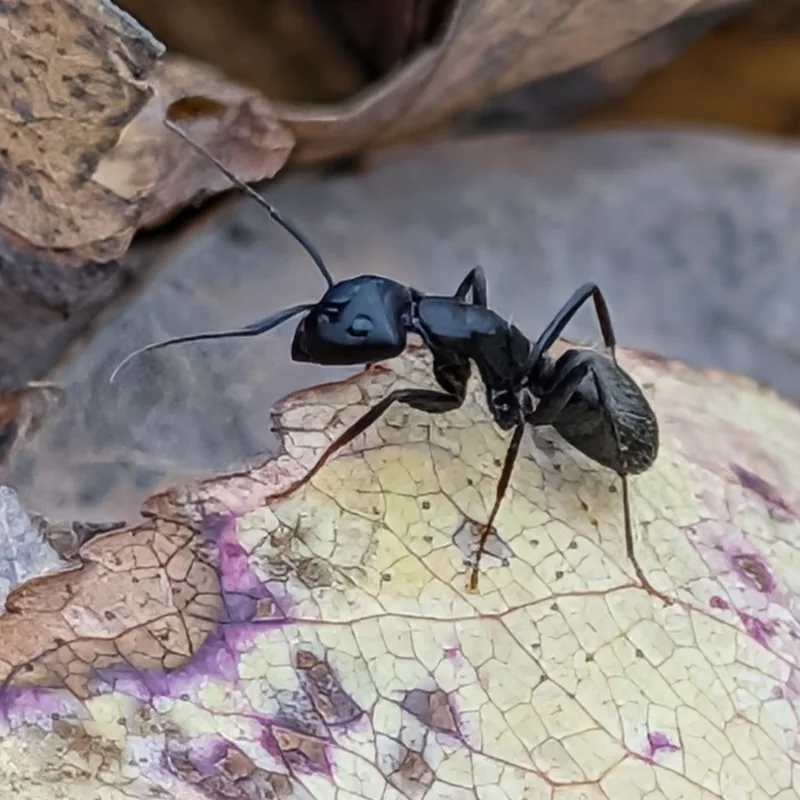
Carpenter Ant
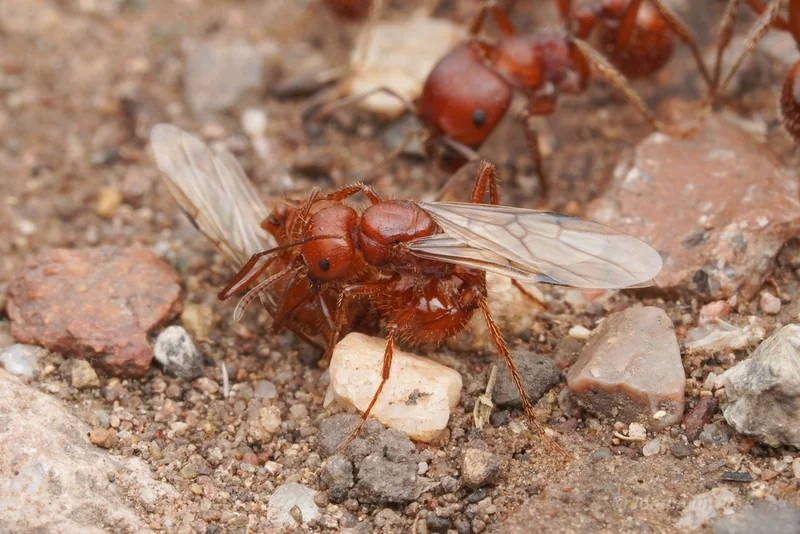
Flying Ant
Side-by-Side Comparison Table
| Trait | Carpenter Ant | Flying Ant |
|---|---|---|
| Scientific Group | Camponotus | Formicidae (Alates) |
| Category | Insect | Insect |
| Typical Size | 6–16 mm | 4–18 mm |
| Danger Level | Structural | Nuisance |
| Bites or Stings? | Yes | No |
| Peak US Months | April, May, June, July | May, June, July, August |
| Key ID Trait | Large black, red-and-black, or brown ant with a smoothly rounded thorax profile | Winged reproductive ants (alates) emerging in warm humid swarms to establish new colonies |
Carpenter Ant vs. Flying Ant: True Size Comparison
Side-by-Side Anatomy Blueprint
Compare body segments, antennae, leg count, and key markings directly before treating or removing either species.
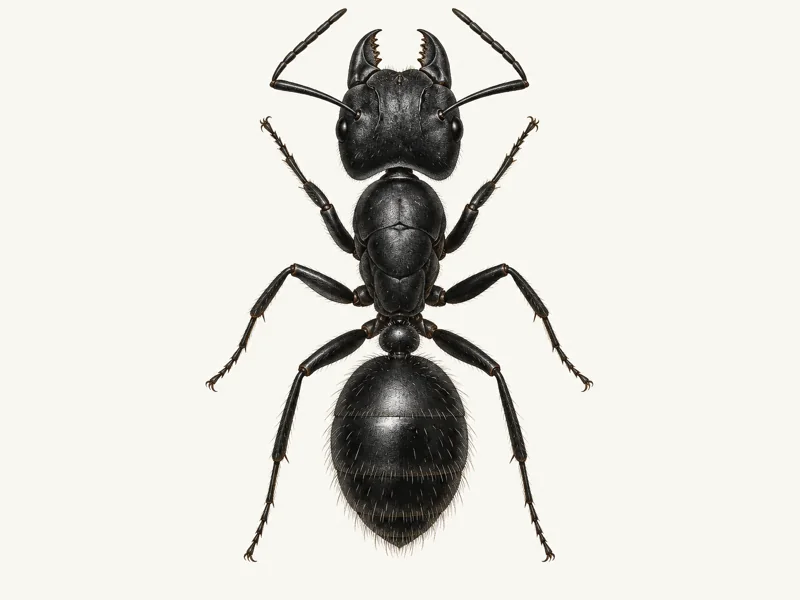
- Elbowed antennae: Sharply bent antennae on a broad heart-shaped black head (straight in termites).
- Rounded black thorax: Evenly arched wingless thorax without spines; workers vary widely in size (6–13 mm).
- Single waist node: EXACTLY ONE distinct small node (petiole) pinching the narrow waist.
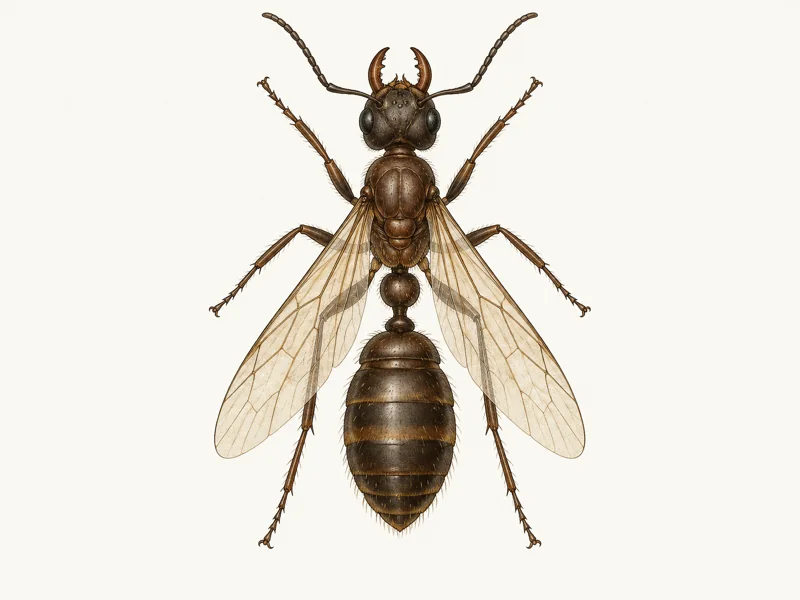
- Elbowed antennae: Sharply bent antennae on a distinct head with mandibles—termites always have straight antennae.
- Unequal wings: Front wings are noticeably longer and wider than hind wings (termites have 4 equal wings).
- Pinched waist: Sharp narrow constriction (1 or 2 tiny petiole nodes) separating thorax from abdomen.
Why Carpenter Ants and Flying Ants Get Confused
The confusion makes sense, because the two categories overlap. "Flying ant" isn't a species. It's a life stage. Winged reproductives, called alates, are produced by many ant species in the family Formicidae, including carpenter ants (Camponotus).
So the real question isn't always "carpenter ant or flying ant?" It's "which species do these wings belong to?" A swarm of small pavement ant alates means very little for a home. A swarm of carpenter ant alates indoors can point to a nest inside the structure.
Carpenter Ant vs Flying Ant Identification: Key Physical Differences
Careful carpenter ant vs flying ant identification comes down to a few physical features. A phone camera with zoom or a cheap hand lens helps a lot.
Size, Color, and Body Shape
Carpenter ants are among the largest ants homeowners see, measuring about 6-16 mm. They're usually solid black, red-and-black, or brown. The giveaway is the profile: viewed from the side, the thorax (middle section) forms a smooth, evenly rounded arch with no bumps or spines.
Flying ants span a wider range, roughly 4-18 mm, depending on species. Most household swarmers are small and dark. A thorax with an uneven, bumpy, or spined outline points away from carpenter ants.
Wings, Antennae, and Waist Clues
All flying ants share three traits that separate them from termites, their most common look-alike:
- Elbowed antennae that bend sharply partway along
- A pinched, narrow waist between thorax and abdomen
- Front wings longer than the hind wings
Carpenter ants have a single node (small bump) at the waist. Termite swarmers, by contrast, have straight antennae, a thick waist, and four wings of equal length. Alates also shed their wings after mating, so piles of discarded wings near windows are a useful clue.
Seasonal Swarms and Where They Appear Across the US
Flying ants emerge in warm, humid swarms to mate and start new colonies. Across most of the US, that means spring through late summer, often right after a rain when the air is still and muggy.
Carpenter ants occur in every region of the lower 48, with the heaviest pressure in moist, wooded areas like the Northeast, Great Lakes, and Pacific Northwest. Their outdoor swarms typically happen in spring. Timing matters here. Winged carpenter ants appearing indoors in late winter or early spring usually means a mature colony is already living inside the heated structure.
Signs of Damage: Is It a Carpenter Ant or a Flying Ant Problem?
Here's the most practical difference between carpenter ant and flying ant problems. Carpenter ants carry a structural risk, while most other flying ants are simply a nuisance. Carpenter ants don't eat wood, but they excavate galleries in it, strongly preferring wood softened by moisture.
Warning signs of carpenter ants include:
- Frass: piles of coarse, sawdust-like shavings mixed with insect parts, often below baseboards, windows, or attic beams
- Faint rustling inside walls, especially at night
- Smooth, clean galleries in damaged wood
- Large worker ants trailing indoors after dark
If a swarm shows none of these signs and the ants are small, it's likely a seasonal nuisance that will pass on its own.
Safe Integrated Pest Management Steps for Homeowners
Integrated Pest Management (IPM) starts with removing the conditions ants need. Sprays are a last resort, not step one.
- Control moisture. Repair roof leaks, plumbing drips, and clogged gutters. Replace water-damaged wood.
- Exclude entry points. Seal gaps around utility lines, windows, and the foundation. Trim branches touching the roof or siding.
- Break wood contact. Store firewood off the ground and away from the house. Keep mulch a few inches from the foundation.
- Practice sanitation. Wipe up sweet spills and store food in sealed containers.
- Vacuum swarmers. Indoor alates can be vacuumed up and disposed of outside.
If products are needed, choose baits over broadcast sprays, which can scatter colonies. Always read and follow the EPA-registered product label exactly. For confirmed carpenter ant nests inside walls, a licensed pest professional is the safest choice.
Carpenter ants can deliver a pinch-like bite but aren't considered medically significant. Anyone who has a severe reaction to any insect bite or sting should call US Poison Control at 1-800-222-1222 and contact a doctor.
Frequently Asked Questions
What is the difference between a carpenter ant and a flying ant?
A carpenter ant is a large black, red-and-black, or brown ant with a smoothly rounded thorax that damages wood. A flying ant is any winged reproductive ant (alate) from various species. The key difference: carpenter ants cause structural damage, while most flying ants are temporary nuisances unless they're carpenter ant alates.
How can I identify carpenter ants by their physical appearance?
Carpenter ants are large (6-16 mm), solid black, red-and-black, or brown with a smooth, rounded thorax when viewed from the side. They have a single node at the waist, elbowed antennae, and front wings longer than hind wings. The smooth, arch-shaped thorax is the key giveaway.
What are the signs of a carpenter ant infestation in my home?
Common carpenter ant warning signs include coarse, sawdust-like frass (piles of shavings and insect parts) below baseboards or beams, faint rustling inside walls at night, smooth galleries in damaged wood, and large worker ants trailing indoors after dark.
When do flying ants swarm, and what does it mean for my home?
Flying ants swarm in spring through late summer during warm, humid weather, often after rain. If the swarms are small flying ants, it's usually a seasonal nuisance. However, winged carpenter ants indoors in late winter or early spring may indicate a mature colony already living inside your structure.
What should I do if I find flying ants in my house?
Start with Integrated Pest Management: remove moisture sources, seal entry points, store firewood away from the house, and vacuum indoor swarmers to dispose outside. Only use EPA-registered baits if needed. For confirmed carpenter ant colonies, contact a licensed pest professional.
Can carpenter ants bite, and are they dangerous to humans?
Carpenter ants can deliver a pinch-like bite but aren't medically significant. If you experience a severe reaction to an insect bite, contact US Poison Control at 1-800-222-1222 and see a doctor. Most carpenter ant bites pose no health risk.