Carpenter Ants in Hawaii: Identification, Season, and Prevention
Quick Answer: Yes, carpenter ants are common in Hawaii, with 313 verified GBIF sightings concentrated in Honolulu, Maui, Hawaii, and Kauai counties. The recorded species is the Hawaiian Carpenter Ant (Camponotus variegatus), a nighttime forager that nests in damp or decaying wood.
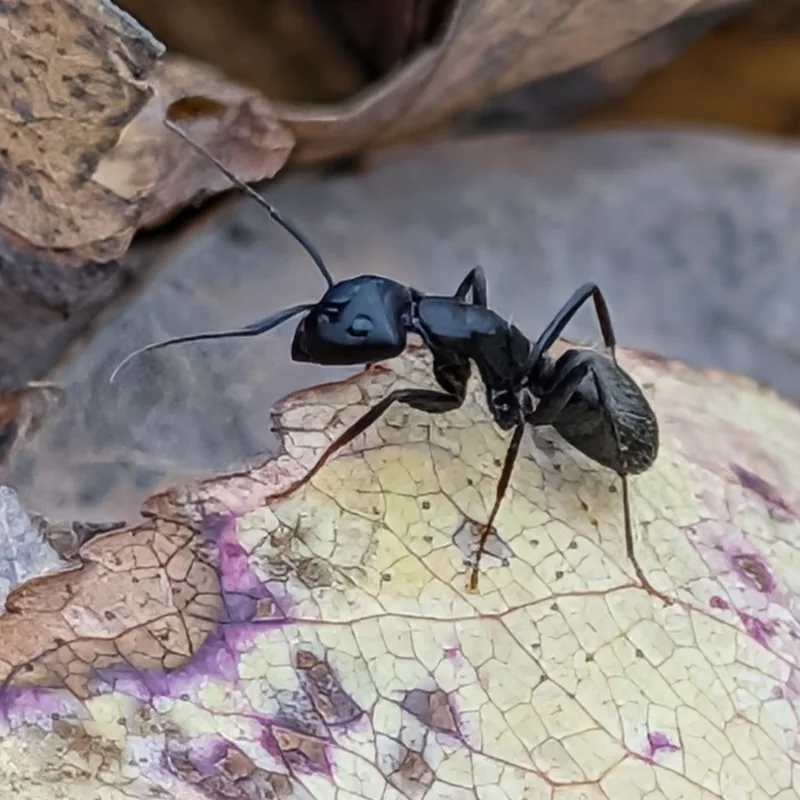
When Carpenter Ants Are Most Active in Hawaii
Now (November): Peak ActivityVerified Hawaii Counties, Species & US Range
Counties with Verified Observations
- Honolulu
- Maui
- Hawaii
- Kauai
Species Recorded in Hawaii
| Species | Scientific Name | GBIF Records |
|---|---|---|
| Hawaiian Carpenter Ant | Camponotus variegatus | 313 |
How Hawaii Compares to Neighboring States
Note: Wildlife does not follow state or county lines. GBIF totals reflect verified citizen and museum records, so low counts in a neighboring county do not guarantee absence.
How to Identify Carpenter Ants
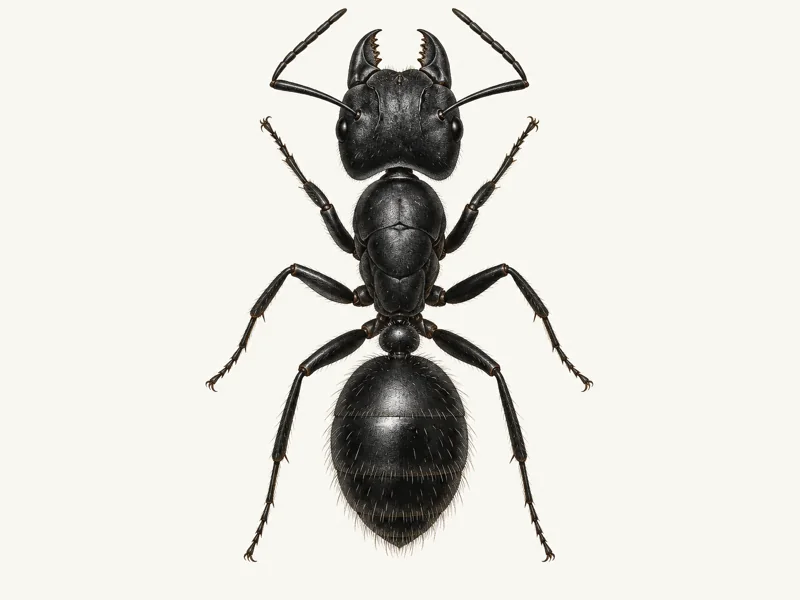
Annotated Anatomy Key (Carpenter Ant)
- Elbowed antennae: Sharply bent antennae on a broad heart-shaped black head (straight in termites).
- Rounded black thorax: Evenly arched wingless thorax without spines; workers vary widely in size (6–13 mm).
- Single waist node: EXACTLY ONE distinct small node (petiole) pinching the narrow waist.
- Silky matte abdomen: Plump black gaster lightly dusted with pale golden-gray hairs; excavates damp wood.
Carpenter Ants Field Checklist
- Large black, red-and-black, or brown ant with a smoothly rounded thorax profile
- Elbowed antennae and a single narrow waist node (petiole)
- Excavates smooth galleries in damp wood rather than eating wood like termites
- Pushes out piles of coarse sawdust-like frass mixed with dead insect fragments
Side-by-Side Look-Alike Comparisons
Carpenter Ants Size at True Relative Scale
Quick Answer: Yes, carpenter ants are common in Hawaii, with 313 verified GBIF sightings concentrated in Honolulu, Maui, Hawaii, and Kauai counties. The recorded species is the Hawaiian Carpenter Ant (Camponotus variegatus), a nighttime forager that nests in damp or decaying wood. Activity can occur year-round in the islands' warm climate, with sightings peaking in April, June, August, and November.
Where Carpenter Ants Live in Hawaii
For anyone asking, "Are there carpenter ants in Hawaii?", the verified record answers clearly. GBIF occurrence data shows carpenter ants are common across the state, with most sightings from Honolulu, Maui, Hawaii, and Kauai counties. The recorded species is the Hawaiian Carpenter Ant (Camponotus variegatus), a familiar insect in island homes and gardens.
Hawaii's tropical maritime climate (USDA zones 9b to 12b) keeps temperatures warm all year. Wet windward microclimates create plenty of the softened, moisture-damaged wood these ants prefer. Common nesting sites include:
- Rotting tree stumps, logs, and dead branches
- Hollow spaces in palms and landscape trees
- Water-damaged fascia boards, window frames, and lanai posts
- Wall voids near leaky plumbing, roofs, or gutters
- Stacked lumber or firewood stored against the house
Unlike termites, carpenter ants do not eat wood. They excavate smooth galleries to nest in it, which is why their danger level is considered structural. Over time, a large colony in damp framing can weaken wood that was already compromised by moisture.
When Carpenter Ants Are Most Active in Hawaii
Hawaii carpenter ant season is less defined than on the mainland because there is no true winter slowdown. Verified GBIF sightings peak in April, June, August, and November, so homeowners should watch closely during those months. Colonies may also release winged reproductives during warm, humid periods.
The Hawaiian Carpenter Ant is mainly nocturnal. Homeowners often notice workers trailing along walls, countertops, or outdoor lights after dark. Seeing ants indoors at night, especially repeatedly, is a good reason to look for a nearby nest.
Look-Alikes Frequently Mistaken for Carpenter Ants
Accurate Hawaii carpenter ant identification starts with body shape. Carpenter ants are relatively large ants with a narrow, pinched waist, elbowed antennae, and an evenly rounded profile on the thorax when viewed from the side. Camponotus variegatus workers vary in size, and their coloring often blends brown, tan, and reddish tones.
Termites
Termites are the most important look-alike in Hawaii because they cause far more serious wood damage. Termite workers are pale and soft-bodied, while swarmers have a thick waist, straight antennae, and four wings of equal length. Termite-damaged wood often contains mud or packed debris, whereas carpenter ant galleries are clean and smooth, with sawdust-like frass pushed outside.
Flying Ants
Many ant species produce winged swarmers, and these flying ants are often confused with both carpenter ants and termites. Winged ants have a pinched waist, elbowed antennae, and front wings longer than the hind wings. Size alone does not confirm species, so a close photo or professional inspection helps when the identity is uncertain.
How to Keep Carpenter Ants Out of Your Hawaii Home
The best approach to how to prevent carpenter ants in Hawaii is Integrated Pest Management, which focuses on removing what attracts them before using any products. University cooperative extension IPM guidance consistently points to moisture control as the foundation. Dry, sound wood is much less appealing to nesting ants.
Non-Chemical Steps First
- Fix moisture problems: Repair roof leaks, clogged gutters, and dripping pipes, and replace water-damaged wood.
- Trim vegetation: Keep tree limbs and shrubs from touching the roof or siding, since ants use them as bridges.
- Remove wood debris: Clear stumps, dead branches, and old lumber near the home, and store firewood off the ground and away from walls.
- Seal entry points: Caulk gaps around utility lines, windows, and doors, and repair torn screens.
- Reduce food sources: Wipe up sugary spills, store food in sealed containers, and manage honeydew-producing insects on landscape plants.
Targeted Treatments
If ants persist, baits formulated for carpenter ants are generally preferred over broad sprays because workers carry them back to the colony. Always read and follow the EPA product label exactly, including placement, dosage, and safety precautions around children, pets, and fish ponds. Avoid spraying trails, which can scatter colonies without eliminating them.
When to Call a Licensed Hawaii Pest Professional
Contact a licensed pest control professional in Hawaii if any of these signs appear:
- Piles of fine sawdust-like frass beneath walls, beams, or window frames
- Large numbers of ants indoors, especially winged ants emerging inside
- Faint rustling sounds inside walls or hollow-sounding wood
- Ant activity that returns after several weeks of IPM efforts
- Any uncertainty about whether damage comes from ants or termites
IPM Prevention Checklist for Hawaii Homes
- Repair roof leaks, clogged gutters, and plumbing drips that soften structural wood
- Trim tree branches touching rooflines or siding
- Store firewood elevated and away from exterior walls
 EXCLUSION BLUEPRINT
Inspect eaves, screens, door sweeps, foundation cracks, and utility penetrations around Hawaii homes before peak season.
Carpenter Ants in Hawaii: Frequently Asked Questions
Are there carpenter ants in Hawaii?
Yes. Carpenter ants are common in Hawaii, with 313 verified GBIF sightings, mainly in Honolulu, Maui, Hawaii, and Kauai counties. The recorded species is the Hawaiian Carpenter Ant (Camponotus variegatus).
When is carpenter ant season in Hawaii?
Carpenter ants can be active year-round in Hawaii's warm climate. Verified sightings peak in April, June, August, and November.
Do carpenter ants in Hawaii damage homes?
They can. Carpenter ants hollow out damp or decaying wood for nesting, so long-term colonies may weaken framing that already has moisture damage.
Do carpenter ants bite?
Carpenter ants may bite if handled or disturbed, but they are considered a structural pest rather than a medical one. Anyone with a concerning reaction should contact a doctor or US Poison Control at 1-800-222-1222.
Sources & Verification
- Penn State Extension — Carpenter Ants
- University of Minnesota Extension — Carpenter Ants
- GBIF Global Biodiversity Occurrence Records
Data refreshed · Editorial & GBIF Methodology