Ticks in New Hampshire: Species, Season, and Prevention Guide
Quick Answer: Yes, ticks are common in New Hampshire, with 1,167 verified GBIF sightings recorded across the state. The species documented there are the American dog tick, the blacklegged tick, and the American castor bean tick (Ixodes cookei). Activity peaks in May and June, so that is when New Hampshire residents should be most careful outdoors.
When Ticks Are Most Active in New Hampshire
Now (November): Lower Outdoor ActivityVerified New Hampshire Counties, Species & US Range
Counties with Verified Observations
- Hillsborough
- Grafton
- Rockingham
- Belknap
- Cheshire
- Strafford
- Sullivan
- Merrimack
Species Recorded in New Hampshire
| Species | Scientific Name | GBIF Records |
|---|---|---|
| American Dog Tick | Dermacentor variabilis | 818 |
| Black Legged Tick | Ixodes scapularis | 330 |
| American castor bean tick | Ixodes cookei | 7 |
How New Hampshire Compares to Neighboring States
Note: Wildlife does not follow state or county lines. GBIF totals reflect verified citizen and museum records, so low counts in a neighboring county do not guarantee absence.
How to Identify Ticks
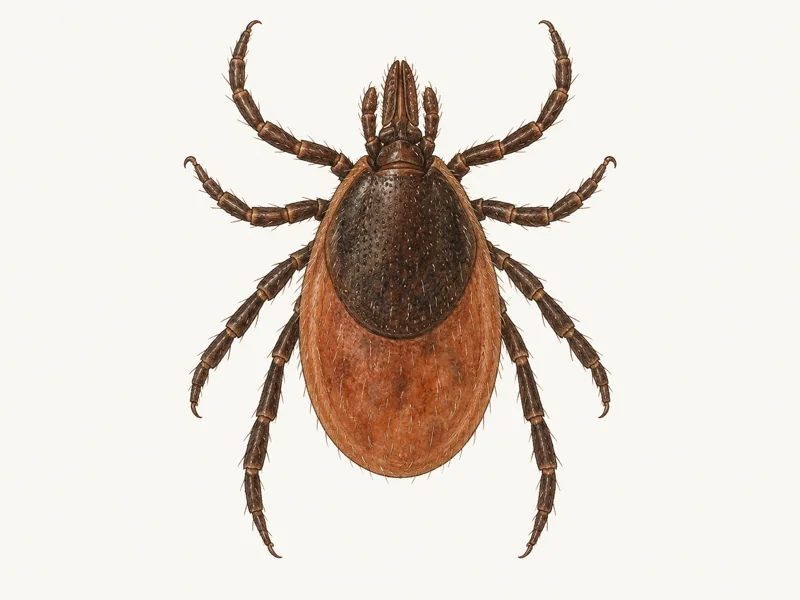
Annotated Anatomy Key (Tick)
- Piercing mouthparts: Forward-projecting capitulum and barbed hypostome at the front tip—no antennae or wings.
- Hardened scutum: Distinct dark dorsal shield plate behind the head (varies by deer, dog, and lone star ticks).
- Eight jointed legs: Adults and nymphs have 8 legs (tiny seed-tick larvae have 6 legs).
- Flat oval abdomen: Teardrop-shaped unfed body that swells into a smooth gray-brown bean shape after feeding.
Ticks Field Checklist
- Flat, oval, teardrop-shaped arachnid with eight legs (six in larval stage)
- No antennae or wings; piercing mouthparts project from the front
- Color varies by species (blacklegged deer tick, mottled dog tick, white-spotted lone star tick)
- Swells into a smooth gray-brown bean shape when engorged with blood
Side-by-Side Look-Alike Comparisons
Ticks Size at True Relative Scale
Where Ticks Live in New Hampshire
New Hampshire has a humid continental climate with forested, warm summers and cold, snowy winters, and it spans USDA zones 3b to 6a. That mix of woodland, leaf litter, and moist ground cover gives hard ticks (family Ixodidae) plenty of places to shelter and wait for hosts. The most verified sightings come from Hillsborough, Grafton, Rockingham, Belknap, and Cheshire counties.
Ticks rarely live in open, sunny, closely mowed lawns. They prefer humid microhabitats where they are less likely to dry out, including:
- Wooded edges where lawns meet forest or brush
- Leaf litter, stone walls, and woodpiles
- Tall grass along trails, fields, and roadsides
- Shaded areas used by deer, rodents, and other wildlife
New Hampshire Tick Identification
Three species appear in the verified records. Telling them apart helps homeowners understand their risk:
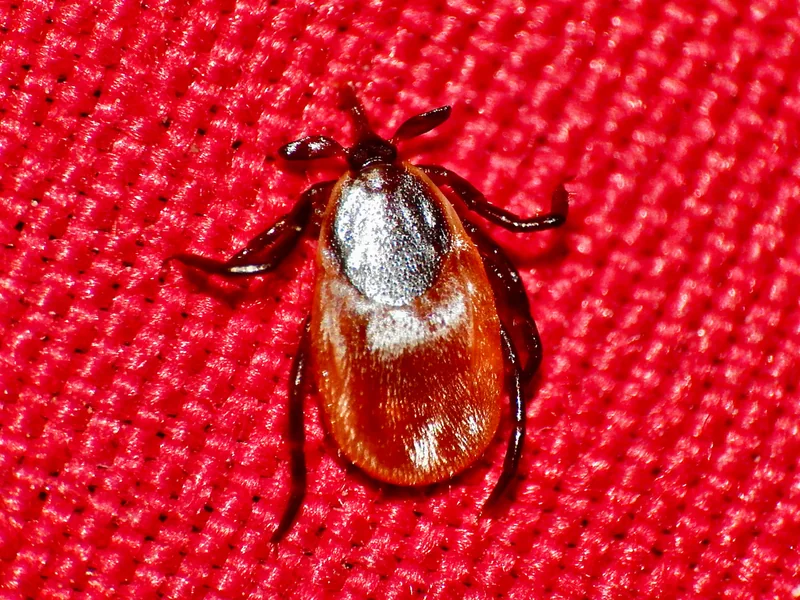
- Blacklegged tick (Ixodes scapularis): Small with dark legs. Adult females have a reddish-orange body and a black shield behind the head. Nymphs are about the size of a poppy seed. This species is a well-known vector of Lyme disease in the Northeast.
- American dog tick (Dermacentor variabilis): Larger and brown, with whitish or gray ornate markings on its back. It is often found along grassy trails and field edges.
- American castor bean tick (Ixodes cookei): Often called the woodchuck tick. It mainly feeds on medium-sized mammals such as woodchucks and skunks, but it sometimes bites pets and people.
When Ticks Are Most Active in New Hampshire
GBIF records show New Hampshire tick season peaks in May and June. During these months, nymphs and adults are out looking for hosts. Because nymphs are so small, they are easy to miss during a quick check.
Ticks can stay active outside the peak whenever temperatures rise above freezing, so mild days in early spring and late fall still call for caution. Snow cover and deep cold reduce activity, but they do not eliminate ticks from the landscape. Hikers, gardeners, and dog owners should take precautions any time the ground is bare.
Look-Alikes Frequently Mistaken for Ticks
Two common New Hampshire pests are often confused with ticks, especially when they are found indoors or on pets:
- Bed bugs: Flat, oval, and reddish-brown, much like an engorged tick. Bed bugs have six legs, while adult ticks have eight. Bed bugs hide in mattress seams and furniture rather than tall grass.
- Fleas: Tiny, dark, and narrow from side to side, with strong jumping legs. Fleas move quickly through pet fur. Ticks crawl slowly and stay attached once they begin feeding.
A simple rule helps: if it jumps, it is likely a flea. If it is found in bedding with fecal spots nearby, consider bed bugs. If it is firmly attached to skin, it is almost certainly a tick.
How to Keep Ticks Out of Your New Hampshire Home
Integrated Pest Management (IPM) guidance from university cooperative extension programs puts habitat changes and personal protection ahead of pesticides. These are the most reliable ways to prevent ticks in New Hampshire.
Yard and Habitat Steps
- Keep grass mowed short and remove leaf litter and brush.
- Place a three-foot barrier of wood chips or gravel between lawns and wooded areas.
- Stack firewood neatly in a dry, sunny spot away from the house.
- Discourage rodents, woodchucks, and deer by sealing gaps under sheds and decks and using fencing.
Personal and Pet Protection
- Wear light-colored long pants tucked into socks on trails.
- Use an EPA-registered repellent, following the product label exactly.
- Run outdoor clothing through a hot dryer for at least 10 minutes after use.
- Check yourself, children, and pets daily, especially behind the ears, at the hairline, in the armpits, and behind the knees.
- Talk with a veterinarian about tick prevention for dogs and cats.
If you find an attached tick, grasp it close to the skin with fine-tipped tweezers and pull steadily upward. Do not use heat, petroleum jelly, or other home remedies. This guide is not medical advice. Contact a doctor if a rash, fever, or other symptoms develop after a bite. For questions about chemical exposure, call US Poison Control at 1-800-222-1222.
When to Call a Licensed Professional
Contact a licensed New Hampshire pest professional if:
- You keep finding ticks on family members or pets despite habitat changes.
- Your property borders dense woods and has heavy wildlife traffic.
- Ticks appear indoors repeatedly, which may point to a rodent or wildlife nest.
- You are considering a yard treatment. A professional can apply products correctly, according to EPA labels.
IPM Prevention Checklist for New Hampshire Homes
- Perform full-body tick checks after outdoor activity and tumble-dry clothes on high heat for 10 minutes
- Keep lawn grass mowed short and create a 3-foot woodchip or gravel barrier between woods and yard
- Use EPA-registered tick repellents per label and veterinarian-approved pet preventatives
 EXCLUSION BLUEPRINT
Inspect eaves, screens, door sweeps, foundation cracks, and utility penetrations around New Hampshire homes before peak season.
Ticks in New Hampshire: Frequently Asked Questions
Are there ticks in New Hampshire year-round?
Ticks peak in May and June in New Hampshire, but they can be active on any day above freezing, including mild days in spring, fall, and winter thaws.
Which New Hampshire counties have the most tick sightings?
Verified GBIF records are highest in Hillsborough, Grafton, Rockingham, Belknap, and Cheshire counties.
What tick species are found in New Hampshire?
Recorded species include the American dog tick, the blacklegged tick, and the American castor bean tick, also called the woodchuck tick.
Should I save a tick after removing it?
Many doctors suggest placing the tick in a sealed bag or container and noting the date. That information can help if symptoms appear later and you seek medical care.
Sources & Verification
- CDC — Ticks & Tickborne Diseases
- University of Rhode Island — TickEncounter
- GBIF Global Biodiversity Occurrence Records
Data refreshed · Editorial & GBIF Methodology