Tick vs Carpet Beetle: How to Tell Them Apart Fast
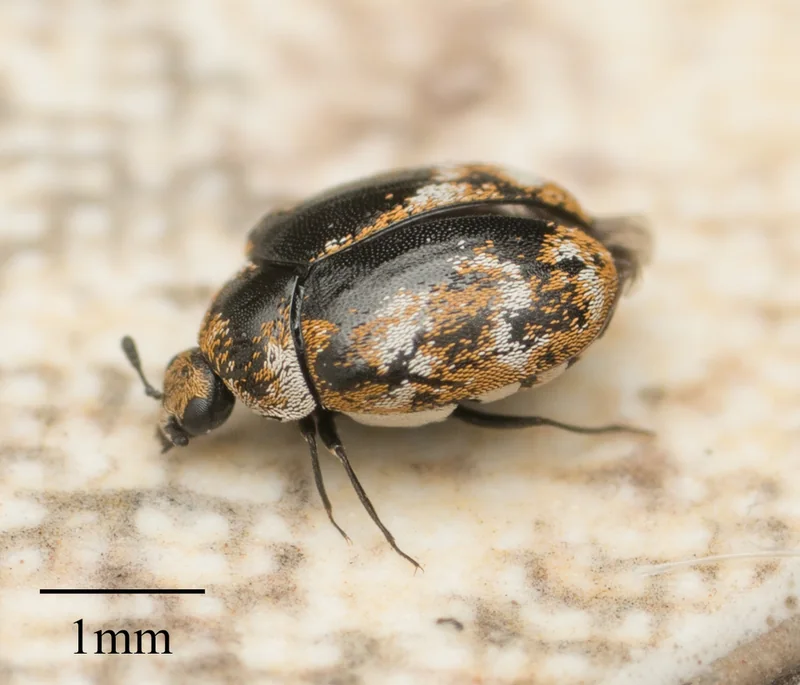
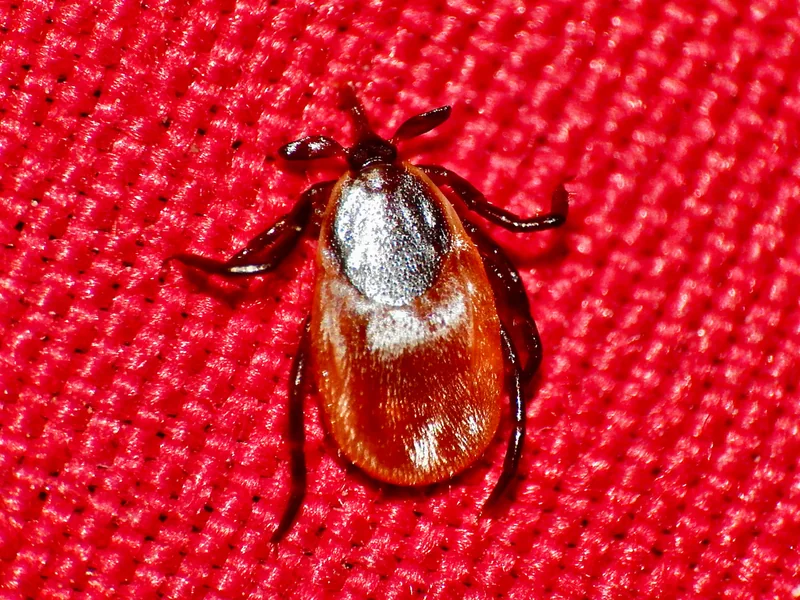
Quick ID Verdict: Count the legs and check the shape. A carpet beetle (Anthrenus verbasci) is a tiny, round, hard-shelled insect with six legs and a mottled pattern of white, brown, and yellow scales. A tick (family Ixodidae) is a flat, oval, teardrop-shaped arachnid with eight legs (six as a larva) and no scale pattern.
Carpet Beetle
Tick
Side-by-Side Comparison Table
| Trait | Carpet Beetle | Tick |
|---|---|---|
| Scientific Group | Anthrenus verbasci | Ixodidae |
| Category | Insect | Arachnid |
| Typical Size | 2–4 mm | 1–6 mm |
| Danger Level | Nuisance | Medically Significant |
| Bites or Stings? | No | Yes |
| Peak US Months | March, April, May | April, May, June, July |
| Key ID Trait | Tiny round beetle mottled in white, brown, and yellow scales (varied carpet beetle) | Flat, oval, teardrop-shaped arachnid with eight legs (six in larval stage) |
Carpet Beetle vs. Tick: True Size Comparison
Side-by-Side Anatomy Blueprint
Compare body segments, antennae, leg count, and key markings directly before treating or removing either species.
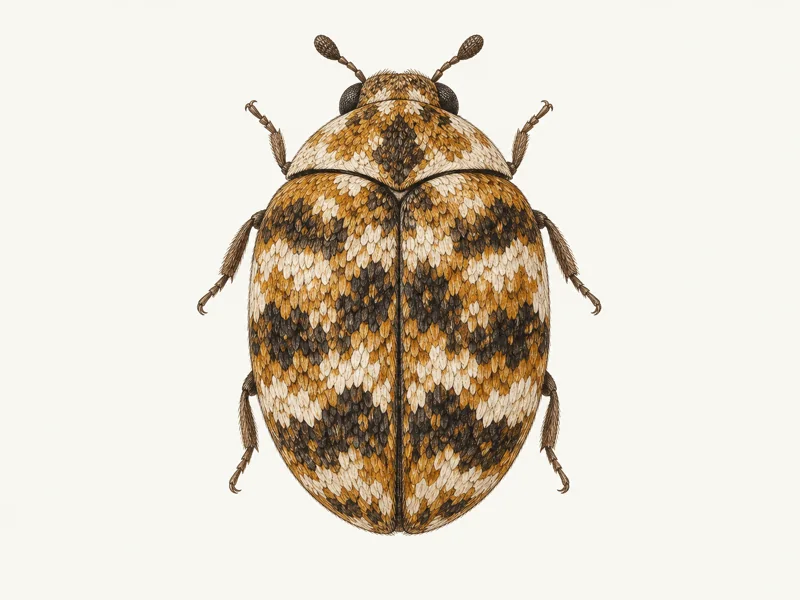
- Short clubbed antennae: Tiny tucked head and short clubbed feelers—completely different from bed bugs.
- Rounded oval dome: Plump ladybug-like 2–3.5 mm silhouette; adults fly to windowsills for pollen.
- Six short tucked legs: Delicate brownish legs pull tightly beneath the armored body when disturbed.
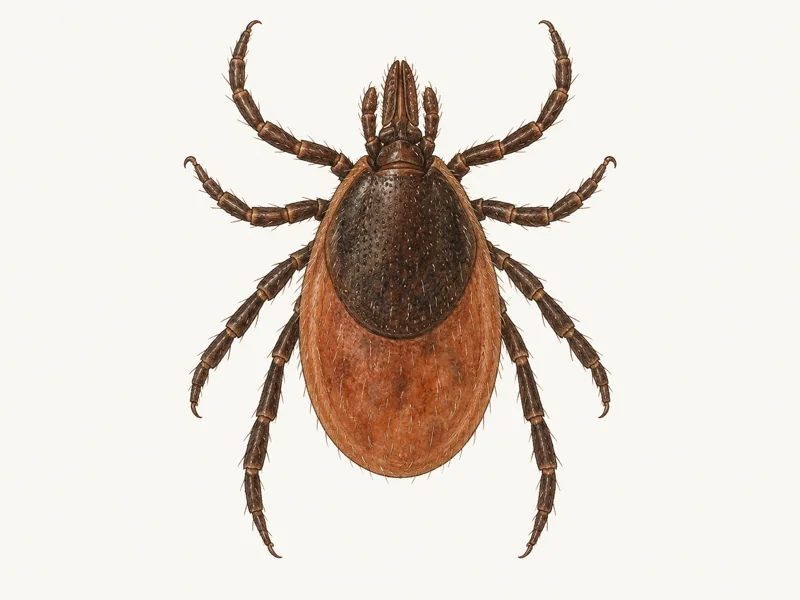
- Piercing mouthparts: Forward-projecting capitulum and barbed hypostome at the front tip—no antennae or wings.
- Hardened scutum: Distinct dark dorsal shield plate behind the head (varies by deer, dog, and lone star ticks).
- Eight jointed legs: Adults and nymphs have 8 legs (tiny seed-tick larvae have 6 legs).
Quick Answer: Count the legs and check the shape. A carpet beetle (Anthrenus verbasci) is a tiny, round, hard-shelled insect with six legs and a mottled pattern of white, brown, and yellow scales. A tick (family Ixodidae) is a flat, oval, teardrop-shaped arachnid with eight legs (six as a larva) and no scale pattern.
Quick ID Verdict: Tick or Carpet Beetle?
If the bug is round like a sesame seed and speckled in white, brown, and yellow, it is almost certainly a varied carpet beetle. If it is flat, teardrop-shaped, and crawls on eight legs toward skin or fur, it is a tick.
That three-second check settles most carpet beetle or tick questions. When in doubt, trap the specimen in a sealed bag or clear tape and examine it under a magnifying glass or phone camera zoom.
Key Visual & Physical Differences
Both pests fall in a similar size range, which explains the confusion. Carpet beetles measure about 2-4 mm, while ticks range from about 1-6 mm depending on life stage and whether they have fed.
Body Shape and Texture
- Carpet beetle: Rounded, dome-like, and compact, with hardened wing covers dusted in colorful scales.
- Tick: Flat and oval when unfed, often described as teardrop-shaped. Engorged ticks swell into a grayish, bean-like shape.
Legs and Body Segments
- Carpet beetle: Six short legs tucked under the body, plus short clubbed antennae.
- Tick: Eight legs in nymphs and adults, six in the larval stage, and no antennae. The mouthparts project forward from the front of the body.
Color and Pattern
The varied carpet beetle shows an irregular mottled mix of white, brown, and yellow scales. Ticks are typically solid reddish-brown, brown, or black, sometimes with a contrasting shield behind the head.
One common source of confusion is the carpet beetle larva. These larvae are elongated, bristly, and banded brown, and they look nothing like a tick, but homeowners sometimes mistake their fuzzy shed skins for something more alarming.
Behavior, Habitat & Danger Comparison
The difference between carpet beetle and tick behavior is just as clear as their appearance. One feeds on household fibers, while the other seeks out a blood meal.
Carpet Beetles
- Diet: Larvae eat wool, silk, feathers, fur, leather, pet hair, and stored dry goods. Adults feed on flower pollen.
- Where found: Closets, under furniture, along baseboards, in stored clothing, and near sunny windowsills where adults gather.
- Danger level: Nuisance. They do not bite, though bristly larval hairs can irritate sensitive skin in some people.
Ticks
- Diet: Blood from mammals, birds, and reptiles, including people and pets.
- Where found: Tall grass, leaf litter, wooded edges, and brushy yards. Indoors, they usually arrive on pets, clothing, or gear.
- Danger level: Medically significant. Ticks attach to skin and can transmit disease-causing pathogens.
If a tick is attached, remove it promptly with fine-tipped tweezers by gripping close to the skin and pulling steadily upward. Save the tick in a sealed bag, and contact a doctor if a rash, fever, or other symptoms develop. For urgent questions about exposures, call US Poison Control at 1-800-222-1222.
Which One Is Worse for Homeowners?
For health risk, ticks are clearly worse. Their potential to spread disease makes every tick encounter worth taking seriously. Carpet beetles, however, cause more property damage, quietly chewing holes in rugs, sweaters, and upholstery over months.
Non-Chemical IPM for Carpet Beetles
- Vacuum carpets, baseboards, closets, and under furniture often, then empty the canister outdoors.
- Wash or dry-clean wool and natural-fiber items before storage.
- Store fabrics in sealed plastic bins and keep pet hair and lint under control.
- Screen windows and check cut flowers, which can carry adults indoors.
Non-Chemical IPM for Ticks
- Keep grass short and clear leaf litter and brush near the house.
- Place a gravel or wood-chip barrier between lawns and wooded areas.
- Check people and pets after outdoor activity, and tumble-dry clothing on high heat.
- Talk to a veterinarian about tick prevention for pets.
If infestations persist, targeted treatments may help. Always read and follow the EPA product label exactly, or hire a licensed pest management professional.
Frequently Asked Questions
Can a carpet beetle bite like a tick?
No. Carpet beetles do not bite or feed on blood. Itchy bumps blamed on them are usually reactions to larval hairs, not bites.
What is the fastest carpet beetle vs tick identification trick?
Count the legs. Six legs and a round, speckled shell mean carpet beetle. Eight legs and a flat teardrop body mean tick.
Why am I finding tiny round bugs on my windowsill?
Adult varied carpet beetles are attracted to light and often collect on windowsills. Their presence suggests larvae may be feeding somewhere indoors.
Can ticks infest a house the way carpet beetles do?
Most ticks found indoors were carried in from outside and do not establish lasting indoor populations. Carpet beetles, by contrast, can breed indoors for generations if left alone.