Clover Mite vs Tick: How to Tell These Tiny Red Pests Apart
Quick ID Verdict: A clover mite is a pinhead-sized (0.6-0.8 mm) brick-red speck with front legs so long they look like antennae, and it leaves a red smear when crushed. A tick is larger (1-6 mm), flat, and teardrop-shaped, and it crawls toward people and pets to feed on blood.
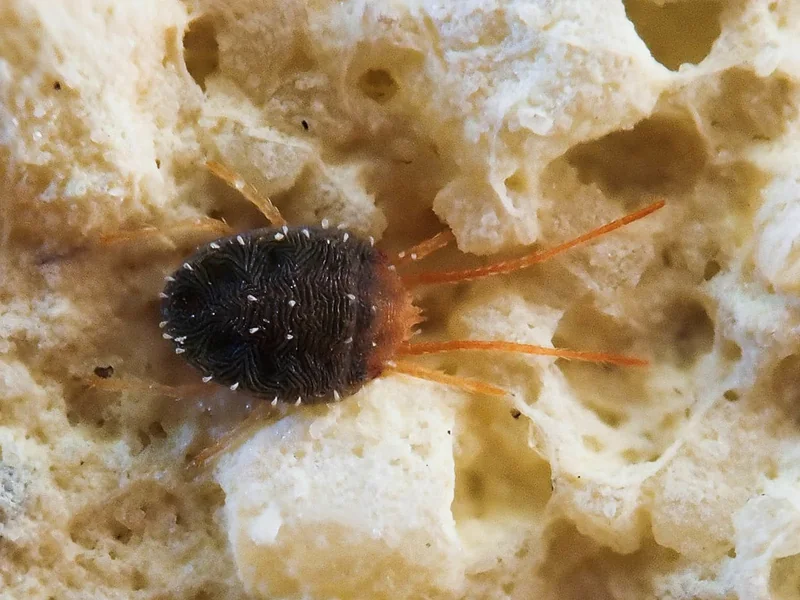
Clover Mite
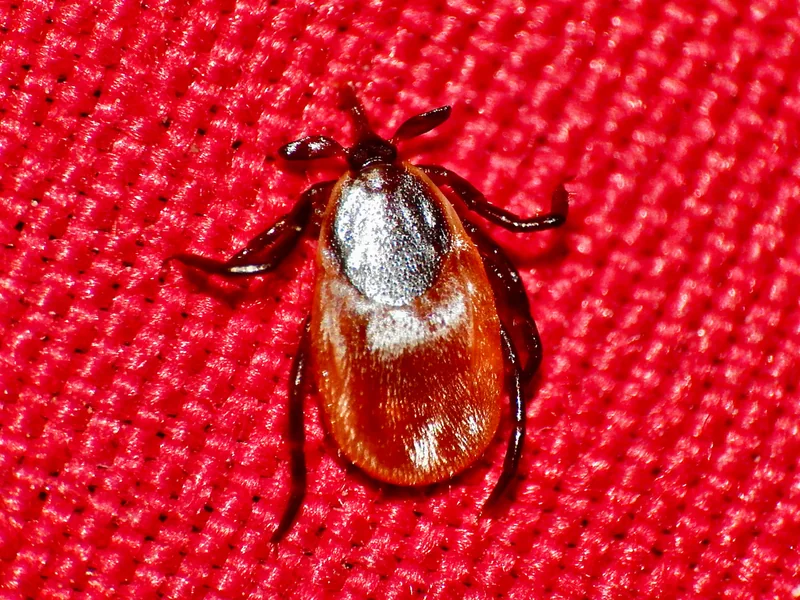
Tick
Side-by-Side Comparison Table
| Trait | Clover Mite | Tick |
|---|---|---|
| Scientific Group | Bryobia praetiosa | Ixodidae |
| Category | Arachnid | Arachnid |
| Typical Size | 0.6–0.8 mm | 1–6 mm |
| Danger Level | Nuisance | Medically Significant |
| Bites or Stings? | No | Yes |
| Peak US Months | March, April, May | April, May, June, July |
| Key ID Trait | Pinhead-sized brick-red to reddish-brown oval mite with an extra-long front pair of legs resembling antennae | Flat, oval, teardrop-shaped arachnid with eight legs (six in larval stage) |
Clover Mite vs. Tick: True Size Comparison
Side-by-Side Anatomy Blueprint
Compare body segments, antennae, leg count, and key markings directly before treating or removing either species.
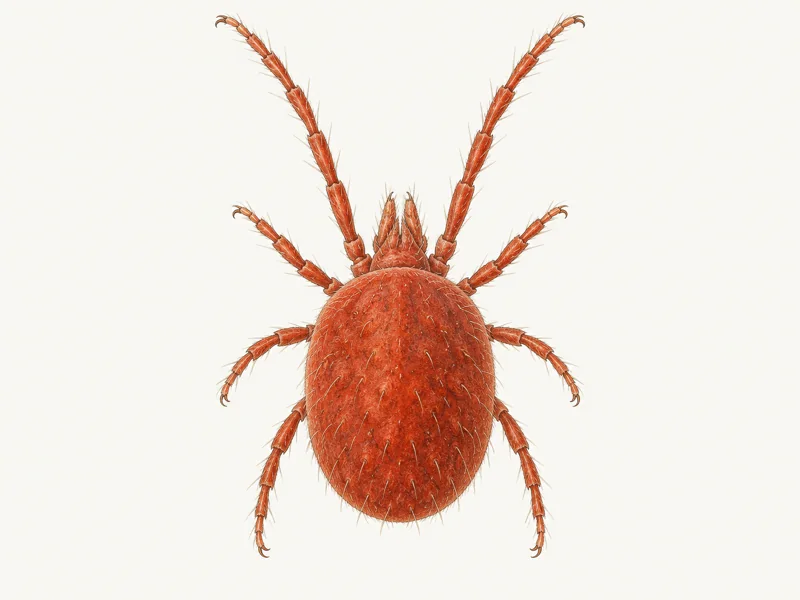
- Extra-long front legs: First leg pair extends far forward like antennae—the unmistakable hallmark of clover mites.
- Tiny mouthparts: Microscopic plant-feeding mouthparts at the front rim; completely wingless and harmless to humans.
- Eight jointed legs: Adult clover mites have 8 slender legs (no true antennae) and leave red smudges if crushed.
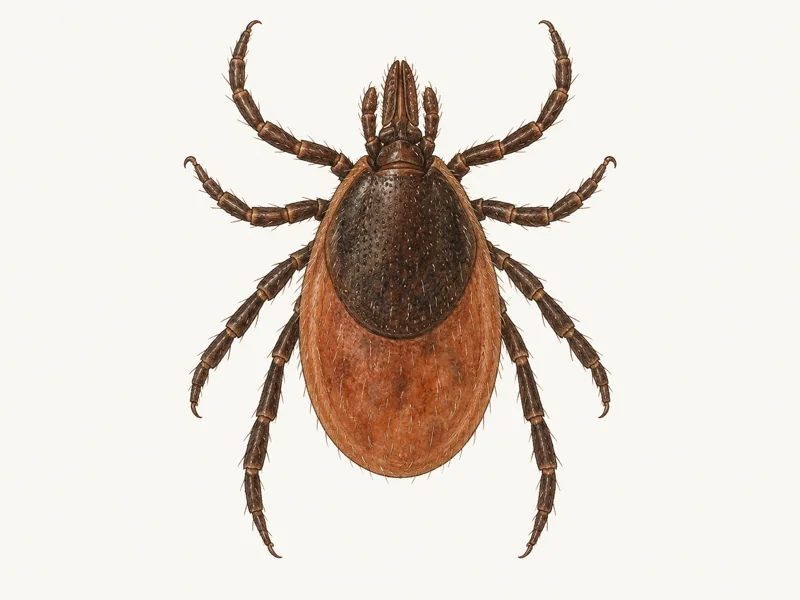
- Piercing mouthparts: Forward-projecting capitulum and barbed hypostome at the front tip—no antennae or wings.
- Hardened scutum: Distinct dark dorsal shield plate behind the head (varies by deer, dog, and lone star ticks).
- Eight jointed legs: Adults and nymphs have 8 legs (tiny seed-tick larvae have 6 legs).
Quick ID verdict: A clover mite is a pinhead-sized (0.6-0.8 mm) brick-red speck with front legs so long they look like antennae, and it leaves a red smear when crushed. A tick is larger (1-6 mm), flat, and teardrop-shaped, and it crawls toward people and pets to feed on blood.
That three-second check matters, because the clover mite vs tick question is really a question about risk. One is a harmless household nuisance. The other is a medically significant parasite that can transmit disease. This guide covers identification, habitat, seasonal activity, and safe Integrated Pest Management (IPM) steps for both.
Clover Mite or Tick? Key Physical Differences at a Glance
Most homeowners first notice these pests as tiny red dots on a windowsill or a dark speck on a pant leg. The difference between clover mite and tick comes down to a few visible traits, and most are easy to see with a basic hand lens.
Size, Color, and Leg Length
TraitClover Mite (Bryobia praetiosa)Tick (Ixodidae)Size0.6-0.8 mm (pinhead)1-6 mm, larger when engorgedShapeSmall oval bodyFlat, oval, teardrop-shapedColorBrick-red to reddish-brownUsually brown, reddish-brown, or blackLegsEight, with an extra-long front pair resembling antennaeEight (six in the larval stage)DangerNuisanceMedically significantThe front legs are the giveaway. On a clover mite, they stretch forward well past the body, while a tick's legs are more evenly sized and cluster near the front of its flattened body.
The Red Smear Test and Other Quick ID Clues
When a clover mite is crushed, it leaves a reddish stain on walls, curtains, or carpet. That color comes from the mite's own pigment, not blood. A tick, by contrast, is tough and hard to squash.
Other clover mite vs tick identification clues:
- Numbers: Clover mites appear by the hundreds or thousands: ticks usually show up one at a time.
- Location: Clover mites gather on sunny walls and windows. Ticks turn up on skin, clothing, or pets.
- Behavior: Clover mites wander aimlessly. Ticks climb and try to attach.
Frequently Asked Questions
What is the main difference between a clover mite and a tick?
A clover mite is a harmless pinhead-sized (0.6-0.8 mm) brick-red pest with disproportionately long front legs resembling antennae. A tick is larger (1-6 mm), flat, teardrop-shaped, and medically significant because it feeds on blood and can transmit disease. The clover mite vs tick distinction matters for health and safety.
How can I tell if I have clover mites or ticks on my property?
Clover mites appear in large numbers (hundreds or thousands) on sunny walls and windows, leave a red smear when crushed, and wander aimlessly. Ticks typically appear individually, seek skin or pets to attach to, and are hard to crush. Use a hand lens to examine the pest's front legs—clover mites' are significantly longer.
Can clover mites transmit diseases like ticks do?
No. Clover mites are harmless household nuisances that don't bite or transmit disease. Ticks, however, are medically significant parasites that feed on blood and can carry pathogens causing Lyme disease, Rocky Mountain spotted fever, and other illnesses.
What does a clover mite infestation look like indoors?
Clover mite infestations appear as large clusters of tiny red dots on windowsills, walls, and curtains. When crushed, they leave characteristic reddish stains from their own pigment. These pests are drawn to sunny areas and typically appear seasonally in spring and fall.
Why do clover mites leave red stains when crushed?
Clover mites leave red stains because the color comes from the mite's own body pigment, not blood. Unlike ticks, which feed on blood, clover mites are plant feeders and don't consume blood, so their stains reflect only their natural reddish-brown coloration.
What are the best IPM methods to control clover mites and ticks?
For clover mites, Integrated Pest Management (IPM) includes sealing cracks, removing vegetation near sunny walls, and using vacuums to remove clusters. For ticks, preventive measures include tick checks on skin and pets, applying tick repellents, and removing leaf litter. Professional pest control may be needed for severe infestations.