Stink Bugs in New Hampshire: Identification, Season, and Prevention
Quick Answer: Yes, stink bugs are common in New Hampshire. The brown marmorated stink bug (Halyomorpha halys) has 258 verified GBIF sightings in the state, with activity peaking in September and October. They are a nuisance pest, not a danger to people, and exclusion works best to keep them outside.
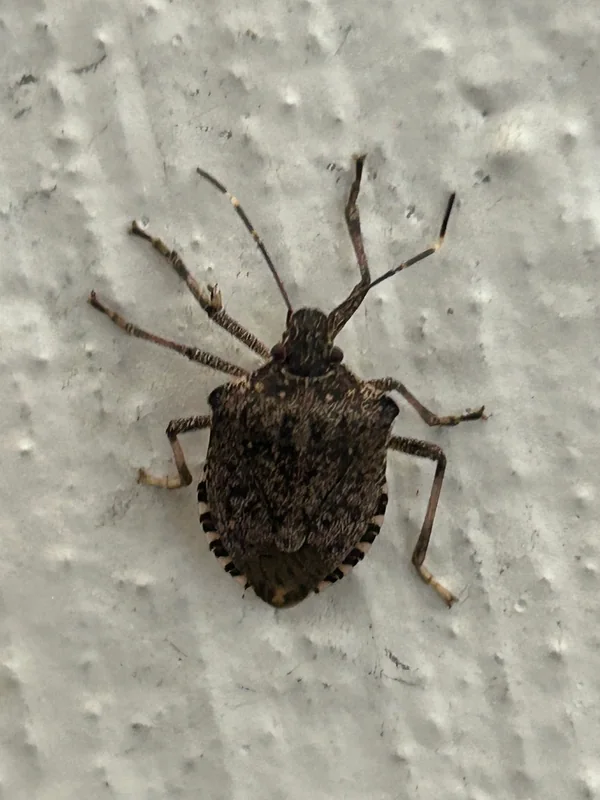
When Stink Bugs Are Most Active in New Hampshire
Now (November): Lower Outdoor ActivityVerified New Hampshire Counties, Species & US Range
Counties with Verified Observations
- Rockingham
- Hillsborough
- Strafford
- Merrimack
- Cheshire
- Sullivan
- Belknap
- Carroll
Species Recorded in New Hampshire
| Species | Scientific Name | GBIF Records |
|---|---|---|
| Marmorated brown stink bug, Yellow-brown stink bug | Halyomorpha halys | 258 |
How New Hampshire Compares to Neighboring States
Note: Wildlife does not follow state or county lines. GBIF totals reflect verified citizen and museum records, so low counts in a neighboring county do not guarantee absence.
How to Identify Stink Bugs
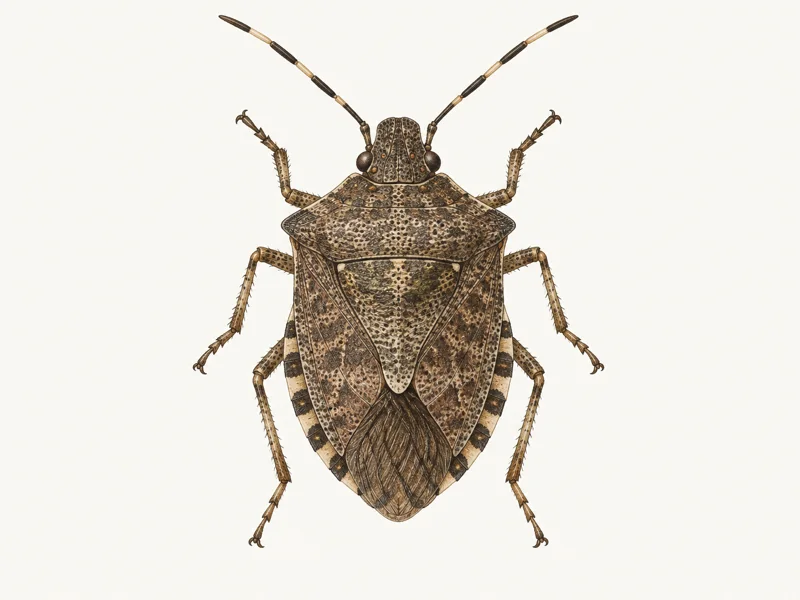
Annotated Anatomy Key (Stink Bug)
- White-banded antennae: Distinct alternating light-white and dark bands on the last two antennae segments.
- Smooth shield shoulders: Broad angular shield-shaped pronotum with smooth (non-spined) outer shoulder edges.
- Six mottled legs: Three pairs of brown walking legs; emits a sharp cilantro-like defensive odor if crushed.
- Banded abdomen rim: Alternating cream-and-dark rectangles along the outer edge of the mottled shield back.
Stink Bugs Field Checklist
- Broad shield-shaped mottled brown body (brown marmorated stink bug)
- Alternating light and dark bands along the antennae and outer edge of the abdomen
- Releases a sharp cilantro-like defensive odor when crushed or startled
- Harmless to humans and structures; feeds on fruits and ornamental plants outdoors
Side-by-Side Look-Alike Comparisons
Stink Bugs Size at True Relative Scale
Quick Answer: Yes, stink bugs are common in New Hampshire. The brown marmorated stink bug (Halyomorpha halys) has 258 verified GBIF sightings in the state, with activity peaking in September and October. They are a nuisance pest, not a danger to people, and exclusion works best to keep them outside.
Where Stink Bugs Live in New Hampshire
Records of Halyomorpha halys cluster in the southern and central parts of the state. The top counties for verified sightings are Rockingham, Hillsborough, Strafford, Merrimack, and Cheshire. These areas combine more housing, gardens, and orchards, which gives the bugs food and sheltered places to overwinter.
GBIF records list both the marmorated brown stink bug and the yellow-brown stink bug under this species. Outdoors, adults feed on fruit trees, ornamental shrubs, vegetable gardens, and woody edges. In fall, they move toward buildings looking for protected cracks.
New Hampshire has a humid continental climate with warm, forested summers and cold, snowy winters (USDA zones 3b to 6a). Cold winters push adults to hide indoors or under bark and siding rather than stay active outside.
When Stink Bugs Are Most Active in New Hampshire
The New Hampshire stink bug season follows the weather. Adults emerge from shelter in spring, feed and lay eggs through summer, and become most noticeable in early fall. GBIF sightings peak in September and October, when cooling nights send adults toward homes.
- Spring: Overwintered adults leave walls and attics, sometimes appearing at windows on warm days.
- Summer: Nymphs and adults feed on plants in gardens and orchards.
- September to October: Adults gather on sunny sides of buildings and squeeze into gaps.
- Winter: Hidden adults may wander out when indoor heat warms the walls.
Stink Bug Identification
For New Hampshire stink bug identification, look for a shield-shaped body about 5/8 inch long, mottled brown on top. Key marks include alternating light and dark bands on the antennae and along the edge of the abdomen. Crushed or disturbed bugs release a distinctive odor.
Stink bugs do not bite people, sting, or damage house structure. They are a nuisance indoors and can injure garden crops and fruit outdoors.
Look-Alikes Frequently Mistaken for Stink Bugs
Two common New Hampshire insects also invade homes in fall and get confused with stink bugs.
- Boxelder bugs: Slimmer, with black bodies and reddish-orange edges and wing lines. They gather on sunny walls and near boxelder and maple trees.
- Asian lady beetles: Round, orange to red beetles, often with spots and a white marking behind the head. They are dome-shaped rather than shield-shaped.
Shape is the quickest check. A shield-shaped, mottled brown insect with banded antennae is most likely a stink bug.
How to Keep Stink Bugs Out of Your New Hampshire Home
Anyone asking how to prevent stink bugs in New Hampshire should start with exclusion, since it works better than spraying. Do the work in late summer, before the September peak.
- Seal gaps around windows, doors, siding, utility penetrations, and fascia with caulk.
- Repair torn window and door screens and add door sweeps.
- Screen attic vents, chimneys, and soffit openings.
- Turn off unneeded exterior lights at night, which draw insects toward walls.
- Clear leaf litter, woodpiles, and debris from against the foundation.
- Fix leaks and reduce moisture in crawl spaces and basements.
For bugs already inside, use a vacuum with a dedicated bag, or sweep them into a container of soapy water. Avoid crushing them, since that releases the odor. Dispose of vacuum contents outdoors.
Insecticides are a limited tool. If you use any product, choose one labeled for the site and pest, and follow the EPA label directions exactly. Spraying indoors rarely solves the problem and can leave dead bugs that attract other pests.
When to Call a Licensed New Hampshire Pest Professional
- Dozens or hundreds of bugs appear indoors each week despite sealing.
- Large groups keep returning to the same wall or attic space.
- You cannot reach or safely seal high gaps, soffits, or rooflines.
- Garden or orchard crops show repeated feeding damage.
- You are unsure whether the insect is a stink bug or another pest.
IPM Prevention Checklist for New Hampshire Homes
- Caulk window trim, siding seams, and utility penetrations before September
- Repair window screens and install tight sweeps on exterior and attic doors
- Remove window AC units promptly in fall
 EXCLUSION BLUEPRINT
Inspect eaves, screens, door sweeps, foundation cracks, and utility penetrations around New Hampshire homes before peak season.
Stink Bugs in New Hampshire: Frequently Asked Questions
Are there stink bugs in New Hampshire?
Yes. The brown marmorated stink bug is common statewide, with 258 verified GBIF sightings. Rockingham, Hillsborough, Strafford, Merrimack, and Cheshire counties have the most records.
When are stink bugs most common in New Hampshire?
September and October are the peak months. Adults move onto and into buildings then to find winter shelter, and a few may emerge on warm winter days or in spring.
Are stink bugs dangerous?
No. They are classed as a nuisance. They do not bite or sting and do not damage house structure. Their odor can irritate some people, and if you have concerns about a reaction, contact a doctor or US Poison Control at 1-800-222-1222.
What is the best way to stop stink bugs from getting inside?
Seal exterior cracks, repair screens, and add door sweeps before September. Vacuum up any that get in, and follow EPA label directions if you choose to use a pesticide.
Sources & Verification
- Penn State Extension — Brown Marmorated Stink Bug
- StopBMSB.org — USDA Specialty Crop Research
- GBIF Global Biodiversity Occurrence Records
Data refreshed · Editorial & GBIF Methodology