Spiders in New Hampshire: Identification, Season, and Prevention Guide
Quick Answer: Spiders in New Hampshire are common, with 7,615 verified GBIF sightings statewide, and nearly all species are harmless nuisances that help control insects. Activity peaks from June through September, when species like the Nursery Web Spider, Goldenrod Crab Spider, and Yellow Garden Orb Weaver are most visible.
When Spiders Are Most Active in New Hampshire
Now (November): Lower Outdoor ActivityVerified New Hampshire Counties, Species & US Range
Counties with Verified Observations
- Grafton
- Hillsborough
- Cheshire
- Merrimack
- Strafford
- Rockingham
- Sullivan
Species Recorded in New Hampshire
| Species | Scientific Name | GBIF Records |
|---|---|---|
| Nursery Web Spider | Pisaurina mira | 652 |
| Goldenrod Crab Spider | Misumena vatia | 374 |
| Orb Weavers | Argiope aurantia | 360 |
How New Hampshire Compares to Neighboring States
Note: Wildlife does not follow state or county lines. GBIF totals reflect verified citizen and museum records, so low counts in a neighboring county do not guarantee absence.
How to Identify Spiders
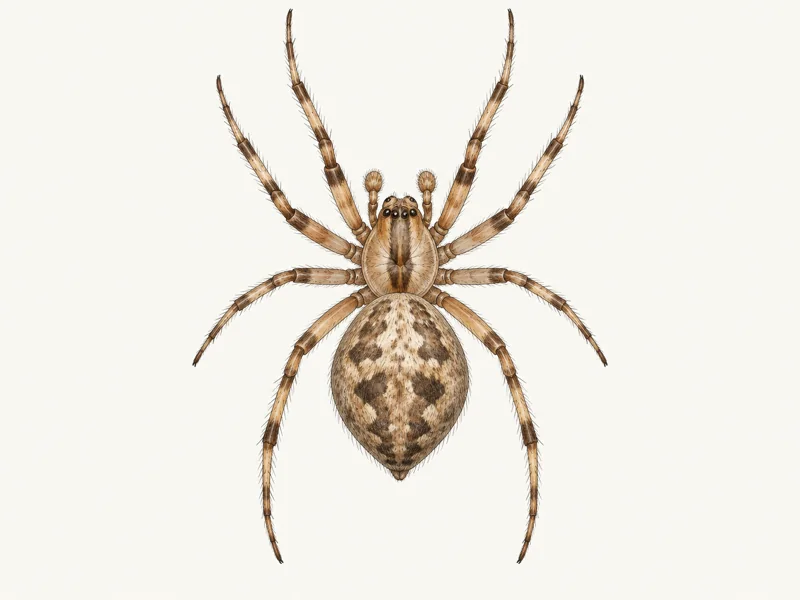
Annotated Anatomy Key (Spider)
- Eight tiny eyes: Two curved rows of 8 small eyes on a smooth tan front cephalothorax.
- Banded slender legs: Eight long thin tan legs ringed with darker brown bands at the joints.
- Comb-footed hind legs: Fine bristles on hind legs help fling silk over trapped insects in cobwebs.
- Mottled globular abdomen: Bulbous cream-and-brown patterned teardrop abdomen—lacks any red hourglass.
Spiders Field Checklist
- Two main body segments (cephalothorax and abdomen) and eight jointed legs
- No wings or antennae; most species have eight eyes (recluses have six)
- Nearly all US spiders are harmless beneficial predators of flies and mosquitoes
- Only widow spiders (Latrodectus) and recluse spiders (Loxosceles) are medically significant in the US
Side-by-Side Look-Alike Comparisons
Spiders Size at True Relative Scale
Quick Answer: Spiders in New Hampshire are common, with 7,615 verified GBIF sightings statewide, and nearly all species are harmless nuisances that help control insects. Activity peaks from June through September, when species like the Nursery Web Spider, Goldenrod Crab Spider, and Yellow Garden Orb Weaver are most visible. Simple exclusion, decluttering, and moisture control keep most spiders outdoors where they belong.
Where Spiders Live in New Hampshire
If you're wondering, "Are there spiders in New Hampshire?", the answer is a confident yes. The state's humid continental climate, with forested warm summers and cold snowy winters across USDA zones 3b to 6a, supports a wide variety of web-building and hunting spiders. Verified GBIF records show the most sightings in Grafton, Hillsborough, Cheshire, Merrimack, and Strafford counties.
These counties combine woodland edges, fields, gardens, and suburban homes. That mix gives spiders plenty of insect prey and sheltered spots to build webs or hunt. Three species stand out in the state's recorded observations:
- Nursery Web Spider (Pisaurina mira): A long-legged, tan-to-brown hunter often found on shrubs and tall grass. Females carry a large egg sac in their jaws and later guard a silk "nursery" tent for their young.
- Goldenrod Crab Spider (Misumena vatia): A small white or yellow ambush predator that waits on flowers, especially goldenrod and daisies. It can slowly shift color to match its bloom.
- Yellow Garden Orb Weaver (Argiope aurantia): A large black-and-yellow spider that spins a big circular web, often with a zigzag silk band in the center, in sunny gardens and meadows.
Indoors, spiders tend to settle in basements, garages, window frames, and storage areas. These spots offer stable temperatures, insects to eat, and few disturbances.
When Spiders Are Most Active in New Hampshire
New Hampshire spider season runs strongest in June, July, August, and September, according to GBIF occurrence data. Warm weather drives insect populations up, and spiders grow, mate, and build larger webs in response. Orb weavers become especially noticeable in late summer as they reach full adult size.
As nights cool in early fall, homeowners often notice more spiders near doors, windows, and foundations. Many are males wandering in search of mates, not a sign of an indoor infestation. During the long winter, most outdoor spiders survive as eggs or tucked-away juveniles, while a few indoor species stay active year-round in heated spaces.
Look-Alikes Frequently Mistaken for Spiders
Accurate New Hampshire spider identification matters, because a few local spiders look similar but behave very differently. These are the look-alikes most often confused in the state:
- Black Widows: Glossy black spiders, usually with a red hourglass mark on the underside. They hide in woodpiles, sheds, and undisturbed corners. Their bite is medically significant, so they deserve careful handling.
- Wolf Spiders: Large, hairy, brown-gray hunters that run along the ground instead of building webs. They are sometimes mistaken for Nursery Web Spiders, but they usually stay low and move quickly.
- Cellar Spiders: Very long, thin legs and small bodies, often hanging in loose, messy webs in basements. They are harmless and frequently confused with harvestmen.
- Orb Weaver Spiders: Several orb weavers besides the Yellow Garden Spider build wheel-shaped webs on porches and lights. They are harmless and generally shy.
If you are bitten and suspect a Black Widow, or if you have severe pain, spreading symptoms, or trouble breathing, contact US Poison Control at 1-800-222-1222 and seek care from a doctor right away. Do not rely on home remedies for venomous bites.
How to Keep Spiders Out of Your New Hampshire Home
Knowing how to prevent spiders in New Hampshire starts with Integrated Pest Management (IPM), an approach widely recommended by university cooperative extension programs. IPM focuses on removing what attracts spiders before turning to chemicals.
Non-Chemical Steps First
- Seal entry points: Caulk gaps around windows, doors, utility lines, and foundation cracks. Repair torn screens and add door sweeps.
- Reduce clutter: Store items in sealed plastic bins instead of cardboard boxes, especially in basements and garages.
- Control moisture: Run a dehumidifier in damp basements and fix leaks, since moist areas attract the insects spiders eat.
- Adjust lighting: Use yellow or warm LED bulbs outdoors, which draw fewer insects and fewer web-building spiders.
- Clear the perimeter: Keep firewood, mulch, and dense shrubs a few feet from the foundation.
- Vacuum regularly: Remove webs and egg sacs from corners, ceilings, and window frames.
Careful Use of Products
If spiders persist, targeted products may help in limited areas. Always read and follow the EPA product label exactly, including where and how to apply. Avoid broad spraying, which can harm beneficial insects and rarely solves the root problem.
When to Call a Licensed New Hampshire Pest Professional
- You find Black Widows inside living spaces or repeatedly around the home.
- Spiders keep appearing in large numbers despite consistent exclusion and cleaning.
- Someone in the household is especially vulnerable to bites, such as young children or older adults.
- You notice a heavy insect problem that is feeding the spider population.
IPM Prevention Checklist for New Hampshire Homes
- Switch exterior entry lights to warm yellow bulbs to avoid attracting spider prey
- Seal door sweeps, window screens, and foundation cracks
- Declutter basements and garages using sealed plastic containers
 EXCLUSION BLUEPRINT
Inspect eaves, screens, door sweeps, foundation cracks, and utility penetrations around New Hampshire homes before peak season.
Spiders in New Hampshire: Frequently Asked Questions
Are spiders in New Hampshire dangerous?
Most are harmless nuisances that eat insects. Black Widows are the main species of concern, so contact Poison Control at 1-800-222-1222 and a doctor if one bites you.
What is the most common garden spider in New Hampshire?
The Yellow Garden Orb Weaver (Argiope aurantia) is one of the most noticeable, especially in late summer. Goldenrod Crab Spiders and Nursery Web Spiders are also frequently recorded.
Why do I see more spiders in my house in the fall?
As temperatures drop after the June-to-September peak, wandering males and shelter-seeking spiders move toward foundations and doorways. Sealing gaps helps keep them out.
Which New Hampshire counties have the most spider sightings?
GBIF records show the most sightings in Grafton, Hillsborough, Cheshire, Merrimack, and Strafford counties.
Sources & Verification
- UC IPM — Spiders
- Ohio State University Extension — Common Spiders
- GBIF Global Biodiversity Occurrence Records
Data refreshed · Editorial & GBIF Methodology