Flea vs Tick: How to Tell These Biting Pests Apart and Protect Your Home
Quick ID Verdict: A tiny dark speck on a dog's belly or a homeowner's ankle raises an immediate question: flea or tick? The quick verdict is that a flea is a wingless insect flattened side to side that jumps, while a tick is a flat, oval arachnid with eight legs that crawls and stays put once attached. That three-second check matters, because the difference between flea and tick goes well beyond looks. One is mainly a nuisance. The other is medically significant.
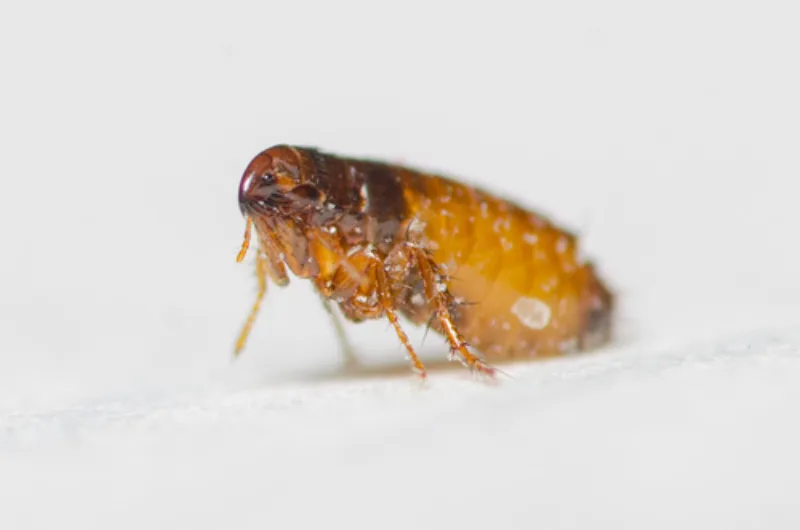
Flea
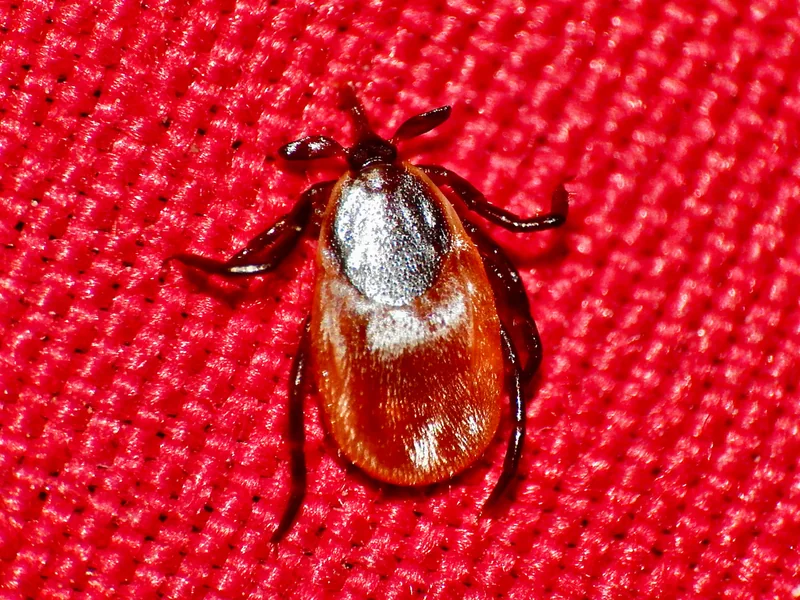
Tick
Side-by-Side Comparison Table
| Trait | Flea | Tick |
|---|---|---|
| Scientific Group | Siphonaptera | Ixodidae |
| Category | Insect | Arachnid |
| Typical Size | 1–3 mm | 1–6 mm |
| Danger Level | Nuisance | Medically Significant |
| Bites or Stings? | Yes | Yes |
| Peak US Months | June, July, August, September | April, May, June, July |
| Key ID Trait | Tiny, wingless, dark reddish-brown insect compressed side-to-side | Flat, oval, teardrop-shaped arachnid with eight legs (six in larval stage) |
Flea vs. Tick: True Size Comparison
Side-by-Side Anatomy Blueprint
Compare body segments, antennae, leg count, and key markings directly before treating or removing either species.
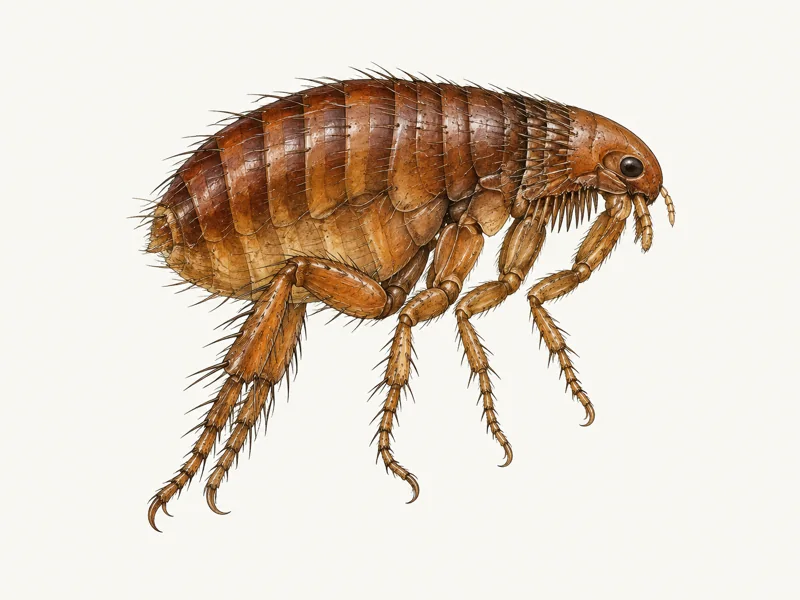
- Flattened armored plates: Laterally compressed wingless 1.5–3 mm glossy mahogany body glides effortlessly through fur.
- Head comb (ctenidia): Tiny eye, tucked antennae, and backward-pointing bristle comb anchor tightly in pet hair.
- Massive hind jumping legs: Powerfully enlarged muscular hind legs launch fleas up to 150× their body length.
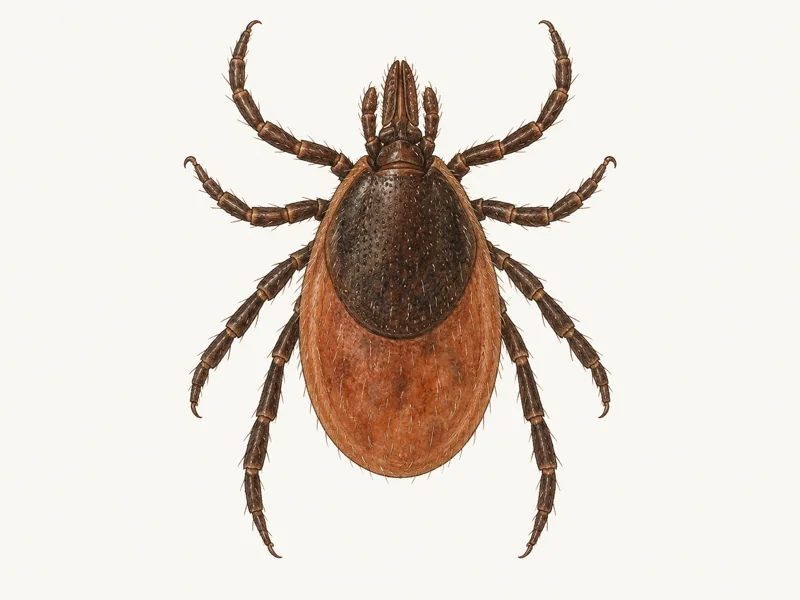
- Piercing mouthparts: Forward-projecting capitulum and barbed hypostome at the front tip—no antennae or wings.
- Hardened scutum: Distinct dark dorsal shield plate behind the head (varies by deer, dog, and lone star ticks).
- Eight jointed legs: Adults and nymphs have 8 legs (tiny seed-tick larvae have 6 legs).
Flea vs Tick Identification at a Glance
Accurate flea vs tick identification starts with body shape and movement. Both pests are small, but they belong to entirely different groups. Fleas are insects in the order Siphonaptera, and ticks are arachnids, close relatives of spiders and mites.
Size, Shape, and Color Differences
FeatureFleas (Siphonaptera)Ticks (Ixodidae)Size1–3 mm1–6 mm (larger when engorged)Body shapeCompressed side to side, like a sesame seed on edgeFlat, oval, teardrop-shaped from aboveLegsSixEight (six in the larval stage)ColorDark reddish-brownBrown, reddish, or gray: some have markingsWingsNoneNoneThe side-to-side flattening is the giveaway for fleas. It lets them slip through fur easily. Ticks look flattened from top to bottom instead, and they swell noticeably after feeding.
Movement and Feeding Behavior
Fleas are built to jump. A disturbed flea vanishes in an instant, leaping many times its own body length. They feed quickly and often, moving around on the host.
Ticks don't jump or fly. They crawl slowly, climb grass or brush, and wait for a passing host, a behavior called questing. Once a tick finds a spot, it embeds its mouthparts and may stay attached for days. So if the speck won't move, it's likely a tick.
Flea or Tick? Comparing Bites and Health Risks
Flea bites usually appear as small, itchy red bumps, often in clusters around the ankles and lower legs. For people, fleas rank as a nuisance. Pets, but, can develop flea allergy dermatitis, and swallowed fleas can pass tapeworms to dogs and cats.
Ticks are a different story. Members of the family Ixodidae (hard ticks) are medically significant because they can transmit diseases such as:
- Lyme disease
- Rocky Mountain spotted fever
- Anaplasmosis and ehrlichiosis
- Babesiosis
A tick bite is often painless, so many people never notice it. Anyone who finds an attached tick should remove it promptly with fine-tipped tweezers following CDC guidance and talk to a doctor, especially if a rash, fever, or fatigue develops. For urgent questions about a bite or a reaction, call US Poison Control at 1-800-222-1222. This guide doesn't offer diagnoses or home remedies.
Where and When Each Pest Is Most Active in the US
Fleas live across all 50 states, but they thrive in warm, humid conditions. Activity peaks from late spring through fall in most regions. In the Southeast, Gulf Coast, and heated homes nationwide, fleas can breed year-round. Most of a flea population actually lives off the host, as eggs and larvae in carpets, pet bedding, and shaded yard soil.
Ticks are also found nationwide, though species vary by region:
- Blacklegged (deer) tick: Northeast, Upper Midwest, and mid-Atlantic
- Lone star tick: Southeast and expanding north and west
- American dog tick: Much of the eastern US and parts of the West Coast
- Western blacklegged tick: Pacific Coast states
Tick activity rises in spring and summer, though adult blacklegged ticks stay active on mild fall and winter days. Tall grass, leaf litter, and wooded edges are prime tick habitat.
Safe Integrated Pest Management for Fleas and Ticks
Integrated Pest Management (IPM) tackles the habitat first and treats chemicals as a last step. For fleas, sanitation is the foundation:
- Vacuum carpets, rugs, and furniture daily during an infestation, then empty the canister outdoors
- Wash pet bedding and throw blankets in hot water weekly
- Keep pets on a veterinarian-recommended flea preventive
- Limit wildlife access to crawl spaces, decks, and sheds
For ticks, focus on the yard and exclusion:
- Mow regularly and remove leaf litter and brush piles
- Create a 3-foot wood chip or gravel barrier between lawns and wooded areas
- Stack firewood neatly in a dry, sunny spot
- Check people and pets after time outdoors
If a pesticide becomes necessary, choose a registered product and always follow the EPA label exactly. The label is the law, and it covers dosage, application sites, and pet safety.
When to Call a Pest Control Professional
A licensed pest control professional makes sense when home efforts fall short. Common triggers include:
- Fleas persisting after three to four weeks of consistent vacuuming, washing, and pet treatment
- Repeated tick finds on family members or pets even though yard changes
- Heavy wildlife activity, such as deer, raccoons, or rodents, near the home
- Properties bordering woods or fields in high-risk Lyme disease areas
A good provider will inspect first, identify the species, and explain an IPM plan rather than spraying on a fixed schedule. Homeowners should ask about products used, re-entry times, and pet precautions. Any health concerns from a tick bite still belong with a doctor.
Frequently Asked Questions
What's the main difference between a flea and a tick?
The key difference is that fleas are wingless insects with six legs that jump and move around constantly, while ticks are arachnids with eight legs that crawl slowly and stay attached to their host for days after embedding their mouthparts.
How can I identify a flea vs tick by appearance?
Fleas are compressed side-to-side (like a sesame seed on edge), 1–3 mm in size, and dark reddish-brown. Ticks are flat and oval-shaped when viewed from above, 1–6 mm, and swell after feeding. If the pest won't move, it's likely a tick.
What diseases can ticks transmit to humans?
Ticks can transmit serious illnesses including Lyme disease, Rocky Mountain spotted fever, anaplasmosis, ehrlichiosis, and babesiosis. Unlike flea bites, tick bites are often painless, so prompt removal and medical attention are important if symptoms develop.
Are flea bites dangerous for people and pets?
Flea bites are mainly a nuisance for people, appearing as itchy red bumps around ankles and lower legs. However, pets can develop flea allergy dermatitis, and swallowed fleas can transmit tapeworms to dogs and cats.
What's the best way to prevent fleas and ticks in my home?
Use Integrated Pest Management (IPM) by vacuuming daily, washing pet bedding weekly in hot water, and keeping pets on veterinarian-recommended preventives. For ticks, mow regularly, remove leaf litter, create a barrier between lawn and woods, and check people and pets after outdoors.
When should I call a pest control professional for fleas or ticks?
Contact a professional if fleas persist after three to four weeks of vacuuming and pet treatment, ticks keep appearing on family members despite yard efforts, or you have heavy wildlife activity near your home in high-risk Lyme disease areas.