Spider vs Tarantula: How to Tell Them Apart and When to Worry
Quick ID Verdict: Here's the 3-second test: if it's large (roughly 2 to 5 inches), heavy-bodied, hairy, and walking on thick legs, it's almost certainly a tarantula. If it's smaller, slimmer, or building an open web, it's a typical spider.
Spider
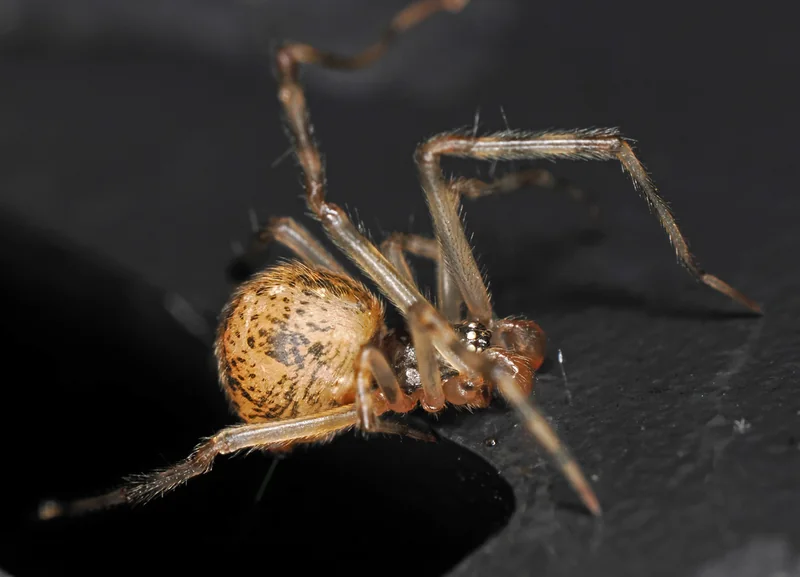
Tarantula
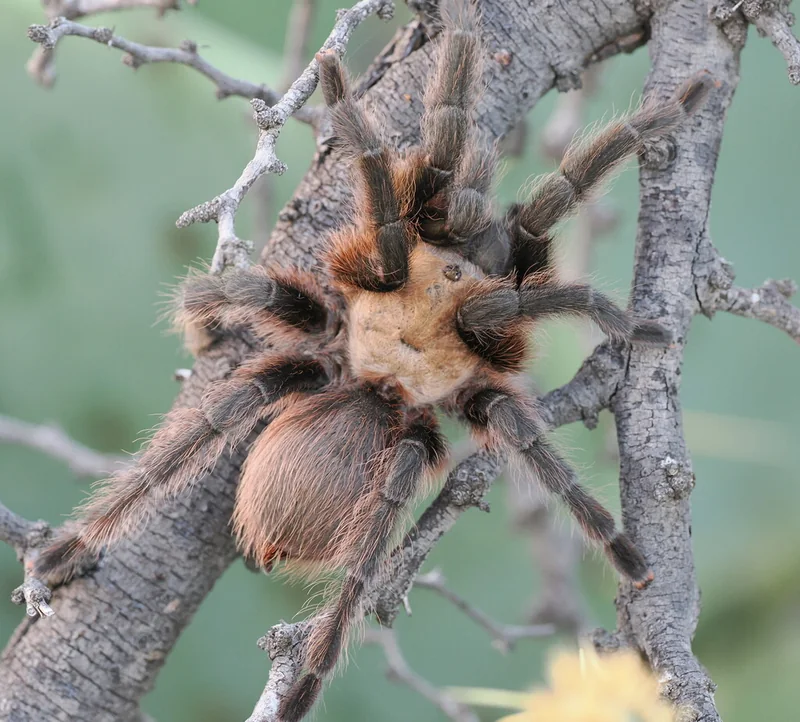
Side-by-Side Comparison Table
| Trait | Spider | Tarantula |
|---|---|---|
| Scientific Group | Araneae | Theraphosidae |
| Category | Spider | Spider |
| Typical Size | 3–80 mm | 50–130 mm |
| Danger Level | Nuisance | Nuisance |
| Bites or Stings? | Yes | Yes |
| Peak US Months | June, July, August, September | July, August, September, October |
| Key ID Trait | Two main body segments (cephalothorax and abdomen) and eight jointed legs | Large, heavy-bodied hairy spider with thick legs |
Spider vs. Tarantula: True Size Comparison
Side-by-Side Anatomy Blueprint
Compare body segments, antennae, leg count, and key markings directly before treating or removing either species.
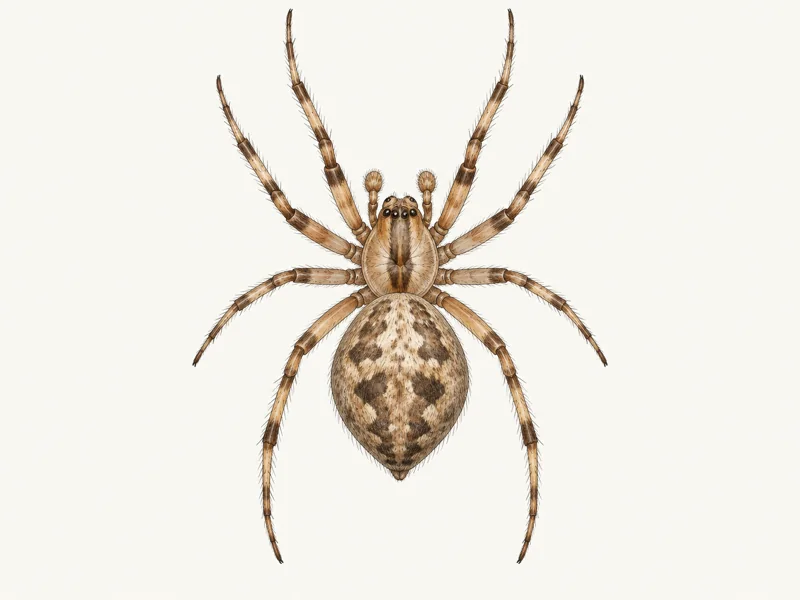
- Eight tiny eyes: Two curved rows of 8 small eyes on a smooth tan front cephalothorax.
- Banded slender legs: Eight long thin tan legs ringed with darker brown bands at the joints.
- Comb-footed hind legs: Fine bristles on hind legs help fling silk over trapped insects in cobwebs.
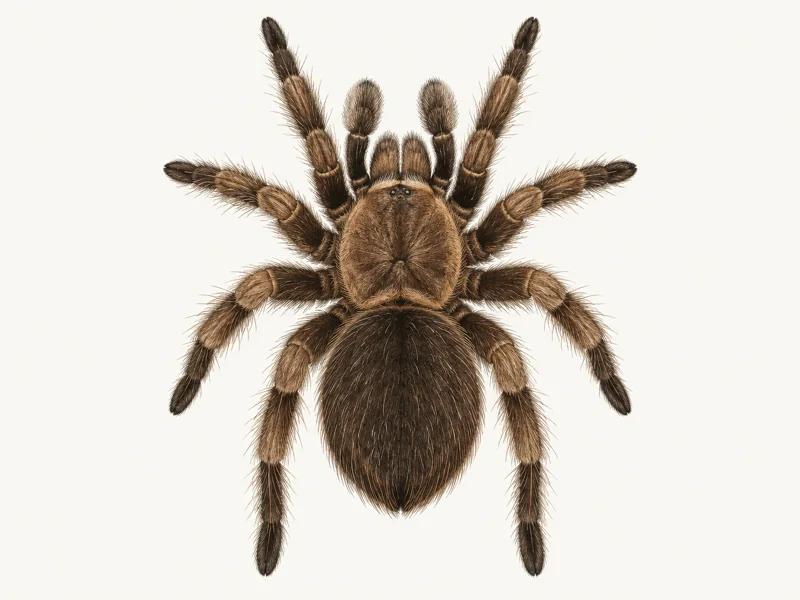
- Furry pedipalps: Pair of thick leg-like front sensory feelers framing downward-striking fangs.
- Velvet carapace: Broad warm cocoa-brown cephalothorax with a tiny central eye tubercle.
- Eight thick legs: Four pairs of stout, densely hairy cocoa-brown legs built for ground hunting.
That quick check covers most sightings. This guide explains the real difference between spider and tarantula, where each lives in the US, and how homeowners can manage both safely.
Is a Tarantula a Spider? Understanding the Relationship
Yes. Every tarantula is a spider, but not every spider is a tarantula. All spiders belong to the order Araneae, and tarantulas form one family within it, Theraphosidae.
Think of it like dogs and retrievers. So asking "spider or tarantula?" really means asking whether the animal belongs to that one heavy-bodied family. Both share the core spider blueprint: two main body segments (cephalothorax and abdomen) and eight jointed legs.
Key Differences Between a Spider and a Tarantula
Accurate spider vs tarantula identification comes down to a few visible traits. Size and hairiness do most of the work, but fangs and behavior seal the deal.
Size, Hair, and Body Shape
TraitSpiders (Araneae)Tarantulas (Theraphosidae)Body length3–80 mm50–130 mmBuildSlim to moderateLarge, heavy-bodiedHairSparse to moderateDense, hairy coatLegsOften thinThick and sturdyThe size ranges overlap at the top end, so a big wolf spider or fishing spider can fool people. But those spiders look leaner and move in quick bursts, while a tarantula appears plush and deliberate.
Fangs, Venom, and Defensive Behavior
Tarantulas have fangs that strike downward, parallel to each other. Most other spiders have fangs that pinch inward toward each other. That detail is hard to see in the field, though, so rely on overall build first.
Both groups are classified as nuisance-level threats. US tarantulas are docile and usually retreat, rear up, or flick irritating hairs from the abdomen rather than bite. A small number of other US spiders, such as black widows and brown recluses, can cause medically significant bites. If anyone is bitten and symptoms develop, call Poison Control at 1-800-222-1222 and contact a doctor: don't rely on home remedies.
Where Tarantulas and Common Spiders Live in the US
Common spiders live in all 50 states, from basements in Maine to garages in Florida. House spiders, cellar spiders, wolf spiders, and orb weavers are the usual suspects homeowners report.
Native tarantulas, mostly in the genus Aphonopelma, have a much narrower range. They're concentrated in the Southwest and southern Plains, including:
- Arizona, New Mexico, and Texas
- Southern California, Nevada, and Utah
- Oklahoma, Kansas, Colorado, Arkansas, and Missouri
They prefer dry grasslands, desert scrub, and rocky hillsides, where they live in burrows. A homeowner in Ohio who spots a "tarantula" is almost certainly looking at a large wolf or fishing spider, or an escaped pet.
Seasonal Activity and Why You See Them Indoors
Tarantula sightings spike from late summer through fall. That's when mature males leave their burrows to search for females, sometimes crossing roads and patios by the dozens. Females rarely wander far.
Common spiders follow a similar pattern. Many become more noticeable in late summer and fall as they reach full size and males roam for mates. Cooling temperatures and prey insects drawn to porch lights also pull them toward homes.
Indoors, spiders usually get in through gaps under doors, torn screens, and utility openings. Tarantulas rarely enter houses on purpose: when they do, it's typically an accident during the fall wandering season.
Safe IPM Steps for Managing Spiders and Tarantulas at Home
So which one is worse for homeowners? Common spiders, by a wide margin, simply because they're everywhere and can set up indoors. Tarantulas are seasonal visitors that don't infest homes and help control insects outdoors.
Integrated Pest Management (IPM) works for both. Start with non-chemical steps:
- Exclusion: Install door sweeps, repair window screens, and seal cracks around pipes, vents, and siding.
- Sanitation: Reduce clutter in garages and basements, and vacuum webs and egg sacs regularly.
- Moisture control: Fix leaks and run a dehumidifier in damp areas, since moisture attracts the insects spiders eat.
- Lighting: Switch to yellow or warm LED bulbs to draw fewer insects near entryways.
- Yard care: Move woodpiles, rocks, and dense vegetation away from the foundation.
For a stray tarantula, gently guide it into a container with a piece of cardboard and release it away from the house. Wear gloves to avoid contact with its irritating hairs.
If spiders persist after these steps, targeted treatments may help. Always read and follow the EPA-registered product label exactly, or hire a licensed pest professional.
Frequently Asked Questions
Is a tarantula a spider, or are they different?
Yes, every tarantula is a spider, but not every spider is a tarantula. Tarantulas belong to the family Theraphosidae within the larger order Araneae. All spiders share the same basic blueprint: two body segments and eight jointed legs.
What are the main differences between a spider and a tarantula?
The key differences between spiders and tarantulas are size, body build, and hairiness. Tarantulas are large (2–5 inches), heavy-bodied, and densely hairy with thick legs. Most common spiders are smaller, slimmer, and have sparse to moderate hair coverage.
How can I identify a tarantula vs. a regular spider?
Use the 3-second test: if it's large (roughly 2 to 5 inches), heavy-bodied, hairy, and walking on thick legs, it's almost certainly a tarantula. If it's smaller, slimmer, or building an open web, it's a typical spider.
Where do tarantulas live in the United States?
Native tarantulas are concentrated in the Southwest and southern Plains, including Arizona, New Mexico, Texas, Southern California, Nevada, Utah, Oklahoma, Kansas, Colorado, Arkansas, and Missouri. They prefer dry grasslands, desert scrub, and rocky hillsides.
Are tarantulas more dangerous than other spiders?
No. US tarantulas are docile and usually retreat or flick irritating hairs rather than bite. In contrast, some spiders like black widows and brown recluses can cause medically significant bites. For any concerning bite, call Poison Control at 1-800-222-1222.
Why do I see more tarantulas and spiders in the fall?
Sightings spike from late summer through fall when mature males leave their burrows to search for mates, sometimes crossing roads and patios. Cooling temperatures and insects drawn to porch lights also pull spiders toward homes during this season.