Black Widow vs Spider: How to Tell Them Apart Fast
Quick ID Verdict: A black widow (genus Latrodectus) is a glossy, jet-black spider with a round, globular abdomen and long, slender black legs, usually 8-15 mm in body length. Most other spiders (order Araneae) are brown, gray, or patterned and lack that shiny, bulbous black body.
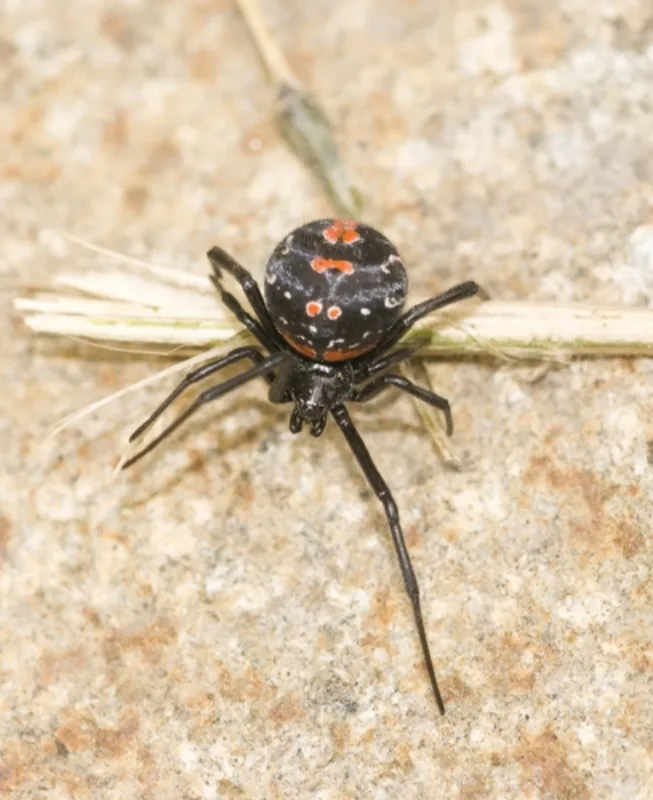
Black Widow
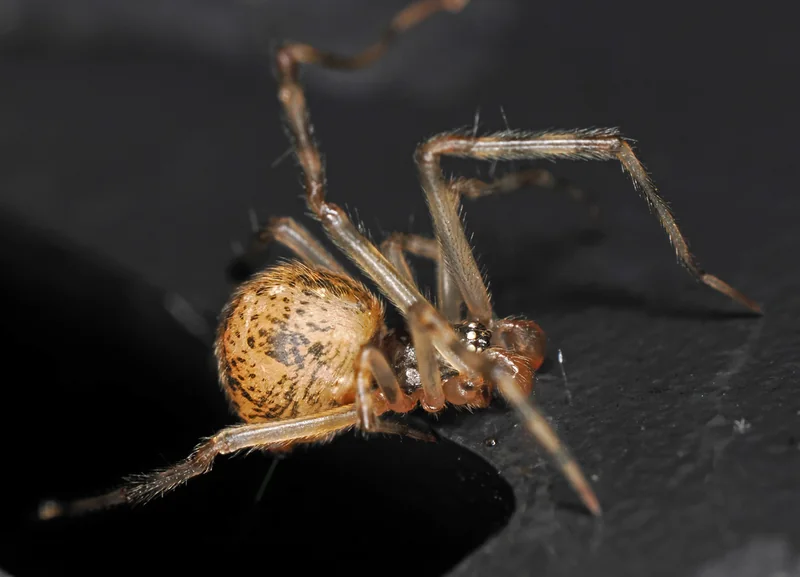
Spider
Side-by-Side Comparison Table
| Trait | Black Widow | Spider |
|---|---|---|
| Scientific Group | Latrodectus | Araneae |
| Category | Spider | Spider |
| Typical Size | 8–15 mm | 3–80 mm |
| Danger Level | Medically Significant | Nuisance |
| Bites or Stings? | Yes | Yes |
| Peak US Months | July, August, September, October | June, July, August, September |
| Key ID Trait | Glossy jet-black globular abdomen with long slender black legs | Two main body segments (cephalothorax and abdomen) and eight jointed legs |
Black Widow vs. Spider: True Size Comparison
Side-by-Side Anatomy Blueprint
Compare body segments, antennae, leg count, and key markings directly before treating or removing either species.
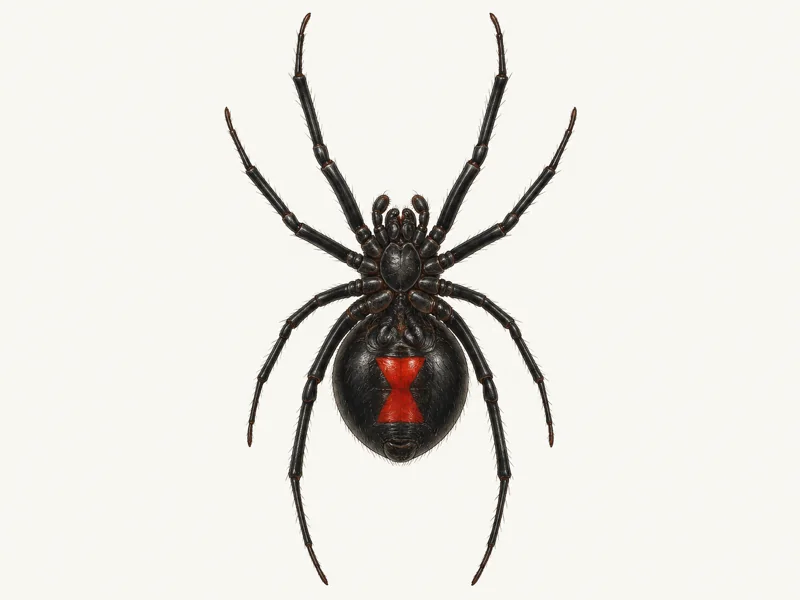
- Compact cephalothorax: Small glossy jet-black front body segment with no dorsal markings.
- Slender black legs: Eight long, glossy, tapered jet-black legs (third pair noticeably shorter than front/rear pairs).
- Globular abdomen: Large, rounded, shiny jet-black bulbous abdomen proportional to the slender legs.
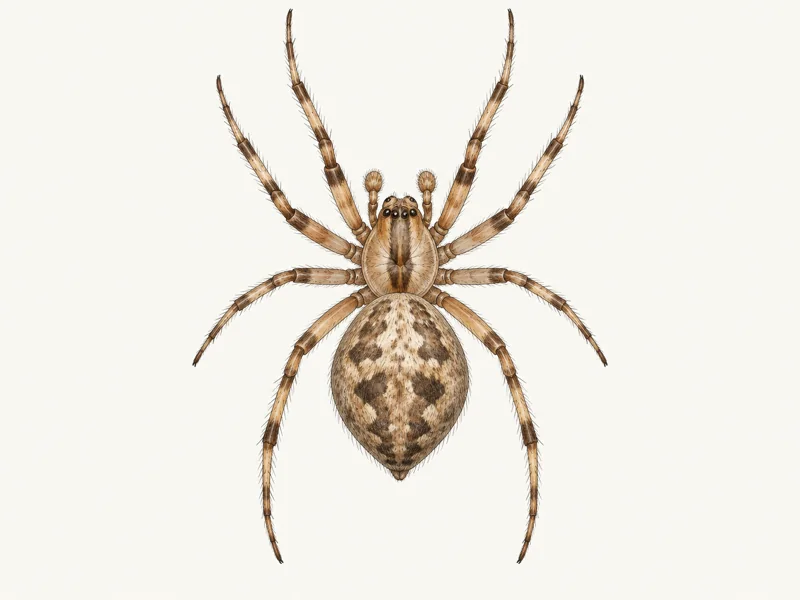
- Eight tiny eyes: Two curved rows of 8 small eyes on a smooth tan front cephalothorax.
- Banded slender legs: Eight long thin tan legs ringed with darker brown bands at the joints.
- Comb-footed hind legs: Fine bristles on hind legs help fling silk over trapped insects in cobwebs.
Quick Answer: A black widow (genus Latrodectus) is a glossy, jet-black spider with a round, globular abdomen and long, slender black legs, usually 8-15 mm in body length. Most other spiders (order Araneae) are brown, gray, or patterned and lack that shiny, bulbous black body. If it looks like a polished black bead on thin legs, treat it as a possible black widow and keep your hands away.
Every black widow is a spider, but most spiders are not black widows. Knowing the difference between a black widow and a common house spider helps homeowners respond calmly. Most spiders are harmless nuisances, while black widows are medically significant.
Key Visual & Physical Differences
All spiders share the same basic body plan. They have two main body segments, the cephalothorax and the abdomen, and eight jointed legs. Black widows follow this plan but have a few traits that stand out right away.
Black Widow Identification Marks
- Color: Glossy, jet-black body that often looks polished or wet.
- Abdomen: Large, round, and globular, much bigger than the front body segment.
- Legs: Long, slender, and black.
- Size: Body length of about 8-15 mm.
General Spider Identification Marks
- Color: Brown, tan, gray, striped, spotted, or banded. Few are solid glossy black.
- Body shape: Abdomen may be oval, elongated, or flattened rather than ball-like.
- Legs: Can be thick, hairy, short, or banded depending on the species.
- Size: Ranges widely, from about 3 mm to 80 mm across the order.
For quick black widow vs spider identification, focus on shine and shape. A dull, hairy, or patterned spider is almost never a black widow. A shiny black spider with a rounded, bead-like abdomen deserves caution and a closer look from a safe distance.
Behavior, Habitat & Danger Comparison
Black Widow Behavior and Habitat
Black widows are shy and spend most of their time hanging in messy, irregular webs. They favor dark, sheltered, undisturbed spots close to the ground. Common hiding places include:
- Woodpiles, stacked bricks, and stored lumber
- Garages, sheds, and crawl spaces
- Undersides of outdoor furniture, grills, and planters
- Utility boxes, water meter covers, and dense clutter
Bites usually happen when someone presses against a hidden spider, such as by reaching into a glove, boot, or box. Because black widows are medically significant, anyone bitten should call US Poison Control at 1-800-222-1222 and contact a doctor promptly. Do not rely on home remedies.
Common Spider Behavior and Habitat
Most household spiders, including cellar spiders, house spiders, wolf spiders, and jumping spiders, are classified as nuisances. They live in corners, windows, basements, and gardens, where they hunt insects. Bites from these spiders are uncommon and rarely serious, though anyone with an unusual reaction should still seek medical advice.
Which One Is Worse for Homeowners?
The black widow is the bigger concern because of its medically significant venom. General spiders mainly cause cobwebs and unease, and many actually help by eating flies, mosquitoes, and other pests. If you are unsure whether you have a black widow or a common spider, play it safe and avoid handling it.
Non-Chemical Control First
Integrated Pest Management (IPM) works well for both black widows and other spiders. Start with these steps:
- Exclusion: Seal cracks, gaps around pipes, and torn screens. Add door sweeps.
- Sanitation: Remove clutter, cardboard boxes, and debris from garages and basements.
- Yard cleanup: Store firewood off the ground and away from the house.
- Moisture control: Fix leaks and run a dehumidifier in damp areas to reduce the insects spiders feed on.
- Lighting: Switch to yellow or warm outdoor bulbs that attract fewer insects.
- Protective gear: Wear gloves when moving stored items, and shake out shoes and gear left outdoors.
When to Use Products or Call a Pro
Vacuum webs and egg sacs, then seal and discard the bag. If spiders persist, targeted pesticide treatments can help, but always follow the EPA product label exactly. For repeated black widow sightings near children, pets, or high-traffic areas, a licensed pest control professional is the safest choice.
Frequently Asked Questions
Is a black widow a type of spider?
Yes. Black widows belong to the genus Latrodectus within the spider order Araneae. They share the two-segment body and eight legs of all spiders.
What is the fastest way to tell a black widow from other spiders?
Look for a glossy, jet-black, ball-shaped abdomen on long, thin black legs. Dull, hairy, or patterned spiders are very unlikely to be black widows.
How big is a black widow compared to other spiders?
Black widows measure about 8-15 mm in body length. Spiders as a group range from roughly 3 mm to 80 mm, so size alone is not a reliable clue.
What should someone do after a suspected black widow bite?
Call US Poison Control at 1-800-222-1222 and contact a doctor right away. If possible, safely photograph the spider to help with identification.