Cellar Spider vs Spider: How to Tell Them Apart Fast
Quick ID Verdict: A cellar spider is a type of spider, a member of the family Pholcidae within the order Araneae. If you see a very pale tan, peanut-shaped body on extraordinarily long, thread-thin legs, you are looking at a cellar spider. If the body is compact or hairy and the legs are short or stout, it belongs to one of the many other spider families.
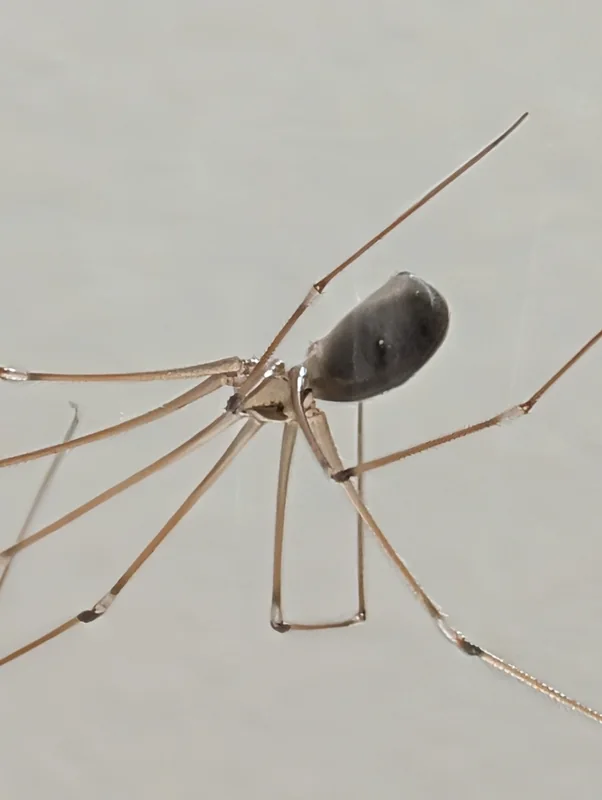
Cellar Spider
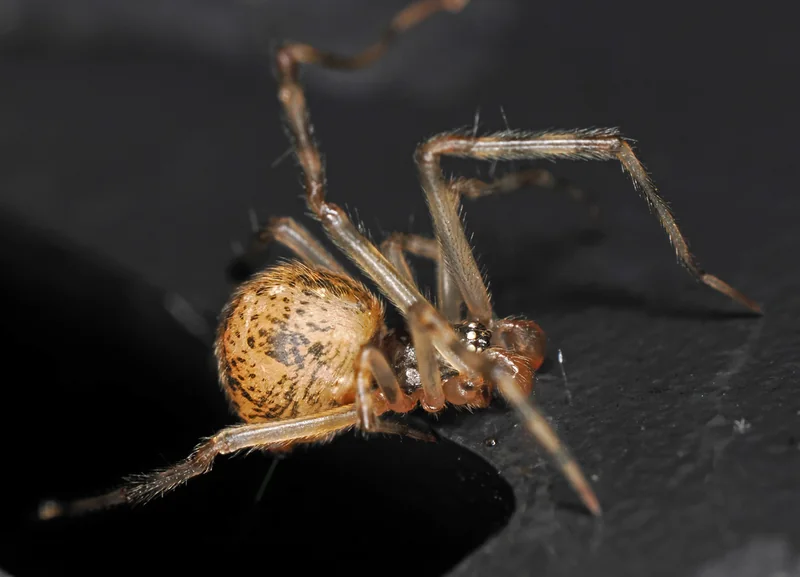
Spider
Side-by-Side Comparison Table
| Trait | Cellar Spider | Spider |
|---|---|---|
| Scientific Group | Pholcidae | Araneae |
| Category | Spider | Spider |
| Typical Size | 6–10 mm | 3–80 mm |
| Danger Level | None | Nuisance |
| Bites or Stings? | No | Yes |
| Peak US Months | May, June, July, August | June, July, August, September |
| Key ID Trait | Very pale tan peanut-shaped body with extraordinarily long, thread-thin legs (up to 50mm span) | Two main body segments (cephalothorax and abdomen) and eight jointed legs |
Cellar Spider vs. Spider: True Size Comparison
Side-by-Side Anatomy Blueprint
Compare body segments, antennae, leg count, and key markings directly before treating or removing either species.
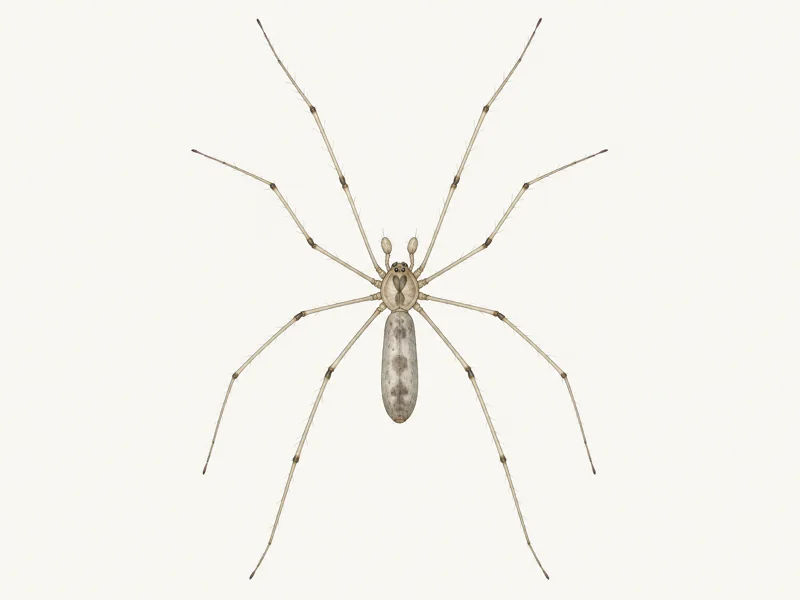
- Tiny pale carapace: Small translucent beige cephalothorax with a faint gray heart smudge (not a violin).
- Hair-thin long legs: Eight extraordinarily long, spindly thread-like legs up to 5× body length.
- Dark knee joints: Subtle dusky bands mark the delicate femur-tibia joints on pale legs.
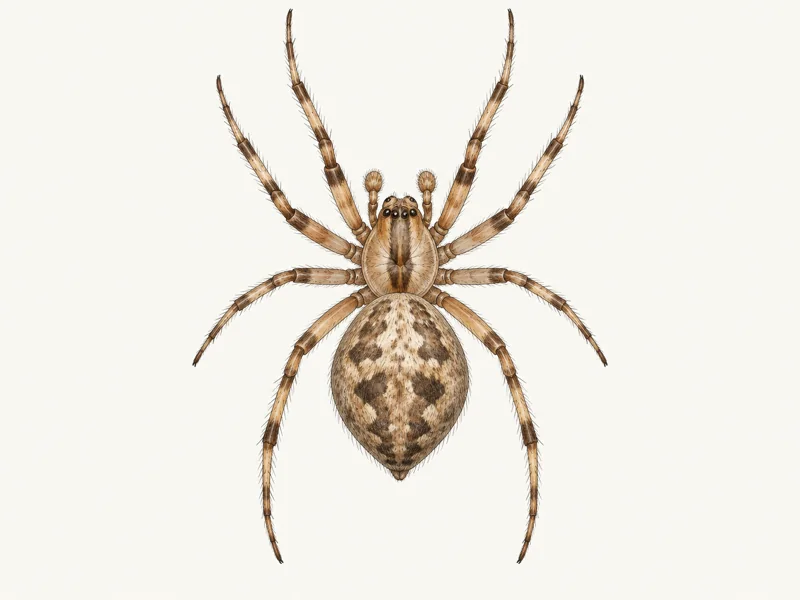
- Eight tiny eyes: Two curved rows of 8 small eyes on a smooth tan front cephalothorax.
- Banded slender legs: Eight long thin tan legs ringed with darker brown bands at the joints.
- Comb-footed hind legs: Fine bristles on hind legs help fling silk over trapped insects in cobwebs.
Quick Answer: A cellar spider is a type of spider, a member of the family Pholcidae within the order Araneae. If you see a very pale tan, peanut-shaped body on extraordinarily long, thread-thin legs, you are looking at a cellar spider. If the body is compact or hairy and the legs are short or stout, it belongs to one of the many other spider families. Cellar spiders pose no danger to people, and most other household spiders are only a nuisance.
Quick ID Verdict: Telling Them Apart in 3 Seconds
Look at the legs first. Cellar spiders have legs so long and thin they look like hair, with a span that can reach about 50 mm across a body only 6-10 mm long. Most other spiders have shorter, sturdier legs that are clearly jointed and proportional to a body that can range from 3 to 80 mm.
This comparison helps with identification because "spider" covers the entire order Araneae. Cellar spiders are one recognizable family inside that much larger group.
Key Visual & Physical Differences
All spiders share the same basic blueprint: two main body segments, the cephalothorax and the abdomen, and eight jointed legs. Cellar spiders follow that plan, but their proportions are distinctive and easy to recognize once you know what to look for.
Cellar Spiders (Pholcidae)
- Body size: 6-10 mm
- Body shape: Small, peanut-shaped, and very pale tan, often slightly translucent
- Legs: Extraordinarily long and thread-thin, with a span of up to 50 mm
- Overall look: Fragile and delicate, often mistaken for a "daddy longlegs"
Spiders in General (Araneae)
- Body size: 3-80 mm, depending on species
- Body shape: Two clear segments, the cephalothorax and abdomen, in many shapes and colors
- Legs: Eight jointed legs, usually shorter and thicker relative to the body
- Overall look: Ranges from tiny jumping spiders to large, hairy wolf spiders
If the legs dwarf the body and the spider looks almost weightless, it is almost certainly a cellar spider. A sturdier build, visible hairs, or bold markings point to another spider family.
Behavior, Habitat & Danger Comparison
Behavior
Cellar spiders build loose, irregular, tangled webs and hang upside down in them. When disturbed, many vibrate or "whirl" rapidly in the web, which makes them blur out of view. Other spiders vary widely. Some spin orb or funnel webs, while others, such as wolf and jumping spiders, hunt on foot without webs.
Habitat
True to their name, cellar spiders favor sheltered, undisturbed spots like basements, crawl spaces, garages, closets, and upper ceiling corners. Other spiders may live in gardens, woodpiles, window frames, or under furniture. Some wander indoors only in search of prey or shelter.
Danger Level
- Cellar spiders: Danger rated as none. They are not considered a health threat to people or pets.
- Spiders overall: Generally rated a nuisance. Most species are harmless, though a few North American spiders, such as widows and recluses, can be medically significant.
If anyone is bitten and develops worsening pain, spreading redness, or other symptoms, call US Poison Control at 1-800-222-1222 and contact a doctor. Do not rely on home remedies.
Which One Is Worse for Homeowners?
For most households, cellar spiders are the lesser concern. They are harmless, and they even eat other insects and spiders. Their main drawback is cosmetic, since abandoned cobwebs collect dust in corners and ceilings.
The broader "spider" category carries more variability. Most are simply a nuisance, but a few species warrant caution, so correct identification matters. Either way, the same Integrated Pest Management (IPM) steps work well:
- Exclusion: Seal cracks, install door sweeps, and repair window screens.
- Sanitation: Vacuum webs and egg sacs regularly, and reduce clutter in basements and garages.
- Moisture control: Run a dehumidifier and fix leaks, since damp areas attract the insects spiders eat.
- Lighting: Switch to yellow or LED outdoor bulbs that attract fewer insects.
If non-chemical methods fall short, use a registered product only as directed, and always follow the EPA product label. For suspected dangerous species, consult a licensed pest professional.
Frequently Asked Questions
Is a cellar spider actually a spider?
Yes. Cellar spiders belong to the family Pholcidae within the order Araneae, so they share the two body segments and eight jointed legs found in all spiders.
Are cellar spiders the same as daddy longlegs?
People often call them daddy longlegs, but that name is also used for harvestmen, which are not spiders. Cellar spiders spin webs and have two distinct body segments. Harvestmen have one fused, oval body.
Can cellar spiders bite humans?
Cellar spiders are rated as no danger to people. They rarely bite, and they are not considered a health risk.
Should I leave cellar spiders alone?
Many homeowners tolerate a few because they eat other pests. If webs become unsightly, vacuum them and reduce moisture and clutter rather than reaching for pesticides first.