Jumping Spider vs Spider: How to Tell Them Apart Fast
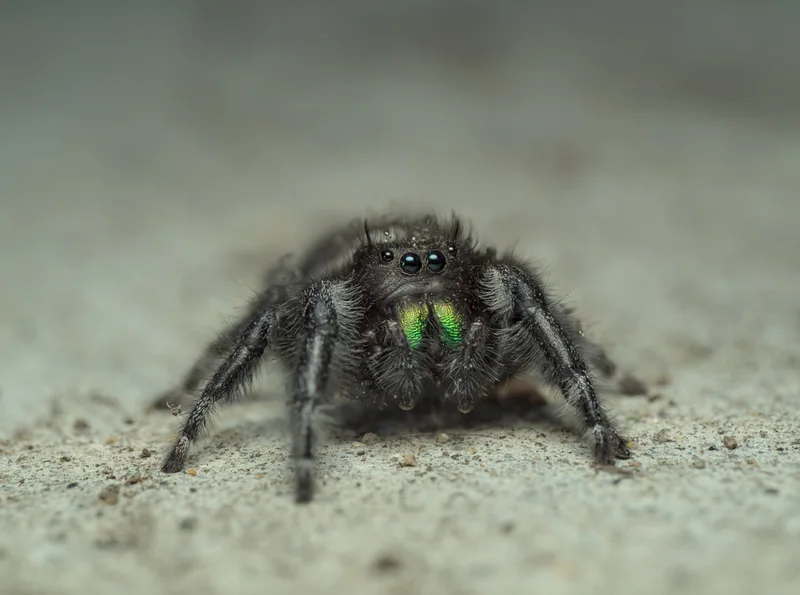
Quick ID Verdict: Every jumping spider is a spider, but not every spider is a jumping spider. Jumping spiders (family Salticidae) are compact, fuzzy hunters 4-18 mm long with short, sturdy legs, large forward-facing eyes, and often iridescent green or blue fangs.
Jumping Spider
Spider
Side-by-Side Comparison Table
| Trait | Jumping Spider | Spider |
|---|---|---|
| Scientific Group | Salticidae | Araneae |
| Category | Spider | Spider |
| Typical Size | 4–18 mm | 3–80 mm |
| Danger Level | None | Nuisance |
| Bites or Stings? | No | Yes |
| Peak US Months | May, June, July, September | June, July, August, September |
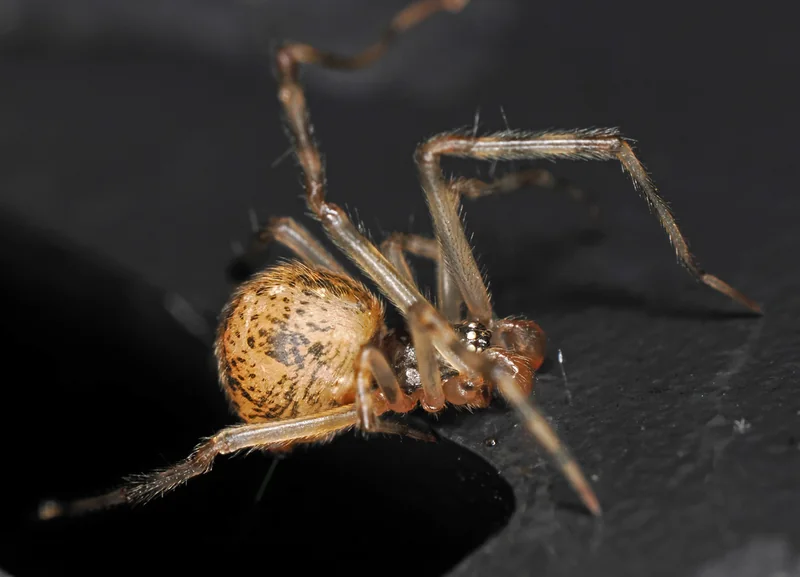
| Key ID Trait | Compact, fuzzy spider with short sturdy legs and iridescent green or blue fangs (chelicerae) in many species | Two main body segments (cephalothorax and abdomen) and eight jointed legs |
Jumping Spider vs. Spider: True Size Comparison
Side-by-Side Anatomy Blueprint
Compare body segments, antennae, leg count, and key markings directly before treating or removing either species.
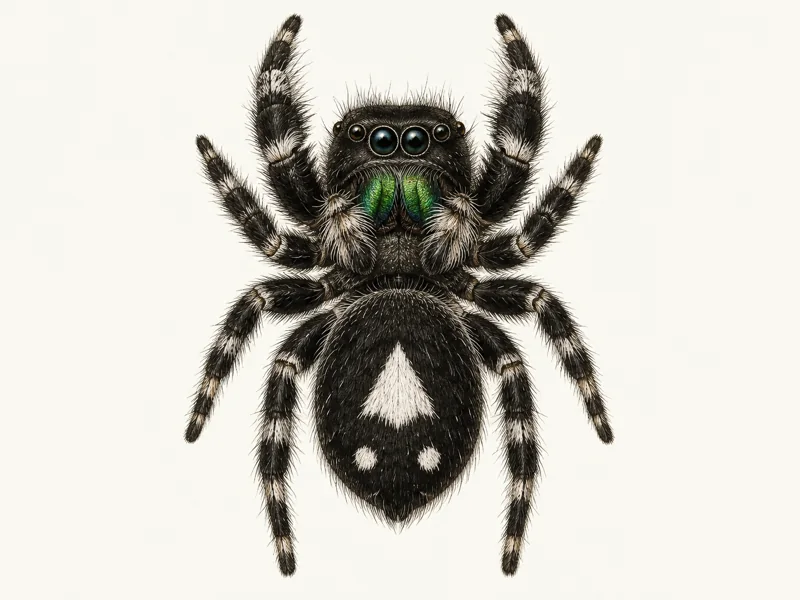
- Green chelicerae: Iridescent emerald-green jaws beneath huge forward-facing binocular eyes.
- Square furry carapace: Broad, stocky black cephalothorax built to support sharp hunting vision.
- Stocky banded legs: Eight sturdy fuzzy black-and-white legs (thick front pair grasps prey).
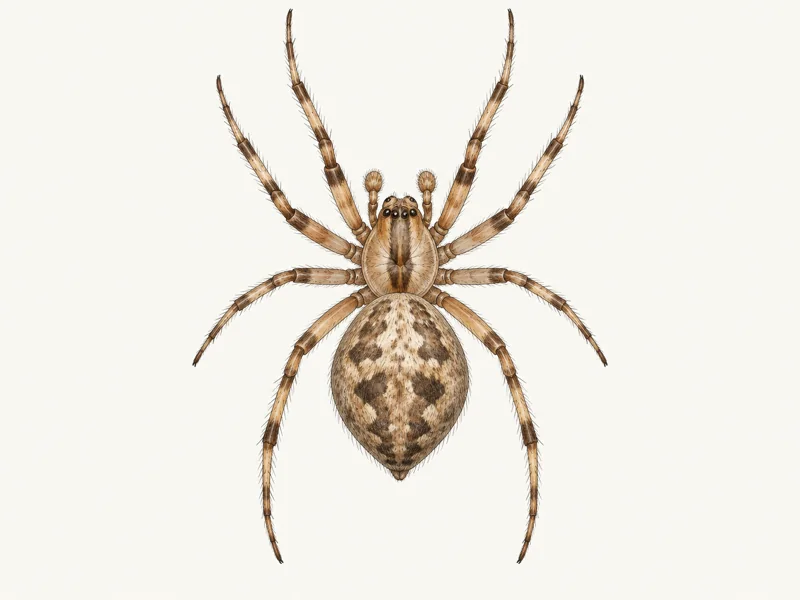
- Eight tiny eyes: Two curved rows of 8 small eyes on a smooth tan front cephalothorax.
- Banded slender legs: Eight long thin tan legs ringed with darker brown bands at the joints.
- Comb-footed hind legs: Fine bristles on hind legs help fling silk over trapped insects in cobwebs.
Quick Answer: Every jumping spider is a spider, but not every spider is a jumping spider. Jumping spiders (family Salticidae) are compact, fuzzy hunters 4-18 mm long with short, sturdy legs, large forward-facing eyes, and often iridescent green or blue fangs. The broader spider group (order Araneae) ranges from 3-80 mm and includes web builders, wanderers, and ambush hunters, all sharing two body segments and eight jointed legs.
3-Second ID Verdict: If the spider is small, fuzzy, stocky, and turns to watch you with big front eyes before hopping away, it is almost certainly a jumping spider. If it sits in a web, has long thin legs, or runs rather than leaps, it belongs to another spider family.
Key Visual & Physical Differences
The difference between a jumping spider and other spiders comes down to body shape, eyes, and legs. All spiders share the same basic plan of a cephalothorax, an abdomen, and eight jointed legs. Jumping spiders simply pack that plan into a short, muscular frame built for pouncing.
Jumping Spiders (Salticidae)
- Size: 4-18 mm, rarely larger than a fingernail.
- Body: Compact and often covered in fuzzy hairs or bold patterns.
- Legs: Short and sturdy, with front legs that are often thicker.
- Eyes: Two very large forward-facing eyes give a "cartoon face" look.
- Fangs: Chelicerae are iridescent green or blue in many species.
Spiders in General (Araneae)
- Size: 3-80 mm, from tiny sheet-web weavers to large wolf spiders and tarantulas.
- Body: Two main segments, the cephalothorax and abdomen.
- Legs: Eight jointed legs, often long and slender in web-building species.
- Eyes: Arrangement varies widely, and many species have small, hard-to-see eyes.
For quick jumping spider vs spider identification, look at the face. A jumping spider's oversized front eyes are visible even without magnification, while most other spiders look eyeless or beady at a glance.
Behavior, Habitat & Danger Comparison
How They Hunt
Jumping spiders hunt by sight. They stalk insects, then leap several times their body length, trailing a silk safety line. Many other spiders rely on webs, vibrations, or ambush and depend far less on vision.
Where They Live
Jumping spiders favor sunny spots such as fence posts, siding, window frames, and garden plants, and they are active during the day. Other spiders occupy nearly every habitat, including basements, garages, crawl spaces, eaves, and dense vegetation. Many are most active at night.
Danger Level
- Jumping spiders: Danger rating of none. They are shy, rarely bite, and usually flee or jump away when disturbed.
- Spiders overall: Danger rating of nuisance. Most species are harmless to people, though webs and indoor sightings can be bothersome.
A small number of spider species in the US are medically significant. If someone is bitten and has spreading pain, cramping, or other concerning symptoms, call US Poison Control at 1-800-222-1222 and contact a doctor. Do not rely on home remedies.
Which One Is Worse for Homeowners?
Between a jumping spider or spider of another type, the general spider group causes more household headaches. Web builders leave cobwebs in corners and on light fixtures, and some nocturnal species startle people in basements and bathrooms. Jumping spiders spin no catching webs and actually help by eating flies, gnats, and other small pests.
Non-Chemical IPM Steps First
- Exclusion: Seal gaps around windows, doors, utility lines, and foundation cracks, and repair torn screens.
- Sanitation: Vacuum webs, egg sacs, and corners regularly, and reduce clutter in garages and basements.
- Moisture control: Fix leaks and run a dehumidifier in damp areas that attract the insects spiders eat.
- Lighting: Use yellow or LED bulbs outdoors to draw fewer insects near entryways.
- Catch and release: Move a stray jumping spider outdoors with a cup and a sheet of paper.
If populations stay high after these steps, a targeted perimeter treatment may help. Always choose an EPA-registered product and follow the label directions exactly, or hire a licensed pest professional.
Frequently Asked Questions
Is a jumping spider actually a spider?
Yes. Jumping spiders belong to the family Salticidae within the spider order Araneae. They have the same two body segments and eight jointed legs as all spiders.
Are jumping spiders dangerous to people or pets?
No. Jumping spiders carry a danger rating of none, and they are timid animals that prefer to escape. Bites are rare and generally occur only when one is pressed against skin.
Why do jumping spiders seem to look at you?
Their large forward-facing eyes give them sharp vision for hunting. They often turn to track movement, which is why they appear curious when people approach.
Should homeowners remove jumping spiders indoors?
Removal is optional since they help control small insects. If one is unwanted, gently relocate it outdoors and seal entry gaps to limit future visitors.