Spiders in North Dakota: Species, Seasons, and Prevention Guide
Quick Answer: Yes, spiders live across North Dakota, though GBIF records are thin: only 2 verified sightings, rated rare, in Grant and McKenzie counties. The recorded species is Pelegrina insignis, a small jumping spider, with sightings peaking in June and July. Spiders here are generally a nuisance, not a danger.
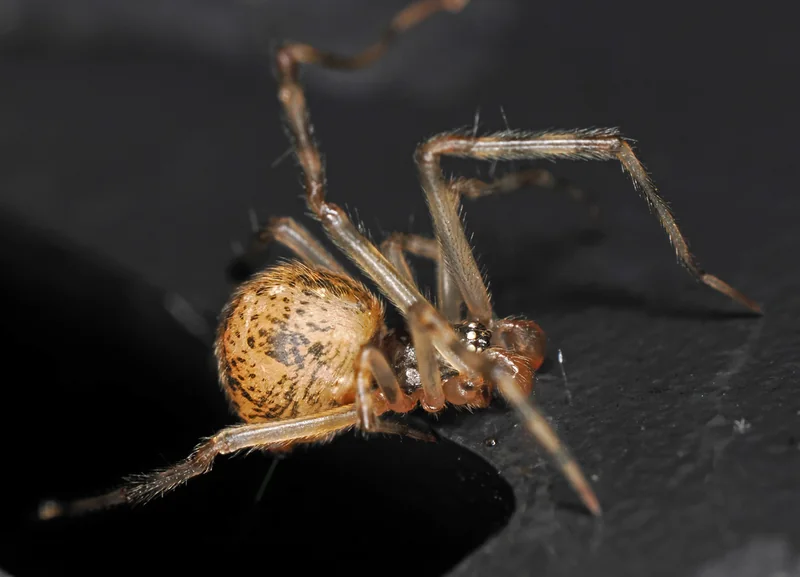
When Spiders Are Most Active in North Dakota
Now (November): Lower Outdoor ActivityVerified North Dakota Counties, Species & US Range
Counties with Verified Observations
- Grant
- McKenzie
Species Recorded in North Dakota
| Species | Scientific Name | GBIF Records |
|---|---|---|
| Pelegrina insignis | Pelegrina insignis | 1 |
How North Dakota Compares to Neighboring States
Note: Wildlife does not follow state or county lines. GBIF totals reflect verified citizen and museum records, so low counts in a neighboring county do not guarantee absence.
How to Identify Spiders
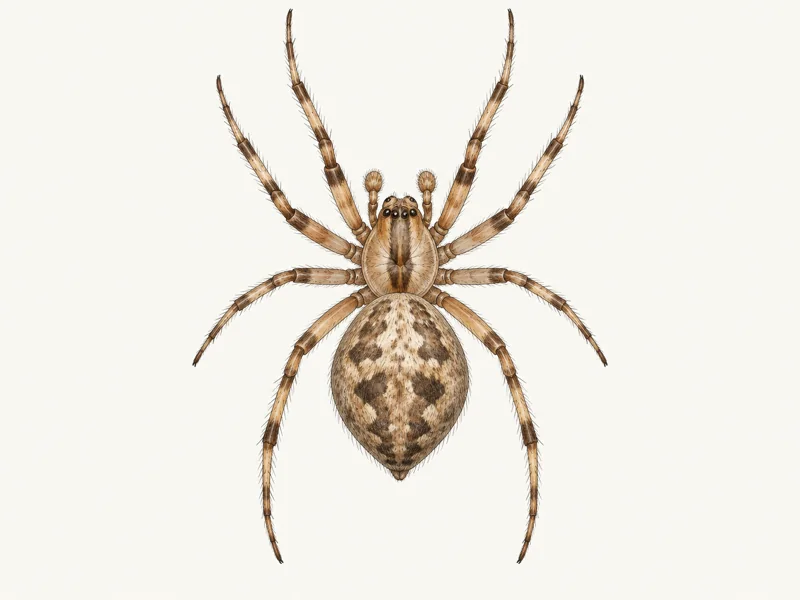
Annotated Anatomy Key (Spider)
- Eight tiny eyes: Two curved rows of 8 small eyes on a smooth tan front cephalothorax.
- Banded slender legs: Eight long thin tan legs ringed with darker brown bands at the joints.
- Comb-footed hind legs: Fine bristles on hind legs help fling silk over trapped insects in cobwebs.
- Mottled globular abdomen: Bulbous cream-and-brown patterned teardrop abdomen—lacks any red hourglass.
Spiders Field Checklist
- Two main body segments (cephalothorax and abdomen) and eight jointed legs
- No wings or antennae; most species have eight eyes (recluses have six)
- Nearly all US spiders are harmless beneficial predators of flies and mosquitoes
- Only widow spiders (Latrodectus) and recluse spiders (Loxosceles) are medically significant in the US
Side-by-Side Look-Alike Comparisons
Spiders Size at True Relative Scale
Quick Answer: Yes, spiders live across North Dakota, though GBIF records are thin: only 2 verified sightings, rated rare, in Grant and McKenzie counties. The recorded species is Pelegrina insignis, a small jumping spider, with sightings peaking in June and July. Spiders here are generally a nuisance, not a danger.
Where Spiders Live in North Dakota
People often ask, are there spiders in North Dakota? There are. The state sits in the Continental northern plains (USDA zones 3b-4b), with warm summers and long, frigid winters. Spiders (order Araneae) occupy grasslands, shelterbelts, farmsteads, and the edges of buildings.
The two verified GBIF records come from Grant and McKenzie counties, both in the western and southwestern part of the state. Both are for Pelegrina insignis, a jumping spider. Two records reflect how few observations have been submitted, not how many spiders are actually present.
- Outdoors: tall grass, garden foliage, woodpiles, under bark and rocks, and eaves.
- Indoors: basements, crawl spaces, garages, window wells, and storage areas.
- Winter refuges: heated buildings, where some spiders move as temperatures fall.
When Spiders Are Most Active in North Dakota
North Dakota spider season follows the short growing season. GBIF sightings peak in June and July, when warm days drive insect prey and spider activity upward. Jumping spiders like Pelegrina insignis hunt by day on sunny plants, fences, and walls.
Late summer and early fall bring more spiders indoors as nights cool and mature spiders wander in search of mates and shelter. During the deep cold of winter, most outdoor spiders are dormant or hidden, so indoor sightings drop to those living in basements and other sheltered spots.
Look-Alikes Frequently Mistaken for Spiders
For North Dakota spider identification, start with body shape, web type, and habitat. Several local groups cause the most confusion. Most are harmless, but the black widow deserves care.
Common Local Spiders
- Jumping spiders (including Pelegrina insignis): small, compact, with large front eyes and quick, hopping movement. Harmless to people.
- Wolf spiders: hairy, brown to gray, fast-running ground hunters that build no capture web. Often mistaken for something more dangerous.
- Cellar spiders: very long, thin legs and a small body, found hanging in loose webs in basements and corners.
- Orb weavers: build the classic wheel-shaped web outdoors, often across porches and gardens at night.
- Black widows: glossy black with a reddish hourglass marking underneath, found in undisturbed, sheltered spots such as woodpiles and sheds.
If a bite from a suspected black widow occurs, or symptoms develop after any bite, call US Poison Control at 1-800-222-1222 and contact a doctor. Do not try home remedies. Identification from photos is best confirmed by a university extension service or a pest professional.
How to Keep Spiders Out of Your North Dakota Home
For how to prevent spiders in North Dakota, begin with non-chemical integrated pest management. Spiders follow their prey, so reducing insects and entry points does most of the work.
- Exclusion: seal gaps around pipes, foundation cracks, and utility lines. Add door sweeps and repair torn window screens.
- Sanitation: vacuum webs, egg sacs, and corners regularly. Reduce clutter in basements, garages, and closets.
- Moisture control: run a dehumidifier in damp basements and fix leaks, which draw the insects spiders eat.
- Outdoor tidying: keep firewood, lumber, and debris away from the foundation, and trim vegetation touching the house.
- Lighting: switch exterior lights to yellow bulbs or move them away from doors to attract fewer insects.
- Traps: sticky traps in corners help monitor activity.
If you use any insecticide, choose a product labeled for spiders and follow the EPA-approved label exactly, including where it may be applied.
When to Call a Licensed North Dakota Pest Professional
- You find black widows, especially several, or egg sacs near living areas.
- Spider numbers stay high after sealing and cleaning.
- Spiders keep appearing in children's rooms, kitchens, or other heavily used spaces.
- You cannot identify a spider and someone in the home has been bitten.
IPM Prevention Checklist for North Dakota Homes
- Switch exterior entry lights to warm yellow bulbs to avoid attracting spider prey
- Seal door sweeps, window screens, and foundation cracks
- Declutter basements and garages using sealed plastic containers
 EXCLUSION BLUEPRINT
Inspect eaves, screens, door sweeps, foundation cracks, and utility penetrations around North Dakota homes before peak season.
Spiders in North Dakota: Frequently Asked Questions
Are there spiders in North Dakota?
Yes. Spiders occur statewide, though GBIF has only 2 verified records, both of Pelegrina insignis in Grant and McKenzie counties. Few submissions explain the low count.
When is North Dakota spider season?
Activity peaks in June and July. Spiders also move indoors in late summer and fall as temperatures drop.
Are North Dakota spiders dangerous?
Most are nuisance pests. Black widows are the main concern. After any worrying bite, call Poison Control at 1-800-222-1222 and see a doctor.
What is the best way to prevent spiders indoors?
Seal entry points, reduce clutter, control moisture, and vacuum webs regularly. Use insecticides only as a last step and follow the EPA label.
Sources & Verification
- UC IPM — Spiders
- Ohio State University Extension — Common Spiders
- GBIF Global Biodiversity Occurrence Records
Data refreshed · Editorial & GBIF Methodology