Jumping Spiders in South Carolina: Identification, Season, and Prevention
Quick Answer: Yes, jumping spiders are common in South Carolina, with 4,398 verified GBIF sightings statewide. They pose no danger to people and are generally beneficial, since they eat flies, mosquitoes, and other small pests. Activity peaks in April, May, June, and August.
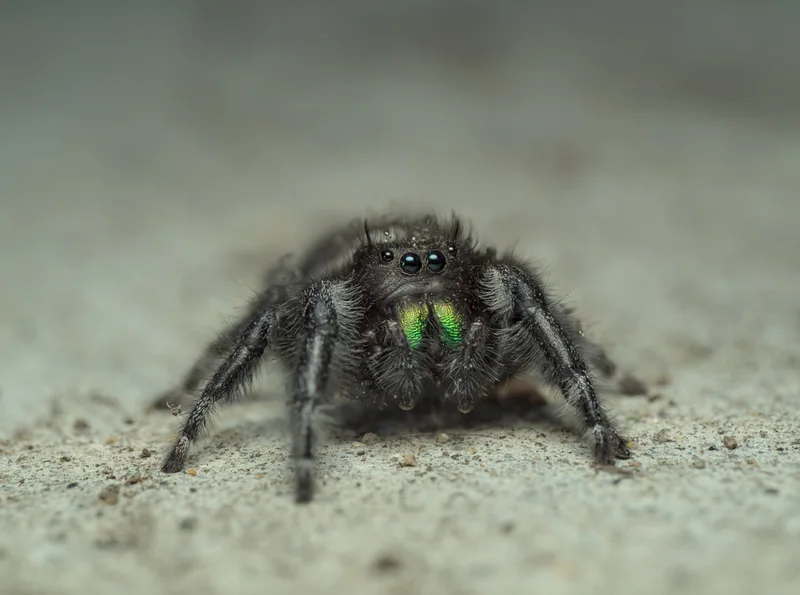
When Jumping Spiders Are Most Active in South Carolina
Now (November): Lower Outdoor ActivityVerified South Carolina Counties, Species & US Range
Counties with Verified Observations
- Charleston
- Spartanburg
- Richland
- Greenville
- Berkeley
- Pickens
- Beaufort
- Anderson
- Georgetown
- Oconee
Species Recorded in South Carolina
| Species | Scientific Name | GBIF Records |
|---|---|---|
| Twin-flagged Jumping Spider | Anasaitis canosa | 1,093 |
| magnolia green jumper | Lyssomanes viridis | 748 |
| Familiar Jumping Spider | Platycryptus undatus | 485 |
How South Carolina Compares to Neighboring States
Note: Wildlife does not follow state or county lines. GBIF totals reflect verified citizen and museum records, so low counts in a neighboring county do not guarantee absence.
How to Identify Jumping Spiders
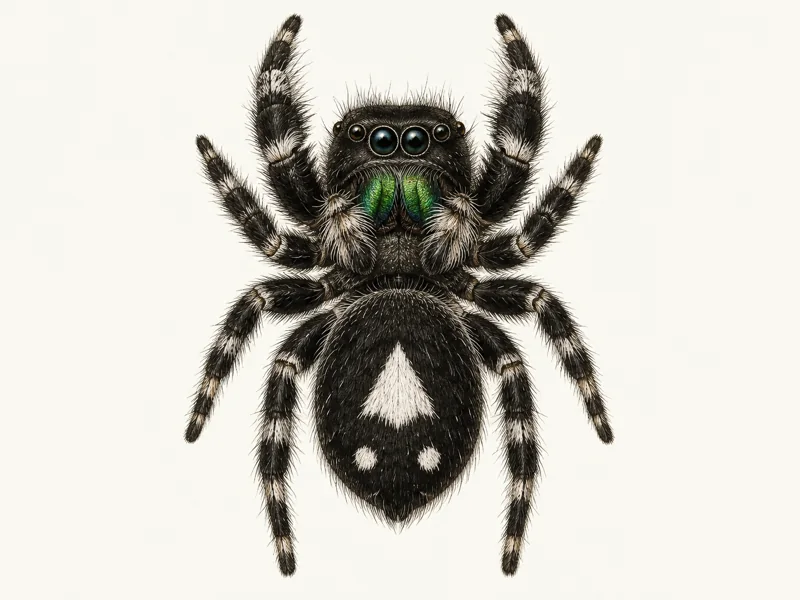
Annotated Anatomy Key (Jumping Spider)
- Green chelicerae: Iridescent emerald-green jaws beneath huge forward-facing binocular eyes.
- Square furry carapace: Broad, stocky black cephalothorax built to support sharp hunting vision.
- Stocky banded legs: Eight sturdy fuzzy black-and-white legs (thick front pair grasps prey).
- White center triangle: Distinct white (or orange in juveniles) triangular spot plus two rear dots.
Jumping Spiders Field Checklist
- Compact, fuzzy spider with short sturdy legs and iridescent green or blue fangs (chelicerae) in many species
- Four huge forward-facing eyes providing sharp vision; turns its head to watch movement
- Moves in short, precise bursts and leaps multiple body lengths to catch flies
- Completely harmless to humans
Side-by-Side Look-Alike Comparisons
Jumping Spiders Size at True Relative Scale
Where Jumping Spiders Live in South Carolina
Jumping spiders (family Salticidae) turn up in every part of the state. GBIF records are densest in Charleston, Spartanburg, Richland, Greenville, and Berkeley counties, which likely reflects both large human populations and lots of suitable habitat. South Carolina's humid subtropical climate (USDA zones 7a to 9a) supports them from the coast to the Upstate.
These spiders hunt by sight rather than building capture webs. Look for them on sunny surfaces:
- Fence posts, siding, and porch rails
- Window sills and door frames
- Tree trunks, shrubs, and garden foliage
- Outdoor furniture and stacked firewood
Three species are recorded in the state's GBIF data:
- Twin-flagged Jumping Spider (Anasaitis canosa): a small, dark spider with pale markings, often seen on walls and bark.
- Magnolia green jumper (Lyssomanes viridis): a pale, translucent green spider found on leaves.
- Familiar Jumping Spider (Platycryptus undatus): a gray-brown, flattened spider common on fences and siding.
When Jumping Spiders Are Most Active in South Carolina
The South Carolina jumping spider season runs through the warm months. Recorded sightings peak in April, May, June, and August, when temperatures are mild to hot and insect prey is abundant. Spring peaks often reflect spiders becoming active and mating as days lengthen.
Mild coastal winters mean some individuals can be found on warm days outside the peak. Indoors, a stray jumper may appear at any time of year.
Identifying Jumping Spiders and Their Look-Alikes
For South Carolina jumping spider identification, start with the eyes and the movement. Jumping spiders have a large pair of forward-facing eyes, with several smaller eyes around a boxy head region. They move in short, quick bursts, and they often turn to face you.
Other clues include a compact, stocky body, short legs, and a habit of stalking prey and leaping onto it. They usually stay in sunny, open spots.
Look-Alikes Frequently Mistaken for Jumping Spiders
Several other spiders in South Carolina get confused with jumpers, mainly because they are active, hairy, and visible during the day.
- Wolf spiders: larger and longer-legged, with two big eyes in a row of eight and a pattern of three rows. They run across the ground rather than leaping and are often seen at night. Their eye arrangement is the best way to tell them apart.
- Other spiders in general: many small, brownish house and garden spiders look similar at a glance. Jumping spiders stand apart by their large front-facing eyes and short pounces, and they do not sit in a web.
If you are unsure, take a clear photo and compare it with records from a university extension service or an entomology resource, or ask a local expert.
How to Keep Jumping Spiders Out of Your South Carolina Home
Anyone wondering how to prevent jumping spiders in South Carolina should begin with non-chemical steps. These spiders follow their food, so reducing insects is the most effective long-term approach.
- Exclusion: seal cracks around windows, doors, and utility lines. Repair torn screens and install door sweeps.
- Sanitation: reduce clutter, and clear leaf litter, stacked wood, and debris from against the foundation.
- Moisture control: fix leaks and run dehumidifiers in damp rooms, which helps reduce the insects spiders hunt.
- Lighting: swap bright white outdoor bulbs for yellow or warm LED lights, or turn them off when not needed, so fewer insects gather.
- Removal: catch individual spiders with a cup and card and release them outdoors, or vacuum them up.
Insecticides are rarely needed for jumping spiders. If you choose to use any product, read the label, and follow all EPA label directions exactly.
When to Call a Professional
Contact a licensed South Carolina pest professional if you notice:
- Spiders appearing indoors in large numbers, which may signal a bigger insect problem
- Persistent insect infestations feeding the spiders
- Uncertainty about whether a spider is harmless, especially if you suspect a medically significant species
Jumping spiders are not considered dangerous, and bites are rare. If anyone has a bite and symptoms that worry you, call US Poison Control at 1-800-222-1222 and see a doctor.
IPM Prevention Checklist for South Carolina Homes
- Maintain intact window screens if you prefer keeping them outdoors
 EXCLUSION BLUEPRINT
Inspect eaves, screens, door sweeps, foundation cracks, and utility penetrations around South Carolina homes before peak season.
Jumping Spiders in South Carolina: Frequently Asked Questions
Are there jumping spiders in South Carolina?
Yes. They are common statewide, with 4,398 verified GBIF sightings, and are especially well recorded in Charleston, Spartanburg, Richland, Greenville, and Berkeley counties.
Are jumping spiders in South Carolina dangerous?
No. Their danger level is considered none. They are shy, rarely bite, and help control insects around homes and gardens.
What is the best time of year to see them?
Sightings peak in April, May, June, and August. Warm, sunny days are best for spotting them on fences, siding, and foliage.
Do I need pesticides to get rid of them?
Usually not. Sealing entry points, reducing clutter and moisture, and cutting down on other insects typically solves the problem. If you use any product, follow the EPA label.
Sources & Verification
Data refreshed · Editorial & GBIF Methodology