Jumping Spiders in California: Identification, Season, and Prevention
Quick Answer: Yes, jumping spiders in California are common, with more than 51,700 verified GBIF sightings across the state. These small, big-eyed hunters pose essentially no danger to people or pets and actually help control garden and household insects. Most homeowners see them on sunny walls, windowsills, and patio furniture, especially in spring and early fall.
When Jumping Spiders Are Most Active in California
Now (November): Lower Outdoor ActivityVerified California Counties, Species & US Range
Counties with Verified Observations
- Los Angeles
- San Diego
- Santa Cruz
- Solano
- Orange
- Alameda
- San Bernardino
- Riverside
- Sacramento
- Ventura
Species Recorded in California
| Species | Scientific Name | GBIF Records |
|---|---|---|
| Bold Jumper | Phidippus audax | 10,289 |
| Johnson jumper | Phidippus johnsoni | 6,844 |
| Jumping spider | Menemerus semilimbatus | 4,829 |
How California Compares to Neighboring States
Note: Wildlife does not follow state or county lines. GBIF totals reflect verified citizen and museum records, so low counts in a neighboring county do not guarantee absence.
How to Identify Jumping Spiders
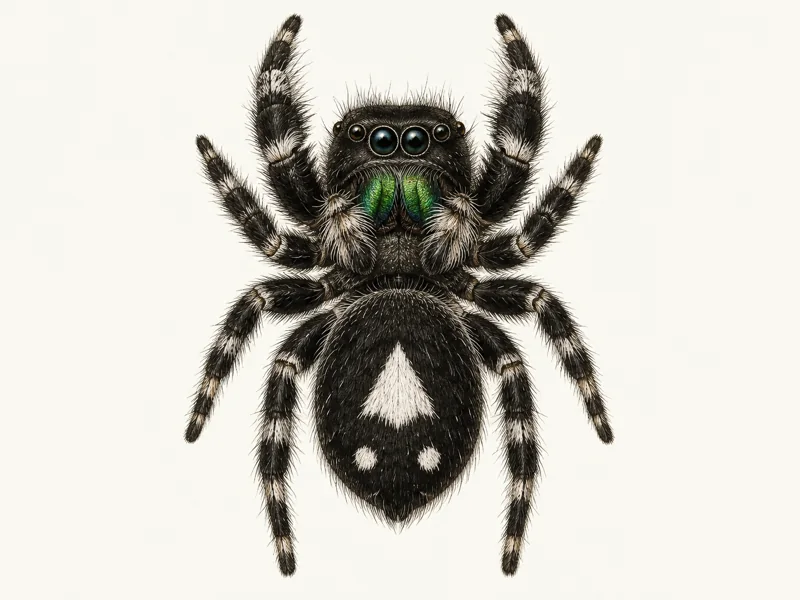
Annotated Anatomy Key (Jumping Spider)
- Green chelicerae: Iridescent emerald-green jaws beneath huge forward-facing binocular eyes.
- Square furry carapace: Broad, stocky black cephalothorax built to support sharp hunting vision.
- Stocky banded legs: Eight sturdy fuzzy black-and-white legs (thick front pair grasps prey).
- White center triangle: Distinct white (or orange in juveniles) triangular spot plus two rear dots.
Jumping Spiders Field Checklist
- Compact, fuzzy spider with short sturdy legs and iridescent green or blue fangs (chelicerae) in many species
- Four huge forward-facing eyes providing sharp vision; turns its head to watch movement
- Moves in short, precise bursts and leaps multiple body lengths to catch flies
- Completely harmless to humans
Side-by-Side Look-Alike Comparisons
Jumping Spiders Size at True Relative Scale
Where Jumping Spiders Live in California
Anyone wondering whether there are jumping spiders in California only needs to look at a sunny fence or porch rail. The family Salticidae thrives across the state's Mediterranean coastal areas, arid inland deserts, and even alpine mountain zones, covering USDA hardiness zones 5a through 11a. They prefer warm, bright surfaces where they can stalk prey by sight rather than catch it in webs.
GBIF occurrence records show the most sightings in these counties:
- Los Angeles County, where urban walls, gardens, and stucco homes offer ideal hunting ground
- San Diego County, with mild weather supporting activity much of the year
- Santa Cruz County, where coastal gardens and wooded edges host many species
- Solano County, including agricultural and suburban areas
- Orange County, especially around landscaped yards and patios
Species Recorded in California
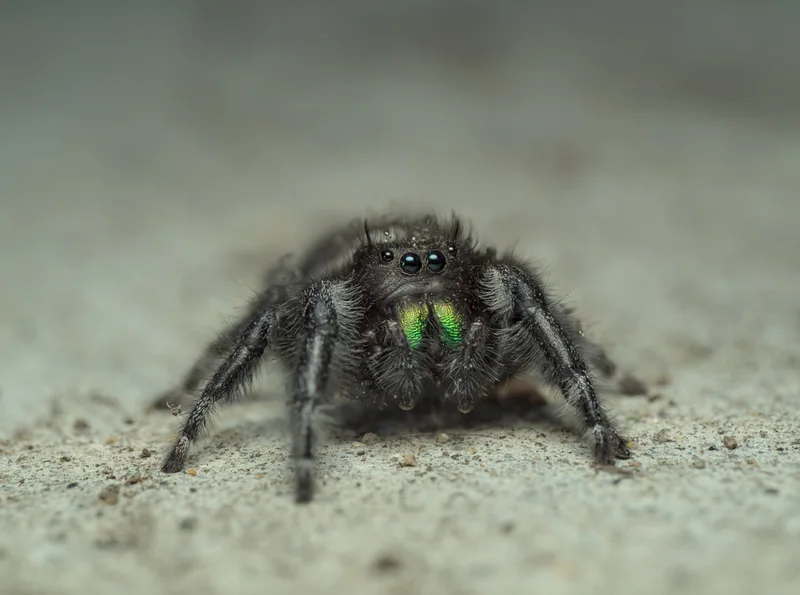
Three species stand out in the verified records. The Bold Jumper (Phidippus audax) is black with a white or orange-tinged spot pattern on the abdomen and iridescent green or blue mouthparts. The Johnson jumper (Phidippus johnsoni) is a western species often recognized by its bright red abdomen, sometimes with a black stripe. Menemerus semilimbatus, a gray-brown jumping spider with pale edging, is often found on building walls in urban areas.
When Jumping Spiders Are Most Active in California
California jumping spider season peaks in April, May, and June, with a second surge in October. Spring warmth brings out maturing spiders and abundant insect prey, while October activity often reflects wandering adults and spiderlings dispersing before cooler weather.
In mild coastal and Southern California areas, a few individuals may appear year-round on sunny days. In colder mountain zones, activity is shorter and concentrated in the warmer months. Homeowners often notice them indoors during these peaks after they wander in through open doors or gaps.
Look-Alikes Frequently Mistaken for Jumping Spiders
Good California jumping spider identification starts with the eyes. Jumping spiders have two very large, forward-facing central eyes that give them a distinctive "face," along with compact, fuzzy bodies and short, sturdy legs. They move in quick, jerky bursts and often turn to watch a person approaching.
Wolf Spiders
Wolf spiders are also hairy, ground-hunting spiders found in California, but they are usually larger and longer-legged. Their eye arrangement includes a row of small eyes below two larger ones, and they run rather than jump. They are typically brown or gray with striped patterns and are most often seen at night.
Other Common Spiders
Many other California spiders are confused with jumpers simply because they appear on walls or windows. The key differences are that most other spiders build webs, have smaller eyes, and lack the jumper's alert, head-turning behavior. If a spider sits in a web, it is not a jumping spider.
How to Keep Jumping Spiders Out of Your California Home
Learning how to prevent jumping spiders in California mostly means reducing the insects they hunt and sealing entry points. Because these spiders are harmless and beneficial, non-chemical integrated pest management (IPM) is the best approach, consistent with general university cooperative extension guidance.
- Seal gaps: Caulk cracks around windows, doors, and utility lines, and repair torn screens.
- Install door sweeps: Close gaps under exterior doors, especially garage and patio doors.
- Reduce outdoor lighting: Porch lights attract insects that draw spiders; use yellow bulbs or motion sensors.
- Trim vegetation: Keep shrubs and vines pruned back from walls and windows.
- Declutter: Remove stacked boxes, firewood, and debris near the foundation.
- Relocate gently: Capture an indoor spider under a cup with a card and release it outside.
- Vacuum: Remove spiders and egg sacs from corners and window frames.
Pesticides are rarely needed for jumping spiders. If any product is used, homeowners should choose one labeled for spiders and follow the EPA product label exactly.
When to Call a Licensed California Pest Professional
- Spiders keep appearing indoors despite sealing and cleanup.
- A large insect problem is attracting many spiders.
- You cannot identify the spider and are concerned it may be a different species.
- Structural gaps are too extensive or hard to reach to seal yourself.
IPM Prevention Checklist for California Homes
- Maintain intact window screens if you prefer keeping them outdoors
 EXCLUSION BLUEPRINT
Inspect eaves, screens, door sweeps, foundation cracks, and utility penetrations around California homes before peak season.
Jumping Spiders in California: Frequently Asked Questions
Are jumping spiders in California dangerous?
No. Jumping spiders have a danger level of none for people and pets. They rarely bite and only do so if pressed against skin; anyone with an unusual reaction to any bite should contact a doctor or Poison Control at 1-800-222-1222.
What is the most common jumping spider in California?
The Bold Jumper (Phidippus audax) and the Johnson jumper (Phidippus johnsoni) are among the most recognizable species recorded in the state, along with Menemerus semilimbatus on urban walls.
Which California counties have the most jumping spider sightings?
Verified GBIF records show the most sightings in Los Angeles, San Diego, Santa Cruz, Solano, and Orange counties.
When do jumping spiders show up most in California?
Activity peaks in April, May, and June, with another rise in October. Coastal and Southern California may see some activity year-round.
Sources & Verification
Data refreshed · Editorial & GBIF Methodology