Jumping Spiders in Tennessee: Identification, Season, and Prevention
Quick Answer: Yes, jumping spiders are common in Tennessee, with 6,657 verified GBIF sightings statewide. They pose no danger to people and help control small insects. Activity peaks from April through July, and simple exclusion and sanitation keep them from wandering indoors.
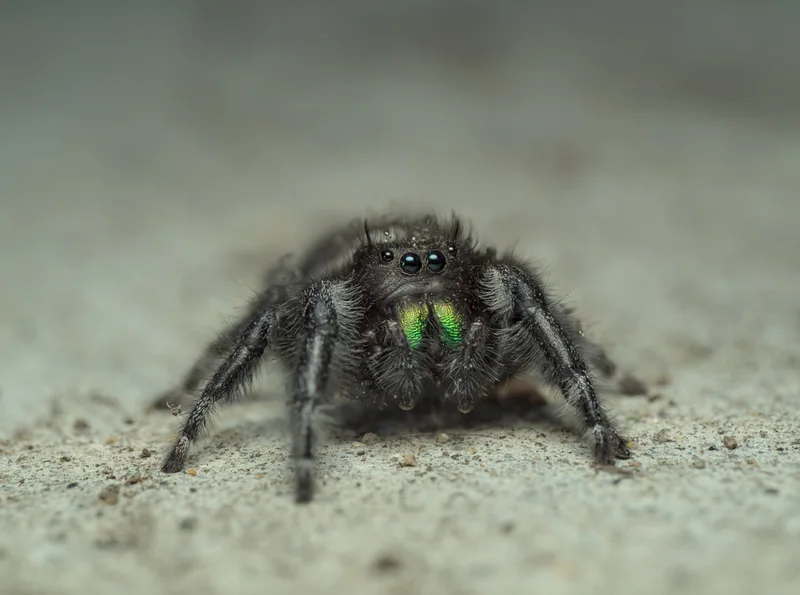
When Jumping Spiders Are Most Active in Tennessee
Now (November): Lower Outdoor ActivityVerified Tennessee Counties, Species & US Range
Counties with Verified Observations
- Knox
- Shelby
- Hamilton
- Sullivan
- Blount
- Greene
- Davidson
- Claiborne
- Anderson
- Jackson
Species Recorded in Tennessee
| Species | Scientific Name | GBIF Records |
|---|---|---|
| Familiar Jumping Spider | Platycryptus undatus | 1,235 |
| Bold Jumper | Phidippus audax | 1,154 |
| Jumping Spiders | Paraphidippus aurantius | 648 |
How Tennessee Compares to Neighboring States
Note: Wildlife does not follow state or county lines. GBIF totals reflect verified citizen and museum records, so low counts in a neighboring county do not guarantee absence.
How to Identify Jumping Spiders
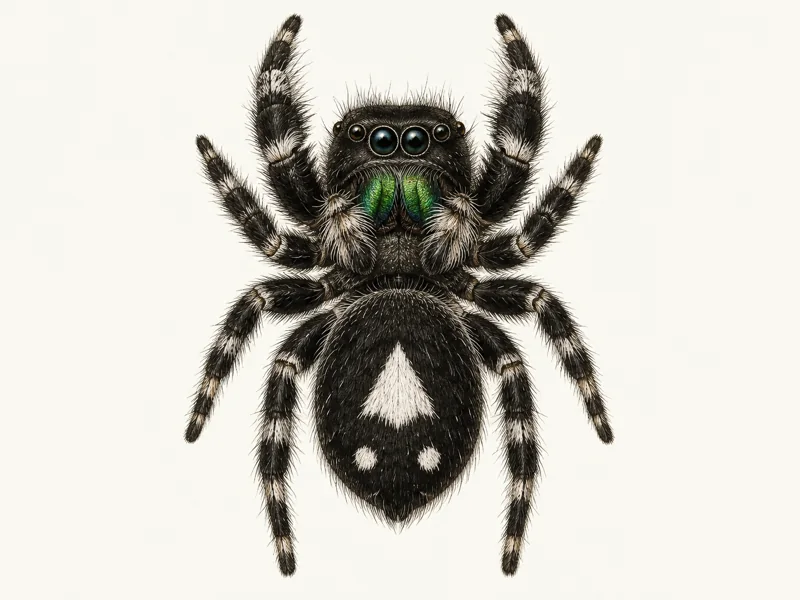
Annotated Anatomy Key (Jumping Spider)
- Green chelicerae: Iridescent emerald-green jaws beneath huge forward-facing binocular eyes.
- Square furry carapace: Broad, stocky black cephalothorax built to support sharp hunting vision.
- Stocky banded legs: Eight sturdy fuzzy black-and-white legs (thick front pair grasps prey).
- White center triangle: Distinct white (or orange in juveniles) triangular spot plus two rear dots.
Jumping Spiders Field Checklist
- Compact, fuzzy spider with short sturdy legs and iridescent green or blue fangs (chelicerae) in many species
- Four huge forward-facing eyes providing sharp vision; turns its head to watch movement
- Moves in short, precise bursts and leaps multiple body lengths to catch flies
- Completely harmless to humans
Side-by-Side Look-Alike Comparisons
Jumping Spiders Size at True Relative Scale
Quick Answer: Yes, jumping spiders are common in Tennessee, with 6,657 verified GBIF sightings statewide. They pose no danger to people and help control small insects. Activity peaks from April through July, and simple exclusion and sanitation keep them from wandering indoors.
Where Jumping Spiders Live in Tennessee
Anyone asking whether there are jumping spiders in Tennessee will find the answer is a firm yes. GBIF records place the most sightings in Knox, Shelby, Hamilton, Sullivan, and Blount counties. That spread covers East Tennessee's mountain foothills, the Memphis area in the west, and the Chattanooga region in the southeast.
Three species appear in the records:
- Familiar Jumping Spider (Platycryptus undatus): a flat, gray-brown spider often found on tree bark, fence posts, and house siding.
- Bold Jumper (Phidippus audax): a stocky, black spider, usually with white spots and often with iridescent green mouthparts.
- Paraphidippus aurantius: a colorful jumper of woodland edges and shrubs, often with orange or golden markings.
Outdoors, these spiders hunt by sight on sunny surfaces. Look on porch rails, window frames, garden foliage, stone walls, and woodpiles. Indoors, they turn up on sunlit windowsills and walls, usually after drifting in through a gap or open door.
When Jumping Spiders Are Most Active in Tennessee
The Tennessee jumping spider season runs through the warm months, and GBIF records peak in April, May, June, and July. Tennessee's humid subtropical climate (USDA zones 6a to 8a) brings spiders out early in spring, especially on warm, sunny days. Cooler mountain areas in the east may see activity start a bit later.
Jumping spiders are daytime hunters, so people notice them most around midday. In fall, some seek sheltered spots and may enter buildings. Most overwinter as juveniles or adults tucked into bark crevices, leaf litter, or silk retreats.
Tennessee Jumping Spider Identification
Jumping spiders are small to medium, usually under half an inch. The clearest field mark is the face: two large forward-facing eyes flanked by smaller ones, giving them a curious, almost alert look. They move in short, quick bursts and leap on prey instead of building capture webs.
- Compact, stocky body with short legs
- Large front-center eyes in a boxy face
- Jerky movement and the habit of turning to watch you
- Often fuzzy, with banding, spots, or metallic sheen
Their danger level is none. They are not aggressive, and they flee more often than they bite.
Look-Alikes Frequently Mistaken for Jumping Spiders
Two groups cause most of the confusion in Tennessee: wolf spiders and other general ground-dwelling spiders.
Wolf Spiders
Wolf spiders are larger, brown or gray, and built for running across the ground. They have a distinctive eye arrangement with two big eyes in the middle of a row of smaller ones, but the face is not as boxy as a jumper's. They are usually seen at night on lawns, garage floors, and basement edges.
Other Spiders
Many small brown spiders get lumped together with jumpers. Check the face and behavior. A spider that sits in a web or scurries without leaping is probably not a jumping spider. If you cannot tell, take a clear photo and compare it with a university extension spider guide.
How to Keep Jumping Spiders Out of Your Tennessee Home
To prevent jumping spiders in Tennessee, start with non-chemical steps. Spiders follow their prey, so reducing insects and entry points does most of the work.
- Seal gaps around windows, doors, and utility lines with caulk or weatherstripping.
- Repair torn window screens and add door sweeps.
- Reduce outdoor lighting near doors, since lights attract the insects spiders eat.
- Trim shrubs and vines away from siding, and keep firewood off the house.
- Declutter storage areas, and fix moisture problems in crawl spaces and basements.
- Remove individual spiders with a vacuum or a cup and card, then release them outside.
If you use any insecticide, choose a product labeled for the site and follow the EPA-approved label exactly. Chemical treatments are rarely needed for jumping spiders, because they are solitary and beneficial.
When to Call a Licensed Tennessee Pest Professional
- You see spiders in large numbers indoors week after week.
- Seals and sanitation have not stopped the problem.
- You cannot confirm the spider's identity and need a proper inspection.
- A heavy underlying insect infestation is feeding the spiders.
Bites from jumping spiders are rare and minor. If anyone has a severe reaction or you are unsure what bit you, call US Poison Control at 1-800-222-1222 and contact a doctor.
IPM Prevention Checklist for Tennessee Homes
- Maintain intact window screens if you prefer keeping them outdoors
 EXCLUSION BLUEPRINT
Inspect eaves, screens, door sweeps, foundation cracks, and utility penetrations around Tennessee homes before peak season.
Jumping Spiders in Tennessee: Frequently Asked Questions
Are jumping spiders in Tennessee dangerous?
No. Their danger level is none. They rarely bite, and they prefer to jump away from people.
Which jumping spiders are recorded in Tennessee?
GBIF records include the Familiar Jumping Spider (Platycryptus undatus), the Bold Jumper (Phidippus audax), and Paraphidippus aurantius.
When are jumping spiders most common in Tennessee?
Sightings peak from April through July, with the most activity on warm, sunny days.
Should I kill jumping spiders in my house?
Usually not. They eat flies, mosquitoes, and other small pests. Relocate them outdoors and seal entry points to reduce return visits.
Sources & Verification
Data refreshed · Editorial & GBIF Methodology