Japanese Beetles in Tennessee: Identification, Season, and Prevention
Quick Answer: Japanese beetles (Popillia japonica) are common in Tennessee, with 1,299 verified GBIF sightings on record. Adults peak in July, feeding on leaves and flowers. They are a garden nuisance, not a danger to people, and non-chemical control works best.
When Japanese Beetles Are Most Active in Tennessee
Now (November): Lower Outdoor ActivityJapanese Beetles Range in Tennessee vs. Neighboring States
How Tennessee Compares to Neighboring States
Note: Wildlife does not follow state or county lines. GBIF totals reflect verified citizen and museum records, so low counts in a neighboring county do not guarantee absence.
How to Identify Japanese Beetles
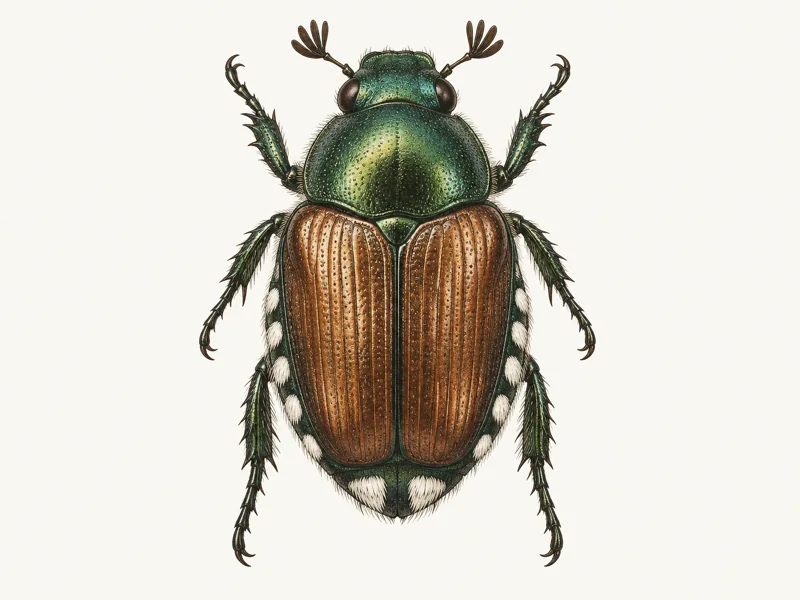
Annotated Anatomy Key (Japanese Beetle)
- Metallic green shield: Iridescent emerald-green head and pronotum gleaming brightly in summer sun.
- Copper-bronze elytra: Ribbed coppery-brown hardened wing covers stop slightly short of the tail tip.
- Six metallic spiny legs: Dark green clawed legs cling tightly to roses, linden leaves, and fruit trees.
- Five white side tufts: Unmistakable row of 5 crisp white hair spots along each side plus 2 at the tip.
Japanese Beetles Field Checklist
- Metallic emerald-green head and thorax with iridescent coppery-bronze wing covers
- Row of five crisp white hair tufts along each side of the abdomen
- Skeletonizes rose, linden, raspberry, and grape leaves into lacy patterns in summer
- White C-shaped soil grubs feed on turfgrass roots in late summer and spring
Side-by-Side Look-Alike Comparisons
Japanese Beetles Size at True Relative Scale
Quick Answer: Japanese beetles (Popillia japonica) are common in Tennessee, with 1,299 verified GBIF sightings on record. Adults peak in July, feeding on leaves and flowers. They are a garden nuisance, not a danger to people, and non-chemical control works best.
Where Japanese Beetles Live in Tennessee
If you are wondering whether there are Japanese beetles in Tennessee, the answer is yes. GBIF occurrence records show the species is well established across the state, though the public records list limited county detail, so sightings reflect where people report them more than true limits of range.
Tennessee has a humid subtropical climate with warm, humid summers and cooler mountain areas in the east (USDA zones 6a-8a). Those conditions suit the beetle's life cycle. Adults feed above ground, while the C-shaped, white grubs live in the soil beneath lawns.
Look for them in these places:
- Sunny gardens, rose beds, and fruit plantings
- Landscape trees and shrubs such as linden, crabapple, and Japanese maple
- Vineyards, orchards, and vegetable patches
- Irrigated, moist turf where females lay eggs
Tennessee Japanese Beetle Identification
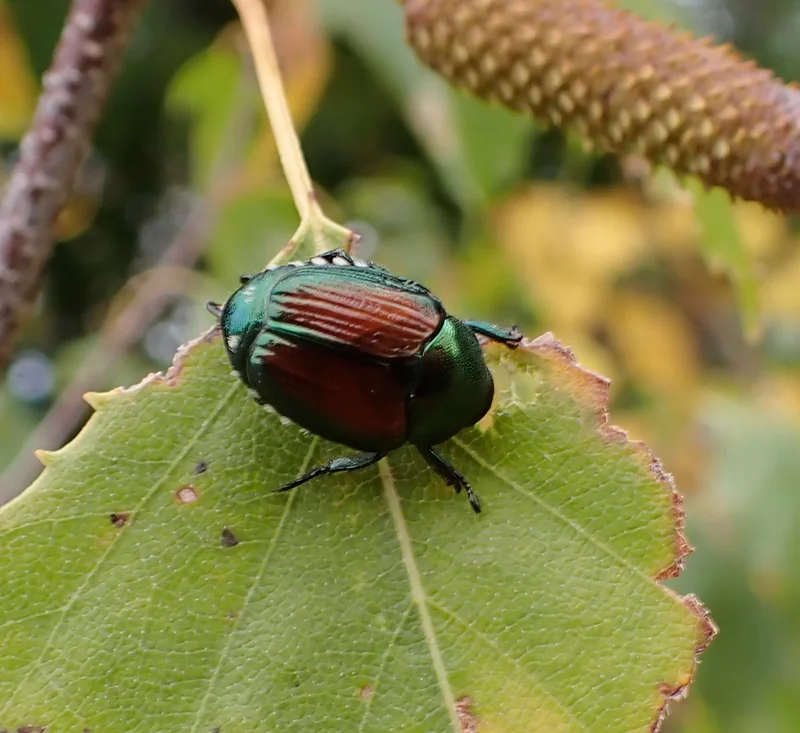
Adults are about 1/2 inch long with a shiny, metallic green head and coppery-brown wing covers. The best field mark is a row of small white hair tufts along each side of the abdomen, plus two more tufts at the tip.
Their feeding is distinctive. Beetles chew the tissue between leaf veins, leaving a lacy "skeletonized" look. They often feed in clusters, starting at the top of the plant.
When Japanese Beetles Are Most Active in Tennessee
The Tennessee Japanese beetle season peaks in July, according to GBIF records. Adults generally emerge in early summer and feed for several weeks, depending on elevation and local weather. Cooler eastern mountain areas may run slightly later than warmer lowlands.
The yearly cycle follows a general pattern described by university extension IPM guidance:
- Early summer: Adults emerge from the soil and begin feeding.
- Midsummer: Peak feeding and mating. Females lay eggs in moist turf.
- Late summer to fall: Grubs hatch and feed on grass roots.
- Winter: Grubs move deeper into the soil.
- Spring: Grubs feed briefly, then pupate.
Look-Alikes Frequently Mistaken for Japanese Beetles
Two common Tennessee insects cause most identification mix-ups.
June Bugs (May Beetles)
June bugs are larger and stockier, usually reddish-brown or dark brown, and lack the metallic green head. They are heavy fliers that bump into porch lights at night. Japanese beetles, by contrast, are active during the day.
Asian Lady Beetles
These are round, orange to red beetles, often with black spots, and they are smaller and more domed. They eat aphids rather than leaves, so they are generally helpful in the garden. If you see round orange beetles and no leaf damage, you are likely not looking at Japanese beetles.
How to Keep Japanese Beetles Out of Your Tennessee Home
Anyone asking how to prevent Japanese beetles in Tennessee should start with the yard, since these beetles rarely become indoor pests. Begin with non-chemical steps, which are the foundation of Integrated Pest Management (IPM).
- Hand-pick in the morning: Beetles are sluggish when cool. Flick them into a bucket of soapy water.
- Use physical barriers: Cover prized plants with fine netting during peak July activity.
- Skip lure traps near plants: Pheromone traps can attract more beetles than they catch. If used, place them well away from your garden.
- Manage turf moisture: Females prefer moist soil for egg-laying. Water lawns deeply but less often in midsummer.
- Choose plants wisely: Consider less-preferred plants such as boxwood, dogwood, and lilac where beetles are heavy.
- Keep doors and screens in good repair: This prevents the occasional stray beetle from wandering inside.
If you use any insecticide, including products for grubs or foliage, read the label first. Follow all EPA-registered label directions on rates, timing, and protection of pollinators. Avoid spraying open blooms where bees are feeding.
When to Call a Licensed Tennessee Pest Professional
- Large patches of lawn peel back like carpet, revealing many grubs
- Repeated defoliation of valuable trees or shrubs despite your efforts
- Heavy beetle numbers across a large property, orchard, or vineyard
- You are unsure of the insect and want a confirmed identification
A licensed professional can confirm the pest and recommend a label-compliant plan. Your local county Extension office can also help with identification.
IPM Prevention Checklist for Tennessee Homes
- Avoid placing pheromone Japanese beetle bag traps in your yard—university studies show they attract far more beetles to nearby plants than they catch
 EXCLUSION BLUEPRINT
Inspect eaves, screens, door sweeps, foundation cracks, and utility penetrations around Tennessee homes before peak season.
Japanese Beetles in Tennessee: Frequently Asked Questions
Are there Japanese beetles in Tennessee?
Yes. They are common, with 1,299 verified GBIF sightings recorded in the state.
When are Japanese beetles worst in Tennessee?
July is the peak month in recorded sightings. Plant damage is usually most visible then.
Are Japanese beetles dangerous to people or pets?
No. They are a nuisance pest that damages plants. They do not sting and are not a medical concern, though anyone worried about a pet that ate insects should call a veterinarian or Poison Control at 1-800-222-1222.
Do Japanese beetles come inside homes?
Rarely. They feed outdoors on plants, and any indoors are usually strays that came in through open doors.
Sources & Verification
Data refreshed · Editorial & GBIF Methodology