Japanese Beetle vs June Bug: How to Tell These Garden Pests Apart
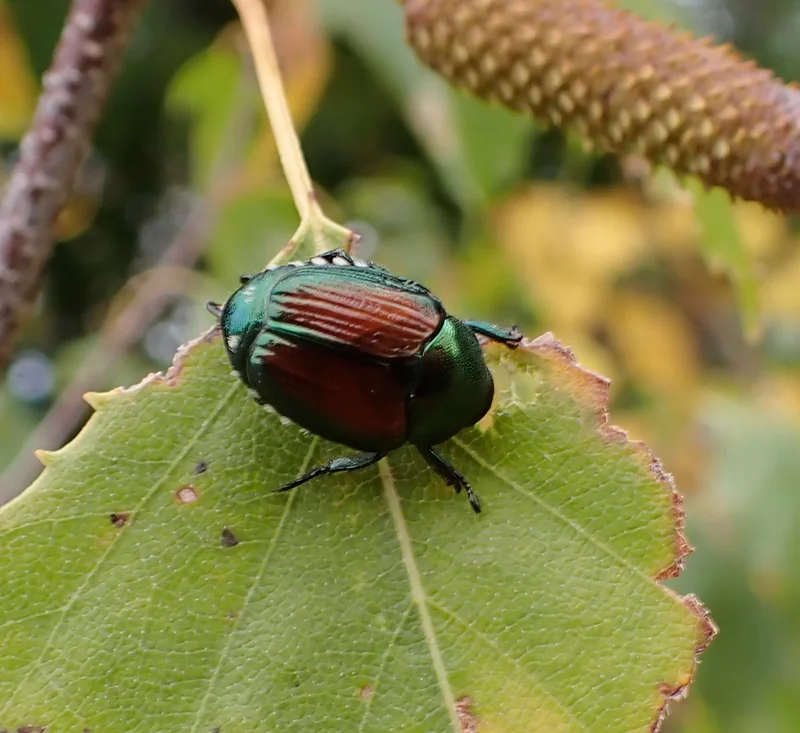
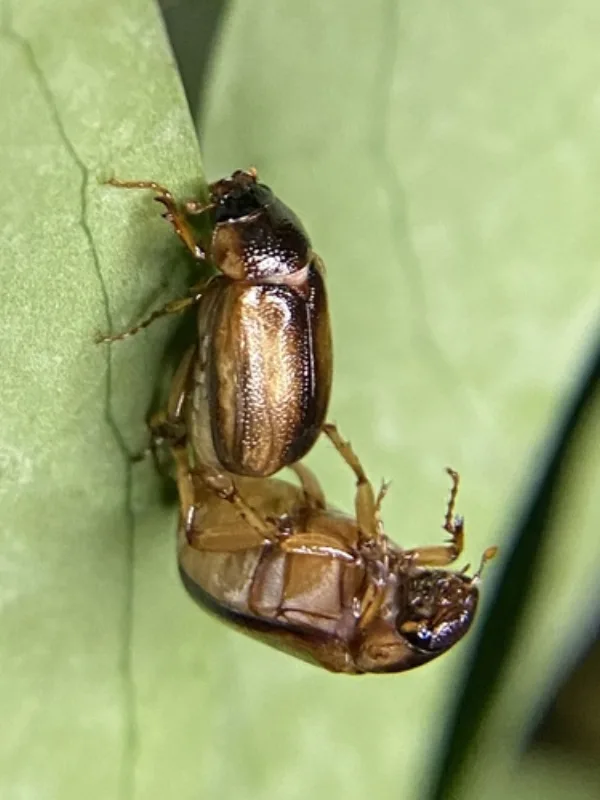
Quick ID Verdict: Two scarab beetles show up in American yards every summer, and homeowners mix them up constantly. The quick verdict in the Japanese beetle vs June bug question: if it's metallic emerald green with coppery-bronze wing covers and chewing your roses in daylight, it's a Japanese beetle. If it's a plump, glossy chestnut-brown beetle thumping against your porch light at night, it's a June bug.
Japanese Beetle
June Bug
Side-by-Side Comparison Table
| Trait | Japanese Beetle | June Bug |
|---|---|---|
| Scientific Group | Popillia japonica | Phyllophaga |
| Category | Insect | Insect |
| Typical Size | 10–13 mm | 12–25 mm |
| Danger Level | Nuisance | Nuisance |
| Bites or Stings? | No | No |
| Peak US Months | July | May, June |
| Key ID Trait | Metallic emerald-green head and thorax with iridescent coppery-bronze wing covers | Plump, glossy chestnut-brown to reddish-tan scarab beetle |
Japanese Beetle vs. June Bug: True Size Comparison
Side-by-Side Anatomy Blueprint
Compare body segments, antennae, leg count, and key markings directly before treating or removing either species.
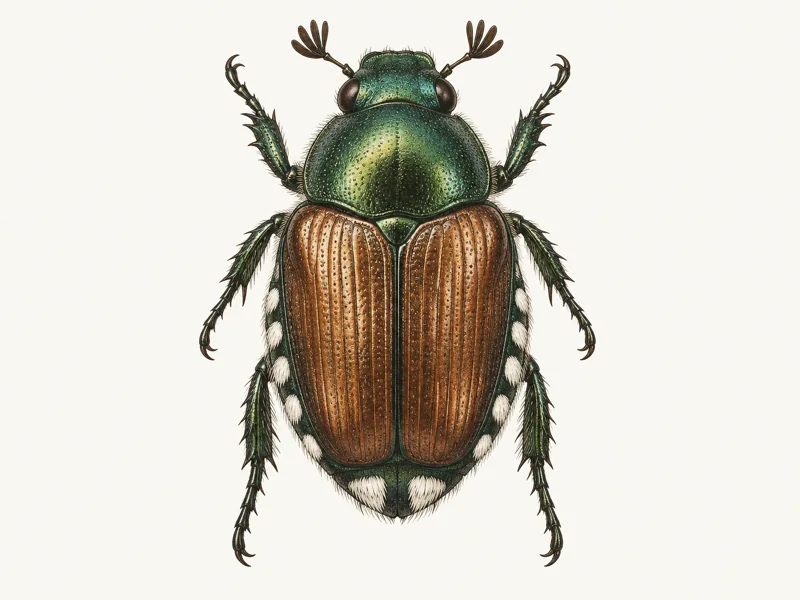
- Metallic green shield: Iridescent emerald-green head and pronotum gleaming brightly in summer sun.
- Copper-bronze elytra: Ribbed coppery-brown hardened wing covers stop slightly short of the tail tip.
- Six metallic spiny legs: Dark green clawed legs cling tightly to roses, linden leaves, and fruit trees.
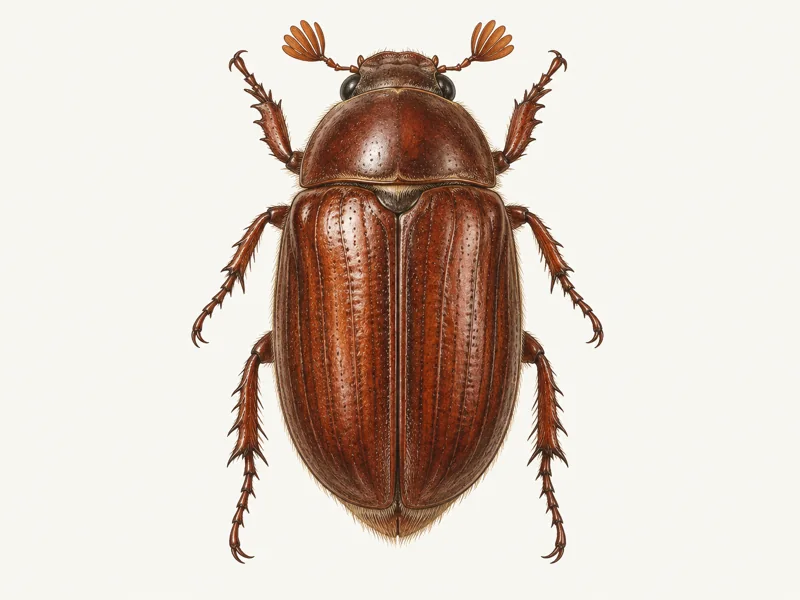
- Fanned club antennae: Short scarab antennae ending in tiny layered fan-like sensory clubs.
- Glossy chestnut dome: Plump, cylindrical 15–25 mm mahogany-brown scarab lacking any green sheen.
- Sturdy spiny legs: Clawed reddish-brown legs buzz clumsily onto porch screens around dusk.
Both are nuisance pests only. Neither bites nor stings, but the damage they cause looks very different.
Japanese Beetle or June Bug? Key Identification Differences
Deciding whether a pest is a Japanese beetle or June bug takes about three seconds once a homeowner knows what to look for. Color and timing do most of the work.
Size, Color, and Body Markings
FeatureJapanese BeetleJune Bug (May Beetle)Scientific namePopillia japonicaPhyllophaga spp.Length10–13 mm (under ½ inch)12–25 mm (½ to 1 inch)ColorMetallic emerald-green head and thorax, iridescent coppery-bronze wing coversGlossy chestnut-brown to reddish-tanDistinctive marksSmall white hair tufts along each side of the abdomenSmooth, plain body: no tuftsDanger levelNuisanceNuisanceThe white tufts are the giveaway for Japanese beetles. June bugs are bulkier and often nearly twice as long.
Behavior, Feeding Habits, and Time of Activity
Japanese beetles are daytime feeders. They gather in clusters on sunny afternoons and feed on hundreds of plant species, from roses and grapes to linden and birch trees.
June bugs are nocturnal. Adults fly clumsily toward lights after dark and feed lightly on tree foliage. Most homeowners notice them buzzing at screens rather than eating plants.
Where and When Each Beetle Shows Up in the US
Japanese beetles are an invasive species, first detected in New Jersey in 1916. They're now established across most states east of the Mississippi River and much of the Midwest. Western states such as Washington, Oregon, Utah, and Colorado have run eradication programs after detections, so residents there should report suspected sightings to their state department of agriculture.
June bugs are native. Over 100 Phyllophaga species live in the US, and they're found in nearly every state.
Seasonal timing helps with Japanese beetle vs June bug identification:
- June bugs: Adults appear in late spring, usually May through June.
- Japanese beetles: Adults emerge in early summer and peak in July, often lasting into August.
- Grubs: Both spend most of their lives underground as white, C-shaped larvae feeding on roots.
Damage to Lawns, Gardens, and Landscapes
The biggest difference between Japanese beetle and June bug damage is where it happens.
Adult Japanese beetles skeletonize leaves, eating the tissue between veins and leaving a lacy brown shell. A heavy infestation can strip a rose bush or young tree in days. Their grubs also feed on turf roots, causing patches of lawn that peel back like loose carpet.
June bug adults cause little visible harm. Their grubs are the real problem. Many species have multi-year life cycles, so grubs can chew roots for two or three seasons before maturing.
To tell the grubs apart, check the underside of the tail tip with a magnifier. Japanese beetle grubs show a V-shaped row of spines: June bug grubs have two parallel rows, like a zipper.
Which one is worse for homeowners? In most yards, the Japanese beetle. It damages both plants and lawns, feeds in large groups, and spreads aggressively. June bugs are mainly a lawn-grub concern.
Safe Integrated Pest Management Strategies for Both Beetles
Integrated Pest Management (IPM) starts with non-chemical steps. Many problems never need a pesticide.
For Japanese beetles:
- Hand-pick beetles in the cool early morning and drop them into soapy water.
- Cover high-value plants with fine-mesh row covers during peak season.
- Skip pheromone traps near gardens. Research shows they often attract more beetles than they catch.
For June bugs:
- Switch porch lights to yellow "bug" bulbs or turn them off at night.
- Keep windows and door screens in good repair.
For grubs of both species:
- Water lawns deeply but less often: beetles prefer laying eggs in moist turf.
- Mow higher to build stronger roots.
- Apply beneficial nematodes (Heterorhabditis bacteriophora) to moist soil in late summer.
- Milky spore disease works only on Japanese beetle grubs, not June bug grubs.
Treat lawns only when sampling shows real pressure, roughly 8–10 Japanese beetle grubs or 3–5 June bug grubs per square foot. If a product is used, always follow the EPA product label exactly.
When to Call a Pest Control Professional
Most homeowners can manage these beetles on their own. A licensed pro is worth calling when:
- Large lawn sections die back even though proper watering.
- Skunks, raccoons, or moles keep tearing up turf hunting grubs.
- Japanese beetles defoliate mature trees or ornamental plantings year after year.
- The beetle is found in a western state where Japanese beetles aren't established.
A qualified technician can sample soil, confirm the species, and design an IPM plan that limits chemical use. Neither beetle is medically significant, but anyone unsure about an insect encounter can reach US Poison Control at 1-800-222-1222.
Frequently Asked Questions
What's the main difference between a Japanese beetle and a June bug?
Japanese beetles are metallic emerald-green with coppery-bronze wing covers and feed during the day on plants. June bugs are glossy chestnut-brown, nocturnal, and are attracted to lights. Japanese beetles also have distinctive white hair tufts along their sides, while June bugs have smooth bodies.
How can I identify a Japanese beetle by its appearance?
Look for a metallic emerald-green head and thorax with iridescent coppery-bronze wing covers. Japanese beetles are small (10–13 mm) and have white hair tufts along each side of the abdomen. They typically feed on plants during sunny afternoons in clusters.
When do Japanese beetles and June bugs appear in the US?
June bugs emerge in late spring, typically May through June. Japanese beetles appear in early summer and peak in July, often lasting into August. Both species spend most of their life underground as white, C-shaped larvae feeding on roots.
What damage do Japanese beetles cause compared to June bugs?
Japanese beetles skeletonize leaves and strip plants rapidly; their grubs also damage lawn roots. June bug adults cause minimal damage, but their grubs chew roots for multiple seasons. Japanese beetles are generally more harmful to gardens and lawns overall.
Are Japanese beetles native to the United States?
No, Japanese beetles are an invasive species first detected in New Jersey in 1916. They're now established east of the Mississippi River and in much of the Midwest. Western states run eradication programs and ask residents to report suspected sightings to their agriculture department.
What's the best way to manage Japanese beetles without chemicals?
Hand-pick beetles in cool early mornings and drop them in soapy water. Cover high-value plants with fine-mesh row covers during peak season. Avoid pheromone traps near gardens, as they often attract more beetles than they catch.