Japanese Beetles in Texas: Status, Season, ID and Prevention
Quick Answer: Japanese beetles in Texas are rare. GBIF holds only 5 verified sightings of Popillia japonica in the state, with July the peak month. The species is a plant-feeding nuisance, not a danger to people, and most beetles that Texans report turn out to be look-alikes.
When Japanese Beetles Are Most Active in Texas
Now (November): Lower Outdoor ActivityJapanese Beetles Range in Texas vs. Neighboring States
How Texas Compares to Neighboring States
Note: Wildlife does not follow state or county lines. GBIF totals reflect verified citizen and museum records, so low counts in a neighboring county do not guarantee absence.
How to Identify Japanese Beetles
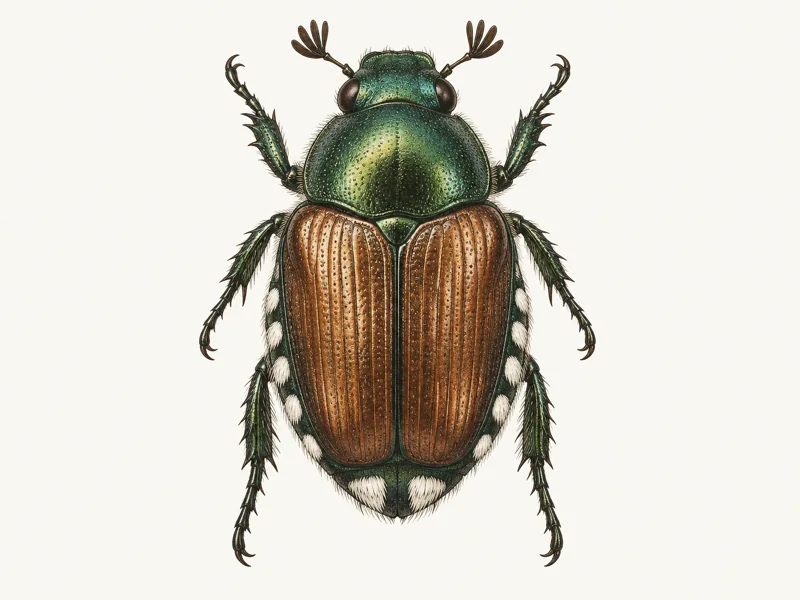
Annotated Anatomy Key (Japanese Beetle)
- Metallic green shield: Iridescent emerald-green head and pronotum gleaming brightly in summer sun.
- Copper-bronze elytra: Ribbed coppery-brown hardened wing covers stop slightly short of the tail tip.
- Six metallic spiny legs: Dark green clawed legs cling tightly to roses, linden leaves, and fruit trees.
- Five white side tufts: Unmistakable row of 5 crisp white hair spots along each side plus 2 at the tip.
Japanese Beetles Field Checklist
- Metallic emerald-green head and thorax with iridescent coppery-bronze wing covers
- Row of five crisp white hair tufts along each side of the abdomen
- Skeletonizes rose, linden, raspberry, and grape leaves into lacy patterns in summer
- White C-shaped soil grubs feed on turfgrass roots in late summer and spring
Side-by-Side Look-Alike Comparisons
Japanese Beetles Size at True Relative Scale
Where Japanese Beetles Live in Texas
So, are there Japanese beetles in Texas? Technically yes, but not as an established, widespread pest. The 5 verified GBIF records are scattered, and county-level data is limited, so no Texas county can be called a hotspot.
Texas spans humid subtropical Gulf Coast, semi-arid central plains, and arid western desert (USDA zones 6b-10a). Japanese beetle grubs need moist, turf-covered soil to survive, which is more typical of eastern and northern US lawns. Hot, dry Texas summers make it hard for the species to settle in.
Isolated records likely reflect hitchhikers on nursery stock, produce, or vehicles rather than breeding populations. Because the beetle is uncommon here, a confirmed find is worth noting.
When Japanese Beetles Are Most Active in Texas
The Texas Japanese beetle season, based on recorded sightings, centers on July. That matches the adult flight period described in general university extension guidance for the species, when adults feed and mate in warm weather.
Adults are active by day and favor sunny spots. In regions where the beetle is established, the life cycle runs about one year:
- Summer: adults feed on foliage and flowers, and females lay eggs in moist turf.
- Late summer to fall: grubs hatch and feed on grass roots.
- Winter: grubs move deeper into the soil.
- Spring: grubs feed briefly, then pupate.
Texas Japanese Beetle Identification
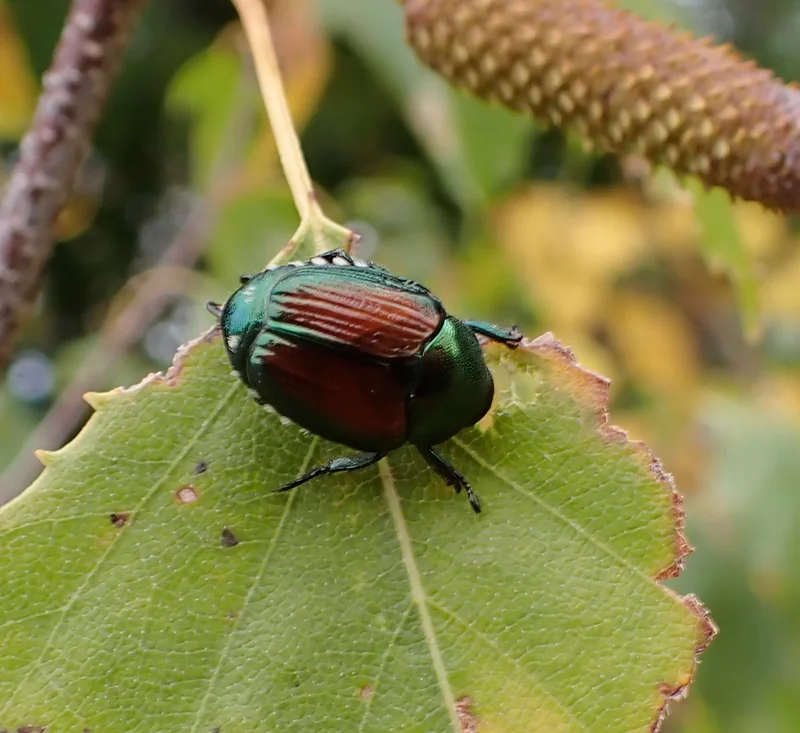
Adults are about 1/2 inch long with a shiny metallic green head and coppery-brown wing covers. The best field mark is a row of five white hair tufts along each side of the abdomen, plus a pair on the rear tip. Check for these before assuming you have one.
Grubs are C-shaped, creamy white, with a brown head and six legs. Adult feeding leaves leaves "skeletonized," with the tissue eaten between the veins. Roses, grapes, linden, and many fruit plants are common targets.
Look-Alikes Frequently Mistaken for Japanese Beetles
Two common Texas insects are often confused with this beetle.
June Bugs (May Beetles)
June bugs are larger and stockier, usually reddish-brown to dark brown, and lack the white abdominal tufts. They fly to porch lights at night, while Japanese beetles feed in daylight. Their grubs also damage turf roots.
Asian Lady Beetles
These are round, orange to red, and often spotted. They eat aphids rather than plants, and they may gather on sunny walls or enter homes in fall. They have no metallic green head.
How to Keep Japanese Beetles Out of Your Texas Home
For how to prevent Japanese beetles in Texas, start with non-chemical steps. Since the species is rare here, vigilance matters more than treatment.
- Inspect new plants: check nursery stock, roots, and soil for grubs and adults before planting, especially plants shipped from other states.
- Avoid overwatering turf: grubs prefer consistently moist soil, so water deeply and infrequently.
- Hand-pick adults: drop them into soapy water in the morning, when they are sluggish.
- Skip pheromone traps: extension guidance notes they can attract more beetles to your yard.
- Protect plants: use physical barriers like netting on prized roses or grapes.
- Keep plants healthy: sanitation and proper pruning reduce stress and damage.
If you consider an insecticide, choose a product labeled for the pest and plant, and follow the EPA-approved label exactly. Take care to protect pollinators by avoiding sprays on blooming plants.
When to Call a Licensed Texas Pest Professional
- You find beetles with the five white side tufts and cannot confirm the species.
- You see multiple adults or C-shaped grubs in your lawn, which could signal a breeding population.
- Turf pulls up like loose carpet because roots have been eaten.
- Damage continues after sanitation and hand removal.
Consider saving a specimen in a sealed container and contacting your county extension office or a licensed professional to confirm the ID. Reporting a suspected find helps track the species.
IPM Prevention Checklist for Texas Homes
- Avoid placing pheromone Japanese beetle bag traps in your yard—university studies show they attract far more beetles to nearby plants than they catch
 EXCLUSION BLUEPRINT
Inspect eaves, screens, door sweeps, foundation cracks, and utility penetrations around Texas homes before peak season.
Japanese Beetles in Texas: Frequently Asked Questions
Are Japanese beetles established in Texas?
No. GBIF lists only 5 verified sightings, so the species is considered rare and not a widespread Texas pest.
What month are Japanese beetles seen in Texas?
July is the peak month in recorded sightings, matching the usual summer adult flight period.
Are Japanese beetles dangerous to people or pets?
No. They are a plant-feeding nuisance and do not sting or bite. If you have a concern about a bite or sting from any insect, call US Poison Control at 1-800-222-1222 or see a doctor.
Is the beetle I found a Japanese beetle or a June bug?
Look for a metallic green head and five white tufts along each side of the abdomen. A larger, plain brown beetle that comes to lights at night is likely a June bug.
Sources & Verification
Data refreshed · Editorial & GBIF Methodology