Japanese Beetles in Missouri: Identification, Season, and Prevention
Quick Answer: *Yes, Japanese beetles (Popillia japonica) are common in Missouri.* GBIF records show 1,095 verified sightings in the state, with activity peaking in July. They are a nuisance to gardens and landscape plants, not a danger to people.
When Japanese Beetles Are Most Active in Missouri
Now (November): Lower Outdoor ActivityJapanese Beetles Range in Missouri vs. Neighboring States
How Missouri Compares to Neighboring States
Note: Wildlife does not follow state or county lines. GBIF totals reflect verified citizen and museum records, so low counts in a neighboring county do not guarantee absence.
How to Identify Japanese Beetles
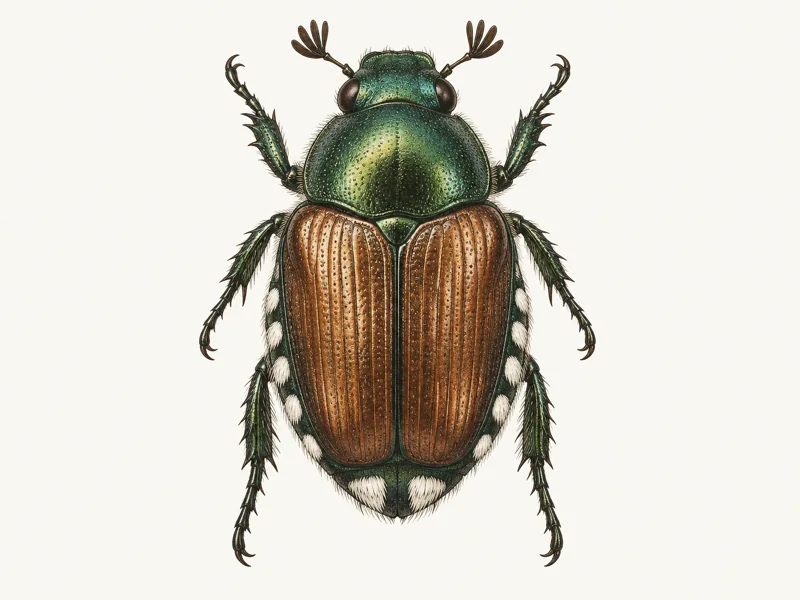
Annotated Anatomy Key (Japanese Beetle)
- Metallic green shield: Iridescent emerald-green head and pronotum gleaming brightly in summer sun.
- Copper-bronze elytra: Ribbed coppery-brown hardened wing covers stop slightly short of the tail tip.
- Six metallic spiny legs: Dark green clawed legs cling tightly to roses, linden leaves, and fruit trees.
- Five white side tufts: Unmistakable row of 5 crisp white hair spots along each side plus 2 at the tip.
Japanese Beetles Field Checklist
- Metallic emerald-green head and thorax with iridescent coppery-bronze wing covers
- Row of five crisp white hair tufts along each side of the abdomen
- Skeletonizes rose, linden, raspberry, and grape leaves into lacy patterns in summer
- White C-shaped soil grubs feed on turfgrass roots in late summer and spring
Side-by-Side Look-Alike Comparisons
Japanese Beetles Size at True Relative Scale
Where Japanese Beetles Live in Missouri
People often ask whether there are Japanese beetles in Missouri, and the records answer clearly: the species is well established. The GBIF data lists only limited county-level detail, so no single county can be named as a hotspot. Homeowners should assume the beetles can turn up anywhere in the state where host plants and turf are present.
Missouri's climate suits them. Summers are hot and humid, winters are variable, and USDA zones run from 5b to 7b. Adults feed on foliage and flowers, while the C-shaped white grubs live in the soil and eat grass roots.
Beetles are most often found in:
- Lawns and irrigated turf, where females lay eggs in moist soil
- Vegetable and flower gardens
- Fruit plantings such as grapes, raspberries, and fruit trees
- Ornamental roses, lindens, and crape myrtles
When Japanese Beetles Are Most Active in Missouri
The Missouri Japanese beetle season centers on July, the peak month in GBIF records. Adults generally emerge in early summer and feed through mid-summer, so exact timing shifts with spring temperatures. Land-grant university extension guidance describes a similar one-year life cycle across the Midwest.
The yearly pattern looks like this:
- Early summer: adults emerge from the soil.
- July: feeding and mating peak, and damage is most visible.
- Late summer: eggs hatch into grubs that feed on turf roots.
- Fall to spring: grubs move deeper in winter, then return near the surface in spring before pupating.
Look-Alikes Frequently Mistaken for Japanese Beetles
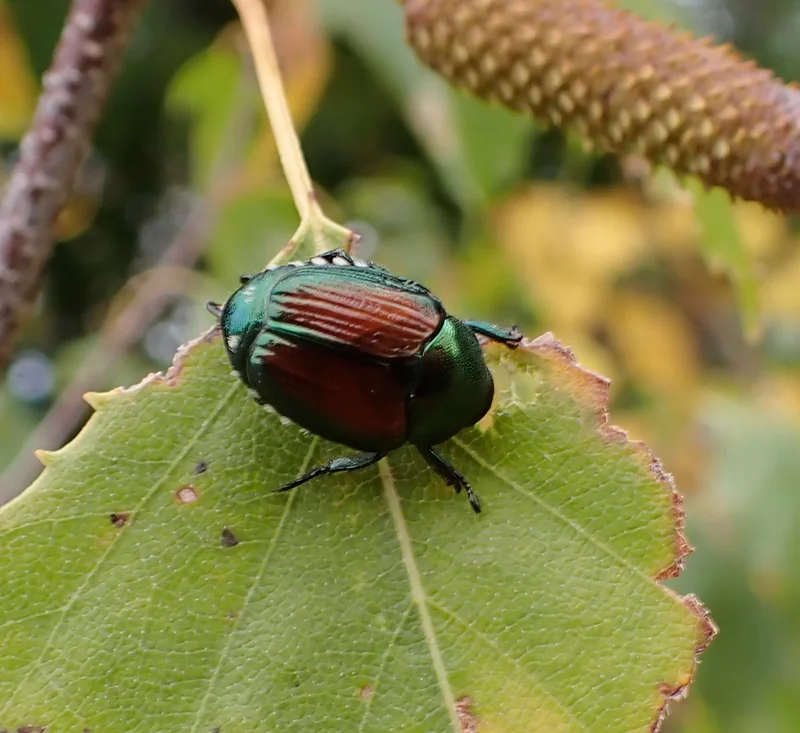
Good Missouri Japanese beetle identification starts with the adult's look. It is about a half inch long, with a shiny metallic green head and coppery-brown wing covers. Look for five small white hair tufts along each side of the abdomen, plus two more at the tip. These tufts are the most reliable field mark.
June Bugs (May Beetles)
June bugs are stouter, reddish-brown to dark brown, and lack the metallic green head and white tufts. They are mostly active at night and are drawn to porch lights. Japanese beetles feed in daylight, especially in warm sun.
Asian Lady Beetles
Asian lady beetles are rounded, orange to red, and often spotted. They feed on aphids rather than chewing leaves, and they may gather on sunny walls in fall. Their dome shape and color differ clearly from the Japanese beetle's metallic look.
How to Keep Japanese Beetles Out of Your Missouri Home
Anyone wondering how to prevent Japanese beetles in Missouri should know that eliminating them is unrealistic, since adults fly in from neighboring properties. The goal is to limit damage. Start with non-chemical steps and add products only if needed.
Non-Chemical IPM First
- Hand-pick: Knock beetles into a bucket of soapy water in the early morning, when they are sluggish.
- Skip the traps: Pheromone traps often attract more beetles than they catch. If used, place them well away from prized plants.
- Cover plants: Lightweight netting protects small shrubs and fruit during the July peak.
- Choose plants wisely: Favor less-preferred species such as boxwood, lilac, and most conifers near favorite targets.
- Manage turf moisture: Avoid frequent light watering of lawns in mid-summer, since females prefer moist soil for egg laying.
- Keep lawns healthy: Thick, properly mowed turf tolerates grub feeding better.
Using Products Safely
If damage is severe, choose a product labeled for the specific plant and pest. Read and follow the EPA-registered label exactly, including bloom-time warnings. Many insecticides can harm pollinators, so avoid spraying open flowers.
When to Call a Licensed Missouri Pest Professional
- Irregular dead patches in turf that peel back like carpet, suggesting heavy grub damage
- Repeated defoliation of valuable trees or shrubs despite your efforts
- Large infestations across a yard or commercial property
- Uncertainty about product choice, timing, or label requirements
Japanese beetles do not sting or bite in ways that threaten health. If anyone swallows a pesticide or has a reaction to one, call US Poison Control at 1-800-222-1222 and consult a doctor.
IPM Prevention Checklist for Missouri Homes
- Avoid placing pheromone Japanese beetle bag traps in your yard—university studies show they attract far more beetles to nearby plants than they catch
 EXCLUSION BLUEPRINT
Inspect eaves, screens, door sweeps, foundation cracks, and utility penetrations around Missouri homes before peak season.
Japanese Beetles in Missouri: Frequently Asked Questions
Are there Japanese beetles in Missouri?
Yes. They are common statewide, with 1,095 verified GBIF sightings of Popillia japonica. County-level records are limited, so they should be expected broadly.
When is Japanese beetle season in Missouri?
Activity peaks in July, based on GBIF records. Adults typically appear in early summer and decline by late summer as grubs develop in the soil.
Are Japanese beetles dangerous to people or pets?
No. They are classed as a nuisance pest that damages plants. They do not sting or transmit disease.
Do Japanese beetle traps help?
Often not. Traps can draw in more beetles than they catch. Hand-picking, netting, and plant choice are generally more dependable for protecting a yard.
Sources & Verification
Data refreshed · Editorial & GBIF Methodology