Japanese Beetles in Wisconsin: Identification, Season, and Prevention
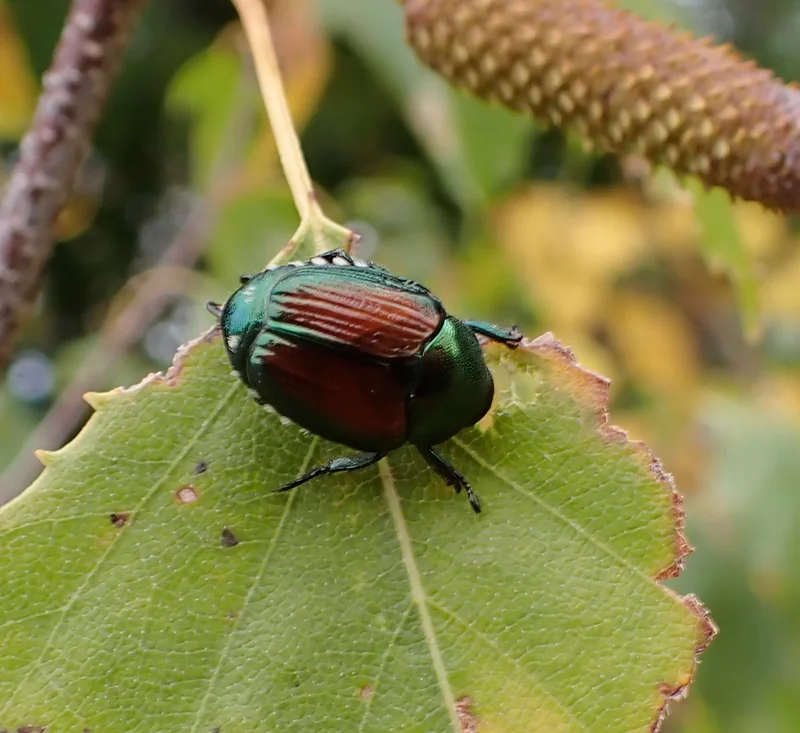
Quick Answer: Yes, Japanese beetles (Popillia japonica) are common in Wisconsin, with 2,125 verified GBIF sightings recorded across the state. Adult activity peaks in July, when the metallic green-and-copper beetles skeletonize leaves on roses, lindens, grapes, and fruit trees. They are a nuisance pest only. They do not bite, sting, or spread disease to people or pets.
When Japanese Beetles Are Most Active in Wisconsin
Now (November): Lower Outdoor ActivityJapanese Beetles Range in Wisconsin vs. Neighboring States
How Wisconsin Compares to Neighboring States
Note: Wildlife does not follow state or county lines. GBIF totals reflect verified citizen and museum records, so low counts in a neighboring county do not guarantee absence.
How to Identify Japanese Beetles
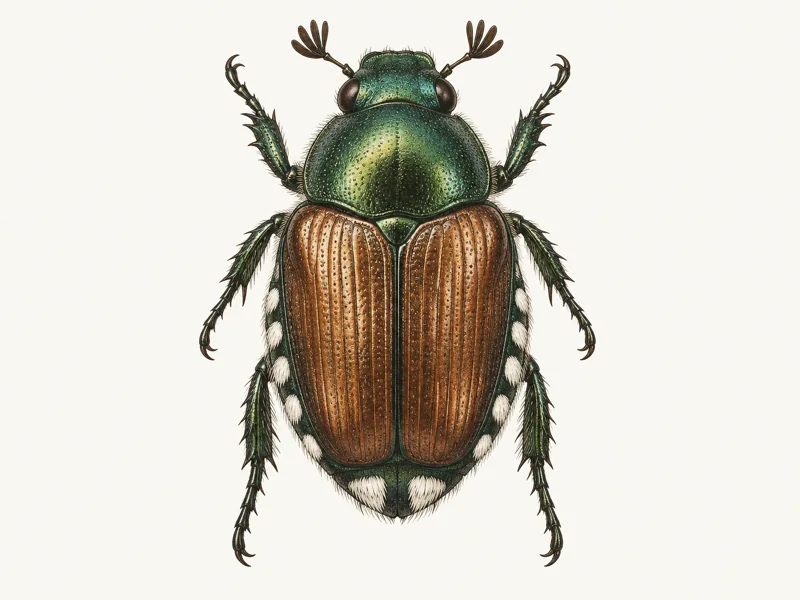
Annotated Anatomy Key (Japanese Beetle)
- Metallic green shield: Iridescent emerald-green head and pronotum gleaming brightly in summer sun.
- Copper-bronze elytra: Ribbed coppery-brown hardened wing covers stop slightly short of the tail tip.
- Six metallic spiny legs: Dark green clawed legs cling tightly to roses, linden leaves, and fruit trees.
- Five white side tufts: Unmistakable row of 5 crisp white hair spots along each side plus 2 at the tip.
Japanese Beetles Field Checklist
- Metallic emerald-green head and thorax with iridescent coppery-bronze wing covers
- Row of five crisp white hair tufts along each side of the abdomen
- Skeletonizes rose, linden, raspberry, and grape leaves into lacy patterns in summer
- White C-shaped soil grubs feed on turfgrass roots in late summer and spring
Side-by-Side Look-Alike Comparisons
Japanese Beetles Size at True Relative Scale
Where Japanese Beetles Live in Wisconsin
Anyone asking whether there are Japanese beetles in Wisconsin will find the answer in the state's yards, gardens, and parks. GBIF records confirm the species is well established. County-level data is limited, though, so the verified records don't show which counties have the highest numbers. In practice, the beetles turn up wherever turfgrass and favored host plants grow side by side.
Wisconsin's humid continental climate suits the beetle's life cycle. Warm summers and plentiful lawn moisture help the grubs develop in the soil. The state spans USDA zones 3b through 6a, and the larvae survive cold, snowy winters by burrowing below the frost line.
- Lawns and turf: Females lay eggs in moist, sunny grass. The C-shaped white grubs that hatch feed on grass roots.
- Ornamental gardens: Roses, hibiscus, and Japanese maples draw heavy adult feeding.
- Trees and orchards: Linden, birch, apple, cherry, and plum are frequent targets.
- Vineyards and berry patches: Grape and raspberry leaves are often skeletonized.
When Japanese Beetles Are Most Active in Wisconsin
The Wisconsin Japanese beetle season peaks in July, which is when GBIF sightings reach their highest point. Adults usually begin emerging from the soil in early summer. Feeding stays heavy for several weeks before tapering off in late summer.
The species completes one generation per year:
- Late spring: Overwintered grubs move back up toward the surface and finish feeding on roots.
- Early to mid-summer: Grubs pupate and adults emerge, with numbers peaking in July.
- Mid to late summer: Females lay eggs in turf, and the new grubs start feeding on roots.
- Fall through winter: Grubs burrow deeper into the soil to overwinter.
Adults are most active on warm, sunny afternoons. They release aggregation pheromones that attract other beetles, so a few early feeders can quickly turn into a large group on one plant.
Look-Alikes Frequently Mistaken for Japanese Beetles
For Wisconsin Japanese beetle identification, look for an oval adult about 3/8 to 1/2 inch long. It has a shiny metallic green head and thorax and coppery-bronze wing covers. The clearest field mark is a row of five small white hair tufts along each side of the abdomen, plus two more at the tip.
June Bugs (May Beetles)
June bugs are larger, about 1/2 to 1 inch long, and plain reddish-brown with no metallic sheen. They fly mostly at night and gather around porch lights. Japanese beetles, by contrast, feed during the day. June bug grubs also live in lawns and look much like Japanese beetle grubs.
Asian Lady Beetles
Asian lady beetles are rounder and dome-shaped. Their color ranges from orange to red, usually with black spots, and many have an "M" or "W" mark behind the head. They eat aphids instead of leaves. In fall they often cluster on the sunny sides of homes and work their way indoors, which Japanese beetles rarely do.
How to Keep Japanese Beetles Out of Your Wisconsin Home
Japanese beetles seldom come indoors, so prevention focuses on the yard and garden. Integrated Pest Management (IPM) guidance from university cooperative extension programs recommends starting with non-chemical methods.
Non-Chemical Steps First
- Hand-pick early: In the cool morning, knock beetles into a bucket of soapy water. Removing the first arrivals cuts down on the pheromone signals that attract more.
- Skip traps near gardens: Extension research shows that pheromone traps can pull in more beetles than they catch.
- Cover high-value plants: Fine netting over roses, grapes, or young fruit trees during July blocks feeding.
- Choose less-favored plants: Lilac, dogwood, arborvitae, and most evergreens are seldom damaged.
- Manage turf moisture: Avoid heavy irrigation in midsummer. Dry turf discourages egg-laying and lowers grub survival.
- Screen and seal: Keep window screens intact and close gaps around doors to keep stray beetles outside.
Targeted Treatments
If damage keeps building, biological controls such as beneficial nematodes or labeled Bacillus thuringiensis strains can target grubs in turf. When considering any insecticide, choose products registered for Japanese beetles and always follow the EPA product label exactly. Avoid spraying plants that are in bloom, because this protects pollinators.
When to Call a Licensed Wisconsin Pest Professional
- Lawn patches turn brown, and the sod peels back like carpet because grubs have eaten the roots.
- Skunks, raccoons, or birds keep tearing up turf to dig for grubs.
- Valuable trees or ornamentals lose large amounts of foliage year after year.
- You're unsure which product to use or how to apply it safely near water, pets, or pollinators.
IPM Prevention Checklist for Wisconsin Homes
- Avoid placing pheromone Japanese beetle bag traps in your yard—university studies show they attract far more beetles to nearby plants than they catch
 EXCLUSION BLUEPRINT
Inspect eaves, screens, door sweeps, foundation cracks, and utility penetrations around Wisconsin homes before peak season.
Japanese Beetles in Wisconsin: Frequently Asked Questions
Are Japanese beetles harmful to people or pets in Wisconsin?
No. They are classified as a nuisance pest. They don't bite, sting, or carry disease. The harm they cause is to plants and lawns.
What month are Japanese beetles worst in Wisconsin?
July. Verified GBIF sightings peak that month, when adult feeding and mating are at their height.
Do Japanese beetle traps work?
Traps catch many beetles, but they often draw in more than they capture. Extension guidance generally advises against placing them near the plants you want to protect.
How do I prevent Japanese beetles in Wisconsin next year?
Limit midsummer lawn watering, plant species the beetles rarely eat, and hand-pick adults as soon as they appear. Treat grubs only when lawn damage confirms they are a problem, and follow the EPA label for any product you use.
Sources & Verification
Data refreshed · Editorial & GBIF Methodology