Japanese Beetles in Colorado: Identification, Season, and Prevention
Quick Answer: Yes, there are Japanese beetles in Colorado, and they are common, with 2,749 verified GBIF sightings of Popillia japonica recorded in the state. Adult activity peaks in July, when the metallic green and copper beetles feed on roses, lindens, grapes, and other ornamentals. They are a nuisance pest. They do not bite or sting people, but they can skeletonize leaves quickly.
When Japanese Beetles Are Most Active in Colorado
Now (November): Lower Outdoor ActivityJapanese Beetles Range in Colorado vs. Neighboring States
How Colorado Compares to Neighboring States
Note: Wildlife does not follow state or county lines. GBIF totals reflect verified citizen and museum records, so low counts in a neighboring county do not guarantee absence.
How to Identify Japanese Beetles
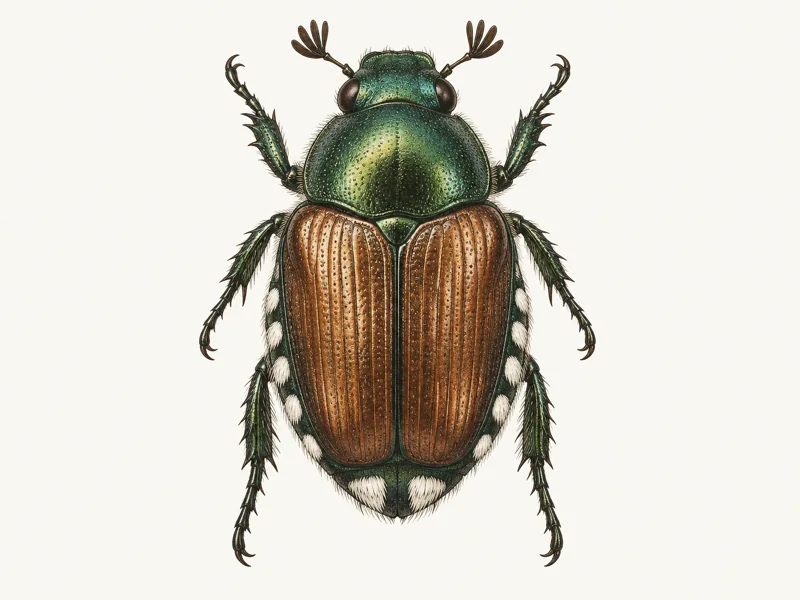
Annotated Anatomy Key (Japanese Beetle)
- Metallic green shield: Iridescent emerald-green head and pronotum gleaming brightly in summer sun.
- Copper-bronze elytra: Ribbed coppery-brown hardened wing covers stop slightly short of the tail tip.
- Six metallic spiny legs: Dark green clawed legs cling tightly to roses, linden leaves, and fruit trees.
- Five white side tufts: Unmistakable row of 5 crisp white hair spots along each side plus 2 at the tip.
Japanese Beetles Field Checklist
- Metallic emerald-green head and thorax with iridescent coppery-bronze wing covers
- Row of five crisp white hair tufts along each side of the abdomen
- Skeletonizes rose, linden, raspberry, and grape leaves into lacy patterns in summer
- White C-shaped soil grubs feed on turfgrass roots in late summer and spring
Side-by-Side Look-Alike Comparisons
Japanese Beetles Size at True Relative Scale
Where Japanese Beetles Live in Colorado
Japanese beetles in Colorado are concentrated where people water: irrigated lawns, landscaped yards, parks, and gardens. The state's semi-arid high plains and low humidity are naturally hard on the grubs, which need moist soil to survive. Regularly watered turf gives them a refuge that dry native ground does not.
GBIF data shows the species is common statewide, but the records include only limited county-level detail. For that reason, homeowners shouldn't assume any irrigated neighborhood is safe. Colorado spans USDA zones 3b through 7a. Cold, high-elevation alpine areas are generally less suited to the beetle than warmer, lower-elevation landscaped areas.
- Adults: Found on sunny foliage and flowers, often feeding in clusters near the tops of plants.
- Grubs: C-shaped white larvae that live in the root zone of moist, irrigated turf.
- Favored plants: Roses, lindens, grapes, raspberries, Virginia creeper, and many flowering ornamentals.
When Japanese Beetles Are Most Active in Colorado
The Colorado Japanese beetle season peaks in July. Adults emerge from the soil in early summer, feed and mate for several weeks, and are most visible on warm, sunny afternoons. Damage often looks worst by mid to late summer, after leaves have been fed down to lacy skeletons.
Females lay eggs in moist turf during the summer. The grubs feed on grass roots until cold weather drives them deeper into the soil for winter. In spring they move back up to feed briefly before they pupate, which completes the one-year life cycle common to this species.
Seasonal Snapshot
- Spring: Grubs feed near the soil surface, then pupate.
- Early summer: Adults begin emerging.
- July: Peak adult feeding and mating.
- Late summer to fall: New grubs feed on turf roots.
Look-Alikes Frequently Mistaken for Japanese Beetles
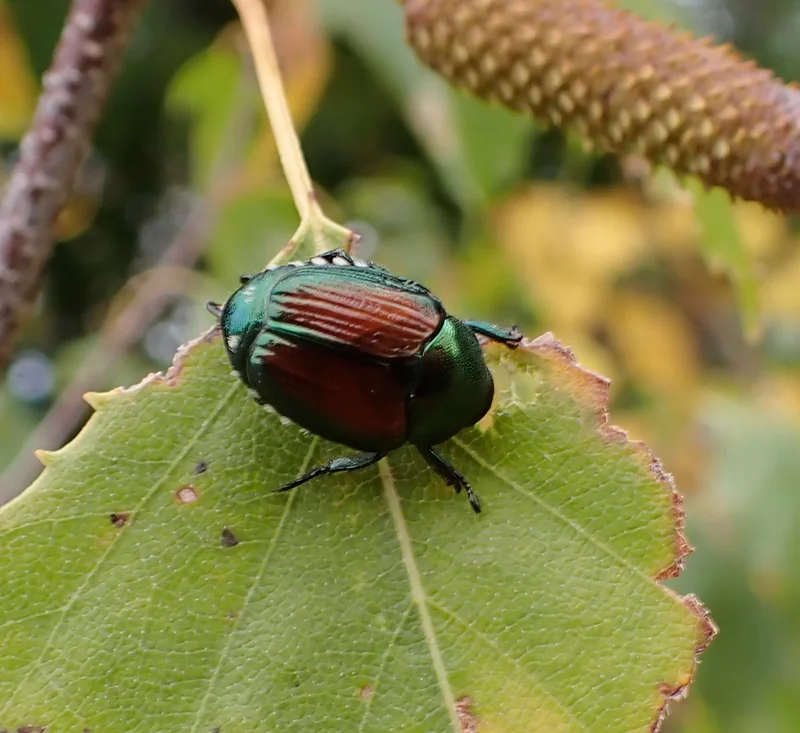
For Colorado Japanese beetle identification, look for a metallic green head and thorax, coppery wing covers, and a body roughly half an inch long. The most reliable feature is the five tufts of white hairs along each side of the abdomen, plus a pair at the tip. Two common Colorado insects are often confused with them.
June Bugs (May Beetles)
June bugs are larger, plain reddish-brown beetles with no metallic shine or white tufts. They are drawn to porch lights at night, while Japanese beetles feed during the day. Their grubs look very similar, so finding grubs in the lawn does not confirm Japanese beetles.
Asian Lady Beetles
Asian lady beetles are rounded and dome-shaped, orange to red, often with black spots and an "M" marking behind the head. They eat aphids and do not chew leaves. They are known for gathering on and inside homes in fall.
How to Keep Japanese Beetles Out of Your Colorado Home
Japanese beetles rarely come indoors. Prevention is mostly about protecting the landscape around the home. Cooperative extension IPM guidance recommends starting with non-chemical methods and keeping chemical treatments as a targeted backup.
Non-Chemical IPM Steps
- Hand-pick early: In the cool morning, knock beetles into a bucket of soapy water. Feeding beetles release scents that attract more beetles, so removing them early helps.
- Water wisely: In midsummer, cut back on excess lawn irrigation where practical. Drier turf is less attractive to egg-laying females.
- Choose resistant plants: Lilac, boxwood, and many conifers are less favored than roses and lindens.
- Use barriers: Fine netting over high-value plants during the July peak can prevent feeding.
- Skip traps near gardens: Pheromone traps can draw in more beetles than they catch.
- Seal entry points: Repair window screens and door gaps to keep stray beetles and fall lady beetles outside.
When Chemicals Are Considered
If damage keeps spreading, products labeled for Japanese beetles or turf grubs may help. Always follow the EPA product label exactly, and avoid spraying open blooms where pollinators are foraging.
When to Call a Licensed Colorado Pest Professional
- Heavy defoliation of trees or large shrubs that hand-picking can't control.
- Brown, loose turf that peels back like carpet, which suggests a heavy grub infestation.
- Damage that returns year after year despite IPM efforts.
- Uncertainty about which product to use or how to apply it safely.
IPM Prevention Checklist for Colorado Homes
- Avoid placing pheromone Japanese beetle bag traps in your yard—university studies show they attract far more beetles to nearby plants than they catch
 EXCLUSION BLUEPRINT
Inspect eaves, screens, door sweeps, foundation cracks, and utility penetrations around Colorado homes before peak season.
Japanese Beetles in Colorado: Frequently Asked Questions
Are there Japanese beetles in Colorado?
Yes. GBIF lists 2,749 verified sightings of Popillia japonica in Colorado, and the species is considered common in the state.
What month are Japanese beetles worst in Colorado?
July. That is the peak month for adult beetle activity and leaf feeding.
Are Japanese beetles dangerous to people or pets?
No. They are a nuisance pest that damages plants. They do not bite, sting, or carry disease.
How can homeowners prevent Japanese beetles in Colorado?
Hand-pick beetles early, limit excess turf watering, use netting on prized plants, and choose less-favored species. Use labeled products only as a backup, and follow the EPA label.
Sources & Verification
Data refreshed · Editorial & GBIF Methodology