Japanese Beetles in Georgia: Identification, Season, and Prevention
Quick Answer: Yes, there are Japanese beetles in Georgia. The species (Popillia japonica) is common statewide, with 873 verified GBIF sightings and a clear peak in July. They are a nuisance to plants rather than a danger to people, and they rarely become a household pest indoors.
When Japanese Beetles Are Most Active in Georgia
Now (November): Lower Outdoor ActivityJapanese Beetles Range in Georgia vs. Neighboring States
How Georgia Compares to Neighboring States
Note: Wildlife does not follow state or county lines. GBIF totals reflect verified citizen and museum records, so low counts in a neighboring county do not guarantee absence.
How to Identify Japanese Beetles
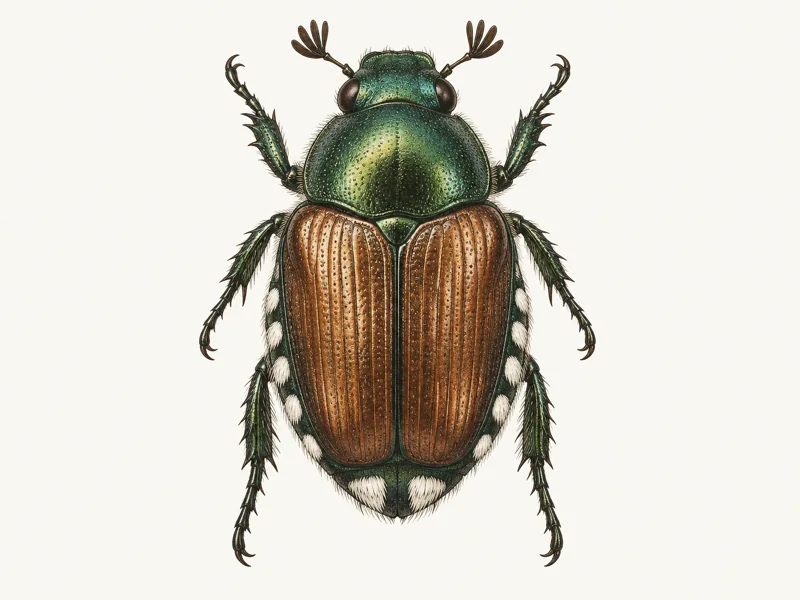
Annotated Anatomy Key (Japanese Beetle)
- Metallic green shield: Iridescent emerald-green head and pronotum gleaming brightly in summer sun.
- Copper-bronze elytra: Ribbed coppery-brown hardened wing covers stop slightly short of the tail tip.
- Six metallic spiny legs: Dark green clawed legs cling tightly to roses, linden leaves, and fruit trees.
- Five white side tufts: Unmistakable row of 5 crisp white hair spots along each side plus 2 at the tip.
Japanese Beetles Field Checklist
- Metallic emerald-green head and thorax with iridescent coppery-bronze wing covers
- Row of five crisp white hair tufts along each side of the abdomen
- Skeletonizes rose, linden, raspberry, and grape leaves into lacy patterns in summer
- White C-shaped soil grubs feed on turfgrass roots in late summer and spring
Side-by-Side Look-Alike Comparisons
Japanese Beetles Size at True Relative Scale
Where Japanese Beetles Live in Georgia
Georgia has a humid subtropical climate with long, hot summers and mild winters across the piedmont and coastal plain (USDA zones 6b-9a). Japanese beetles are well established in this climate. GBIF county-level records are limited, so the exact distribution is best described as widespread rather than tied to a short list of counties.
Adults feed on leaves, flowers, and fruit of hundreds of plant species. Larvae are C-shaped white grubs that live in the soil and feed on grass roots. Irrigated, well-kept lawns are especially attractive egg-laying sites.
- Favored plants: roses, grapes, crape myrtle, linden, Japanese maple, raspberries, and many garden flowers.
- Favored turf: moist, sunny lawns with thatch-free, soft soil.
- Typical damage: skeletonized leaves, ragged blossoms, and brown patches of thinning turf from grubs.
When Japanese Beetles Are Most Active in Georgia
The Georgia Japanese beetle season peaks in July, based on GBIF occurrence records. Adults emerge in early summer, feed through the warmest weeks, and then taper off as the season ends. Activity is highest on sunny, warm days.
The life cycle follows the pattern described by university cooperative extension IPM guidance. Females lay eggs in turf, the grubs feed through late summer and fall, then overwinter deeper in the soil. They resume feeding briefly in spring before pupating.
Look-Alikes Frequently Mistaken for Japanese Beetles
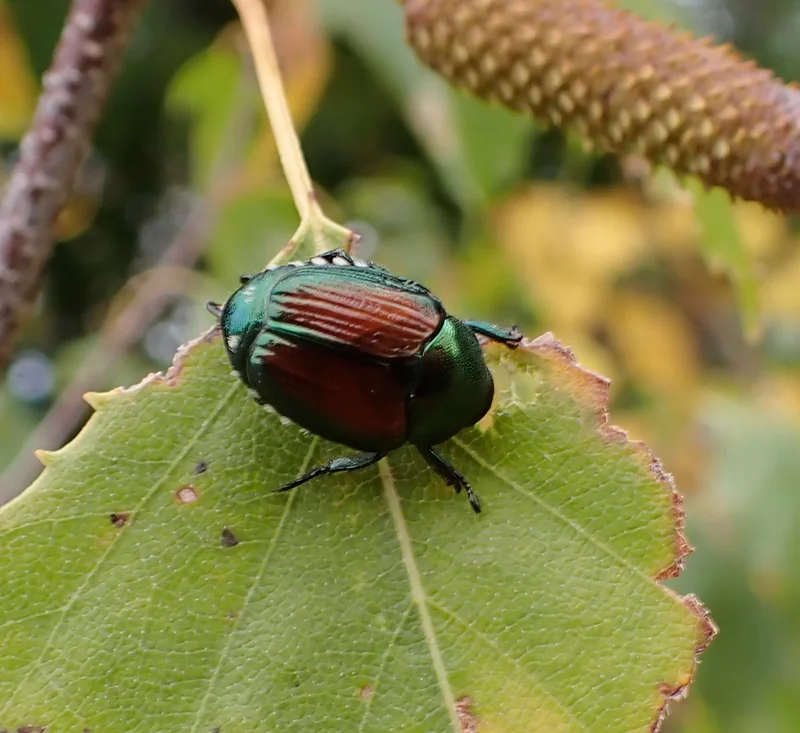
Georgia Japanese beetle identification starts with the adult's look. It is about a half inch long, with a metallic green head and shiny copper-brown wing covers. The key feature is a row of small white tufts of hair along each side of the abdomen, plus two additional tufts at the tip.
June Bugs (May Beetles)
June bugs are larger, stout, and a dull reddish-brown without metallic green. They are strongly attracted to porch lights at night, while Japanese beetles are active by day. They lack the white side tufts.
Asian Lady Beetles
These are small, rounded, and orange to red, often with black spots and a pale marking behind the head. They eat aphids rather than foliage. Unlike Japanese beetles, they sometimes gather on or inside buildings in fall.
How to Keep Japanese Beetles Out of Your Georgia Home
Learning how to prevent Japanese beetles in Georgia means protecting plants and turf, since the beetles seldom live indoors. Begin with non-chemical steps and add products only if needed.
- Hand-pick: knock beetles into a bucket of soapy water in the morning, when they are sluggish.
- Use barriers: cover small, valuable plants with fine netting during peak weeks.
- Choose plants wisely: add less-preferred species where beetles are heavy.
- Manage turf moisture: avoid overwatering in midsummer, when females look for moist soil to lay eggs.
- Keep lawns healthy: proper mowing height and fertilizing help turf tolerate grub feeding.
- Skip pheromone traps near prized plants: they can draw more beetles into the yard than they catch.
If you use any insecticide or grub control, read the EPA-registered label and follow it exactly. Check bloom and pollinator warnings, since flowering plants visited by bees need extra care.
When to Call a Licensed Georgia Pest Professional
- Large, spreading dead patches of turf that peel back like a carpet, with many grubs underneath.
- Repeated severe defoliation of trees or shrubs despite your own efforts.
- Uncertainty about the species, especially if you suspect a different pest.
- A need for a grub treatment plan on a large or commercial property.
Japanese beetles are not considered medically significant. If anyone has an unusual reaction to an insect or a product, contact US Poison Control at 1-800-222-1222 and a doctor.
IPM Prevention Checklist for Georgia Homes
- Avoid placing pheromone Japanese beetle bag traps in your yard—university studies show they attract far more beetles to nearby plants than they catch
 EXCLUSION BLUEPRINT
Inspect eaves, screens, door sweeps, foundation cracks, and utility penetrations around Georgia homes before peak season.
Japanese Beetles in Georgia: Frequently Asked Questions
Are there Japanese beetles in Georgia?
Yes. They are common, with 873 verified GBIF sightings of Popillia japonica in the state.
When do Japanese beetles peak in Georgia?
July is the peak month in GBIF records. Adults are active mostly in early to midsummer.
Are Japanese beetles dangerous?
No. They are a plant and turf nuisance. They do not sting and are not a medical concern.
Do Japanese beetles come inside homes?
Rarely. They may land on screens or fly in briefly, but they feed on outdoor plants and breed in soil.
Sources & Verification
Data refreshed · Editorial & GBIF Methodology