Japanese Beetles in Oregon: Identification, Season, and Prevention
Quick Answer: Japanese beetles (Popillia japonica) are rare in Oregon, with only one verified GBIF sighting on record, in July. They are a nuisance pest of plants, not a danger to people. Because Oregon works to keep this beetle from establishing, any suspected find is worth reporting.
When Japanese Beetles Are Most Active in Oregon
Now (November): Lower Outdoor ActivityJapanese Beetles Range in Oregon vs. Neighboring States
How Oregon Compares to Neighboring States
Note: Wildlife does not follow state or county lines. GBIF totals reflect verified citizen and museum records, so low counts in a neighboring county do not guarantee absence.
How to Identify Japanese Beetles
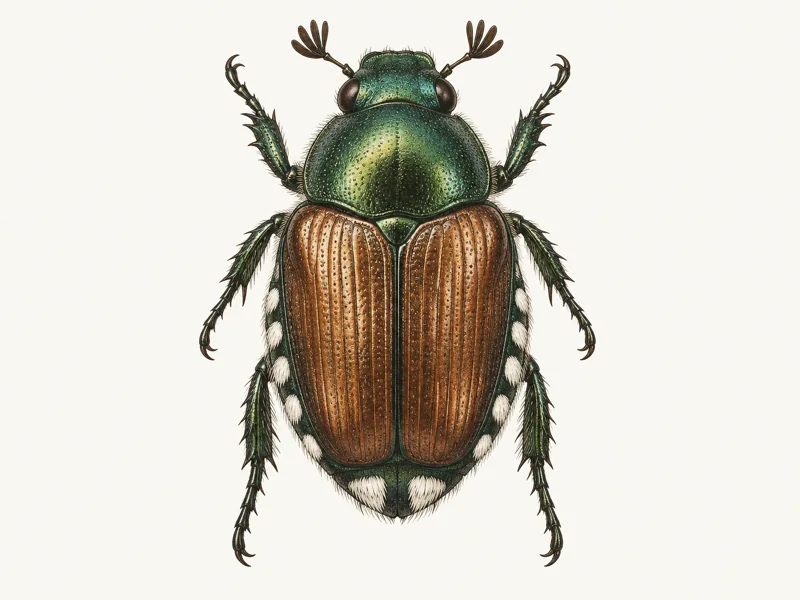
Annotated Anatomy Key (Japanese Beetle)
- Metallic green shield: Iridescent emerald-green head and pronotum gleaming brightly in summer sun.
- Copper-bronze elytra: Ribbed coppery-brown hardened wing covers stop slightly short of the tail tip.
- Six metallic spiny legs: Dark green clawed legs cling tightly to roses, linden leaves, and fruit trees.
- Five white side tufts: Unmistakable row of 5 crisp white hair spots along each side plus 2 at the tip.
Japanese Beetles Field Checklist
- Metallic emerald-green head and thorax with iridescent coppery-bronze wing covers
- Row of five crisp white hair tufts along each side of the abdomen
- Skeletonizes rose, linden, raspberry, and grape leaves into lacy patterns in summer
- White C-shaped soil grubs feed on turfgrass roots in late summer and spring
Side-by-Side Look-Alike Comparisons
Japanese Beetles Size at True Relative Scale
Where Japanese Beetles Live in Oregon
So, are there Japanese beetles in Oregon? Only barely. GBIF lists a single verified occurrence of Popillia japonica in the state, and county-level records are limited, so no county can be named as a stronghold.
Oregon spans wet, mild, oceanic conditions west of the Cascades and dry high desert to the east, across USDA zones 4b to 9b. Japanese beetle grubs favor moist, irrigated turf, which makes lawns and well-watered gardens the most likely places for one to turn up. The beetle is far more established in eastern states, so a single record does not mean a widespread population here.
- Status: rare, one verified record
- Danger level: nuisance (plant feeder)
- Habitat risk: irrigated lawns, roses, fruit trees, and ornamental beds
When Japanese Beetles Are Most Active in Oregon
The one verified record falls in July, which matches the adult flight period described in general entomology literature and university extension IPM guidance. Adults generally emerge in early summer and feed through midsummer in places where they are established.
For anyone tracking the Oregon Japanese beetle season, July is the month to watch. The life cycle runs roughly like this:
- Grubs: feed on grass roots in late summer and fall, then overwinter in soil
- Spring: grubs feed briefly before pupating
- Adults: emerge in early summer, feed on foliage, flowers, and fruit, and lay eggs in turf
Look-Alikes Frequently Mistaken for Japanese Beetles
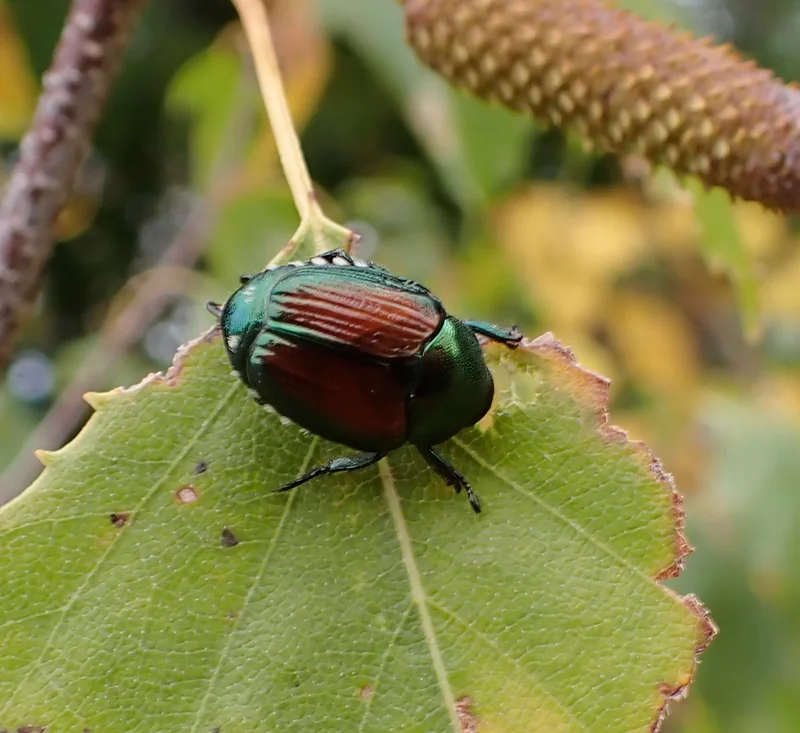
Oregon Japanese beetle identification starts with a close look. Adults are about 3/8 to 1/2 inch long, with a shiny metallic green head and thorax and coppery-brown wing covers. The key trait is a row of small white tufts of hair along each side of the abdomen, with a pair at the tip.
June Bugs (May Beetles)
These are common and often larger, stout, and reddish-brown to dark brown. They lack the metallic green head and the white side tufts. They are mostly active at night and are drawn to lights.
Asian Lady Beetles
These are small, round, orange to red beetles, often with black spots, and they are mostly predators of aphids. They do not skeletonize leaves. They are more likely to be noticed when they gather on sunny walls or enter homes in fall.
If a beetle has metallic green and copper coloring plus white abdominal tufts, photograph it, save it in a sealed container, and report it.
How to Keep Japanese Beetles Out of Your Oregon Home
Learning how to prevent Japanese beetles in Oregon mostly means watching closely and acting early. Start with non-chemical steps.
- Inspect plants in July: check roses, grapes, beans, linden, and fruit trees for skeletonized leaves (lacy damage between veins).
- Don't move risky material: avoid bringing in turf, soil, or nursery plants from infested states without checking for pests.
- Hand-pick: drop a few beetles into soapy water in the early morning, when they are sluggish.
- Use barriers: lightweight netting can protect small, high-value plants during the flight period.
- Manage turf moisture: avoid overwatering lawns in summer, since female beetles prefer moist soil for egg-laying.
- Skip pheromone traps: they can draw beetles to your yard rather than reduce damage.
If you consider an insecticide or biological product, read the label and follow all EPA-registered directions for the plant, site, and timing. Protect pollinators by never spraying open blooms.
When to Call a Professional
- You find a beetle matching the description and cannot rule out Japanese beetle.
- You see several beetles or repeated skeletonized foliage in July.
- Lawn patches lift like loose carpet because of heavy grub feeding.
Contact a licensed Oregon pest professional, and report suspected finds to the Oregon Department of Agriculture or your local extension office so the sighting can be confirmed.
IPM Prevention Checklist for Oregon Homes
- Avoid placing pheromone Japanese beetle bag traps in your yard—university studies show they attract far more beetles to nearby plants than they catch
 EXCLUSION BLUEPRINT
Inspect eaves, screens, door sweeps, foundation cracks, and utility penetrations around Oregon homes before peak season.
Japanese Beetles in Oregon: Frequently Asked Questions
Are there Japanese beetles in Oregon?
Yes, but they are rare. GBIF shows one verified record, from July, and no established county population is documented.
When should I watch for Japanese beetles in Oregon?
July is the peak month in the verified record. Check plants for feeding damage and adult beetles then.
Are Japanese beetles dangerous to people or pets?
No. They are a nuisance that feeds on plants and do not pose a medical threat. If someone has an unusual reaction to any insect, call Poison Control at 1-800-222-1222 or see a doctor.
What should I do if I think I found one?
Photograph it, collect it in a sealed container, and report it to the Oregon Department of Agriculture or local extension. Confirmation helps officials track whether the beetle is spreading.
Sources & Verification
Data refreshed · Editorial & GBIF Methodology