Yellow Jackets in North Carolina: Species, Season, and Prevention
Quick Answer: Yes, yellow jackets are common in North Carolina. GBIF holds 2,989 verified sightings statewide, and three species are recorded: the Eastern Yellowjacket (Vespula maculifrons), the Southern Yellowjacket (Vespula squamosa), and the Downy Yellowjacket (Vespula flavopilosa). Activity peaks in April and again from September through November.
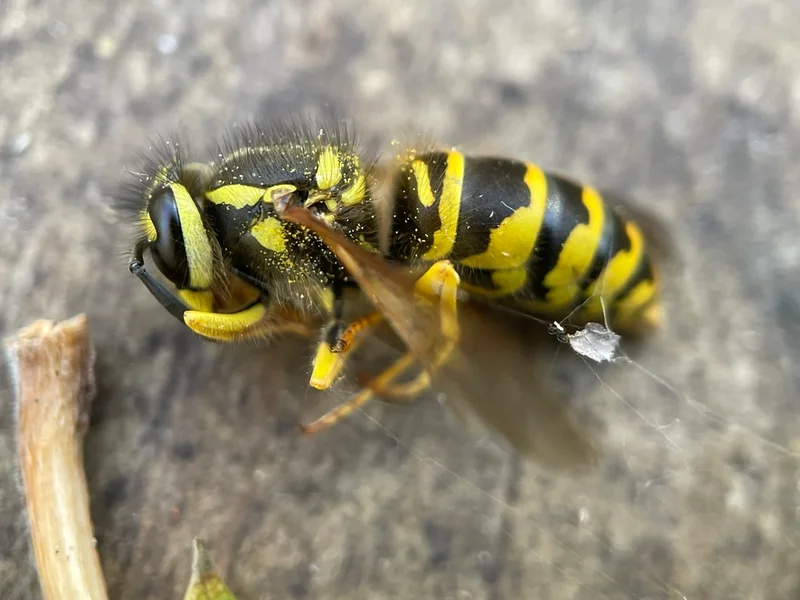
When Yellow Jackets Are Most Active in North Carolina
Now (November): Peak ActivityVerified North Carolina Counties, Species & US Range
Counties with Verified Observations
- Orange
- Wake
- Watauga
- Guilford
- Cumberland
- Mecklenburg
- Durham
- Iredell
- New Hanover
- Chatham
Species Recorded in North Carolina
| Species | Scientific Name | GBIF Records |
|---|---|---|
| Eastern Yellowjacket | Vespula maculifrons | 1,672 |
| Southern Yellowjacket | Vespula squamosa | 1,032 |
| Downy Yellowjacket | Vespula flavopilosa | 108 |
How North Carolina Compares to Neighboring States
Note: Wildlife does not follow state or county lines. GBIF totals reflect verified citizen and museum records, so low counts in a neighboring county do not guarantee absence.
How to Identify Yellow Jackets
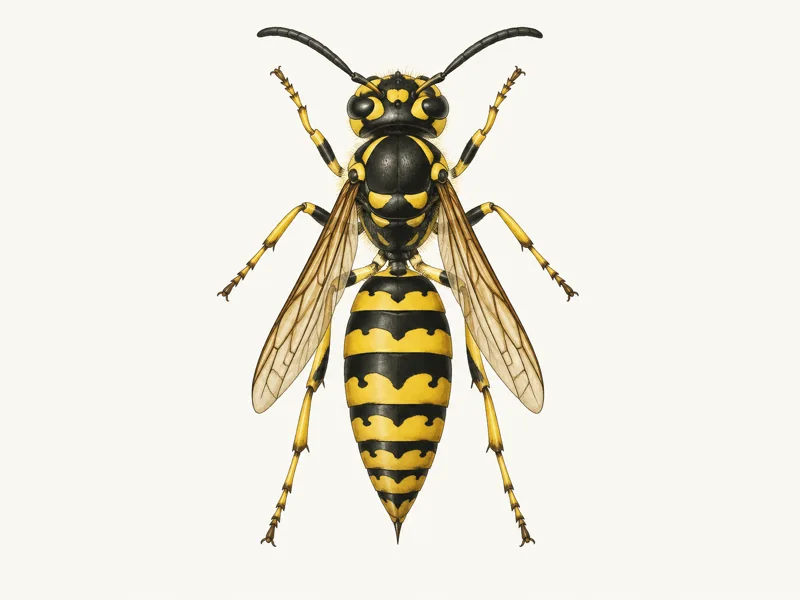
Annotated Anatomy Key (Yellow Jacket)
- Smooth hairless body: Compact shiny black-and-yellow thorax—lacks the fuzzy hair coat of honey bees and bumble bees.
- Folded wings: Two pairs of smoky translucent wings that fold lengthwise along the sides at rest.
- Pinched waist: Extremely narrow constriction separating thorax and abdomen; legs tuck tightly in flight.
- Yellow & black bands: Crisp bright-yellow and jet-black warning rings ending in a smooth multi-use stinger.
Yellow Jackets Field Checklist
- Compact, shiny wasp with vivid bright-yellow and jet-black abdominal bands
- Fast side-to-side darting flight close to the ground and outdoor food
- Legs tuck tightly close to the body in flight (unlike dangling paper wasps)
- Highly defensive of ground or wall-void nests, especially in late summer
Yellow Jackets Size at True Relative Scale
Where Yellow Jackets Live in North Carolina
Anyone asking whether there are yellow jackets in North Carolina can look to the occurrence records. The top counties for sightings are Orange, Wake, Watauga, Guilford, and Cumberland. That spread covers the Piedmont, the Blue Ridge foothills and mountains, and the Sandhills region near the coastal plain.
The state is humid subtropical across the coastal plain and Piedmont, with cooler conditions in the Blue Ridge (USDA zones 6a to 8b). Yellow jackets adapt to all of it. Colonies are often built underground, so nests turn up in old rodent burrows, lawn edges, and soil banks.
Other common nest sites include:
- Wall voids and gaps behind siding
- Hollow logs and stumps
- Crawl spaces, sheds, and under decks
- Dense shrubs and woodpiles
When Yellow Jackets Are Most Active in North Carolina
North Carolina yellow jacket season follows the colony cycle. Overwintered queens emerge in spring and start small nests, which is consistent with the April peak in sightings. Colonies grow through summer, and workers become most noticeable in late summer and fall.
September, October, and November are the other peak months in the records. Large colonies are at full size then, and workers scavenge sugar and protein more aggressively. Picnics, trash cans, and outdoor dining areas draw them in.
Cold weather ends most colonies, and only new queens overwinter in sheltered spots. Mild stretches in the coastal plain may keep foragers flying a bit longer.
Look-Alikes Frequently Mistaken for Yellow Jackets
North Carolina yellow jacket identification starts with body shape. Yellow jackets are compact, about 3/8 to 5/8 inch long, with bold yellow and black bands and a smooth, nearly hairless look. They fly with a quick, side-to-side pattern near food and nests.
Several local insects are often confused with them:
- Paper wasps: Slimmer, with long dangling legs and open, umbrella-shaped nests, usually under eaves.
- Hornets: Larger, and they build enclosed paper nests, often hanging in trees or shrubs.
- Other wasps: A broad group that includes solitary species, with varied colors and nesting habits.
- Honey bees: Fuzzy, golden-brown, and rounder. They are usually docile while foraging on flowers.
If you cannot tell what you are looking at, observe from a distance and note where the nest entrance is. A hole in the ground with steady traffic points to yellow jackets.
How to Keep Yellow Jackets Out of Your North Carolina Home
Knowing how to prevent yellow jackets in North Carolina comes down to removing food, shelter, and entry points. Start with non-chemical steps, which work best before a colony is established.
- Sanitation: Use tight-lidded trash cans, rinse recycling, and clean up pet food and fallen fruit promptly.
- Exclusion: Seal gaps in siding, soffits, and foundation vents. Repair torn screens.
- Yard care: Fill abandoned burrows, and keep woodpiles away from the house.
- Moisture control: Fix leaky spigots and irrigation, since wasps also seek water.
- Outdoor dining: Cover food and drinks, and check cans before sipping.
- Early nests: Walk the property in spring and watch for queens scouting sites.
Traps can reduce foragers near patios, but they will not eliminate a nest. If you use any insecticide product, read the label and follow it exactly, since EPA labels are the legal directions for use.
When to call a licensed North Carolina pest professional
- The nest is in a wall void, attic, or other enclosed space.
- The nest is near a door, walkway, or play area.
- You see heavy traffic from a ground nest or the colony is large.
- Anyone in the household has had a severe reaction to stings.
Do not block a nest entrance or disturb a nest yourself. Yellow jackets defend colonies aggressively and can sting repeatedly.
Yellow jacket stings are medically significant for some people. For sting questions, contact US Poison Control at 1-800-222-1222. Seek emergency care right away for trouble breathing, swelling of the face or throat, or dizziness. This article is general pest information and not medical advice.
IPM Prevention Checklist for North Carolina Homes
- Keep outdoor food, sugary drinks, and trash cans tightly covered
- Inspect lawns for insect flight traffic before mowing
- Never plug a wall-void nest entrance from outside—trapped wasps will chew into living spaces
 EXCLUSION BLUEPRINT
Inspect eaves, screens, door sweeps, foundation cracks, and utility penetrations around North Carolina homes before peak season.
Yellow Jackets in North Carolina: Frequently Asked Questions
Are there yellow jackets in North Carolina?
Yes. They are common, with 2,989 verified GBIF sightings. Eastern, Southern, and Downy Yellowjackets are all recorded in the state.
When is yellow jacket season in North Carolina?
Records peak in April, then September through November. Colonies are largest, and workers most noticeable, in fall.
Where do yellow jackets nest in North Carolina?
Often underground in old burrows, but also in wall voids, crawl spaces, logs, and dense shrubs.
Can I remove a yellow jacket nest myself?
Small, accessible nests are risky even then. Call a licensed professional for nests in walls, large colonies, or anyone with a sting allergy.
Sources & Verification
- UC IPM — Yellowjackets
- Ohio State University Extension — Yellowjackets
- GBIF Global Biodiversity Occurrence Records
Data refreshed · Editorial & GBIF Methodology