Cicada Killer vs Yellow Jacket: How to Tell Them Apart
Quick ID Verdict: A cicada killer (Sphecius speciosus) is a massive solitary wasp, 30-50 mm long (up to 2 inches), with rusty amber wings. A yellow jacket (Vespula) is a compact, shiny wasp only 10-16 mm long with vivid bright-yellow and jet-black bands. If it looks huge and has amber-tinted wings, it is almost certainly a cicada killer.
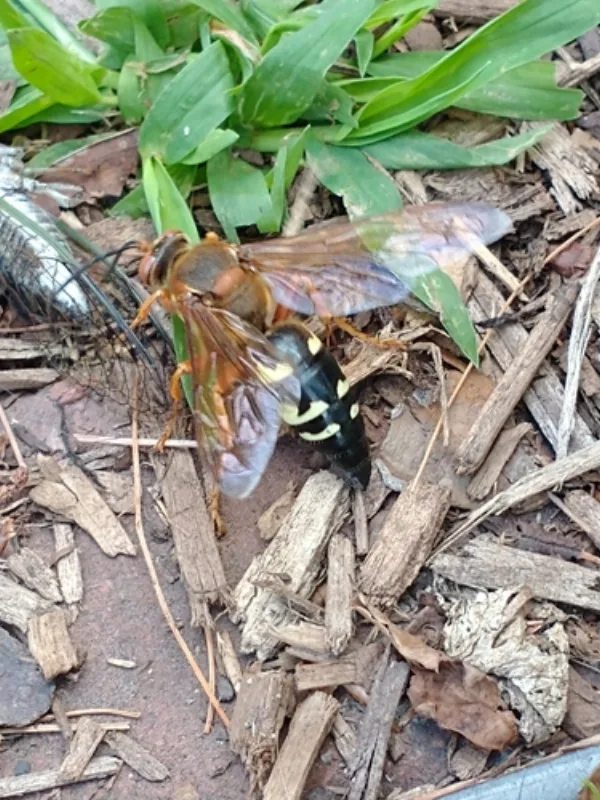
Cicada Killer
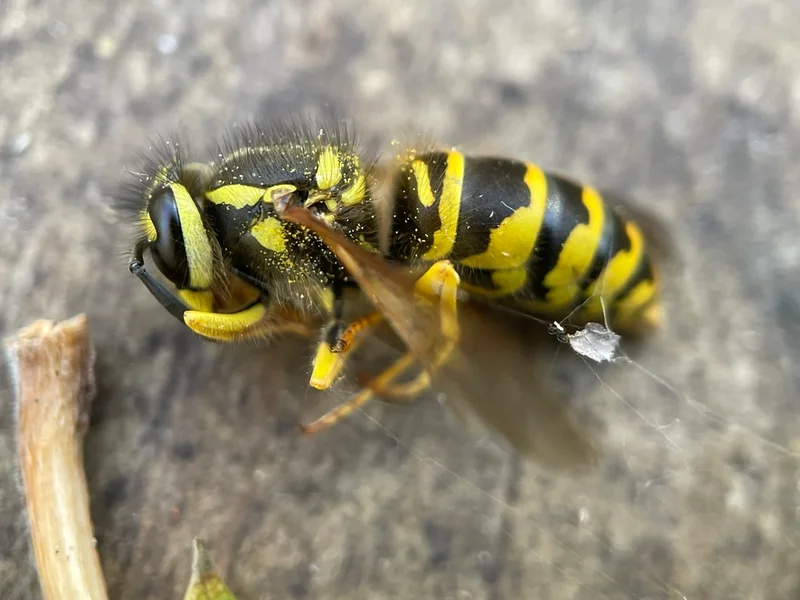
Yellow Jacket
Side-by-Side Comparison Table
| Trait | Cicada Killer | Yellow Jacket |
|---|---|---|
| Scientific Group | Sphecius speciosus | Vespula |
| Category | Insect | Insect |
| Typical Size | 30–50 mm | 10–16 mm |
| Danger Level | Nuisance | Medically Significant |
| Bites or Stings? | Yes | Yes |
| Peak US Months | July, August | August, September, October |
| Key ID Trait | Massive solitary wasp (up to 2 inches) with rusty amber wings and black-and-yellow striped abdomen | Compact, shiny wasp with vivid bright-yellow and jet-black abdominal bands |
Cicada Killer vs. Yellow Jacket: True Size Comparison
Side-by-Side Anatomy Blueprint
Compare body segments, antennae, leg count, and key markings directly before treating or removing either species.
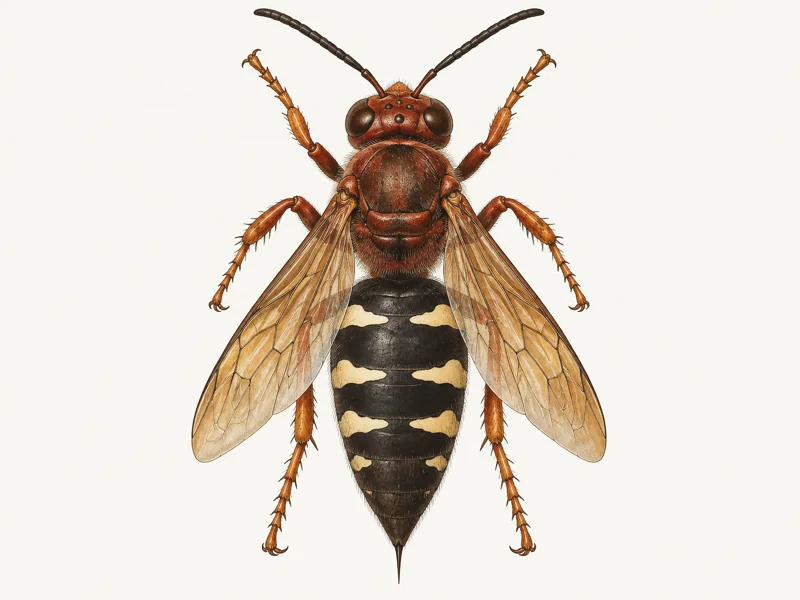
- Russet head & thorax: Massive solitary digger wasp (up to 40 mm) with rusty-red head and thorax.
- Large amber wings: Long russet-tinted veined wings strong enough to carry heavy paralyzed cicadas.
- Spiny digging legs: Six powerful amber-red spiny legs built for excavating deep sandy lawn burrows.
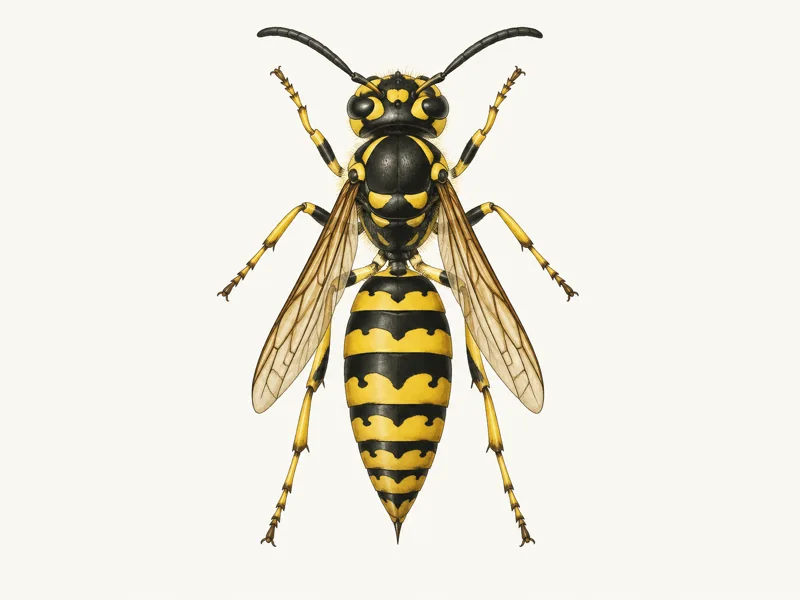
- Smooth hairless body: Compact shiny black-and-yellow thorax—lacks the fuzzy hair coat of honey bees and bumble bees.
- Folded wings: Two pairs of smoky translucent wings that fold lengthwise along the sides at rest.
- Pinched waist: Extremely narrow constriction separating thorax and abdomen; legs tuck tightly in flight.
Quick Answer: A cicada killer (Sphecius speciosus) is a massive solitary wasp, 30-50 mm long (up to 2 inches), with rusty amber wings. A yellow jacket (Vespula) is a compact, shiny wasp only 10-16 mm long with vivid bright-yellow and jet-black bands. If it looks huge and has amber-tinted wings, it is almost certainly a cicada killer. If it is small, glossy, and arrives in numbers, treat it as a yellow jacket.
Key Visual & Physical Differences
Size is the fastest way to tell a cicada killer from a yellow jacket. A cicada killer can be three times longer than a yellow jacket, and its size often alarms homeowners who see one for the first time. Color and wing tint confirm the identification.
Cicada Killer Identification
- Size: 30-50 mm, which makes it one of the largest wasps a homeowner will see.
- Wings: Rusty amber, often glowing orange in sunlight.
- Abdomen: Black or dark reddish-brown, marked with black-and-yellow stripes that are often broken or patchy.
- Build: Heavy and robust, with long legs that hang down in flight.
Yellow Jacket Identification
- Size: 10-16 mm, which is about the size of a honey bee or slightly larger.
- Wings: Smoky or clear, held folded lengthwise along the body at rest.
- Abdomen: Shiny and nearly hairless, with crisp, vivid bright-yellow and jet-black bands.
- Build: Compact and sleek, with a quick, darting flight that often moves side to side near food.
If the wasp could cover a quarter and has amber wings, it is a cicada killer. If it is small, glossy, and boldly banded, it is a yellow jacket.
Behavior, Habitat & Danger Comparison
The biggest difference between cicada killers and yellow jackets is social structure. Cicada killers are solitary, and each female digs and provisions her own burrow. Yellow jackets live in colonies that can hold thousands of workers ready to defend the nest.
Cicada Killers
- Nests: Individual burrows in bare, sandy, or well-drained soil. They often appear along sidewalks, patio edges, and thin turf, with a U-shaped mound of loose dirt at each entrance.
- Diet: Females paralyze cicadas to feed their larvae. Adults sip nectar and plant sap.
- Behavior: Males patrol territories and dive at passersby, but they cannot sting. Females are docile and rarely sting unless handled or stepped on.
- Danger level: Nuisance. Their size is intimidating, but the risk to people is low.
Yellow Jackets
- Nests: Paper nests in the ground, often in old rodent burrows, or inside wall voids, attics, sheds, and shrubs.
- Diet: They hunt insects early in the season, then forage for sugars and proteins. That makes them persistent visitors at picnics, trash cans, and soda cans.
- Behavior: They defend the colony aggressively. They can sting repeatedly, and disturbing a nest can bring a mass attack.
- Danger level: Medically significant. Their stings can cause severe reactions in sensitive people.
If someone is stung by multiple yellow jackets or shows signs of an allergic reaction, call 911 right away. For guidance after a sting, contact US Poison Control at 1-800-222-1222 and follow up with a doctor. Do not rely on home remedies for venom reactions.
Which One Is Worse for Homeowners?
Yellow jackets pose the greater threat to households. They sting defensively and repeatedly, they nest in hidden spots near people, and their colonies grow larger as summer goes on. Cicada killers can churn up lawns and startle people, but they are mainly a nuisance.
Managing Cicada Killers (IPM First)
- Thicken turf through overseeding, proper fertilizing, and steady watering, because cicada killers prefer bare, dry soil.
- Cover exposed sandy areas with mulch, ground cover, or pavers.
- Accept modest activity where possible. These wasps help control cicada populations and leave on their own as the season ends.
Managing Yellow Jackets (IPM First)
- Keep trash cans tightly lidded, and cover food and drinks outdoors.
- Seal gaps in siding, soffits, and foundations to keep colonies out of wall voids.
- Use baited traps away from patios and gathering areas.
- Have a licensed pest professional remove nests in walls or high-traffic areas. Never seal an active nest inside a wall, because the wasps may chew through into living spaces.
If chemical control becomes necessary for either species, use only registered products and follow the EPA product label exactly. Treat nests at dusk, when activity is lowest, and wear protective clothing.
Frequently Asked Questions
Is it a cicada killer or a yellow jacket if it nests in my lawn?
Both species can nest in the ground. Cicada killers dig single burrows with a mound of loose soil, usually in sandy or bare spots. Yellow jackets use one entrance with heavy traffic of small wasps flying in and out.
Do cicada killers sting people?
Males cannot sting. Females can, but they rarely do unless someone handles them or steps on them barefoot.
Why are yellow jackets considered more dangerous?
Yellow jackets defend large colonies, can sting multiple times, and attack in groups. This makes them medically significant, especially for people with venom allergies.
Should I remove cicada killers from my yard?
Removal is usually optional. Improving turf density and covering bare soil discourages them without pesticides. Their activity ends naturally late in the summer season.