Paper Wasp vs Yellow Jacket: How to Tell Them Apart and Protect Your Home
Quick ID Verdict: A wasp drifts past the porch light, and the first question is whether it's a paper wasp or yellow jacket. The answer changes how much risk is nearby and how the problem should be handled.
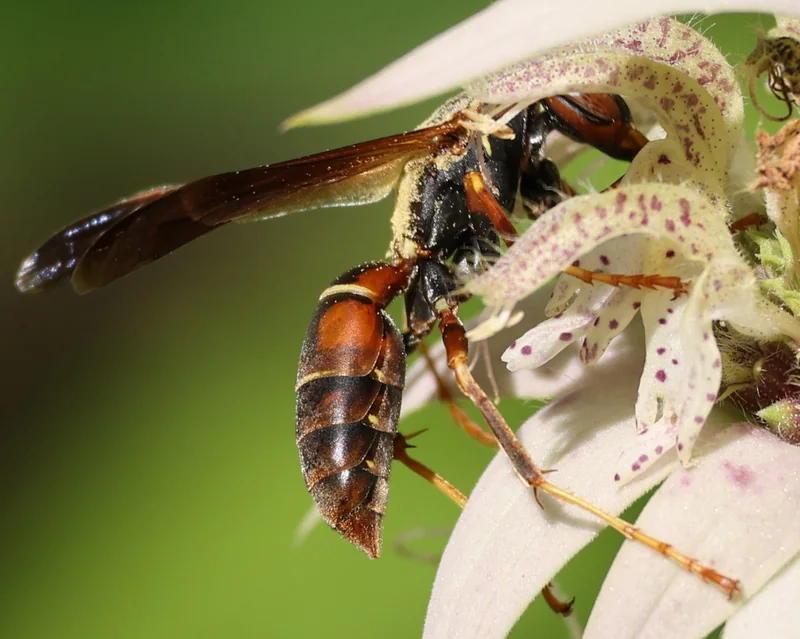
Paper Wasp
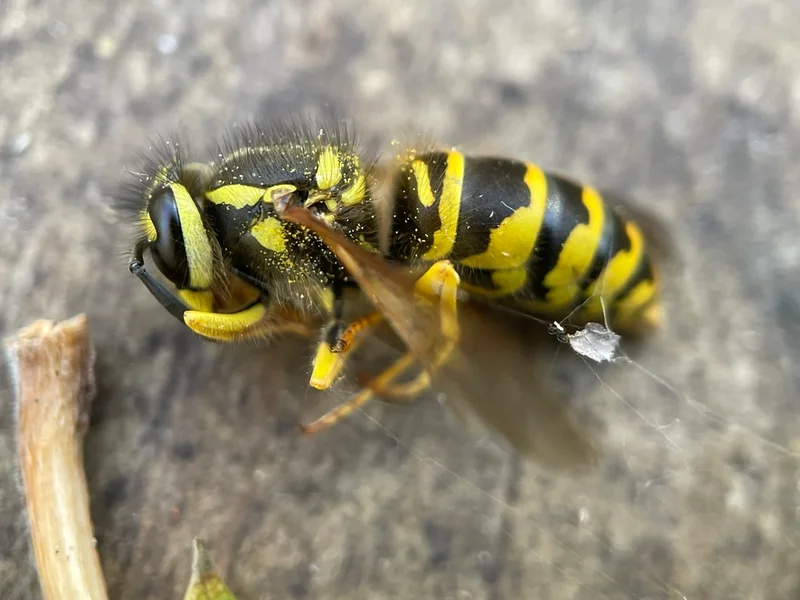
Yellow Jacket
Side-by-Side Comparison Table
| Trait | Paper Wasp | Yellow Jacket |
|---|---|---|
| Scientific Group | Polistes | Vespula |
| Category | Insect | Insect |
| Typical Size | 16–25 mm | 10–16 mm |
| Danger Level | Medically Significant | Medically Significant |
| Bites or Stings? | Yes | Yes |
| Peak US Months | July, August, September, October | August, September, October |
| Key ID Trait | Long slender brown, reddish, or yellow-and-black wasp with long hind legs dangling in flight | Compact, shiny wasp with vivid bright-yellow and jet-black abdominal bands |
Paper Wasp vs. Yellow Jacket: True Size Comparison
Side-by-Side Anatomy Blueprint
Compare body segments, antennae, leg count, and key markings directly before treating or removing either species.
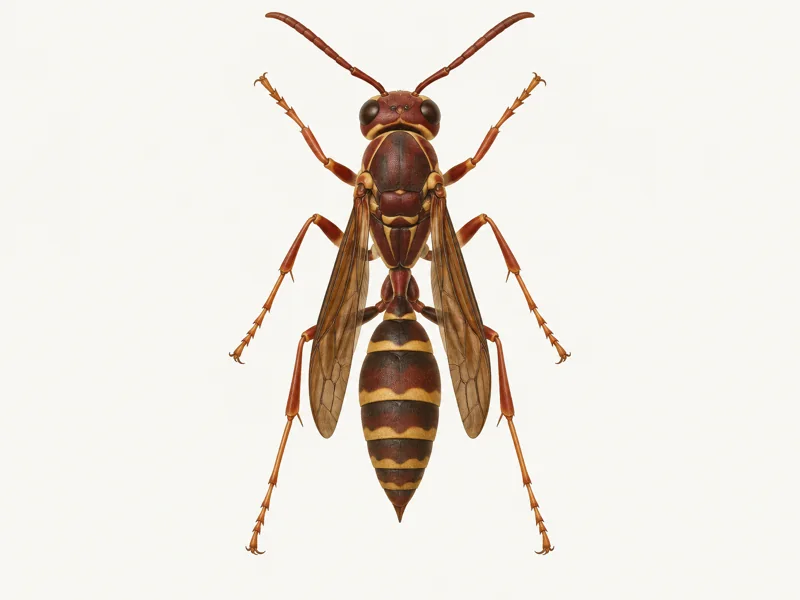
- Mahogany head & antennae: Slender reddish-brown head with curved yellow-tipped antennae.
- Narrow pinched waist: Slim spindle-shaped waist connecting dark thorax to tapered abdomen.
- Long dangling legs: Extra-long reddish-brown hind legs trail conspicuously downward in flight.
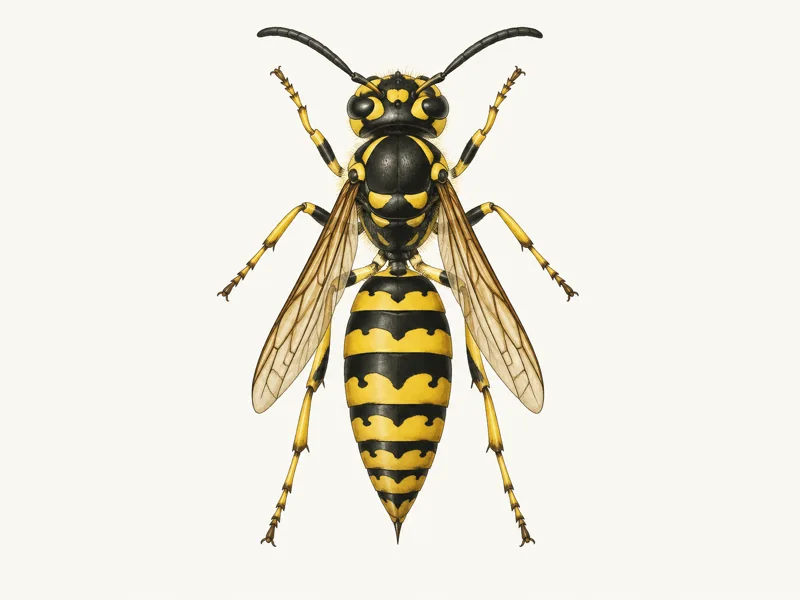
- Smooth hairless body: Compact shiny black-and-yellow thorax—lacks the fuzzy hair coat of honey bees and bumble bees.
- Folded wings: Two pairs of smoky translucent wings that fold lengthwise along the sides at rest.
- Pinched waist: Extremely narrow constriction separating thorax and abdomen; legs tuck tightly in flight.
The 3-second verdict: If the wasp is long and slender with hind legs dangling in flight, it's a paper wasp. If it's compact and shiny with bright yellow and jet-black bands and a fast, direct flight, it's a yellow jacket.
Paper Wasp or Yellow Jacket? Quick Identification Guide
Paper wasp vs yellow jacket identification gets easier once a homeowner knows which features matter. Size, silhouette, and nest location settle most cases without getting close.
Body Shape, Color, and Flight Patterns
Paper wasps (Polistes) measure about 16–25 mm. They're long and slender, with a narrow waist, and are colored brown, reddish, or yellow-and-black. The best field mark is their long hind legs, which hang down during flight.
Yellow jackets (Vespula) are smaller, about 10–16 mm, and look stocky and compact. Their bodies are shiny, with vivid bright-yellow and jet-black bands on the abdomen. They fly quickly in straight lines or side-to-side zigzags, with legs tucked in.
FeaturePaper WaspYellow JacketLength16–25 mm10–16 mmBuildLong, slenderCompact, stoutColorBrown, reddish, or yellow-blackBright yellow and jet black, shinyFlightSlow, legs danglingFast, legs tucked
Nest Types and Where You'll Find Them
Paper wasps build an open, umbrella-shaped comb of gray paper with visible cells. The nest hangs from a single stalk under eaves, porch ceilings, deck railings, shutters, and grill lids.
Yellow jackets usually hide their nests. Many colonies live underground in old rodent burrows, while others fill wall voids, attics, or hollow logs. The nest is enclosed in a papery shell, so homeowners often see only a steady stream of workers at a small hole in the ground or siding.
Behavior and Sting Risk Compared
Both insects are medically significant stingers. Unlike honey bees, both can sting more than once.
The main difference between paper wasp and yellow jacket behavior is temperament. Paper wasps are generally less aggressive and tend to sting when their nest is bumped or a hand gets too close. Yellow jackets defend their colonies hard, and a lawnmower passing over a ground nest can trigger a mass attack.
Yellow jackets are also scavengers. In late summer they hover around soda cans, trash bins, and picnic plates, which puts them in close contact with people. Paper wasps mostly hunt caterpillars and other soft-bodied insects, so they rarely crash a cookout.
Safety note: For any sting causing swelling beyond the sting site, trouble breathing, dizziness, or multiple stings, call US Poison Control at 1-800-222-1222 or seek emergency care. People with known allergies should follow their doctor's guidance.
Seasonal Activity and Range Across the US
Both groups occur widely across the United States, with different species dominating different regions. Homeowners in nearly every state can expect to see one or both.
The seasonal cycle is similar:
- Spring: A single overwintering queen starts a small nest.
- Summer: Workers hatch and the colony grows quickly.
- Late summer to fall: Colonies peak. Yellow jacket nests can hold thousands of workers, while paper wasp nests usually stay much smaller.
- Winter: Workers die off with hard freezes, and only mated queens survive in sheltered spots.
In the warm Southern states and California, the season runs longer, and yellow jacket colonies sometimes persist through mild winters and grow unusually large. Fall is when yellow jackets cause the most trouble, as they shift from protein to sugary foods.
Safe IPM Strategies for Each Pest
Integrated Pest Management starts with prevention, not spraying. A few habits reduce encounters with either insect.
For paper wasps:
- Check eaves, railings, and play sets in early spring, when nests are tiny.
- Seal gaps in siding, soffits, and vents to cut off sheltered nesting sites.
- Consider leaving a nest alone if it's away from doors and walkways, since paper wasps help control garden caterpillars.
For yellow jackets:
- Keep trash cans tightly lidded and rinse recyclables.
- Cover food and drinks outdoors, and clean up fallen fruit.
- Fill old rodent burrows and seal openings in walls and foundations.
- Mark any ground nest so no one mows or walks over it.
If an insecticide is needed, homeowners should choose a product labeled for the specific pest and site, and follow the EPA-registered product label exactly. Treating at dusk, when activity is low, is the common label guidance. Never seal a yellow jacket entrance in a wall, since the colony may chew inward into living space.
When to Call a Pest Professional
A licensed pest professional is the safer choice when:
- The nest belongs to yellow jackets, especially underground or inside a wall.
- The nest is high, hard to reach, or near an entry door.
- Anyone in the household has a sting allergy.
- Multiple nests keep returning each season.
Professionals have protective gear and can remove wall-void nests without driving wasps indoors. For most homeowners in the paper wasp vs yellow jacket debate, the yellow jacket is the one that warrants a call.
Frequently Asked Questions
What's the easiest way to tell a paper wasp from a yellow jacket?
Look at the wasp's body shape and flight pattern. Paper wasps are long and slender with hind legs dangling during flight, while yellow jackets are compact and shiny with bright yellow-and-black bands and fast, direct flight patterns.
Are paper wasps less aggressive than yellow jackets?
Yes. Paper wasps generally sting only when their nest is directly threatened, while yellow jackets are highly aggressive and will defend their colonies aggressively, even attacking lawnmowers passing over ground nests.
Where do yellow jackets typically build their nests?
Yellow jackets usually hide their nests underground in old rodent burrows or inside wall voids and attics. The enclosed papery nest is often detected only by a steady stream of workers at a small ground or siding hole.
Why are yellow jackets more problematic at picnics and outdoor events?
Yellow jackets are scavengers that seek sugary foods and protein in late summer, making them hover around soda cans, trash, and food plates. This puts them in close contact with people, unlike paper wasps which hunt insects.
Can a paper wasp sting more than once?
Yes, paper wasps can sting multiple times because their stingers are smooth and don't get stuck, unlike honey bees. Yellow jackets share this ability, making both medically significant stingers.
When should I call a pest professional for a yellow jacket nest?
Contact a pest professional if the yellow jacket nest is underground, inside a wall, high up, near entry doors, or if anyone in your home has a sting allergy. Professionals have protective gear to safely remove wall-void nests.