Wasp vs Yellow Jacket: How to Tell Them Apart and Handle Them Safely
Quick ID Verdict: A buzzing insect circles the picnic table, and every homeowner asks the same question: wasp or yellow jacket? Here's the 3-second verdict: a slender, smooth, nearly hairless insect with a very narrow pinched waist and dangling legs is a typical wasp, while a compact, shiny insect banded in vivid bright yellow and jet black is a yellow jacket. Both are medically significant stingers, so correct identification shapes how safely the problem gets handled.
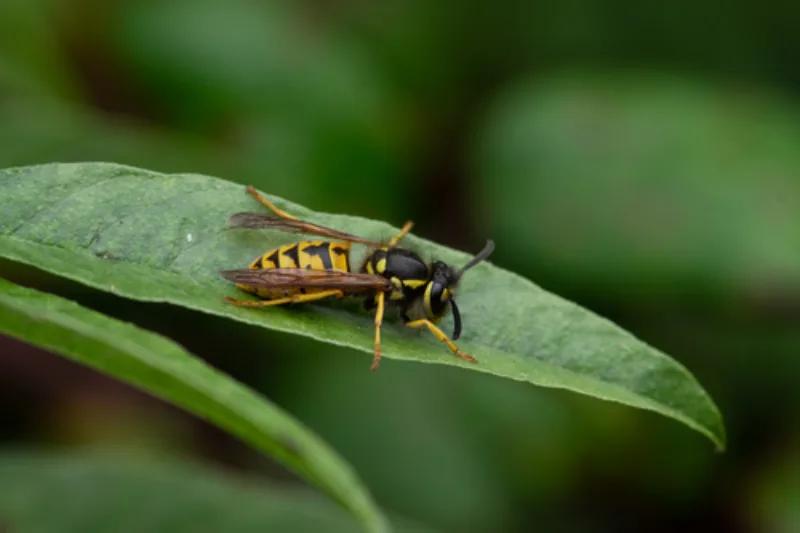
Wasp
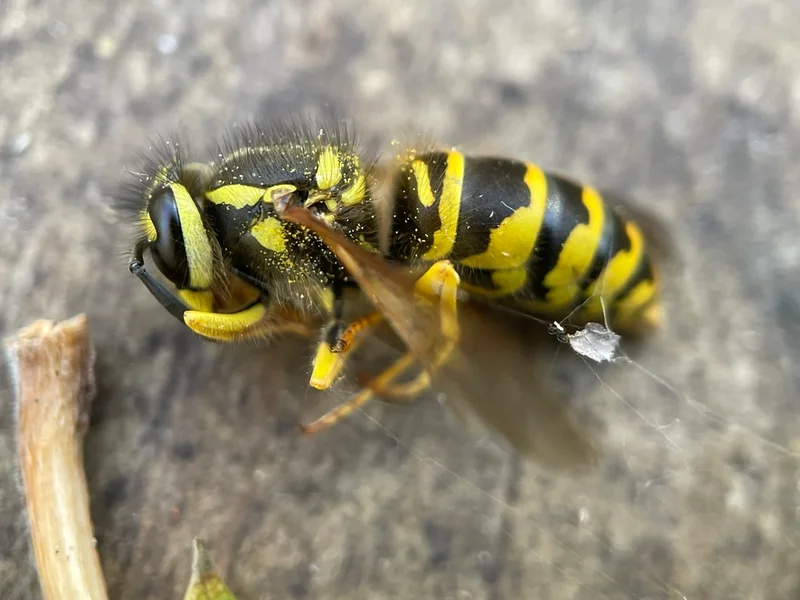
Yellow Jacket
Side-by-Side Comparison Table
| Trait | Wasp | Yellow Jacket |
|---|---|---|
| Scientific Group | Vespidae | Vespula |
| Category | Insect | Insect |
| Typical Size | 12–28 mm | 10–16 mm |
| Danger Level | Medically Significant | Medically Significant |
| Bites or Stings? | Yes | Yes |
| Peak US Months | July, August, September, October | August, September, October |
| Key ID Trait | Slender, smooth, nearly hairless body with a very narrow pinched waist | Compact, shiny wasp with vivid bright-yellow and jet-black abdominal bands |
Wasp vs. Yellow Jacket: True Size Comparison
Side-by-Side Anatomy Blueprint
Compare body segments, antennae, leg count, and key markings directly before treating or removing either species.
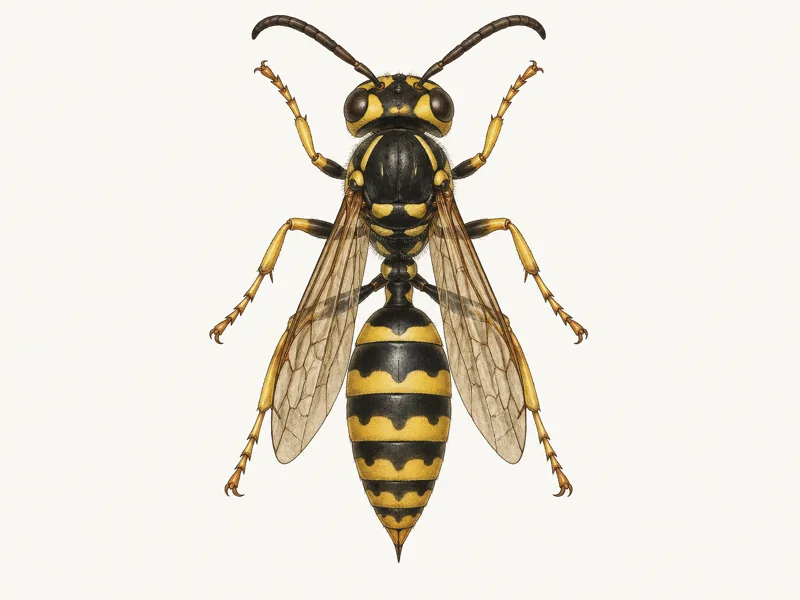
- Curved dark antennae: Segmented dark antennae and strong chewing mandibles for wood pulp nests.
- Smoky folded wings: Two pairs of narrow veined wings that fold lengthwise along the back at rest.
- Pinched waist: Sharp slender constriction separating the smooth hairless thorax from abdomen.
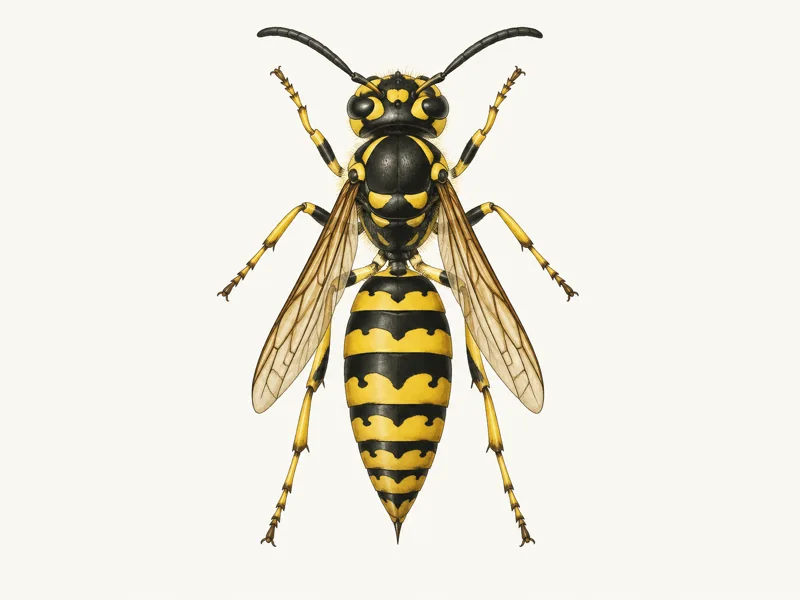
- Smooth hairless body: Compact shiny black-and-yellow thorax—lacks the fuzzy hair coat of honey bees and bumble bees.
- Folded wings: Two pairs of smoky translucent wings that fold lengthwise along the sides at rest.
- Pinched waist: Extremely narrow constriction separating thorax and abdomen; legs tuck tightly in flight.
Are Yellow Jackets Wasps? Understanding the Family Connection
Yes. Yellow jackets are wasps. They belong to the genus Vespula, which sits inside the broader wasp family Vespidae, alongside paper wasps and hornets.
So the real difference between wasp and yellow jacket is one of scale. "Wasp" is the umbrella term, and when most homeowners say it, they mean the longer-legged paper wasps hanging around eaves. Yellow jackets are a specific, more compact, and often more defensive group within that family.
Wasp vs Yellow Jacket Identification: Key Physical Differences
Good wasp vs yellow jacket identification comes down to two things: what the insect looks like and where it lives.
Body Shape, Color Patterns, and Size
FeatureWasps (Vespidae)Yellow Jackets (Vespula)Size12–28 mm10–16 mmBodySlender, smooth, nearly hairlessCompact, shiny, stockyWaistVery narrow, pinchedPresent but less obviousColorVaries: brown, reddish, black, some yellowVivid bright-yellow and jet-black bandsWasps often fly with their legs dangling below them. Yellow jackets tuck their legs in and move fast, in a darting, side-to-side pattern near food.
Nest Locations and Construction
Paper wasps build open, umbrella-shaped combs with visible cells, usually under eaves, porch ceilings, or deck railings. These nests rarely grow beyond a few dozen cells.
Yellow jackets prefer enclosed nests wrapped in a papery outer envelope. Many build underground in old rodent burrows, while others nest inside wall voids, attics, or sheds. A single colony can reach thousands of workers by late summer, and the entrance may be nothing more than a small hole with constant traffic.
Behavior, Aggression, and Seasonal Activity Across the US
Both insects occur across the continental US. Colonies typically start each spring when a lone queen emerges from overwintering and begins building. Activity peaks from late summer into fall, then colonies die off after hard frosts. In warmer southern states, some yellow jacket colonies can persist through winter.
Behavior is where the two split sharply:
- Wasps are generally less defensive. They tend to sting only when their nest is touched or they're trapped against skin.
- Yellow jackets become notably aggressive in late summer and fall, when their diet shifts toward sugars and proteins. That's why they crash cookouts, trash cans, and soda cans.
- Ground nests are a major hazard. Lawn mowers and string trimmers can set off a mass defensive response from a yellow jacket colony.
For homeowners, yellow jackets usually rank as the bigger problem. Larger colonies, hidden nests, and scavenging habits put them in closer contact with people.
Sting Risks and When to Seek Medical Help
Both wasps and yellow jackets are medically significant. Unlike honey bees, they can sting more than once, and a disturbed yellow jacket nest may produce multiple stings within seconds.
Most people experience localized pain and swelling. But, anyone stung should seek emergency care immediately (call 911) if they show:
- Difficulty breathing or swallowing
- Swelling of the face, lips, or throat
- Dizziness, hives spreading beyond the sting site, or a rapid pulse
- Many stings at once, especially in children or older adults
For guidance after any sting, contact US Poison Control at 1-800-222-1222 and follow up with a doctor. People with known venom allergies should talk with their physician about an emergency action plan before the outdoor season begins.
Safe IPM Strategies for Managing Wasps or Yellow Jackets Around Your Home
Integrated Pest Management starts with prevention, not pesticides. Whether the culprit is a wasp or yellow jacket, these steps reduce encounters:
- Exclusion: Seal gaps around siding, soffits, vents, and utility lines in early spring, before queens choose nest sites. Repair torn window screens.
- Sanitation: Keep trash cans tightly lidded, rinse recycling, and cover food and drinks outdoors. Pick up fallen fruit promptly.
- Moisture control: Fix leaky spigots and remove standing water that draws foraging workers.
- Early inspection: Check eaves and decks in spring, when nests are small and easier to manage.
Small, exposed paper wasp nests far from doorways can often be left alone, since wasps also prey on garden pests. Yellow jacket nests in walls, ground near play areas, or high-traffic zones are a different story. In those cases, a licensed pest professional is the safest choice.
If a homeowner decides to use any product, they should always follow the EPA-registered label exactly. Treat only at dusk, when insects are inside the nest, and never plug a wall-void entrance, which can drive yellow jackets into living spaces.
Frequently Asked Questions
What is the main difference between a wasp and a yellow jacket?
Yellow jackets are a specific type of wasp (genus Vespula) within the larger Vespidae family. The key difference is that wasps are slender with dangling legs, while yellow jackets are compact, shiny, and banded in bright yellow and black. Yellow jackets are also more aggressive, especially in late summer.
How can I identify a wasp vs yellow jacket by appearance?
Wasps are 12–28 mm with slender, hairless bodies and narrow waists, often in brown or reddish colors. Yellow jackets are smaller (10–16 mm), compact, shiny, and distinctly banded in vivid yellow and jet black. Yellow jackets also fly in darting patterns with legs tucked, while wasps dangle their legs.
Why are yellow jackets more aggressive than wasps?
Yellow jackets become highly aggressive in late summer and fall when their diet shifts toward sugars and proteins, causing them to scavenge food at cookouts and trash cans. They also build larger hidden colonies with thousands of workers, making defensive encounters more likely near ground nests.
Where do wasps and yellow jackets typically build their nests?
Paper wasps build open, umbrella-shaped nests under eaves and porches with just a few dozen cells. Yellow jackets prefer enclosed nests in underground burrows, attics, walls, or sheds, often reaching thousands of workers. Ground nests are particularly hazardous near lawn equipment.
What should I do if I get stung by a wasp or yellow jacket?
Most stings cause localized pain and swelling. Seek emergency care (call 911) immediately if you experience difficulty breathing, facial swelling, dizziness, or multiple stings. Contact Poison Control at 1-800-222-1222 for guidance and follow up with a doctor.
How can I prevent wasps and yellow jackets from nesting around my home?
Use Integrated Pest Management: seal gaps in siding and soffits in early spring, keep trash cans lidded, rinse recycling, cover outdoor food, remove standing water, and inspect eaves and decks early. Small exposed paper wasp nests away from doorways can be left alone since they eat garden pests.