Yellow Jackets in Wisconsin: Species, Season, and Prevention Guide
Quick Answer: Yes, yellow jackets are common in Wisconsin. GBIF records include 1,441 verified sightings, with the most reports in Dane, Milwaukee, Waukesha, Portage, and Sauk counties. Activity peaks from August through October, when colonies are largest and workers hunt for sugar and protein.
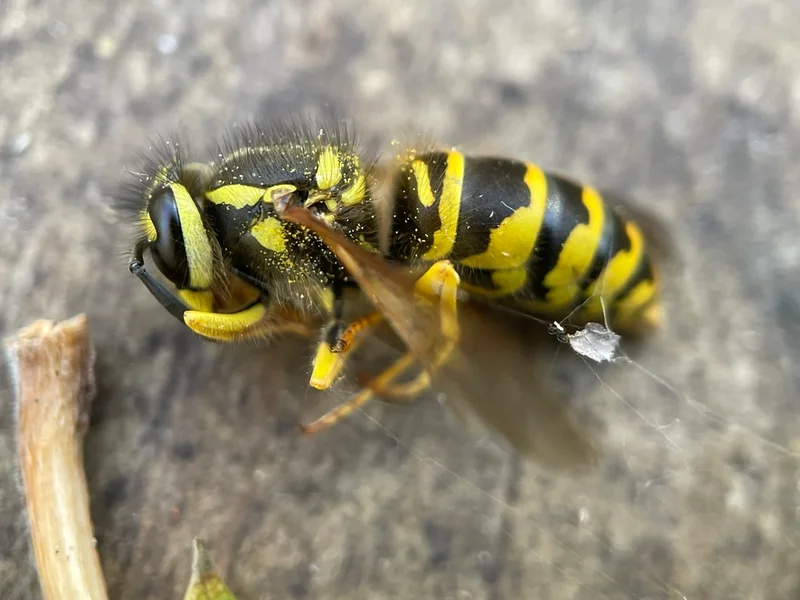
When Yellow Jackets Are Most Active in Wisconsin
Now (November): Lower Outdoor ActivityVerified Wisconsin Counties, Species & US Range
Counties with Verified Observations
- Dane
- Milwaukee
- Waukesha
- Portage
- Sauk
- Brown
- Racine
- Sheboygan
- Green Lake
- Shawano
Species Recorded in Wisconsin
| Species | Scientific Name | GBIF Records |
|---|---|---|
| Eastern Yellowjacket | Vespula maculifrons | 690 |
| German Wasp | Vespula germanica | 291 |
| Northeastern Yellowjacket | Vespula vidua | 264 |
How Wisconsin Compares to Neighboring States
Note: Wildlife does not follow state or county lines. GBIF totals reflect verified citizen and museum records, so low counts in a neighboring county do not guarantee absence.
How to Identify Yellow Jackets
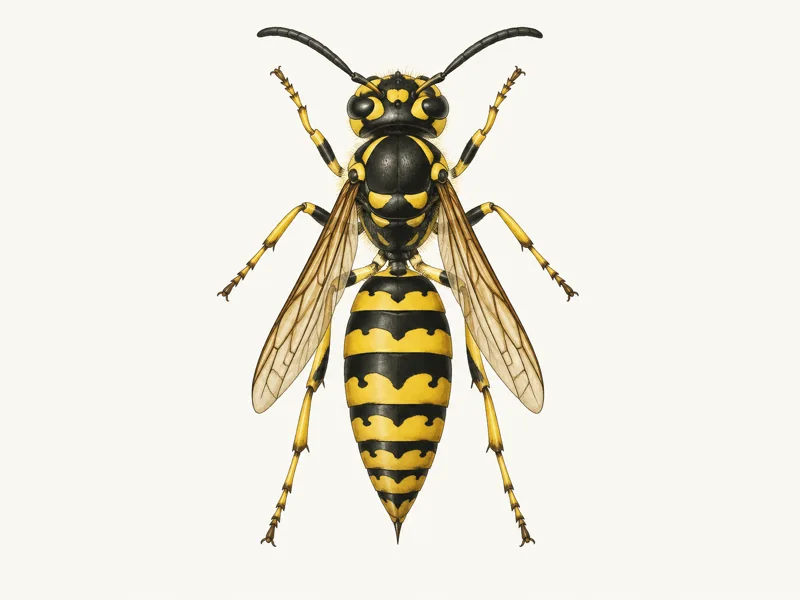
Annotated Anatomy Key (Yellow Jacket)
- Smooth hairless body: Compact shiny black-and-yellow thorax—lacks the fuzzy hair coat of honey bees and bumble bees.
- Folded wings: Two pairs of smoky translucent wings that fold lengthwise along the sides at rest.
- Pinched waist: Extremely narrow constriction separating thorax and abdomen; legs tuck tightly in flight.
- Yellow & black bands: Crisp bright-yellow and jet-black warning rings ending in a smooth multi-use stinger.
Yellow Jackets Field Checklist
- Compact, shiny wasp with vivid bright-yellow and jet-black abdominal bands
- Fast side-to-side darting flight close to the ground and outdoor food
- Legs tuck tightly close to the body in flight (unlike dangling paper wasps)
- Highly defensive of ground or wall-void nests, especially in late summer
Yellow Jackets Size at True Relative Scale
Where Yellow Jackets Live in Wisconsin
Wisconsin has a humid continental climate with warm summers, many lakes, and cold, snowy winters. That climate suits yellow jackets (genus Vespula), which build annual colonies that die off each winter. Only mated queens survive, sheltering in logs, leaf litter, or building voids until spring.
GBIF occurrence records show three species in the state:
- Eastern Yellowjacket (Vespula maculifrons)
- German Wasp (Vespula germanica)
- Northeastern Yellowjacket (Vespula vidua)
Many yellow jackets nest underground, often in abandoned rodent burrows. Others nest in wall voids, attics, sheds, and hollow logs. The German wasp is the species most often found nesting inside structures.
Recorded sightings cluster in the populated southern and central counties. That likely reflects both habitat and where people are submitting observations, so yellow jackets should be expected statewide wherever there are food sources and nesting sites.
When Yellow Jackets Are Most Active in Wisconsin
The Wisconsin yellow jacket season starts in spring, when each overwintered queen founds a small nest. Colonies stay modest through early summer. By late summer, a single colony can hold thousands of workers.
GBIF peak months are August, September, and October. During this stretch, workers shift from hunting insects to seeking sweets, so they swarm soda cans, fallen fruit, and picnic food. Colonies decline after hard frosts, though workers may linger on warm autumn days.
- Spring: Queens search for nest sites.
- Early summer: Small colonies grow quietly.
- Late summer to fall: Peak numbers and the most human encounters.
Look-Alikes Frequently Mistaken for Yellow Jackets
Wisconsin yellow jacket identification starts with a few traits: a smooth, hairless body, bold black-and-yellow banding, a narrow waist, and quick, darting flight. Several local insects are easy to confuse with them.
- Paper wasps: Longer, slimmer bodies with dangling legs, building open umbrella-shaped combs under eaves.
- Hornets: Larger, often with white or pale markings, and typically building enclosed paper nests above ground.
- Other wasps: Many solitary and social wasps share some yellow-and-black coloring but do not form large ground colonies.
- Honey bees: Fuzzy, golden-brown, and rounder. They are valuable pollinators and should not be treated as pests.
Correct identification matters because honey bees and many native wasps are beneficial. If you are unsure, photograph the insect from a safe distance and compare it with a regional field guide or ask your county extension office.
How to Keep Yellow Jackets Out of Your Wisconsin Home
Knowing how to prevent yellow jackets in Wisconsin comes down to removing food and blocking entry. Start with non-chemical steps, which work best before a colony is established.
- Sanitation: Use tightly lidded trash and recycling bins, rinse cans and bottles, and clean up pet food and fallen fruit promptly.
- Exclusion: Seal gaps in siding, soffits, and foundations. Repair window screens and cover vents with fine mesh.
- Yard care: Fill abandoned burrows in spring and check sheds, woodpiles, and eaves for early nests.
- Outdoor dining: Keep food covered, check drinks before sipping, and avoid strong sweet fragrances.
- Early action: Knock down small, new nests in spring only if you can do so safely, ideally at dusk.
If you use any insecticide product, follow the EPA-approved label exactly, including all directions for use and safety. Never pour flammable liquids into nests, and never seal an indoor nest entrance, since trapped wasps can chew into living spaces.
When to Call a Licensed Wisconsin Pest Professional
- The nest is in a wall void, attic, or other structure.
- You see a ground nest near a walkway, play area, or entrance.
- Wasps repeatedly enter the house through a wall or ceiling.
- Anyone in the household has a known sting allergy.
- The nest is large or hard to reach without a ladder.
Yellow jackets can sting repeatedly and are medically significant for allergic people. For a sting emergency, call 911 for trouble breathing, swelling of the face or throat, or dizziness. For other questions, contact US Poison Control at 1-800-222-1222 and a doctor. This guide is educational and does not provide medical advice or treatment.
IPM Prevention Checklist for Wisconsin Homes
- Keep outdoor food, sugary drinks, and trash cans tightly covered
- Inspect lawns for insect flight traffic before mowing
- Never plug a wall-void nest entrance from outside—trapped wasps will chew into living spaces
 EXCLUSION BLUEPRINT
Inspect eaves, screens, door sweeps, foundation cracks, and utility penetrations around Wisconsin homes before peak season.
Yellow Jackets in Wisconsin: Frequently Asked Questions
Are there yellow jackets in Wisconsin?
Yes. GBIF lists 1,441 verified sightings, including the Eastern Yellowjacket, German Wasp, and Northeastern Yellowjacket. They are considered common across the state.
When are yellow jackets worst in Wisconsin?
August through October is the peak, based on GBIF records. Colonies are at full size and workers seek sugary foods near people.
Where do yellow jackets nest in Wisconsin?
Many nest underground in old rodent burrows. Others use wall voids, attics, sheds, and hollow logs, especially the German wasp.
Should I remove a nest myself?
Only small, early-season nests in open areas are reasonable for a careful homeowner. Large, hidden, or ground nests near activity areas are best handled by a licensed professional, and anyone with a sting allergy should stay away.
Sources & Verification
- UC IPM — Yellowjackets
- Ohio State University Extension — Yellowjackets
- GBIF Global Biodiversity Occurrence Records
Data refreshed · Editorial & GBIF Methodology