Bumble Bee vs Yellow Jacket: How to Tell Them Apart and Stay Safe at Home
Quick ID Verdict: A black-and-yellow insect buzzing near the patio leaves most homeowners with one question: is it a bumble bee or a yellow jacket? The answer changes everything, from how worried they should be to what they should do next.
Bumble Bee
Yellow Jacket
Side-by-Side Comparison Table
| Trait | Bumble Bee | Yellow Jacket |
|---|---|---|
| Scientific Group | Bombus | Vespula |
| Category | Insect | Insect |
| Typical Size | 15–25 mm | 10–16 mm |
| Danger Level | Nuisance | Medically Significant |
| Bites or Stings? | Yes | Yes |
| Peak US Months | June, July, August | August, September, October |
| Key ID Trait | Plump, heavily fuzzy bee with dense yellow, black, or orange hairs covering BOTH thorax and abdomen | Compact, shiny wasp with vivid bright-yellow and jet-black abdominal bands |
Bumble Bee vs. Yellow Jacket: True Size Comparison
Side-by-Side Anatomy Blueprint
Compare body segments, antennae, leg count, and key markings directly before treating or removing either species.
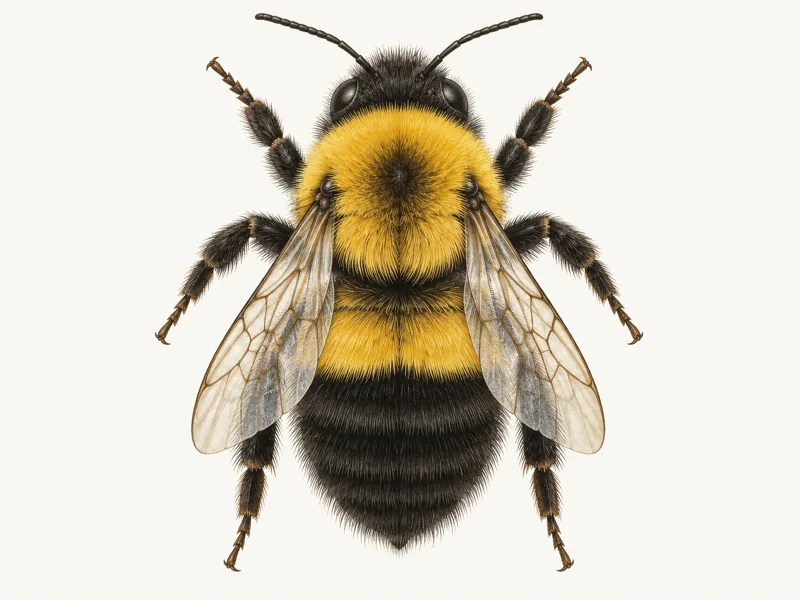
- Compact black head: Round fuzzy head with short elbowed antennae—vital native pollinator.
- Plush yellow thorax: Thick velvety golden-yellow hair coat covering the entire rounded thorax.
- Clear veined wings: Two pairs of translucent wings beating rapidly for buzz pollination.
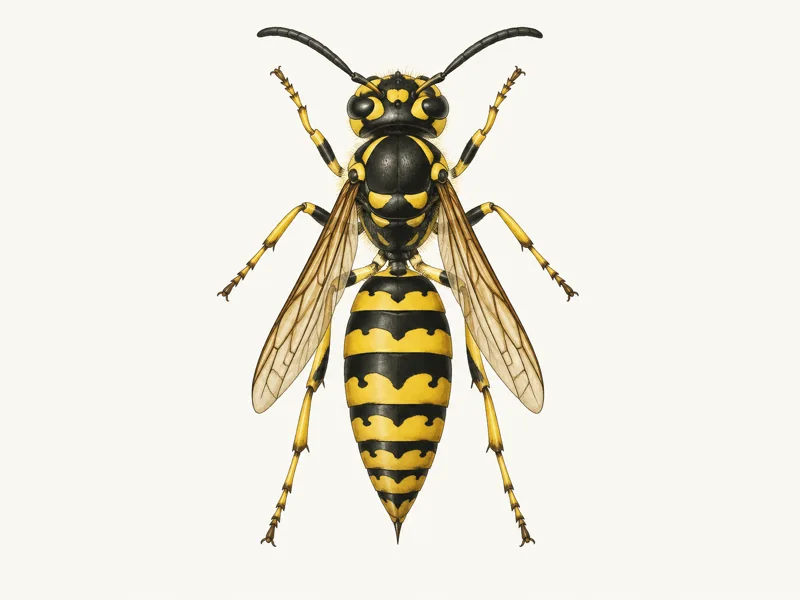
- Smooth hairless body: Compact shiny black-and-yellow thorax—lacks the fuzzy hair coat of honey bees and bumble bees.
- Folded wings: Two pairs of smoky translucent wings that fold lengthwise along the sides at rest.
- Pinched waist: Extremely narrow constriction separating thorax and abdomen; legs tuck tightly in flight.
The 3-second verdict: If it's plump and covered in fuzzy hair from head to tail, it's a bumble bee. If it's sleek, shiny, and banded in vivid yellow and jet black, it's a yellow jacket, and it deserves far more caution.
Quick Identification: Bumble Bee or Yellow Jacket?
The difference between a bumble bee and a yellow jacket is easy to see once someone knows where to look. Both wear yellow and black, but that's where the resemblance ends.
Body Shape, Hair, and Coloring
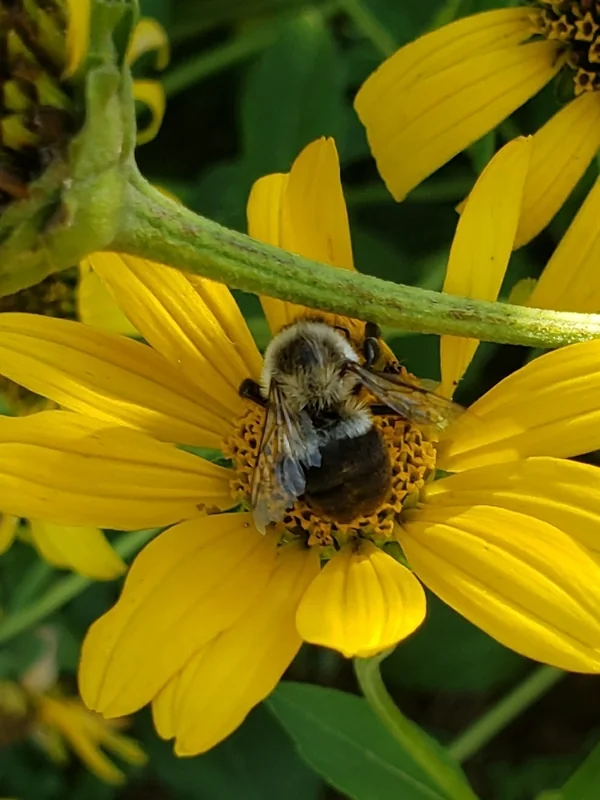
Bumble bees (genus Bombus) are big, round, and fuzzy. They measure about 15–25 mm and are covered in dense yellow, black, or sometimes orange hair on both the thorax and the abdomen. They look a bit like a flying cotton ball.
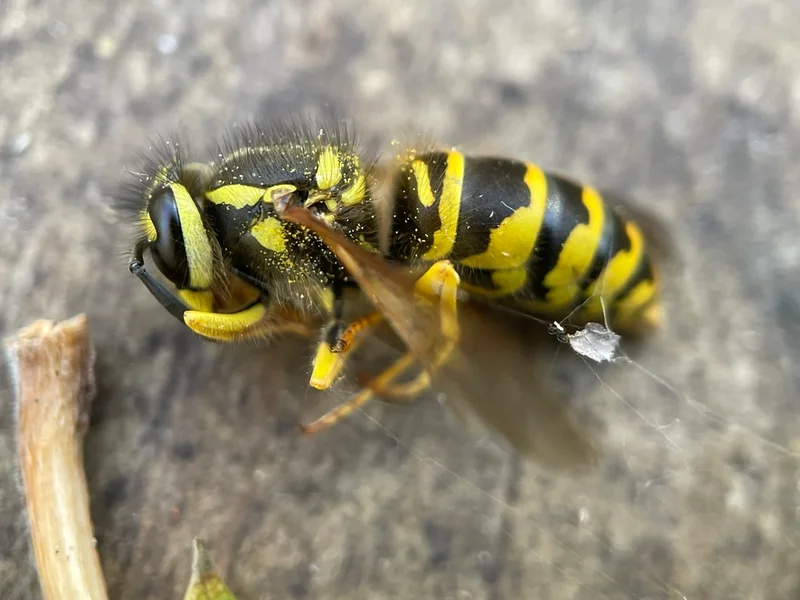
Yellow jackets (genus Vespula) are smaller and more compact at 10–16 mm. Their bodies are smooth and shiny, with almost no visible hair. The giveaway is the abdomen, which carries crisp, bright-yellow and jet-black bands.
FeatureBumble BeeYellow JacketSize15–25 mm10–16 mmBodyPlump, heavily fuzzyCompact, shinyColoringYellow, black, or orange hairVivid yellow and black bandsWaistThick, barely visibleNarrow, pinched
Flight Patterns and Feeding Habits
Bumble bees fly slowly and a little clumsily, drifting from flower to flower. They feed on nectar and pollen, so they're usually found in gardens and on blooming shrubs.
Yellow jackets fly fast and darting, often zigzagging around people. They're scavengers that go after meat, sweet drinks, fruit, and garbage. If an insect is hovering over a soda can or a hot dog, it's almost certainly a yellow jacket.
Nesting Sites and Seasonal Activity Across the US
Both insects are found throughout the continental US, and both build annual colonies. Only newly mated queens survive the winter, so neither reuses an old nest the following year.
- Bumble bees nest in abandoned rodent burrows, under decks and sheds, in compost piles, or in old insulation. Colonies are small, often 50 to a few hundred bees.
- Yellow jackets nest in the ground, wall voids, attics, and hollow logs. A single colony can grow to several thousand workers by late summer.
Bumble bees are active from early spring through early fall. Yellow jackets build slowly in spring, then peak in August through October, which is exactly when backyard cookouts and fall yard work bring people into contact with them. After the first hard frost, most workers of both species die off.
Sting Risk and Aggression Compared
This is where the bumble bee vs yellow jacket comparison really matters. Bumble bees are classified as a nuisance pest. They're docile, rarely sting unless handled or their nest is disturbed, and are focused on foraging.
Yellow jackets are medically significant. They defend their nests aggressively, can sting repeatedly, and often attack in numbers when a nest is bumped by a mower or trimmer. In late season, when food grows scarce, they become noticeably more irritable around people.
Anyone stung who develops swelling of the face or throat, trouble breathing, dizziness, or hives should call 911 immediately. For any other sting concerns, contact US Poison Control at 1-800-222-1222 and see a doctor. People with known allergies should talk to their physician before stinging-insect season.
Safe IPM Strategies for Each Insect
Integrated Pest Management starts with non-chemical steps. For bumble bees, the best approach is usually to leave them alone. They're valuable pollinators, and some species, like the rusty patched bumble bee, are federally protected. A nest away from foot traffic will die out on its own by fall.
For yellow jackets, prevention is key:
- Exclusion: Seal gaps around siding, soffits, vents, and utility lines in early spring, before queens start nesting.
- Sanitation: Keep trash cans tightly lidded, clean up fallen fruit, and cover food and drinks outdoors.
- Moisture control: Fix leaky spigots and drain standing water that attracts foraging workers.
- Monitoring: Walk the yard in late spring to spot small nests before they grow.
If a product is used, homeowners must follow the EPA-registered label exactly. The label is the law, and it lists required protective gear, timing, and where the product can be applied.
When to Call a Pest Professional
A licensed pest professional should handle any yellow jacket nest inside walls or attics, near doorways, or in high-traffic areas. The same goes for any household with a member who has a sting allergy. Never seal an active wall nest, since trapped yellow jackets may chew through drywall into living spaces. For a bumble bee nest that truly can't be avoided, a professional or local beekeeper may be able to relocate it rather than destroy it.
Frequently Asked Questions
How can I tell the difference between a bumble bee and a yellow jacket?
Bumble bees are plump, fuzzy, and 15–25 mm with dense hair covering. Yellow jackets are smaller (10–16 mm), sleek, shiny, and have crisp yellow-and-black bands. Bumble bees fly slowly to flowers; yellow jackets dart around and hover near food and garbage.
Are bumble bees more aggressive than yellow jackets?
No. Bumble bees are docile and rarely sting unless handled or their nest is disturbed. Yellow jackets are highly aggressive, defend nests vigorously, can sting repeatedly, and often attack in groups. They're also more irritable in late season when food is scarce.
What should I do if I find a bumble bee nest in my yard?
Leave it alone if it's away from foot traffic. Bumble bee colonies are small and die out naturally by fall. Many species are valuable pollinators—some are federally protected. If relocation is necessary, contact a local beekeeper or pest professional.
Why are yellow jackets more dangerous than bumble bees?
Yellow jackets are medically significant pests that sting repeatedly and attack in numbers when threatened. Bumble bees rarely sting and cause minimal harm. Yellow jackets peak in late summer and fall, coinciding with outdoor activities, increasing human contact risk.
How do I prevent yellow jackets from nesting near my home?
Seal gaps around siding, soffits, and vents in early spring. Keep trash tightly lidded, clean fallen fruit, cover outdoor food, and fix leaky water sources. Monitor your yard in late spring to spot small nests before they grow.
When should I call a pest professional for a yellow jacket or bumble bee problem?
Call a professional for yellow jacket nests in walls, attics, or near doorways—especially if household members have sting allergies. Never seal active wall nests. For bumble bees, professionals or beekeepers can relocate rather than destroy nests.