Tarantulas in Louisiana: Where They Live, When They Appear, and How to Identify Them
Quick Answer: Tarantulas in Louisiana are present but uncommon. GBIF records list 36 verified sightings, all of the Texas brown tarantula (Aphonopelma hentzi), concentrated in the central and western parts of the state. They are a nuisance-level spider, not a danger to people, and are most often seen in spring and fall.
When Tarantulas Are Most Active in Louisiana
Now (November): Peak ActivityVerified Louisiana Counties, Species & US Range
Counties with Verified Observations
- Natchitoches
- Rapides
- Vernon
- Grant
- Sabine
- Bossier
- Beauregard
- Caddo
- Claiborne
- Red River
Species Recorded in Louisiana
| Species | Scientific Name | GBIF Records |
|---|---|---|
| Texas brown tarantula | Aphonopelma hentzi | 36 |
How Louisiana Compares to Neighboring States
Note: Wildlife does not follow state or county lines. GBIF totals reflect verified citizen and museum records, so low counts in a neighboring county do not guarantee absence.
How to Identify Tarantulas
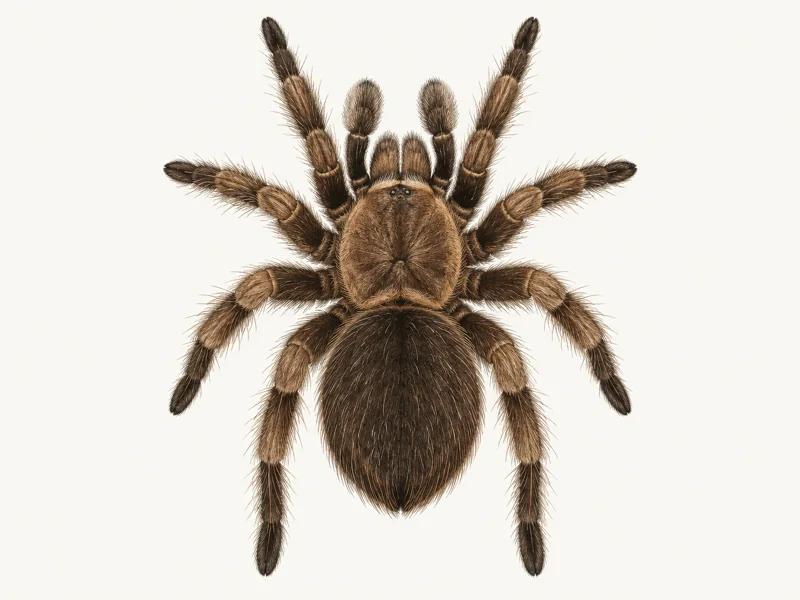
Annotated Anatomy Key (Tarantula)
- Furry pedipalps: Pair of thick leg-like front sensory feelers framing downward-striking fangs.
- Velvet carapace: Broad warm cocoa-brown cephalothorax with a tiny central eye tubercle.
- Eight thick legs: Four pairs of stout, densely hairy cocoa-brown legs built for ground hunting.
- Urticating hair abdomen: Plush dark brown abdomen bearing tiny barbed hairs kicked off in defense.
Tarantulas Field Checklist
- Large, heavy-bodied hairy spider with thick legs
- Distinctive tan, brown, or black velvety setae across legs and abdomen
- Eight small eyes clustered closely on a single tubercle
- Can flick irritating urticating hairs from the abdomen when threatened
Side-by-Side Look-Alike Comparisons
Tarantulas Size at True Relative Scale
Where Tarantulas Live in Louisiana
So, are there tarantulas in Louisiana? Yes. The verified records cluster in west-central parishes, which GBIF lists as counties: Natchitoches, Rapides, Vernon, Grant, and Sabine. These areas have well-drained soils, open woodland edges, and grassy clearings that suit a burrowing spider.
Texas brown tarantulas dig or take over burrows in the ground, often under rocks, logs, or leaf litter. They are ground-dwellers and rarely climb. Louisiana's humid subtropical climate (USDA zones 8a to 10a) has very wet, hot summers, so spiders favor higher, better-drained ground over soggy low areas.
- Burrows in sandy or loamy soil, usually silk-lined at the entrance
- Spaces under stones, boards, and fallen timber
- Field edges, pastures, and wooded lots with open ground
When Tarantulas Are Most Active in Louisiana
The Louisiana tarantula season, based on GBIF sighting dates, peaks in April, May, October, and November. Those months bring milder temperatures and fewer extremes than the hot, wet summer.
Fall sightings are commonly mature males leaving burrows to search for mates, which is a widely documented behavior in North American tarantulas. Spiders seen walking across roads or yards at dusk are usually just passing through. They typically return to ground cover rather than moving indoors.
Look-Alikes Frequently Mistaken for Tarantulas
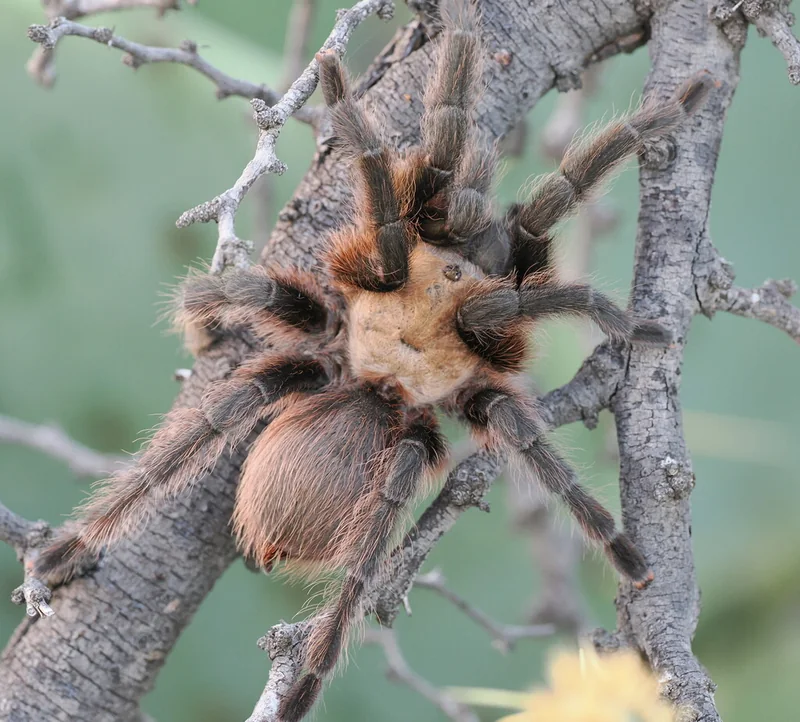
Louisiana tarantula identification starts with size and build. A Texas brown tarantula is large, with a stout, hairy body, thick legs, and a uniform brown color. Several other animals in Louisiana get mistaken for it.
- Wolf spiders: Common and often large, but they have a slimmer build, striped or mottled markings, and prominent eyes arranged in three rows. They are the most frequent mix-up.
- Other spiders: Fishing spiders, grass spiders, and similar species can look bulky but lack a tarantula's heavy, uniformly hairy legs.
- Scorpions: These have pincers and a curved tail, so they are easy to separate once seen clearly.
If a spider is large, dark brown, and plush-looking with thick legs, it may be a tarantula. A clear photo sent to a local extension office or a regional entomologist can confirm the identification.
How to Keep Tarantulas Out of Your Louisiana Home
Anyone wondering how to prevent tarantulas in Louisiana should focus on non-chemical steps first. Tarantulas seldom enter buildings, and these Integrated Pest Management (IPM) habits reduce the chance further.
- Exclusion: Seal gaps around doors, utility lines, and foundation cracks. Install door sweeps and keep window screens in good repair.
- Sanitation: Clear wood piles, debris, and stacked boards away from the foundation. Keep firewood off the ground and several feet from the house.
- Moisture control: Fix leaky spigots, improve drainage, and keep mulch thin near the foundation.
- Lighting: Use yellow or LED lights near entries to attract fewer of the insects that spiders hunt.
- Reduce prey: Controlling crickets, beetles, and other insects makes a yard less appealing.
Wear gloves when moving rocks, boards, or debris. Tarantulas are not aggressive, but a handled or cornered spider may bite or flick irritating hairs from its abdomen. These hairs can irritate skin and eyes, so avoid touching your face afterward.
If a bite or hair reaction causes significant symptoms, contact US Poison Control at 1-800-222-1222 and a doctor. Do not try home remedies.
Chemical products are rarely needed. If you use any, follow the EPA-registered label exactly, including where and how it may be applied.
When to Call a Licensed Louisiana Pest Professional
- You find spiders repeatedly indoors, not just a single stray
- Several burrows appear close to the foundation, patio, or play areas
- You cannot identify the spider and want a confirmed ID
- Someone in the household has a strong reaction to spider contact
- Exclusion work is needed in hard-to-reach areas such as crawl spaces
IPM Prevention Checklist for Louisiana Homes
- Keep garage doors tightly sealed during late-summer and fall migration
- Install tight weatherstripping on ground-level exterior doors
- Avoid disturbing ground burrows near walkways
 EXCLUSION BLUEPRINT
Inspect eaves, screens, door sweeps, foundation cracks, and utility penetrations around Louisiana homes before peak season.
Tarantulas in Louisiana: Frequently Asked Questions
Are there tarantulas in Louisiana?
Yes. GBIF has 36 verified sightings, all of the Texas brown tarantula, mostly in Natchitoches, Rapides, Vernon, Grant, and Sabine parishes.
Are Louisiana tarantulas dangerous?
They are considered a nuisance. They are not aggressive, but they can bite if handled. For concerning symptoms, call Poison Control at 1-800-222-1222 and see a doctor.
When are tarantulas seen most often in Louisiana?
Records peak in April, May, October, and November. Fall sightings often involve wandering males.
Will a tarantula come inside my house?
It is unlikely. They mainly live in ground burrows and enter homes only occasionally. Sealing gaps and clearing debris reduces the risk.
Sources & Verification
- Texas A&M AgriLife Extension — Tarantulas
- UC IPM — Spiders Pest Notes
- GBIF Global Biodiversity Occurrence Records
Data refreshed · Editorial & GBIF Methodology