Tarantulas in North Carolina: Are They Here? Look-Alikes and Prevention
Quick Answer: Breeding populations of tarantulas (Theraphosidae) do not occur in North Carolina. The large, hairy spiders residents report are almost always wolf spiders or other native spiders, and a rare escaped pet or shipping hitchhiker is the only realistic exception. None of these is a medical concern for most people, and they are best treated as nuisance pests.
When Tarantulas Are Most Active in North Carolina
November: Rare / AbsentTarantulas Range in North Carolina vs. Neighboring States
How North Carolina Compares to Neighboring States
Note: Wildlife does not follow state or county lines. GBIF totals reflect verified citizen and museum records, so low counts in a neighboring county do not guarantee absence.
How to Identify Tarantulas
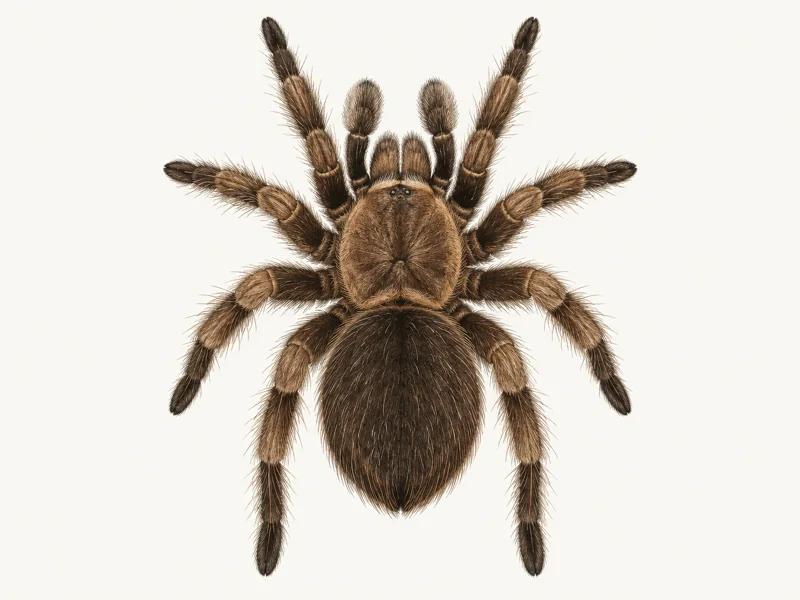
Annotated Anatomy Key (Tarantula)
- Furry pedipalps: Pair of thick leg-like front sensory feelers framing downward-striking fangs.
- Velvet carapace: Broad warm cocoa-brown cephalothorax with a tiny central eye tubercle.
- Eight thick legs: Four pairs of stout, densely hairy cocoa-brown legs built for ground hunting.
- Urticating hair abdomen: Plush dark brown abdomen bearing tiny barbed hairs kicked off in defense.
Tarantulas Field Checklist
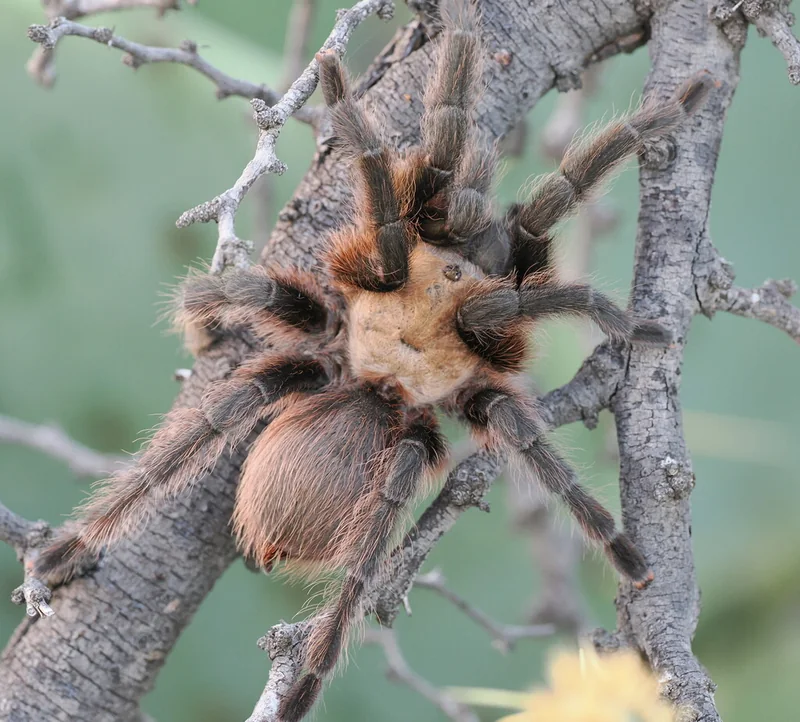
- Large, heavy-bodied hairy spider with thick legs
- Distinctive tan, brown, or black velvety setae across legs and abdomen
- Eight small eyes clustered closely on a single tubercle
- Can flick irritating urticating hairs from the abdomen when threatened
Side-by-Side Look-Alike Comparisons
Tarantulas Size at True Relative Scale
Where Tarantulas Live in North Carolina
Strictly speaking, they do not. GBIF occurrence records for Theraphosidae show no established wild populations in the state, which spans a humid subtropical coastal plain and piedmont plus the cooler Blue Ridge mountains (USDA zones 6a to 8b). True tarantulas are generally associated with the arid Southwest and warmer regions farther south and west.
So, are there tarantulas in North Carolina? Only as captives. Tarantulas are popular in the pet trade, and an escaped animal or one that arrives in a shipment of produce, plants, or freight can occasionally turn up. These individuals do not form colonies and rarely survive a winter outdoors.
When Tarantulas Are Most Active in North Carolina
Because no wild tarantulas live here, there is no true North Carolina tarantula season. What residents notice instead is seasonal activity from native spiders. Wolf spiders and other ground-dwelling species are most visible from late spring through fall, and they wander indoors more often when weather turns cool or wet.
- Late summer to early fall: Mature males roam in search of mates, which is when big spiders appear in garages and basements.
- Fall rains and cold snaps: Spiders seek shelter and drier ground near foundations.
- Winter: Sightings drop, though a heated home can keep some spiders active.
Look-Alikes Frequently Mistaken for Tarantulas
North Carolina tarantula identification usually comes down to a handful of local animals. Each one is large, brownish, or hairy enough to cause a double take.
Wolf Spiders
Wolf spiders are the most common mix-up. They are robust, hairy, and brown or gray with dark markings, and they run quickly across the ground rather than building webs. Females carry a round egg sac under the abdomen and later carry spiderlings on their back, which can look alarming. Wolf spiders may bite if pinned or handled, but they are not considered medically significant for most people.
Other Native Spiders
Fishing spiders, grass spiders, and large house spiders also get mistaken for tarantulas because of their size and leg span. Most are harmless to people and help control insects. Tarantulas have thick, stout legs and a heavy body, while these local spiders look longer-legged and more streamlined.
Scorpions
Scorpions are occasionally reported and sometimes confused with large spiders at a glance. Look for pincers and a segmented tail, which no spider has. If you believe a sting is serious or symptoms develop, contact US Poison Control at 1-800-222-1222 and see a doctor.
How to Keep Tarantulas Out of Your North Carolina Home
How to prevent tarantulas in North Carolina is really a matter of preventing large spiders in general. Start with non-chemical Integrated Pest Management (IPM), as recommended in general university extension guidance, and work from the outside in.
- Exclusion: Seal gaps around pipes, utility lines, and foundation cracks. Install door sweeps and repair torn window screens.
- Sanitation: Reduce clutter in garages, basements, and crawl spaces where spiders hide. Store items in sealed plastic bins.
- Moisture control: Fix leaks, run dehumidifiers in damp areas, and keep crawl space vents clear.
- Yard care: Move firewood, leaf piles, and mulch away from the foundation. Switch to yellow bulbs near entrances to attract fewer insects.
- Removal: Use a cup and card to relocate a spider outdoors, or vacuum it up.
Use insecticides only as a last step, and always follow the EPA-approved product label for the site and pest listed.
When to Call a Licensed North Carolina Pest Professional
- You see spiders or egg sacs repeatedly despite sealing and cleaning.
- You cannot identify a large spider and want a confirmed ID.
- You suspect an escaped exotic pet or a true tarantula, which a professional or local animal expert can help handle.
- Scorpions appear indoors more than once.
IPM Prevention Checklist for North Carolina Homes
- Keep garage doors tightly sealed during late-summer and fall migration
- Install tight weatherstripping on ground-level exterior doors
- Avoid disturbing ground burrows near walkways
 EXCLUSION BLUEPRINT
Inspect eaves, screens, door sweeps, foundation cracks, and utility penetrations around North Carolina homes before peak season.
Tarantulas in North Carolina: Frequently Asked Questions
Are there tarantulas in North Carolina?
Not in the wild. No established breeding populations exist in the state, and any tarantula found is most likely an escaped pet or a rare hitchhiker.
What is the big hairy spider in my North Carolina yard?
It is most likely a wolf spider. These ground hunters are hairy, brown, and fast, which is why they are often mistaken for tarantulas.
Are North Carolina spiders that look like tarantulas dangerous?
Generally not. Wolf spiders are a nuisance and rarely bite unless handled. For any bite or sting with concerning symptoms, call US Poison Control at 1-800-222-1222 and see a doctor.
Should I use pesticides to stop large spiders?
Try exclusion, cleanup, and moisture control first. If a product is needed, follow the EPA label exactly or hire a licensed professional.
Sources & Verification
- Texas A&M AgriLife Extension — Tarantulas
- UC IPM — Spiders Pest Notes
- GBIF Global Biodiversity Occurrence Records
Data refreshed · Editorial & GBIF Methodology