Hobo Spiders in North Carolina: Are They Here? ID and Prevention
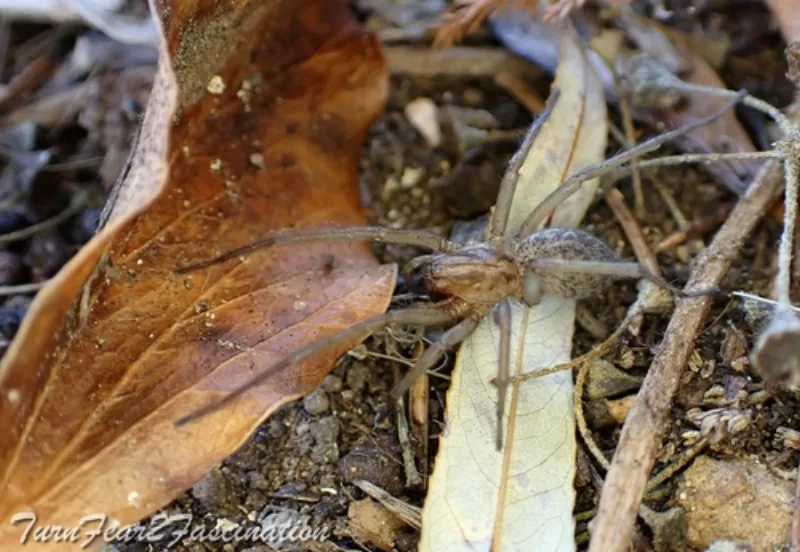
Quick Answer: Breeding populations of hobo spiders (Eratigena agrestis) do not occur in North Carolina. The brown spiders that residents report as hobo spiders are almost always wolf spiders or other common funnel-web and ground-dwelling species. Hobo spiders are classed as a nuisance pest, and an accidental hitchhiker in cargo or furniture is rare.
When Hobo Spiders Are Most Active in North Carolina
November: Rare / AbsentHobo Spiders Range in North Carolina vs. Neighboring States
How North Carolina Compares to Neighboring States
Note: Wildlife does not follow state or county lines. GBIF totals reflect verified citizen and museum records, so low counts in a neighboring county do not guarantee absence.
How to Identify Hobo Spiders
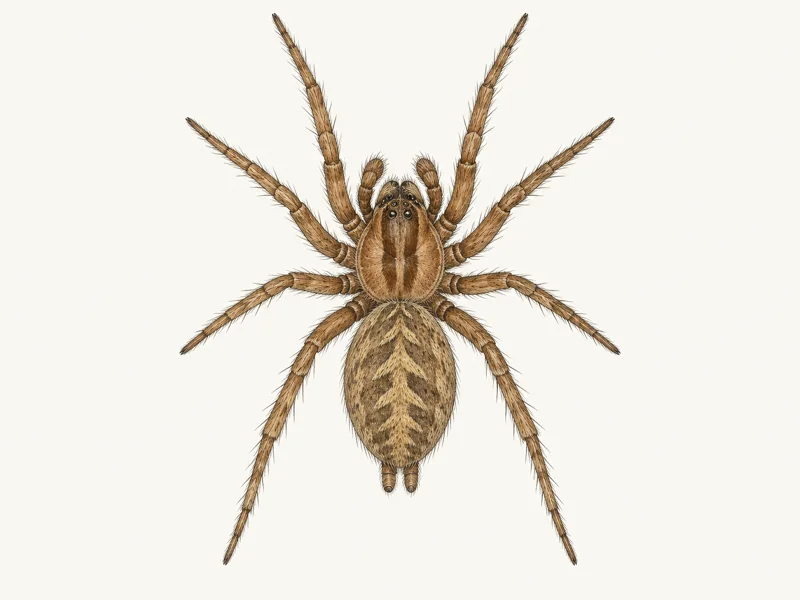
Annotated Anatomy Key (Hobo Spider)
- Eight clustered eyes: Eight small eyes in two rows above prominent hairy front pedipalps.
- Twin dusky stripes: Warm amber cephalothorax with two faint lengthwise stripes—never a crisp violin.
- Unbanded hairy legs: Eight solid tan-brown legs covered in fine hairs and spines—no dark rings.
- Herringbone chevrons: Distinct pale yellowish chevron V-marks down the abdomen above visible spinnerets.
Hobo Spiders Field Checklist
- Fast-running brown funnel-web spider with faint chevron markings on the abdomen
- Solid brown legs without dark rings (unlike giant house spiders)
- Primarily occurs in the Pacific Northwest and northern Mountain West
- Modern CDC and entomology consensus confirms hobo spider bites do NOT cause necrotic wounds
Side-by-Side Look-Alike Comparisons
Hobo Spiders Size at True Relative Scale
Where Hobo Spiders Live in North Carolina
For anyone asking whether there are hobo spiders in North Carolina, the answer is no established populations. GBIF occurrence records place this species in the Pacific Northwest and parts of the interior West, along with its native range in Europe. The state's humid subtropical climate across the coastal plain and piedmont, and the cooler Blue Ridge mountains (USDA zones 6a-8b), have not produced a breeding colony.
A lone spider could in theory arrive on freight, nursery stock, or moved household goods. Such a find would be an isolated individual, not a sign of an infestation. Any suspected specimen is far more likely to be a native species.
When Hobo Spiders Are Most Active in North Carolina
Because the species is not established here, there is no true North Carolina hobo spider season. In the regions where the spider does live, males wander in late summer and early fall looking for mates, which is when most sightings occur.
In North Carolina, the spiders people notice indoors follow their own patterns:
- Late summer through fall: wandering male wolf spiders and other spiders enter homes as temperatures drop.
- Spring: females carry egg sacs or young, and ground-level activity rises.
- After heavy rain: moisture pushes ground spiders toward garages, basements, and door thresholds.
Look-Alikes Frequently Mistaken for Hobo Spiders
North Carolina hobo spider identification is difficult even for experts, because the telltale features are microscopic. Most plain brown spiders share a similar size and color, so a photo alone rarely settles it. The two groups below account for most mistaken reports in the state.
Wolf Spiders
Wolf spiders are robust, hairy, and brown to gray, often with a lighter stripe down the carapace. They have large eyes arranged in three rows, including two prominent forward-facing eyes. They hunt on the ground and do not build funnel webs. Females may carry a round egg sac or a swarm of spiderlings on their backs.
Other Brown Ground and Funnel-Web Spiders
Several native brown spiders, including grass spiders and similar species, build sheet webs with a funnel retreat. These webs near foundations, wood piles, and window wells lead many people to suspect hobo spiders. Their appearance varies, but all are native, shy, and considered nuisance pests.
For a firm identification, collect the spider in a jar, freeze it, and submit it to your local N.C. Cooperative Extension office or a university entomology lab.
How to Keep Hobo Spiders Out of Your North Carolina Home
If you want to know how to prevent hobo spiders in North Carolina, the same steps that deter native spiders work. Start with non-chemical Integrated Pest Management (IPM): exclusion, sanitation, and moisture control.
- Seal gaps around pipes, utility lines, and foundation cracks with caulk or steel wool.
- Install door sweeps and repair torn window screens.
- Reduce clutter in basements, garages, and crawl spaces where spiders hide.
- Fix leaks and use a dehumidifier in damp areas.
- Move firewood, mulch, and debris at least a foot from the foundation.
- Switch exterior lights to yellow bulbs or shield them, since bright lights attract the insects spiders eat.
- Vacuum webs and egg sacs, then empty the vacuum outdoors.
- Use sticky traps along baseboards to monitor activity.
If you use any insecticide, choose a product labeled for spiders and follow the EPA-registered label on rates, placement, and safety. Do not apply products indoors beyond what the label allows.
When to Call a Licensed North Carolina Pest Professional
- You find many spiders or egg sacs indoors despite sealing and cleaning.
- Extension or lab identification suggests an unusual or non-native species.
- You cannot reach or seal the entry points, such as crawl spaces or wall voids.
- Someone in the home has a bite concern. Call US Poison Control at 1-800-222-1222 and see a doctor.
IPM Prevention Checklist for North Carolina Homes
- Seal basement cracks, window wells, and exterior door sweeps
- Keep firewood and stacked lumber away from foundation walls
 EXCLUSION BLUEPRINT
Inspect eaves, screens, door sweeps, foundation cracks, and utility penetrations around North Carolina homes before peak season.
Hobo Spiders in North Carolina: Frequently Asked Questions
Are there hobo spiders in North Carolina?
No established populations exist in the state. Reports are nearly always wolf spiders or native funnel-web and ground spiders. A rare hitchhiker is possible but unlikely.
Can I identify a hobo spider from a photo?
Rarely. Distinguishing features require magnification, so photos are unreliable. Submit a preserved specimen to your N.C. Cooperative Extension office for confirmation.
Are the spiders in my North Carolina home dangerous?
Most common brown spiders here are nuisance pests that bite only when pressed or trapped. If a bite occurs, wash the area and contact a doctor or US Poison Control at 1-800-222-1222 for guidance.
What is the best first step to reduce spiders indoors?
Exclusion and sanitation. Seal entry gaps, cut clutter, control moisture, and vacuum webs regularly. Use chemical products only as a last resort and strictly per the EPA label.
Sources & Verification
- Washington State University Extension — Hobo Spiders
- CDC — Venomous Spiders
- GBIF Global Biodiversity Occurrence Records
Data refreshed · Editorial & GBIF Methodology