Hobo Spiders in Michigan: Are They Here? Facts and Look-Alikes
Quick Answer: Breeding populations of hobo spiders (Eratigena agrestis) do not occur in Michigan. Nearly every spider reported as a hobo spider here is a native species, most often a wolf spider or another common house-dwelling spider. Rare accidental hitchhikers in shipped goods are possible, but they do not establish.
When Hobo Spiders Are Most Active in Michigan
November: Rare / AbsentHobo Spiders Range in Michigan vs. Neighboring States
How Michigan Compares to Neighboring States
Note: Wildlife does not follow state or county lines. GBIF totals reflect verified citizen and museum records, so low counts in a neighboring county do not guarantee absence.
How to Identify Hobo Spiders
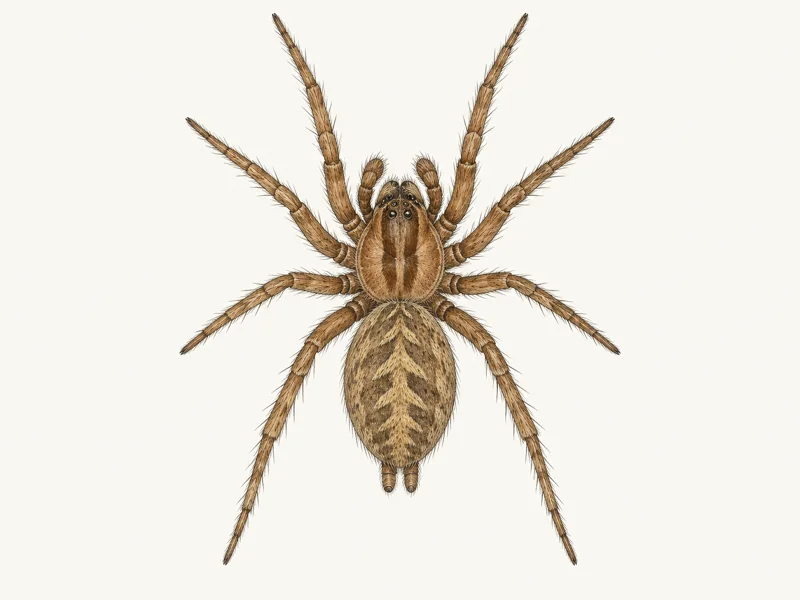
Annotated Anatomy Key (Hobo Spider)
- Eight clustered eyes: Eight small eyes in two rows above prominent hairy front pedipalps.
- Twin dusky stripes: Warm amber cephalothorax with two faint lengthwise stripes—never a crisp violin.
- Unbanded hairy legs: Eight solid tan-brown legs covered in fine hairs and spines—no dark rings.
- Herringbone chevrons: Distinct pale yellowish chevron V-marks down the abdomen above visible spinnerets.
Hobo Spiders Field Checklist
- Fast-running brown funnel-web spider with faint chevron markings on the abdomen
- Solid brown legs without dark rings (unlike giant house spiders)
- Primarily occurs in the Pacific Northwest and northern Mountain West
- Modern CDC and entomology consensus confirms hobo spider bites do NOT cause necrotic wounds
Side-by-Side Look-Alike Comparisons
Hobo Spiders Size at True Relative Scale
Where Hobo Spiders Live in Michigan
So, are there hobo spiders in Michigan? Not as a resident species. GBIF occurrence records and university extension IPM guidance place established populations of this funnel-web spider in other parts of the country, not in the Great Lakes region.
An occasional specimen could arrive on lumber, furniture, or freight moved from elsewhere. A single traveler does not make a breeding population, and none has taken hold in Michigan's humid continental climate (USDA zones 4a-6b).
Spiders that look similar do live here, and they turn up in the same places hobo spiders would:
- Basements and crawl spaces
- Window wells and foundation edges
- Woodpiles, garages, and sheds
- Ground-level corners behind stored boxes
When Hobo Spiders Are Most Active in Michigan
There is no true Michigan hobo spider season, because the species does not breed here. What residents notice instead is a seasonal pattern in native spiders. Late summer and fall bring the most sightings, when mature males wander in search of mates and cooler nights push spiders indoors.
Lake-effect winters send more spiders into heated basements and garages. Sightings often peak from August through October, then taper off once hard freezes arrive.
Look-Alikes Frequently Mistaken for Hobo Spiders
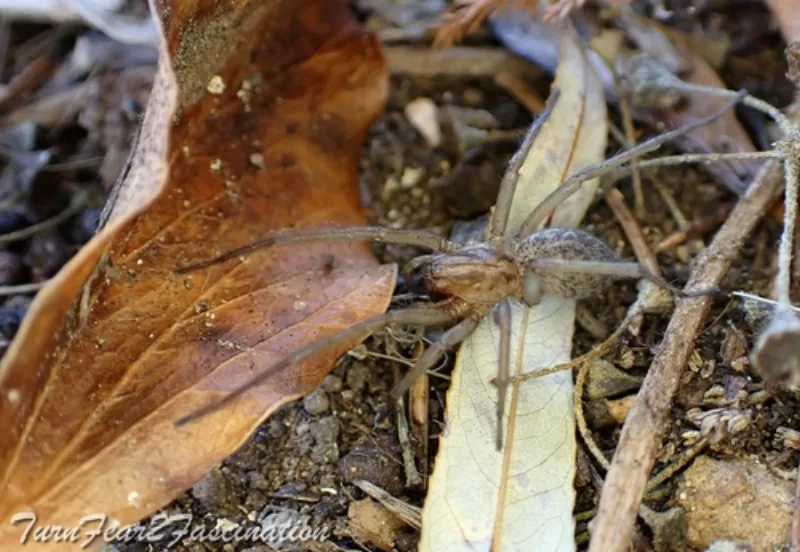
Michigan hobo spider identification is difficult even for experts, since the key features are microscopic. Homeowners usually see a fast, brown, long-legged spider and assume the worst. The common culprits are wolf spiders and other brownish ground-dwelling or house spiders.
Wolf Spiders
Wolf spiders are hairy, robust, and brown to gray with darker markings. They hunt on the ground rather than building funnel webs. Their eyes are arranged in three rows, with two large eyes facing forward, and females often carry a round egg sac on the abdomen or drag it behind them.
Other Brown House Spiders
Many common Michigan house spiders are tan or brown with leggy builds. Some spin sheet-like or tangled webs in corners, which adds to the confusion. Color and pattern vary widely, so appearance alone is an unreliable guide.
These native spiders are considered nuisance pests. They eat flies, crickets, and other insects. If a bite is suspected, wash the area, and call US Poison Control at 1-800-222-1222 or see a doctor for any concerning symptoms. Do not try home venom remedies.
How to Keep Hobo Spiders Out of Your Michigan Home
How to prevent hobo spiders in Michigan comes down to the same steps that keep out any wandering spider. Start with non-chemical IPM, which works better and lasts longer than spraying.
- Seal entry points: Caulk foundation cracks and gaps around pipes, and install door sweeps.
- Repair screens: Fix torn window and vent screens and weatherstrip basement windows.
- Cut moisture: Run a dehumidifier in damp basements and fix leaky pipes and gutters.
- Reduce clutter: Store items in sealed plastic bins instead of cardboard.
- Clear the perimeter: Keep firewood, leaf piles, and mulch several feet from the foundation.
- Vacuum regularly: Remove spiders, webs, and egg sacs from corners and baseboards.
- Use sticky traps: Place them along walls to catch wanderers and gauge activity.
If you use any insecticide, choose a product labeled for spiders and follow the EPA-approved label exactly for site, rate, and safety directions.
When to Call a Licensed Michigan Pest Professional
- You see spiders daily despite sealing and cleanup
- You find numerous egg sacs or heavy webbing
- A spider's identity matters and you cannot confirm it yourself
- Someone in the home has been bitten and you want an on-site inspection
- Persistent moisture or insect problems keep drawing spiders in
For a suspected unusual species, save the specimen in a sealed container or take a clear photo. A licensed professional or your local extension office can help confirm the identification.
IPM Prevention Checklist for Michigan Homes
- Seal basement cracks, window wells, and exterior door sweeps
- Keep firewood and stacked lumber away from foundation walls
 EXCLUSION BLUEPRINT
Inspect eaves, screens, door sweeps, foundation cracks, and utility penetrations around Michigan homes before peak season.
Hobo Spiders in Michigan: Frequently Asked Questions
Are there hobo spiders in Michigan?
No established populations exist in Michigan. Spiders reported as hobo spiders are almost always wolf spiders or other native brown spiders. An accidental hitchhiker is rare and does not create a breeding colony.
How can I tell a wolf spider from a hobo spider?
Wolf spiders have a distinctive three-row eye arrangement and hunt without webs. Reliable confirmation of any funnel-web spider requires microscope examination, so a photo or specimen should go to an expert.
Are Michigan house spiders dangerous?
Most are nuisance pests that rarely bite. If you are bitten and worried, call US Poison Control at 1-800-222-1222 or see a doctor. Do not attempt home remedies.
Why do I see more spiders in fall?
Mature males roam to find mates in late summer and fall, and cooling weather sends spiders indoors. Sealing gaps and reducing clutter and moisture lowers the number that settle in.
Sources & Verification
- Washington State University Extension — Hobo Spiders
- CDC — Venomous Spiders
- GBIF Global Biodiversity Occurrence Records
Data refreshed · Editorial & GBIF Methodology