Hobo Spiders in Arizona: Are They Here? Facts and Look-Alikes
Quick Answer: Breeding populations of hobo spiders (Eratigena agrestis) do not occur in Arizona. If you are asking whether there are hobo spiders in Arizona, the answer is no: the brown spider in your garage is almost certainly a wolf spider or another common local species. Rare accidental hitchhikers in shipped goods or vehicles are possible, but they do not form lasting colonies here.
When Hobo Spiders Are Most Active in Arizona
November: Rare / AbsentHobo Spiders Range in Arizona vs. Neighboring States
How Arizona Compares to Neighboring States
Note: Wildlife does not follow state or county lines. GBIF totals reflect verified citizen and museum records, so low counts in a neighboring county do not guarantee absence.
How to Identify Hobo Spiders
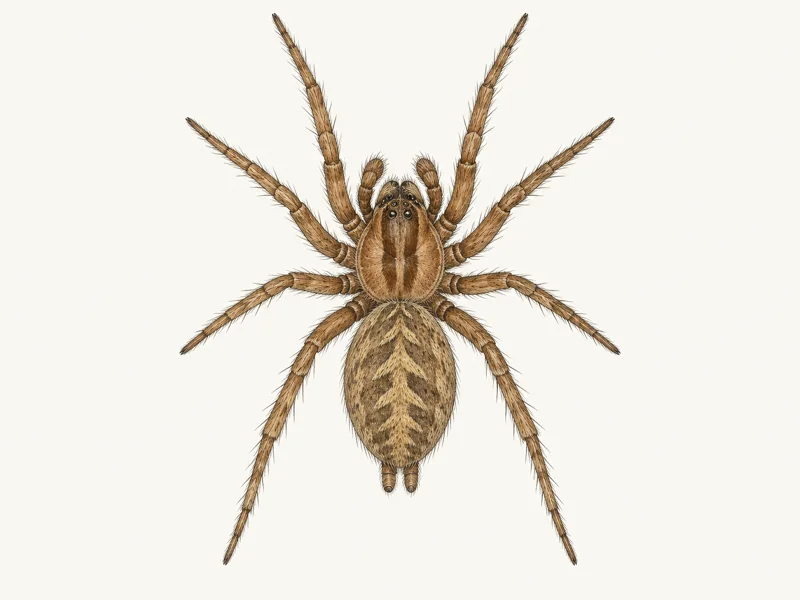
Annotated Anatomy Key (Hobo Spider)
- Eight clustered eyes: Eight small eyes in two rows above prominent hairy front pedipalps.
- Twin dusky stripes: Warm amber cephalothorax with two faint lengthwise stripes—never a crisp violin.
- Unbanded hairy legs: Eight solid tan-brown legs covered in fine hairs and spines—no dark rings.
- Herringbone chevrons: Distinct pale yellowish chevron V-marks down the abdomen above visible spinnerets.
Hobo Spiders Field Checklist
- Fast-running brown funnel-web spider with faint chevron markings on the abdomen
- Solid brown legs without dark rings (unlike giant house spiders)
- Primarily occurs in the Pacific Northwest and northern Mountain West
- Modern CDC and entomology consensus confirms hobo spider bites do NOT cause necrotic wounds
Side-by-Side Look-Alike Comparisons
Hobo Spiders Size at True Relative Scale
Where Hobo Spiders Live in Arizona
They do not live here in any established sense. GBIF occurrence records place Eratigena agrestis in cooler regions of the Pacific Northwest and northern Rocky Mountain states, not in Arizona.
Arizona's southern lowlands are hot, dry desert with brief monsoon humidity. The northern highlands are cooler, with USDA zones ranging from 5a to 10a. Hobo spiders do not establish in these conditions, so a lone specimen is most likely a transported stray.
- Established range: Not Arizona.
- Possible here: Rare individuals arriving on freight, firewood, or household goods.
- Danger level: Nuisance.
When Hobo Spiders Are Most Active in Arizona
There is no true Arizona hobo spider season, because no resident population exists. In the regions where the species is established, males wander in late summer and early fall looking for mates, which is when most sightings occur indoors.
In Arizona, the spiders people see in those months are usually other wandering species. Monsoon moisture can push ground-dwelling spiders toward homes, and cooler fall nights send them indoors in search of shelter.
Look-Alikes Frequently Mistaken for Hobo Spiders
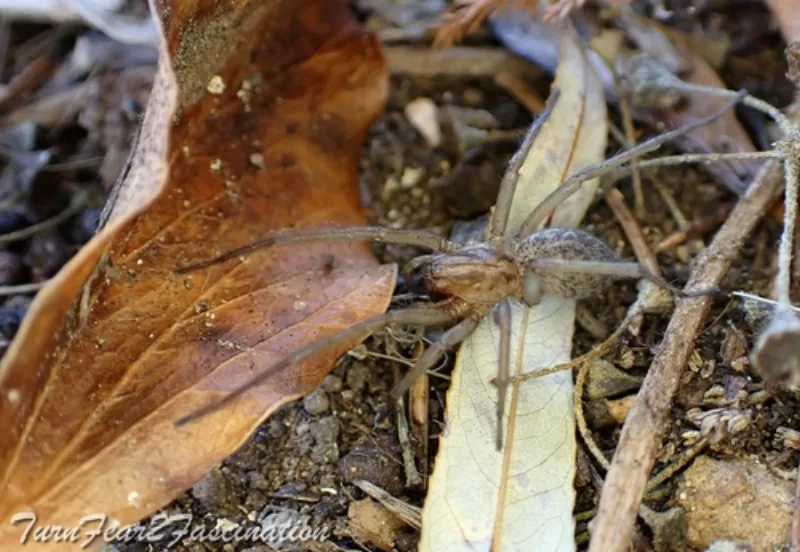
Arizona hobo spider identification is tricky because many brown spiders share the same general look: a tan to brown body, long legs, and a fast, ground-level run. Two groups cause most of the confusion here.
Wolf Spiders
Wolf spiders are hairy, stocky, and brown with darker markings. Their key feature is a set of eight eyes in three rows, including two large forward-facing eyes. Females often carry a round egg sac or young on their backs. They hunt on the ground and do not build funnel webs.
Other Common Ground and House Spiders
Many general brown house and ground spiders turn up in garages, window wells, and woodpiles. Most are harmless and look similar at a glance. Size, eye arrangement, and web style separate them, but these details are hard to judge without magnification.
- Check for a funnel-shaped web; wolf spiders do not make one.
- Look for egg sacs carried on the spinnerets, a wolf spider trait.
- Note stripe patterns and body hair, which vary widely between species.
Spider identification from a photo is unreliable. If you need certainty, take a clear, close photo or save the specimen in a sealed container and contact a local university extension service or a licensed pest professional.
How to Keep Hobo Spiders Out of Your Arizona Home
How to prevent hobo spiders in Arizona comes down to the same integrated pest management steps that work for any wandering spider. Start with exclusion, sanitation, and moisture control before considering any product.
- Seal gaps around doors, windows, pipes, and utility lines with caulk or weatherstripping.
- Install door sweeps and repair torn screens.
- Reduce clutter, cardboard boxes, and stored items along garage walls.
- Move firewood, lumber, and debris away from the foundation.
- Fix leaks and drain standing water near the house, especially during monsoon season.
- Shake out and inspect items arriving from other states before storing them.
- Vacuum spiders, webs, and egg sacs, then empty the vacuum outdoors.
- Switch exterior lights to yellow bulbs or move them away from doors to attract fewer insects, which means fewer spiders.
Sticky traps placed along baseboards help show where spiders are entering. If you use any insecticide, choose a product labeled for spiders and follow the EPA-approved label exactly.
When to Call a Licensed Arizona Pest Professional
- You see spiders repeatedly despite sealing and cleanup.
- You find large numbers of egg sacs or webs indoors.
- You cannot identify a spider and want an expert opinion.
- You suspect a medically significant species, such as a black widow or recluse-type spider, near living areas.
If anyone is bitten and symptoms develop, contact US Poison Control at 1-800-222-1222 and see a doctor. Do not try home remedies.
IPM Prevention Checklist for Arizona Homes
- Seal basement cracks, window wells, and exterior door sweeps
- Keep firewood and stacked lumber away from foundation walls
 EXCLUSION BLUEPRINT
Inspect eaves, screens, door sweeps, foundation cracks, and utility penetrations around Arizona homes before peak season.
Hobo Spiders in Arizona: Frequently Asked Questions
Are there hobo spiders in Arizona?
No established populations exist in Arizona. Rare individuals could arrive in shipped goods, but they do not breed here.
What spider is most often mistaken for a hobo spider in Arizona?
Wolf spiders are the most common mix-up. They are brown, fast, and found at ground level, but they do not spin funnel webs.
Are hobo spiders dangerous?
They are rated as a nuisance. Any spider bite that causes concerning symptoms should be discussed with a doctor or Poison Control at 1-800-222-1222.
How can I stop brown spiders from entering my home?
Seal entry gaps, reduce clutter and moisture, and vacuum webs regularly. Follow EPA product labels if you use any treatment, and call a licensed pro for persistent problems.
Sources & Verification
- Washington State University Extension — Hobo Spiders
- CDC — Venomous Spiders
- GBIF Global Biodiversity Occurrence Records
Data refreshed · Editorial & GBIF Methodology