Boxelder Bug vs Stink Bug: How to Tell These Fall Invaders Apart
Quick ID Verdict: Every fall, US homeowners find slow-moving bugs crowding sunny siding and window frames, and the same question comes up: boxelder bug or stink bug? Here's the 3-second answer. A boxelder bug is a flattened black oval with crisp red-orange stripes behind the head. A brown marmorated stink bug is a broad, mottled brown shield. The rest of this guide covers smell, range, seasonal habits, and safe ways to keep both outside.
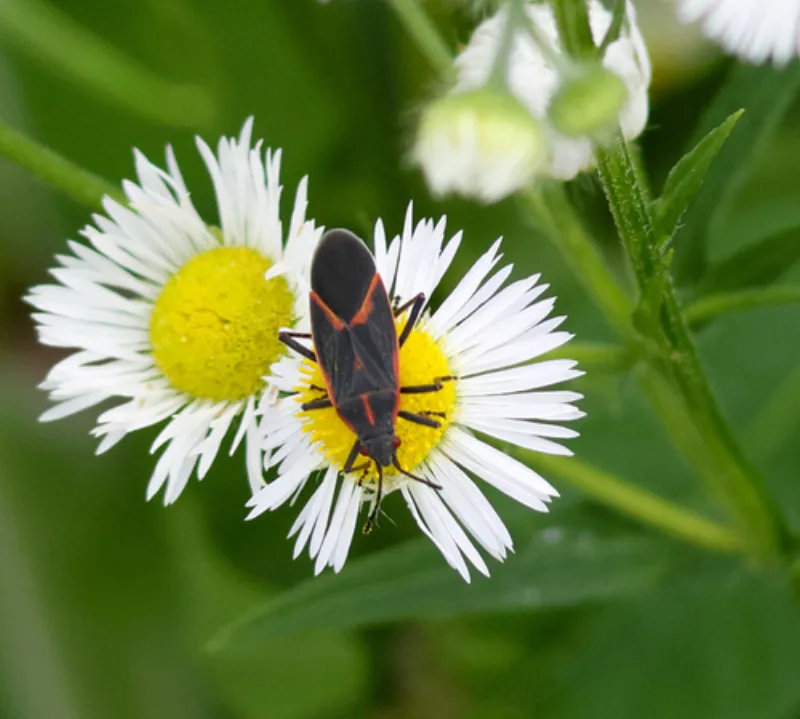
Boxelder Bug
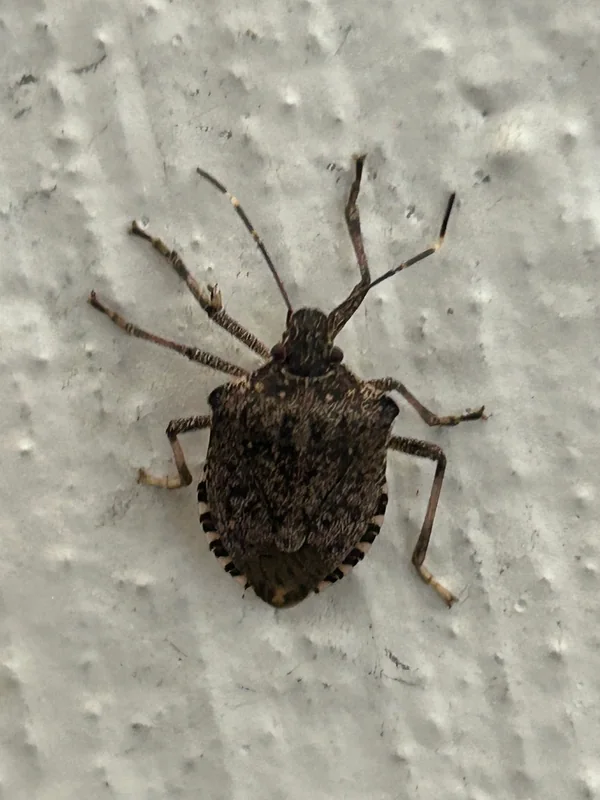
Stink Bug
Side-by-Side Comparison Table
| Trait | Boxelder Bug | Stink Bug |
|---|---|---|
| Scientific Group | Boisea trivittata | Halyomorpha halys |
| Category | Insect | Insect |
| Typical Size | 11–14 mm | 12–17 mm |
| Danger Level | Nuisance | Nuisance |
| Bites or Stings? | No | No |
| Peak US Months | April, September, October | August, September, October |
| Key ID Trait | Flattened oval black body accented with three crisp red-orange stripes behind the head and red wing margins | Broad shield-shaped mottled brown body (brown marmorated stink bug) |
Boxelder Bug vs. Stink Bug: True Size Comparison
Side-by-Side Anatomy Blueprint
Compare body segments, antennae, leg count, and key markings directly before treating or removing either species.
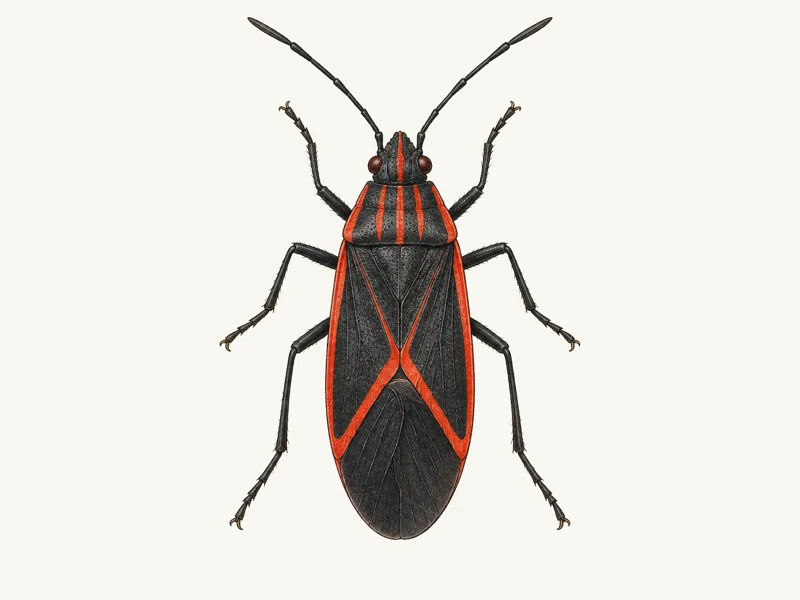
- Slender black antennae: Four-segmented charcoal antennae projecting from a narrow black head.
- Three red shield stripes: Crisp vermilion-red center and side stripes across the dark pronotum.
- Six black legs: Three pairs of slender dark legs; harmless nuisance that clusters on sunny walls.
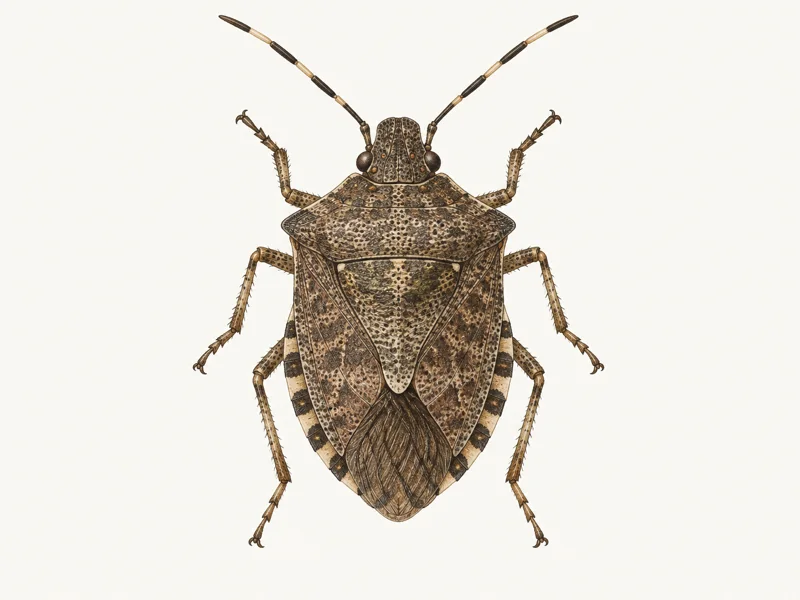
- White-banded antennae: Distinct alternating light-white and dark bands on the last two antennae segments.
- Smooth shield shoulders: Broad angular shield-shaped pronotum with smooth (non-spined) outer shoulder edges.
- Six mottled legs: Three pairs of brown walking legs; emits a sharp cilantro-like defensive odor if crushed.
Boxelder Bug or Stink Bug? Key Identification Differences
Both insects are "true bugs" with piercing-sucking mouthparts, and both gather on homes at the same time of year. That overlap is why so many people confuse them. Once you know what to look for, the difference between boxelder bug and stink bug is easy to spot.
Shape, Color, and Markings
- Boxelder bug (Boisea trivittata): Flattened, elongated oval body that's mostly black. It has three crisp red-orange stripes on the area behind the head and red edges along the wings.
- Brown marmorated stink bug (Halyomorpha halys): Broad, shield-shaped body in mottled brown and gray. Look for light bands on the antennae and alternating light and dark markings along the outer edge of the abdomen.
If the bug looks like a tiny knight's shield, it's a stink bug. If it's sleek and outlined in red, it's a boxelder bug.
Smell, Size, and Nymph Appearance
Size overlaps but still helps. Boxelder bugs measure 11–14 mm, while brown marmorated stink bugs run 12–17 mm and look noticeably wider.
Smell is another clue. Stink bugs live up to their name and release a sharp odor, often compared to cilantro, when they're disturbed or crushed. Boxelder bugs can give off a mild, unpleasant scent, but it's much weaker.
Nymphs (the young) look different from adults. Boxelder nymphs are bright red and wingless. Stink bug nymphs are rounder, with dark bodies, red-orange markings, and banded legs.
Where They Live: US State Presence and Host Plants
The boxelder bug is native to North America. It's most common in the western and central states but turns up nearly anywhere its host trees grow. It feeds mainly on seed-bearing female boxelder trees (Acer negundo) and also uses maples and ash.
The brown marmorated stink bug is an invasive species from East Asia. It was first confirmed in Pennsylvania in the late 1990s and has since been reported in most US states, with the heaviest populations in the Mid-Atlantic. It isn't picky about food and feeds on hundreds of plants, including:
- Apples, peaches, and pears
- Tomatoes, peppers, and sweet corn
- Soybeans and ornamental trees
Seasonal Activity and Why They Invade Homes
Neither bug wants to live in your house. Both are looking for a protected place to spend the winter. As days shorten in late September and October, adults gather on warm south- and west-facing walls, then slip into gaps around windows, siding, soffits, and attic vents.
Once inside wall voids, they go mostly dormant. On warm winter days or in early spring they wake up, follow heat and light, and end up inside living spaces. That's why homeowners often see them in January even though no new bugs have gotten in. They don't breed indoors, so the number you see won't grow over the winter.
Are They Harmful to People, Pets, or Plants?
Both species are classified as nuisance pests. They don't spread disease, they don't damage wood or wiring, and they almost never bite. In very rare cases a boxelder bug may pierce skin and leave a small red mark. If anyone has an unusual reaction after contact, contact US Poison Control at 1-800-222-1222 or a doctor.
The household downsides are mostly cosmetic:
- Boxelder bugs can leave reddish-orange fecal spots on curtains, walls, and fabric.
- Stink bugs leave a lingering odor when crushed, and some people find the smell irritating.
A pet that eats one may drool or vomit because the bugs taste bad, but they aren't considered toxic. For plants, the comparison clearly favors boxelder bugs. They do little harm beyond minor leaf spotting. Brown marmorated stink bugs are a serious agricultural pest that scar fruit and vegetables, so gardeners and orchard owners in heavily infested states have real reason for concern.
Safe IPM Strategies to Prevent and Remove Both Pests
Integrated Pest Management (IPM) works well for both species because they enter homes the same way. Start with non-chemical steps in late summer, before the fall migration begins.
Exclusion (most effective):
- Caulk cracks around window frames, door trim, and utility penetrations.
- Repair torn screens and add fine mesh over attic and soffit vents.
- Install door sweeps and replace worn weatherstripping.
Removal indoors:
- Vacuum bugs up with a shop vac or a vacuum fitted with a nylon stocking. Don't crush them, especially stink bugs.
- Knock stink bugs into a container of soapy water.
- Use light traps in attics to collect bugs that become active in winter.
Landscape and sanitation:
- Rake up boxelder seeds, and consider not planting female boxelder trees near the house.
- Clear leaf litter and debris away from the foundation.
If a severe infestation keeps coming back, a licensed professional may apply an exterior perimeter treatment in early fall. Avoid treating indoor wall voids, because dead bugs inside walls can attract carpet beetles. Always read and follow the EPA-registered product label exactly. When it comes to which pest is worse, the boxelder bug is the bigger staining nuisance inside. The stink bug is the bigger smell problem and the greater threat to gardens.
Frequently Asked Questions
What's the main difference between a boxelder bug and a stink bug?
A boxelder bug is a flattened black oval with crisp red-orange stripes and red wing edges, resembling a sleek design. A stink bug is broader and shield-shaped with mottled brown and gray coloring. The boxelder bug is native to North America, while the stink bug is an invasive species from East Asia.
How can I tell boxelder bugs and stink bugs apart by smell?
Stink bugs release a sharp, cilantro-like odor when disturbed or crushed, earning their name. Boxelder bugs can emit a mild, unpleasant scent, but it's much weaker and less noticeable than stink bugs' strong smell.
Why do boxelder bugs and stink bugs enter homes in the fall?
Both insects seek protected places to overwinter as temperatures drop in late September and October. They gather on warm south- and west-facing walls, then slip into gaps around windows, siding, soffits, and attic vents to survive winter dormancy.
Which pest is more harmful to gardens and crops?
Brown marmorated stink bugs are serious agricultural pests that scar fruit and vegetables, posing real concern for gardeners and orchard owners. Boxelder bugs do little harm to plants beyond minor leaf spotting, making them less damaging agriculturally.
What's the safest way to remove stink bugs from inside my home?
Avoid crushing stink bugs because they release their pungent odor. Instead, vacuum them using a shop vac with a nylon stocking, or knock them into a container of soapy water. Use light traps in attics to collect bugs that wake on warm winter days.
Can boxelder bugs or stink bugs bite or harm people and pets?
Both are nuisance pests that rarely bite. In very rare cases, boxelder bugs may pierce skin and leave a small red mark. Pets that eat them may drool or vomit due to bad taste, but neither species is toxic or disease-carrying.