Spotted Lanternfly vs Stink Bug: How to Tell Them Apart
Quick ID Verdict: A spotted lanternfly (Lycorma delicatula) is a larger 22-27 mm planthopper with gray, black-spotted forewings that jumps powerfully when approached. A brown marmorated stink bug (Halyomorpha halys) is a smaller 12-17 mm insect with a broad, shield-shaped, mottled brown body that crawls or flies off clumsily.
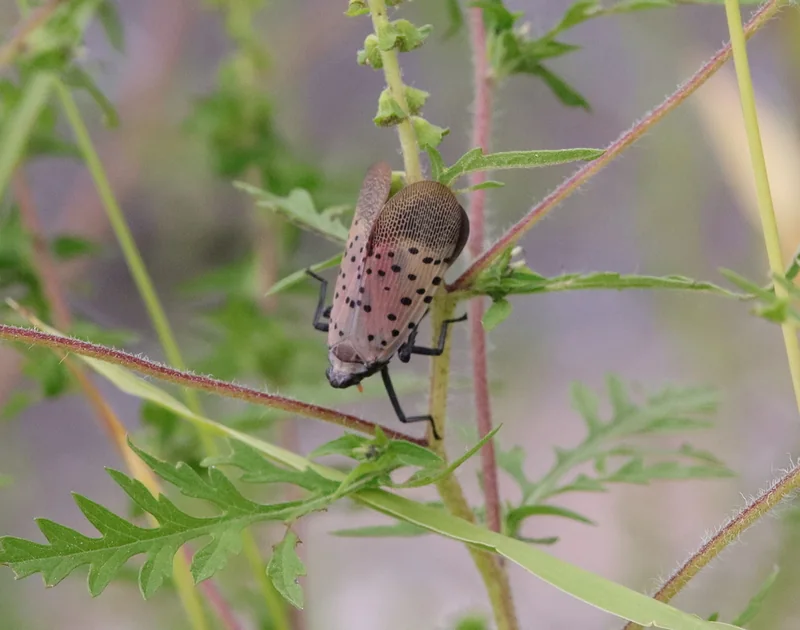
Spotted Lanternfly
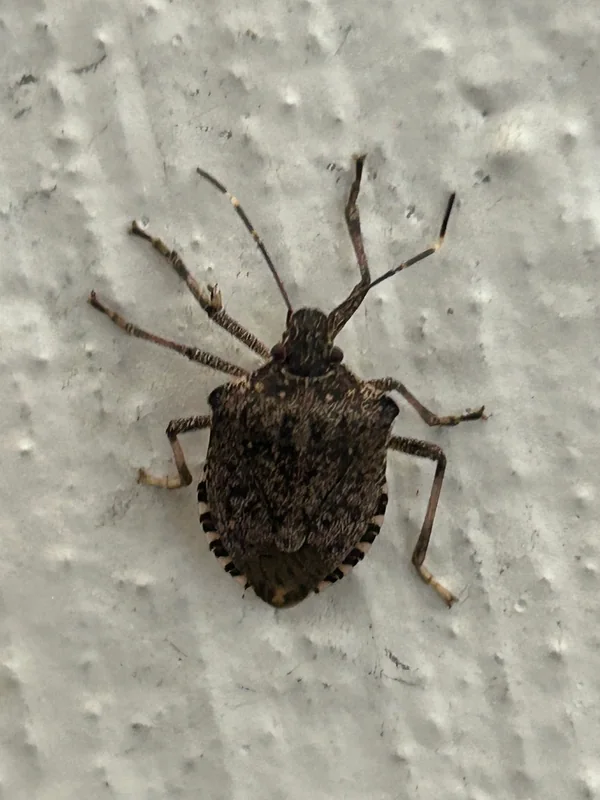
Stink Bug
Side-by-Side Comparison Table
| Trait | Spotted Lanternfly | Stink Bug |
|---|---|---|
| Scientific Group | Lycorma delicatula | Halyomorpha halys |
| Category | Insect | Insect |
| Typical Size | 22–27 mm | 12–17 mm |
| Danger Level | Nuisance | Nuisance |
| Bites or Stings? | No | No |
| Peak US Months | July, August, September, October | August, September, October |
| Key ID Trait | Invasive planthopper (not a moth or fly) that jumps powerfully when approached | Broad shield-shaped mottled brown body (brown marmorated stink bug) |
Spotted Lanternfly vs. Stink Bug: True Size Comparison
Side-by-Side Anatomy Blueprint
Compare body segments, antennae, leg count, and key markings directly before treating or removing either species.
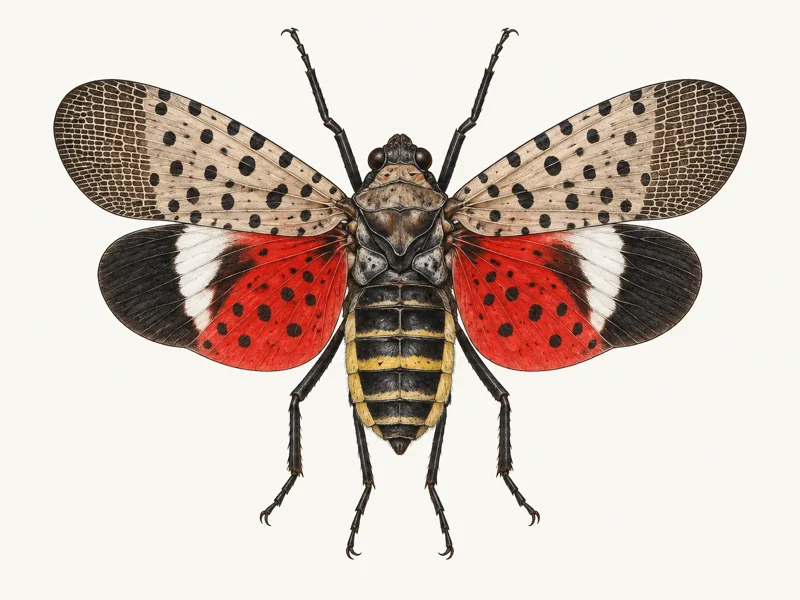
- Spotted forewings: Grayish-tan upper wings peppered with distinct black spots across the inner two-thirds.
- Netted wing tips: Outer forewing tips patterned in fine brick-like black reticulated veins.
- Crimson hindwings: Unmistakable bright crimson-red lower wings spotted with black and a crisp white band.
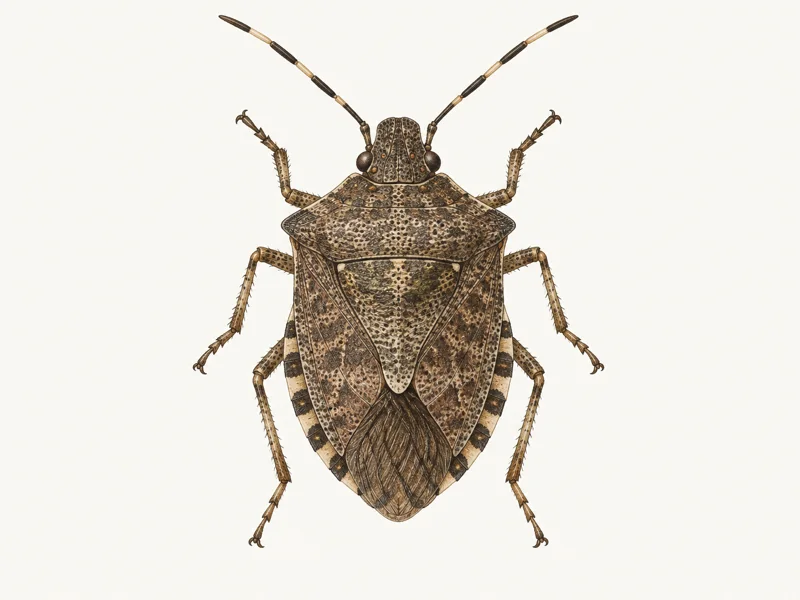
- White-banded antennae: Distinct alternating light-white and dark bands on the last two antennae segments.
- Smooth shield shoulders: Broad angular shield-shaped pronotum with smooth (non-spined) outer shoulder edges.
- Six mottled legs: Three pairs of brown walking legs; emits a sharp cilantro-like defensive odor if crushed.
Quick Answer: A spotted lanternfly (Lycorma delicatula) is a larger 22-27 mm planthopper with gray, black-spotted forewings that jumps powerfully when approached. A brown marmorated stink bug (Halyomorpha halys) is a smaller 12-17 mm insect with a broad, shield-shaped, mottled brown body that crawls or flies off clumsily. Both are classified as nuisance pests, not medical threats.
In three seconds, check the shape and the escape. A narrow, wedge-shaped insect that leaps away is a lanternfly. A flat, shield-shaped brown bug that walks slowly is a stink bug.
Key Visual & Physical Differences
The main difference between spotted lanternfly and stink bug is body shape. Lanternflies hold their wings tent-like over a slender body. Stink bugs have a flat, armored shield outline.
Spotted Lanternfly (Lycorma delicatula)
- Size: 22-27 mm long, noticeably larger than a stink bug.
- Classification: An invasive planthopper, not a moth or a fly despite the name.
- Wings at rest: Grayish-tan forewings with black spots and a speckled tip.
- Hidden color: Bright red hindwings flash when the insect jumps or spreads its wings.
- Nymphs: Younger stages are black with white spots, then red, black, and white before adulthood.
Brown Marmorated Stink Bug (Halyomorpha halys)
- Size: 12-17 mm long, about half the length of an adult lanternfly.
- Body shape: Broad, shield-shaped, and flattened.
- Color: Mottled brown, often described as "marbled."
- Markings: Light bands on the antennae and alternating light and dark edges along the abdomen.
- Odor: Releases a pungent smell when crushed or disturbed.
Side-by-Side Identification Table
- Shape: Lanternfly is wedge-shaped; stink bug is shield-shaped.
- Size: Lanternfly 22-27 mm; stink bug 12-17 mm.
- Colors: Lanternfly is gray with black spots and red hindwings; stink bug is mottled brown.
- Escape style: Lanternfly jumps hard; stink bug walks or takes a slow, buzzing flight.
Behavior, Habitat & Danger Comparison
Behavior is often the clearest clue in spotted lanternfly vs stink bug identification. The two insects feed differently, gather in different places, and become problems at different times.
Spotted Lanternfly Behavior
Spotted lanternflies feed on plant sap and gather in groups on tree trunks, vines, and woody plants. As they feed, they excrete sticky honeydew that can coat decks, patio furniture, and cars below infested trees. Black sooty mold often grows on that residue.
They are mainly an outdoor pest and rarely try to overwinter inside homes. Their egg masses look like smeared mud and can appear on outdoor furniture, firewood, vehicles, and stone.
Stink Bug Behavior
Brown marmorated stink bugs feed on fruits, vegetables, and ornamental plants, leaving dimpled or discolored spots. In fall, they seek shelter and crowd onto sunny walls before slipping indoors through gaps around windows, doors, and siding.
Indoors they spend winter hiding in attics and wall voids. On warm days they emerge, wander toward windows, and release their odor if disturbed.
Danger Level
Both species carry a nuisance danger rating. Neither stings, and neither is considered a medical threat to people or pets. The real harm is to plants, property, and comfort rather than health.
Which One Is Worse for Homeowners?
The answer depends on where the problem shows up. If someone is asking "spotted lanternfly or stink bug?" while looking at a stained deck, the lanternfly is likely to blame. If the bugs are crawling across the living room ceiling in winter, the stink bug is the usual suspect.
- Lanternflies are worse outdoors: They stress trees and grapevines, create sticky honeydew messes, and spread by hitchhiking on vehicles and outdoor items.
- Stink bugs are worse indoors: They invade living spaces in large numbers, leave odors behind, and damage garden produce.
Non-Chemical Control First (IPM)
- Exclusion: Seal cracks, repair torn screens, and add door sweeps before fall to keep stink bugs out.
- Vacuuming: Remove indoor stink bugs with a dedicated vacuum or bag to limit odor.
- Egg scraping: Scrape lanternfly egg masses into a bag with rubbing alcohol from fall through spring.
- Circle traps: Use tree-trunk circle traps rather than open sticky bands, which can catch birds and other wildlife.
- Inspect before travel: Check vehicles, firewood, and outdoor gear before leaving areas with lanternflies.
If an insecticide becomes necessary, choose a product labeled for the specific pest and site, and always follow the EPA product label directions. For heavy tree infestations, a licensed arborist or pest professional is the safest option.
Frequently Asked Questions
Do spotted lanternflies or stink bugs bite?
Neither species is known to bite people. Both are nuisance pests that feed on plants, not on humans or pets.
Is a spotted lanternfly a type of moth?
No. Despite its moth-like wings, the spotted lanternfly is an invasive planthopper. Its powerful jump is a key way to identify it.
Why do stink bugs come inside in fall?
Brown marmorated stink bugs look for sheltered spots to spend winter. Gaps around windows, doors, and siding give them easy access to attics and walls.
Should I report a spotted lanternfly sighting?
Many states ask residents to report spotted lanternflies, especially in newly affected areas. Check with your state department of agriculture or local extension office for current guidance.