Fire Ant vs Pavement Ant: How to Tell Them Apart Fast
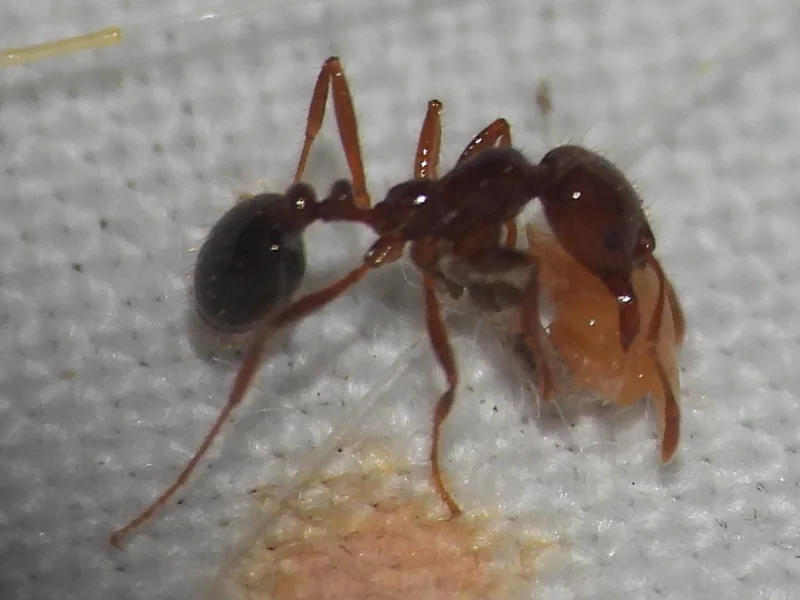
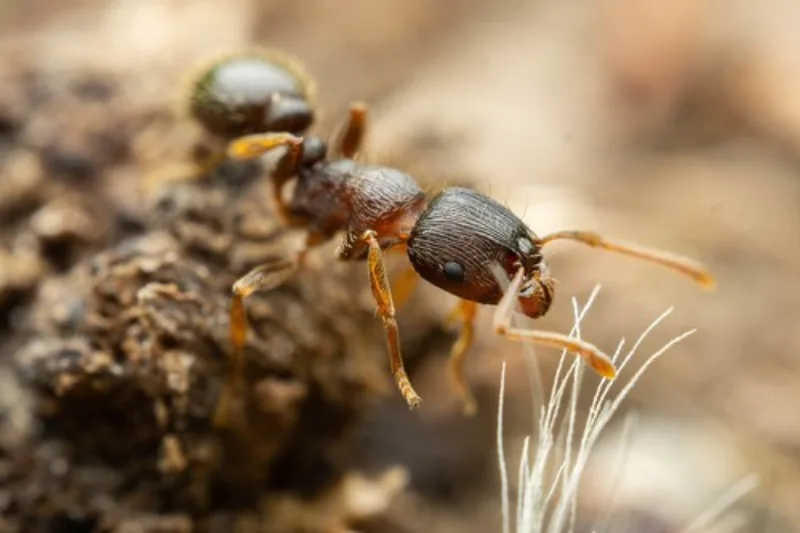
Quick ID Verdict: Fire ants (Solenopsis invicta) have a reddish-brown head and thorax with a darker, shiny brown-black abdomen, and they swarm aggressively when their mound is disturbed. Pavement ants (Tetramorium immigrans) are small, dark brown to blackish ants with paler legs and antennae that trail calmly along sidewalk cracks.
Fire Ant
Pavement Ant
Side-by-Side Comparison Table
| Trait | Fire Ant | Pavement Ant |
|---|---|---|
| Scientific Group | Solenopsis invicta | Tetramorium immigrans |
| Category | Insect | Insect |
| Typical Size | 2–6 mm | 2.5–4 mm |
| Danger Level | Medically Significant | Nuisance |
| Bites or Stings? | Yes | No |
| Peak US Months | January, March, April, May | April, May, June, July |
| Key ID Trait | Reddish-brown head and thorax with a darker shiny brown-black abdomen | Small dark brown to blackish ant with paler legs and antennae |
Fire Ant vs. Pavement Ant: True Size Comparison
Side-by-Side Anatomy Blueprint
Compare body segments, antennae, leg count, and key markings directly before treating or removing either species.
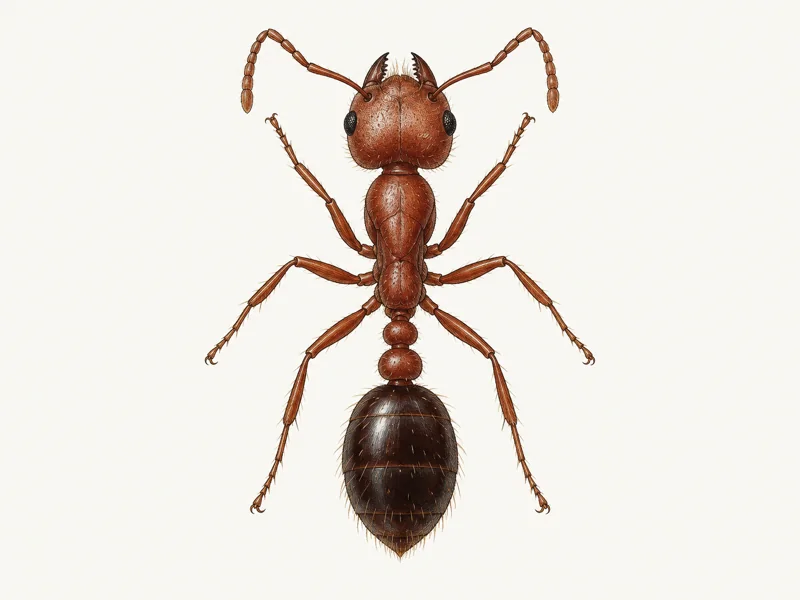
- Elbowed antennae: Sharply bent (elbowed) antennae ending in a 2-segmented club—key difference from termites.
- Copper-red thorax: Reddish-brown head and thorax contrasting against the darker abdomen; polymorphic worker sizes.
- Two waist nodes: Two distinct small bead-like segments (petiole + postpetiole) pinching the narrow waist.
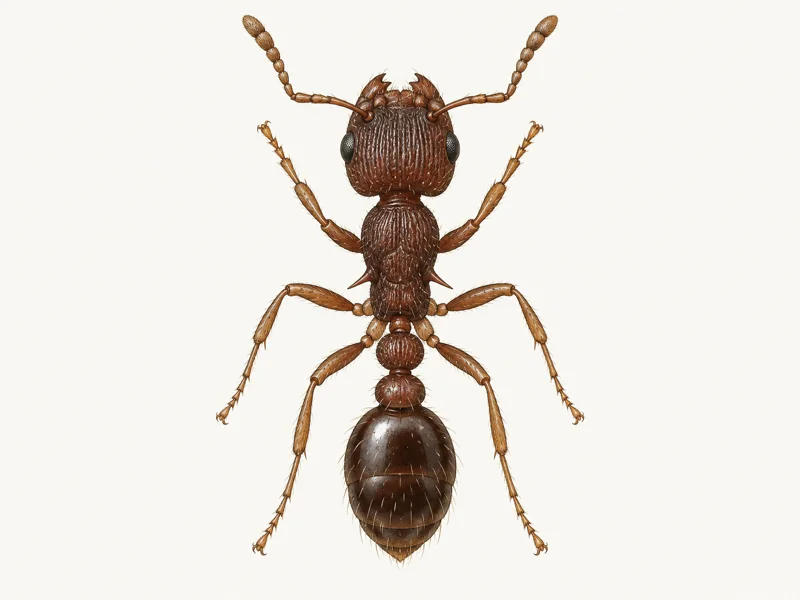
- Grooved dark head: Fine parallel lengthwise furrows cover the head and thorax under magnification.
- Tiny thorax spines: Pair of small backward-pointing spines sit at the rear edge of the thorax.
- Two waist nodes: Two distinct petiole nodes connect the dark brown thorax to the oval abdomen.
Quick Answer: Fire ants (Solenopsis invicta) have a reddish-brown head and thorax with a darker, shiny brown-black abdomen, and they swarm aggressively when their mound is disturbed. Pavement ants (Tetramorium immigrans) are small, dark brown to blackish ants with paler legs and antennae that trail calmly along sidewalk cracks. If the ants are two-toned and rush out of a fluffy dirt mound to sting, they are fire ants. If they are uniformly dark and pile tiny heaps of sand beside pavement, they are pavement ants.
Key Visual & Physical Differences
Color is the fastest clue for fire ant vs pavement ant identification. Fire ants look two-toned, while pavement ants appear dark overall, with legs and antennae a shade lighter than the body. A hand lens or a phone camera zoom makes these differences much easier to see.
Fire Ants (Solenopsis invicta)
- Size: 2-6 mm. Workers in the same colony come in mixed sizes, which is a useful field clue.
- Color: Reddish-brown head and thorax with a darker, shiny brown-black abdomen.
- Body: Two nodes in the waist, plus a stinger at the tip of the abdomen.
Pavement Ants (Tetramorium immigrans)
- Size: 2.5-4 mm, with workers fairly uniform in size.
- Color: Dark brown to blackish, with paler legs and antennae.
- Body: Fine parallel grooves on the head and thorax, along with two waist nodes and a small spine pair on the thorax.
The main difference between fire ant and pavement ant workers comes down to size variation and color pattern. A trail of identical dark ants points to pavement ants. Mixed sizes with a reddish front half point to fire ants.
Behavior, Habitat & Danger Comparison
Where the ants nest and how they react to disturbance often confirm the ID faster than body features do.
Nesting and Habitat
- Fire ants build loose, dome-shaped mounds of soil in sunny lawns, pastures, roadsides, and playgrounds. These mounds have no central opening, and they often appear after rain.
- Pavement ants nest under sidewalks, driveways, patio slabs, and foundations. They push small crater-like piles of fine soil or sand out of cracks and expansion joints.
Behavior
- Fire ants are highly defensive. Dozens of workers boil out of a disturbed mound and climb onto feet and legs within seconds.
- Pavement ants forage in steady trails for crumbs, grease, sweets, and pet food. They often move indoors through slab cracks. Neighboring colonies sometimes stage mass "ant wars" on sidewalks in spring.
Danger Level
Fire ants are medically significant. Their stings burn sharply, commonly leave itchy pustules, and can trigger serious allergic reactions in sensitive people. Anyone with swelling beyond the sting site, trouble breathing, dizziness, or many stings, especially a child or older adult, should call 911 or seek medical care right away. For guidance, contact US Poison Control at 1-800-222-1222 and follow a doctor's advice rather than home remedies.
Pavement ants are a nuisance pest. They can bite or sting weakly, but they rarely bother people. The real problems they cause are food contamination and their unsightly presence in kitchens and basements.
Which One Is Worse for Homeowners?
When deciding between a fire ant or pavement ant problem, fire ants are clearly the bigger concern because of their stings. They threaten children, pets, and anyone working in the yard. Pavement ants are more persistent indoors but pose little health risk.
Non-Chemical IPM First
- Sanitation: Wipe up crumbs and grease, store food in sealed containers, and pick up pet bowls overnight. This matters most for pavement ants.
- Exclusion: Seal cracks in slabs, foundations, and around utility entries with caulk or concrete patch.
- Moisture control: Fix leaks and redirect downspouts away from the foundation.
- Yard awareness: Mark fire ant mounds, wear boots and gloves outdoors, and keep children away from active mounds.
When to Use Products
For fire ants, slow-acting baits broadcast across the lawn are the standard approach and are often followed by individual mound treatments. For pavement ants, slow-acting baits placed along trails let workers carry the bait back to the colony. Always read and follow the EPA product label exactly. Large infestations, or yards used heavily by kids, are good reasons to call a licensed pest professional.
Frequently Asked Questions
Do pavement ants sting like fire ants?
Pavement ants have a small stinger, but they rarely use it on people and it seldom penetrates skin. Fire ant stings are painful, often form pustules, and can cause allergic reactions.
Can fire ants nest under pavement?
Fire ants sometimes nest along pavement edges, but they usually build open soil mounds in sunny areas. Small sand heaps coming out of slab cracks point to pavement ants.
Why are pavement ants in my kitchen?
They follow food and moisture, often entering through slab or foundation cracks. Clean up food sources, seal entry points, and use labeled baits if trails continue.
What should someone do after many fire ant stings?
They should move away from the mound and brush ants off. If symptoms appear severe, they should call 911. Otherwise, they can contact Poison Control at 1-800-222-1222 or a doctor for guidance instead of trying home remedies.