Fire Ant vs Sugar Ant: How to Tell Them Apart and Protect Your Home
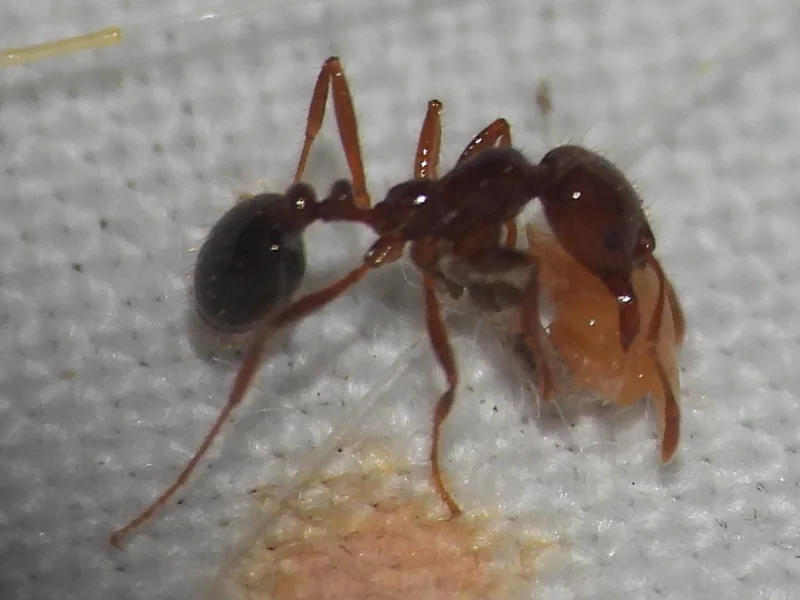
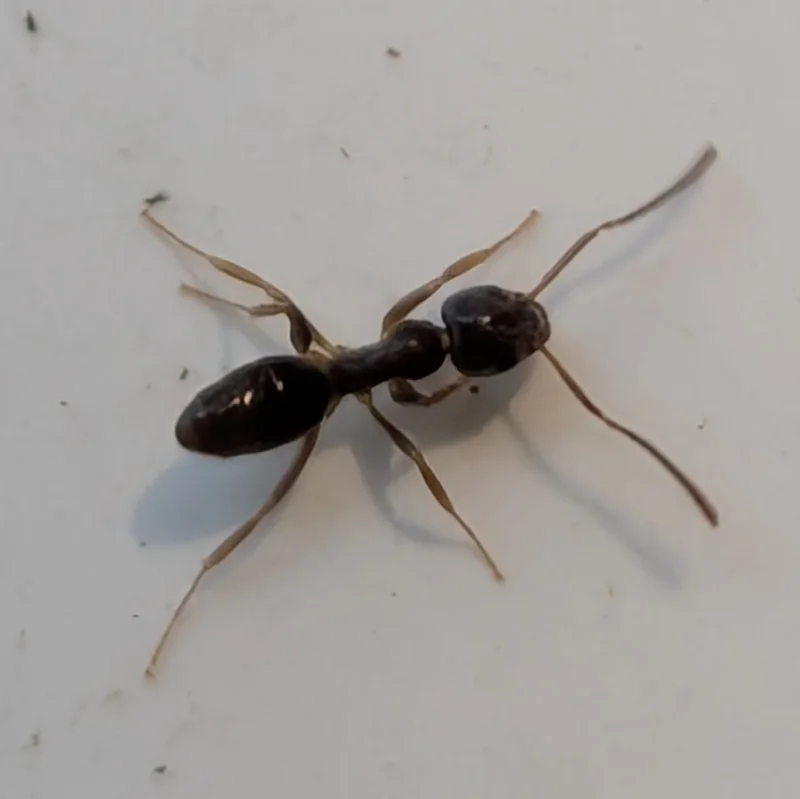
Quick ID Verdict: Two small ants, two very different problems. Quick ID verdict: if the ant has a reddish-brown front half, a darker shiny abdomen, and a stinging attack from a dirt mound in the yard, it's a fire ant. If it's a tiny, uniformly dark brown-to-black ant marching along a kitchen counter, it's almost certainly a sugar ant (the odorous house ant).
Fire Ant
Sugar Ant
Side-by-Side Comparison Table
| Trait | Fire Ant | Sugar Ant |
|---|---|---|
| Scientific Group | Solenopsis invicta | Tapinoma sessile |
| Category | Insect | Insect |
| Typical Size | 2–6 mm | 2–3.5 mm |
| Danger Level | Medically Significant | Nuisance |
| Bites or Stings? | Yes | No |
| Peak US Months | January, March, April, May | April, May, June, July |
| Key ID Trait | Reddish-brown head and thorax with a darker shiny brown-black abdomen | Tiny dark brown to black ant common in kitchens nationwide |
Fire Ant vs. Sugar Ant: True Size Comparison
Side-by-Side Anatomy Blueprint
Compare body segments, antennae, leg count, and key markings directly before treating or removing either species.
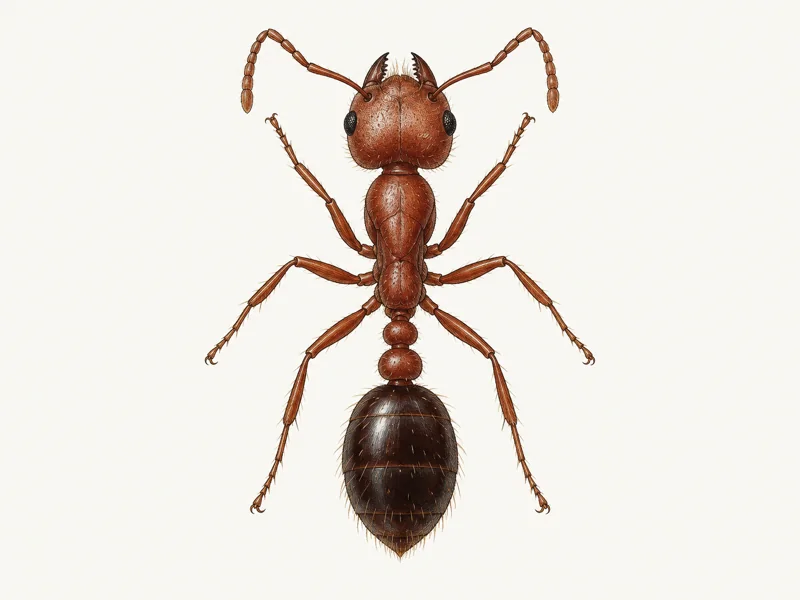
- Elbowed antennae: Sharply bent (elbowed) antennae ending in a 2-segmented club—key difference from termites.
- Copper-red thorax: Reddish-brown head and thorax contrasting against the darker abdomen; polymorphic worker sizes.
- Two waist nodes: Two distinct small bead-like segments (petiole + postpetiole) pinching the narrow waist.
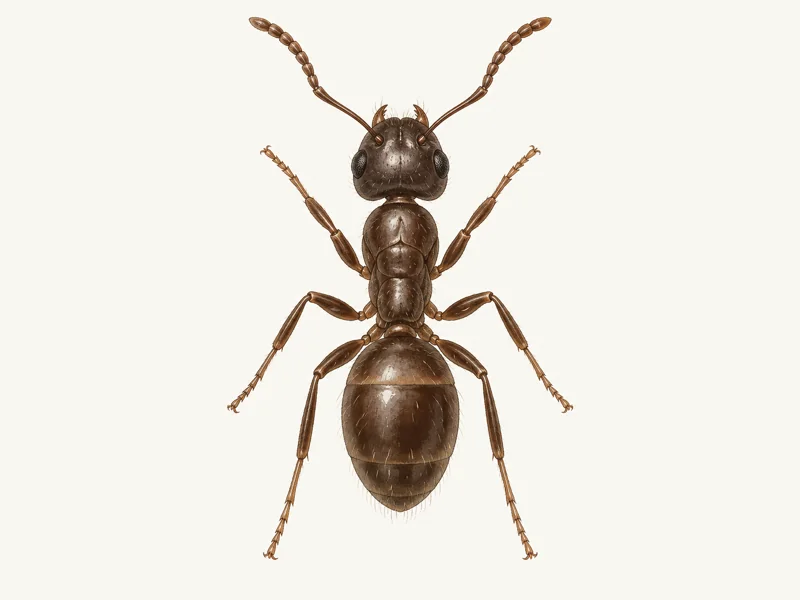
- Elbowed 12-part antennae: Sharply angled dark brown antennae without a heavy thickened club.
- Compact smooth thorax: Uniform dark chocolate-brown 2.5–3.2 mm body; smells like rotten coconut if crushed.
- Hidden single waist node: Flat, low 1-segmented petiole tucked directly beneath the overhanging abdomen.
The fire ant vs sugar ant question matters because one is a medically significant stinger and the other is mostly an annoyance. This guide covers identification, behavior, range, and safe Integrated Pest Management (IPM) control.
Fire Ant vs Sugar Ant Identification at a Glance
"Sugar ant" is a nickname, not a scientific name. Across most of the US, the ant homeowners call a sugar ant is the odorous house ant, Tapinoma sessile. The fire ant most people encounter is the red imported fire ant, Solenopsis invicta.
Size, Color, and Body Features
The clearest difference between fire ant and sugar ant species shows up in color and size variation.
FeatureFire Ant (Solenopsis invicta)Sugar Ant (Tapinoma sessile)Size2–6 mm, mixed sizes in one colony2–3.5 mm, fairly uniformColorReddish-brown head and thorax, darker shiny brown-black abdomenDark brown to black all overDanger levelMedically significantNuisanceTelltale signPainful stingRotten-coconut odor when crushedThat crushed-ant smell is a handy field test. Odorous house ants release a sweet, musty scent that some people compare to rancid butter or coconut. Fire ants don't.
Mounds, Nests, and Trails
Fire ants build loose, fluffy soil mounds in sunny lawns, pastures, and along sidewalks. The mounds have no central opening, and disturbing one sends workers boiling to the surface within seconds.
Sugar ants rarely build visible mounds. They nest in shallow, temporary spots like wall voids, under flooring, beneath mulch, or inside potted plants. Their giveaway is long, busy foraging trails leading to sweets, pet food, or a damp sink cabinet.
Behavior, Bites, and Health Risks
Fire ants are aggressive defenders. A worker grips skin with its mandibles, then stings repeatedly, often alongside dozens of nestmates. Stings typically burn and can form white pustules within a day.
For some people, fire ant stings can trigger serious allergic reactions. Children, older adults, pets, and anyone stung many times are at higher risk. Anyone showing swelling beyond the sting site, trouble breathing, dizziness, or hives should get emergency care right away. For guidance on any significant sting, call US Poison Control at 1-800-222-1222 and consult a doctor rather than relying on home remedies.
Sugar ants are a different story. Odorous house ants don't sting and very rarely bite in any noticeable way. Their real impact is contamination: they trail across food prep areas and can quickly overrun a pantry.
Where They Live: State Presence and Seasonal Activity
Range is one of the fastest ways to narrow down a fire ant or sugar ant sighting.
- Fire ants: Established across much of the southern US, including Texas, Louisiana, Mississippi, Alabama, Georgia, Florida, South Carolina, and parts of Oklahoma, Arkansas, Tennessee, North Carolina, Virginia, New Mexico, Arizona, and California. Federal quarantine zones limit movement of soil, sod, and nursery stock from infested areas.
- Sugar ants (odorous house ants): Found nationwide, from Maine to Washington and nearly everywhere between.
Seasonally, fire ant mounds become most noticeable in spring and fall, especially a day or two after rain. Odorous house ants tend to invade homes after heavy rain or when outdoor honeydew sources dry up, so kitchen invasions often spike in late spring and summer. In heated homes, indoor colonies may stay active year-round.
Fire Ant or Sugar Ant? Safe IPM Control Strategies
Integrated Pest Management starts with removing what attracts ants, then using targeted treatments only when needed.
For sugar ants indoors:
- Wipe counters and store sweets, syrups, and pet food in sealed containers.
- Fix leaky faucets and dry out damp cabinets, since moisture draws colonies.
- Seal cracks around windows, door frames, and utility lines.
- Use slow-acting bait stations instead of sprays. Sprays scatter odorous house ants and can split one colony into several.
For fire ants outdoors:
- Keep children and pets away from active mounds.
- Avoid disturbing mounds while mowing or gardening.
- Use a broadcast bait across the yard in warm, dry weather, then treat individual mounds that remain.
With any product, always read and follow the EPA-registered label exactly. The label is the law, and it lists safe rates, timing, and pet precautions.
Prevention Tips and When to Call a Professional
Simple habits go a long way. Trim shrubs back from siding, keep mulch a few inches from the foundation, and inspect potted plants and firewood before bringing them indoors.
So which one is worse for homeowners? For safety, fire ants win easily because their stings pose a real health risk. Sugar ants are more frustrating than dangerous, though persistent infestations can be hard to clear.
A licensed pest professional is worth calling when:
- Fire ant mounds sit near play areas, entryways, or livestock.
- Anyone in the household has a known sting allergy.
- Sugar ant trails keep returning after several weeks of baiting.
- Ants appear to be nesting inside walls or under slabs.
Frequently Asked Questions
How do you identify a fire ant vs a sugar ant?
Fire ants have a reddish-brown head and darker shiny abdomen, measuring 2–6 mm. Sugar ants are uniformly dark brown to black and smaller (2–3.5 mm). Fire ants build visible soil mounds; sugar ants hide in wall voids and leave foraging trails. Crush a sugar ant to smell its rotten-coconut odor—fire ants lack this.
What's the difference between fire ant stings and sugar ant bites?
Fire ants deliver painful, repeated stings that burn and form white pustules. They can trigger serious allergic reactions requiring emergency care. Sugar ants rarely bite noticeably and don't sting at all—their primary threat is food contamination and infestation.
Where are fire ants and sugar ants found in the US?
Fire ants are established across the southern US including Texas, Louisiana, Florida, Georgia, and parts of Arizona and California. Sugar ants (odorous house ants) are found nationwide from Maine to Washington, making them more geographically widespread.
What should you do if stung by a fire ant?
Most fire ant stings cause localized burning and pustules. However, if you experience swelling beyond the sting site, difficulty breathing, dizziness, or hives, seek emergency care immediately. Call US Poison Control at 1-800-222-1222 for guidance on significant stings rather than relying on home remedies.
How do you get rid of sugar ants in your home?
Eliminate sugar ant attractions by sealing food in containers, fixing leaky faucets, and drying damp cabinets. Seal cracks around windows and doors. Use slow-acting bait stations rather than sprays, which scatter colonies. Avoid using pesticides that split one colony into several separate ones.
When should you call a pest professional for ants?
Contact a licensed pest professional if fire ant mounds are near play areas or livestock, anyone has a sting allergy, sugar ant trails persist after weeks of baiting, or ants appear to be nesting inside walls. Professional treatment ensures safe and effective control.