Fire Ant vs Pharaoh Ant: How to Tell Them Apart Fast
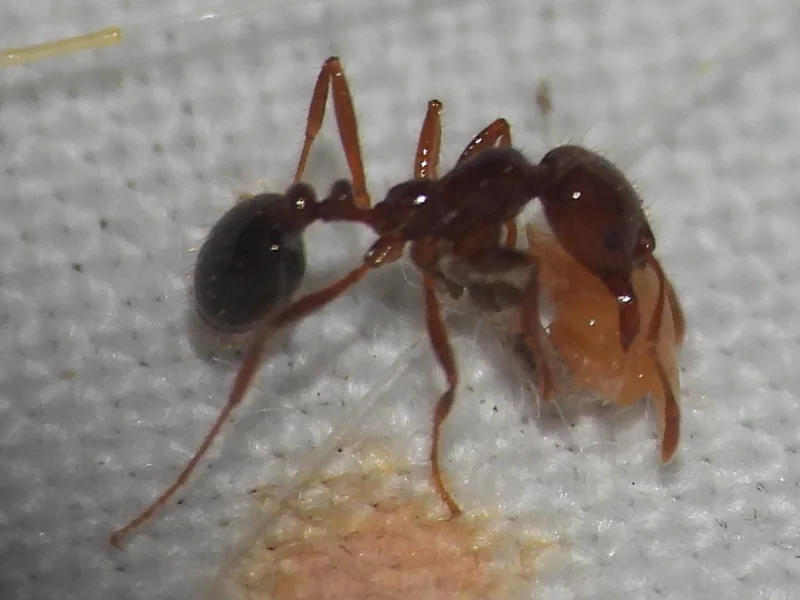
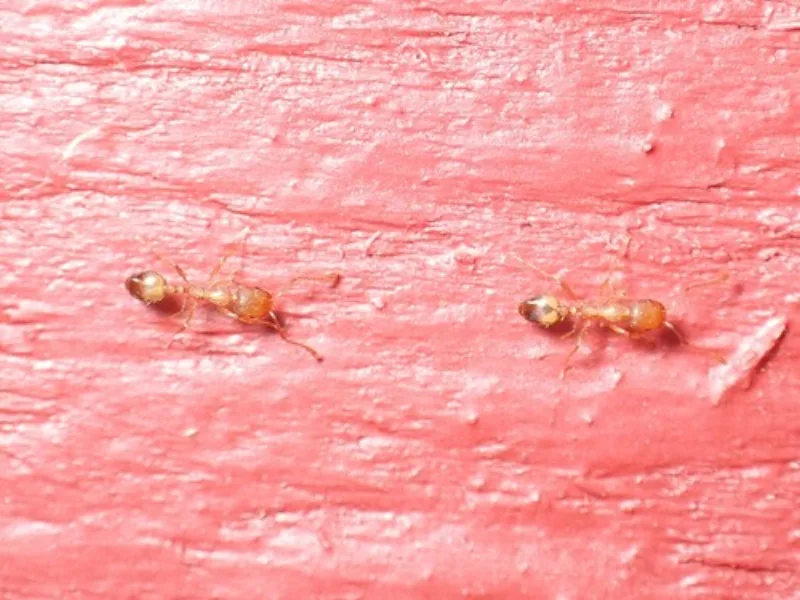
Quick ID Verdict: Fire ants (Solenopsis invicta) are larger at 2-6 mm, with a reddish-brown head and thorax and a darker, shiny brown-black abdomen. Pharaoh ants (Monomorium pharaonis) are extremely tiny at 1.5-2 mm and pale golden-yellow to light reddish, with only a slightly darker abdomen tip.
Fire Ant
Pharaoh Ant
Side-by-Side Comparison Table
| Trait | Fire Ant | Pharaoh Ant |
|---|---|---|
| Scientific Group | Solenopsis invicta | Monomorium pharaonis |
| Category | Insect | Insect |
| Typical Size | 2–6 mm | 1.5–2 mm |
| Danger Level | Medically Significant | Nuisance |
| Bites or Stings? | Yes | No |
| Peak US Months | January, March, April, May | August, September, October, December |
| Key ID Trait | Reddish-brown head and thorax with a darker shiny brown-black abdomen | Extremely tiny pale golden-yellow to light reddish ant with a slightly darker abdomen tip |
Fire Ant vs. Pharaoh Ant: True Size Comparison
Side-by-Side Anatomy Blueprint
Compare body segments, antennae, leg count, and key markings directly before treating or removing either species.
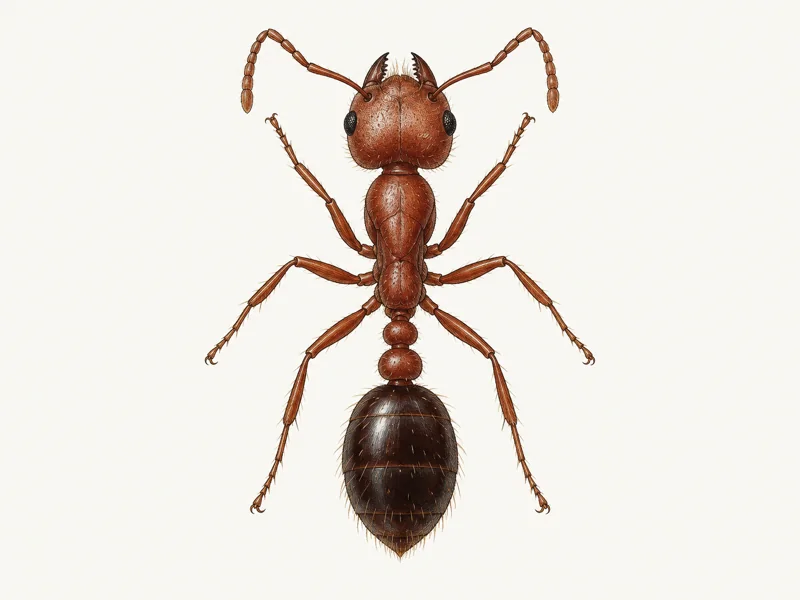
- Elbowed antennae: Sharply bent (elbowed) antennae ending in a 2-segmented club—key difference from termites.
- Copper-red thorax: Reddish-brown head and thorax contrasting against the darker abdomen; polymorphic worker sizes.
- Two waist nodes: Two distinct small bead-like segments (petiole + postpetiole) pinching the narrow waist.
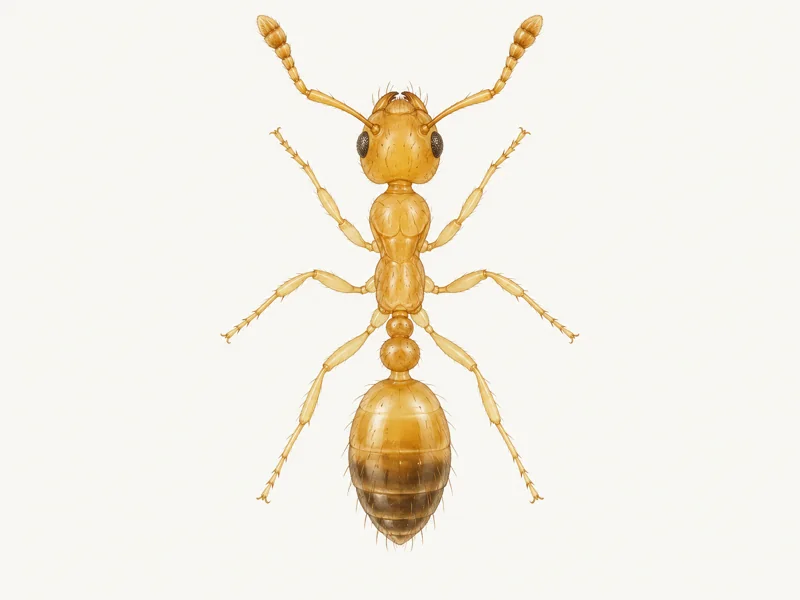
- 3-segmented club antennae: Elbowed pale antennae ending in a distinct 3-segment club (2-segment in fire ants).
- Translucent amber body: Tiny 1.5–2 mm pale golden-yellow indoor ant forming multi-queen colonies.
- Two tiny waist nodes: Two distinct small bead-like segments (petiole + postpetiole) at the waist.
Quick Answer: Fire ants (Solenopsis invicta) are larger at 2-6 mm, with a reddish-brown head and thorax and a darker, shiny brown-black abdomen. Pharaoh ants (Monomorium pharaonis) are extremely tiny at 1.5-2 mm and pale golden-yellow to light reddish, with only a slightly darker abdomen tip. If the ant is a barely visible yellowish speck trailing indoors, it is likely a pharaoh ant. If it is a bigger, two-toned ant swarming out of a soil mound, treat it as a fire ant and keep your distance.
Key Visual & Physical Differences
Size and color settle most fire ant vs pharaoh ant identification questions within seconds. A pharaoh ant is often hard to see without a close look, while fire ant workers come in mixed sizes, and even the smaller ones are usually larger than a pharaoh ant.
- Size: Fire ants measure 2-6 mm, with workers of varying sizes in the same colony. Pharaoh ants measure 1.5-2 mm and look nearly uniform.
- Color: Fire ants have a reddish-brown head and thorax with a darker, shiny brown-black abdomen. Pharaoh ants are pale golden-yellow to light reddish, with a slightly darker abdomen tip.
- Overall look: Fire ants appear sturdy and distinctly two-toned. Pharaoh ants look pale, almost translucent, against countertops and baseboards.
- Movement: Disturbed fire ants pour out quickly and aggressively. Pharaoh ants travel in steady, thin trails along edges, cords, and pipes.
A hand lens or a phone camera's zoom makes the color contrast much easier to see. Photograph a few ants on a white index card before you choose any control method.
Behavior, Habitat & Danger Comparison
Fire Ants
Fire ants are mainly an outdoor pest. They build soil mounds in lawns, pastures, roadsides, and garden beds, often in sunny, open spots. When a mound is disturbed, workers swarm and sting repeatedly.
Fire ants are rated medically significant. Their stings cause burning pain and pustules, and some people have serious allergic reactions. If someone is stung many times, or shows swelling beyond the sting site, trouble breathing, or dizziness, call 911 or seek emergency care right away. For other sting concerns, contact US Poison Control at 1-800-222-1222 or a doctor. Do not rely on home remedies for venom reactions.
Pharaoh Ants
Pharaoh ants are a classic indoor pest. They nest in warm, hidden voids such as wall gaps, behind appliances, under flooring, and in stored items. They are drawn to sweets, greasy foods, and moisture near sinks and bathrooms.
Pharaoh ants are rated a nuisance pest rather than a medically significant one. Their colonies have many queens and can split into new nests through a process called budding, so infestations often spread through apartments and other multi-unit buildings.
Which One Is Worse for Homeowners?
The answer depends on what you value most. For safety, fire ants are worse because their stings pose real health risks to children, pets, and allergic adults in the yard. For a hard-to-beat indoor problem, pharaoh ants are worse because they hide deep in walls and scatter when sprayed.
Start with non-chemical Integrated Pest Management (IPM) for either ant:
- Sanitation: Wipe up crumbs and spills, store food in sealed containers, and empty pet bowls at night.
- Moisture control: Fix leaky faucets and pipes, and dry out damp cabinets.
- Exclusion: Caulk cracks, seal utility openings, and trim vegetation away from the foundation.
- Yard care: Mark fire ant mounds and keep children and pets away from them. Never disturb a mound barehanded.
If you need a pesticide, choose a product labeled for your specific ant and always follow the EPA product label. Slow-acting baits are often preferred for pharaoh ants because repellent sprays can trigger budding and spread the colony. Fire ant baits and mound treatments work best when applied as the label directs. For severe or recurring infestations, a licensed pest professional is a smart call.
Frequently Asked Questions
What is the main difference between fire ant and pharaoh ant?
Fire ants are larger (2-6 mm), two-toned, sting, and nest in outdoor soil mounds. Pharaoh ants are tiny (1.5-2 mm), pale yellow, and nest indoors as a nuisance pest.
Do pharaoh ants sting like fire ants?
No. Pharaoh ants are classified as a nuisance and are not considered medically significant. Fire ants deliver painful stings that can trigger serious reactions.
Why shouldn't I spray pharaoh ants?
Repellent sprays can stress the colony and cause it to split into new nests, which makes the infestation worse. Label-approved baits used as directed are usually more effective.
How can I tell if it's a fire ant or pharaoh ant in my kitchen?
A tiny, pale golden ant trailing along counters is most likely a pharaoh ant. A larger reddish-brown ant with a dark abdomen indoors may be a fire ant and should be handled with care.