Black Widows in North Carolina: Identification, Season & Prevention
Quick Answer: Yes, black widows in North Carolina are common, with 1,204 verified GBIF sightings statewide. Three widow species are on record: the southern black widow (Latrodectus mactans), the northern black widow (Latrodectus variolus), and the brown widow (Latrodectus geometricus). Activity peaks from July through October, when webs are most often found in sheds, woodpiles, and garages.
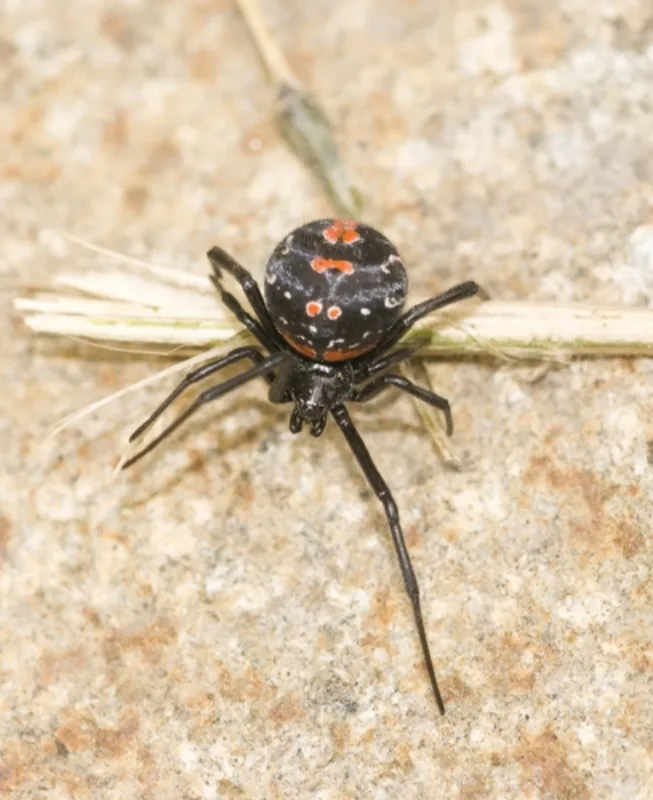
When Black Widows Are Most Active in North Carolina
Now (November): Moderate ActivityVerified North Carolina Counties, Species & US Range
Counties with Verified Observations
- New Hanover
- Wake
- Guilford
- Currituck
- Hoke
- Brunswick
- Onslow
- Cumberland
- Scotland
- Alexander
Species Recorded in North Carolina
| Species | Scientific Name | GBIF Records |
|---|---|---|
| southern black widow | Latrodectus mactans | 676 |
| Northern Black Widow | Latrodectus variolus | 279 |
| Brown Widow | Latrodectus geometricus | 244 |
How North Carolina Compares to Neighboring States
Note: Wildlife does not follow state or county lines. GBIF totals reflect verified citizen and museum records, so low counts in a neighboring county do not guarantee absence.
How to Identify Black Widows
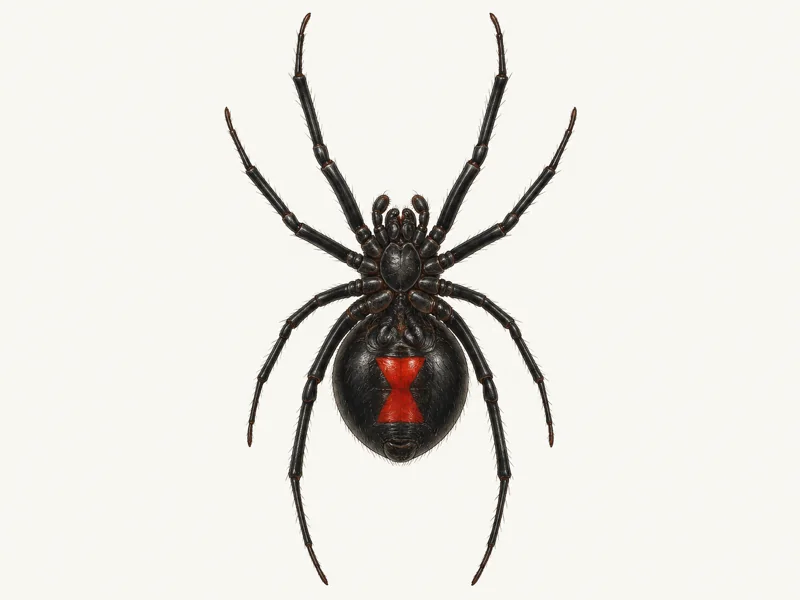
Annotated Anatomy Key (Black Widow)
- Compact cephalothorax: Small glossy jet-black front body segment with no dorsal markings.
- Slender black legs: Eight long, glossy, tapered jet-black legs (third pair noticeably shorter than front/rear pairs).
- Globular abdomen: Large, rounded, shiny jet-black bulbous abdomen proportional to the slender legs.
- Red hourglass mark: Diagnostic vivid crimson or orange-red hourglass marking on the underside of the female's abdomen.
Black Widows Field Checklist
- Glossy jet-black globular abdomen with long slender black legs
- Distinctive red or orange hourglass marking on the underside of the female's abdomen
- Spins irregular, tangled, remarkably strong cobwebs close to the ground
- Egg sacs are smooth, papery, off-white teardrop spheres
Side-by-Side Look-Alike Comparisons
Black Widows Size at True Relative Scale
Where Black Widows Live in North Carolina
Anyone asking whether there are black widows in North Carolina will find them from the coastal plain to the piedmont, and in sheltered spots in the cooler Blue Ridge. The state's humid subtropical climate across most regions, spanning USDA zones 6a to 8b, gives these spiders plenty of warm, protected places to build webs.
GBIF occurrence records show the most sightings in these counties:
- New Hanover County, around Wilmington and the southern coast
- Wake County, including Raleigh and its suburbs
- Guilford County, centered on Greensboro
- Currituck County, on the northeastern coast
- Hoke County, in the Sandhills region
Higher sighting counts often reflect where more people live and report spiders, so widows can turn up in any county. They prefer dark, dry, undisturbed spaces such as crawl spaces, meter boxes, stacked lumber, outdoor furniture, and the undersides of decks.
When Black Widows Are Most Active in North Carolina
North Carolina black widow season peaks in July, August, September, and October. During these months, females are mature, egg sacs are common, and webs are easiest to spot. Late summer and early fall yard cleanup is when homeowners most often encounter them.
Widows don't vanish in winter. They slow down and shelter in protected spots, especially in garages and crawl spaces. Mountain counties tend to see a shorter active season than the warmer coast and piedmont.
North Carolina Black Widow Identification
- Southern black widow: Glossy black female with a complete red hourglass on the underside of the abdomen.
- Northern black widow: Similar glossy black body, but the hourglass is usually broken into two separate red marks, and red spots often appear along the back.
- Brown widow: Tan to mottled brown with an orange hourglass. Its egg sacs look spiky, often compared to a cotton ball studded with points.
All widows build irregular, tangled cobwebs with strong, sticky silk, usually close to the ground. Males and juveniles are smaller and often paler, with lighter markings.
Look-Alikes Frequently Mistaken for Black Widows
Several common North Carolina spiders get confused with widows. Checking body shape, markings, and web style usually settles the question.
- Cellar spiders: These have tiny bodies and very long, thin legs, earning the nickname "daddy longlegs." They hang in loose, messy webs in basements and corners and lack any red hourglass.
- Other cobweb spiders: Common house spiders and false widows share the rounded abdomen and tangled web but are usually brown or mottled, with no glossy black finish or clear hourglass.
- Dark jumping and ground spiders: Some are black, but they hunt actively and don't sit in a web like widows do.
If a spider is shiny black with a red hourglass, treat it as a widow and avoid handling it.
How to Keep Black Widows Out of Your North Carolina Home
Knowing how to prevent black widows in North Carolina starts with Integrated Pest Management. University cooperative extension IPM guidance consistently recommends removing shelter and sealing entry points before turning to pesticides.
Non-Chemical Steps First
- Reduce clutter: Clear boxes, debris, and stored items from garages, sheds, and crawl spaces.
- Move woodpiles: Stack firewood off the ground and at least 20 feet from the house.
- Seal gaps: Caulk cracks, repair screens, and install door sweeps.
- Control moisture: Fix leaks and ventilate crawl spaces to discourage the insects widows eat.
- Vacuum webs and egg sacs: Dispose of the bag sealed in plastic outdoors.
- Wear gloves: Use them when gardening, moving firewood, or reaching into dark spaces, and shake out shoes stored in garages.
- Adjust lighting: Yellow bulbs attract fewer insects, which means less prey near doors.
Using Pesticides Safely
If spiders persist, a targeted spot treatment may help. Always read and follow the EPA product label exactly, since the label is the law. Avoid broad spraying, which kills beneficial insects without solving the shelter problem.
When to Call a Licensed North Carolina Pest Professional
- You find multiple widows or egg sacs indoors.
- Spiders keep returning after cleanup and exclusion.
- Infested areas are hard to reach, such as crawl spaces or attics.
- Young children, older adults, or pets regularly use the affected area.
Bite safety: Widow venom is medically significant. If someone is bitten, call US Poison Control at 1-800-222-1222 and contact a doctor right away. This guide offers general information only and is not medical advice.
IPM Prevention Checklist for North Carolina Homes
- Wear thick leather gloves when moving firewood, bricks, or stored garage boxes
- Declutter garages and elevate storage bins off the floor
- Seal foundation vents, gaps, and door sweeps
 EXCLUSION BLUEPRINT
Inspect eaves, screens, door sweeps, foundation cracks, and utility penetrations around North Carolina homes before peak season.
Black Widows in North Carolina: Frequently Asked Questions
Are there black widows in North Carolina?
Yes. GBIF records 1,204 verified sightings, with southern, northern, and brown widows all documented in the state.
Which North Carolina counties report the most black widows?
New Hanover, Wake, Guilford, Currituck, and Hoke counties lead in verified GBIF sightings.
When is black widow season in North Carolina?
Sightings peak from July through October, though widows can shelter in protected spaces year-round.
What should someone do after a black widow bite in North Carolina?
Call US Poison Control at 1-800-222-1222 and seek care from a doctor promptly. Do not rely on home remedies.
Sources & Verification
- UC IPM — Black Widow and Other Widow Spiders
- UF/IFAS Extension — Widow Spiders
- GBIF Global Biodiversity Occurrence Records
Data refreshed · Editorial & GBIF Methodology