American Cockroaches in Texas: Identification, Season, and Prevention
Quick Answer: American cockroaches in Texas are common, with 4,093 verified GBIF sightings statewide. Bexar, Harris, McLennan, Nueces, and Dallas counties report the most records, and sightings peak in April, July, September, and October. They are a nuisance pest, not a venomous one, but they contaminate food and signal moisture or entry problems.
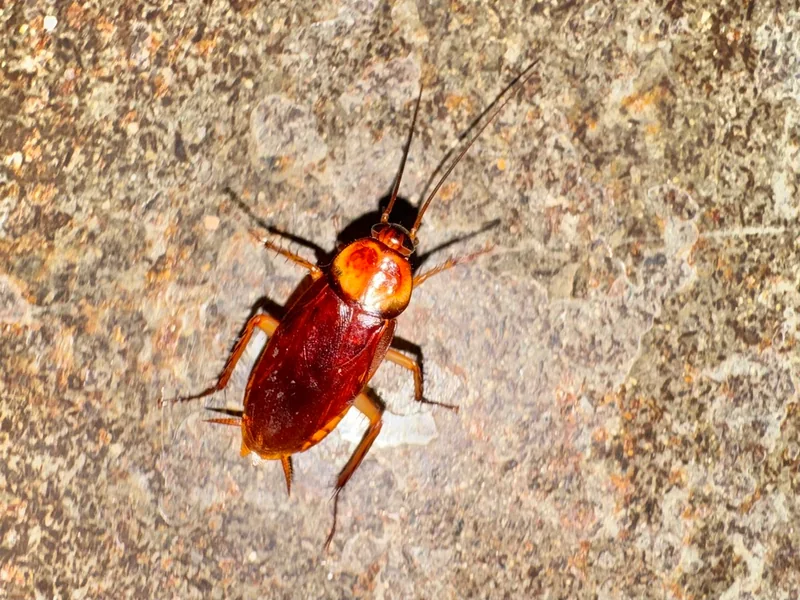
When American Cockroaches Are Most Active in Texas
Now (November): Moderate ActivityVerified Texas Counties, Species & US Range
Counties with Verified Observations
- Bexar
- Harris
- McLennan
- Nueces
- Dallas
- Hidalgo
- Travis
- Galveston
- Taylor
- Williamson
Species Recorded in Texas
| Species | Scientific Name | GBIF Records |
|---|---|---|
| American Cockroach | Periplaneta americana | 4,093 |
How Texas Compares to Neighboring States
Note: Wildlife does not follow state or county lines. GBIF totals reflect verified citizen and museum records, so low counts in a neighboring county do not guarantee absence.
How to Identify American Cockroaches
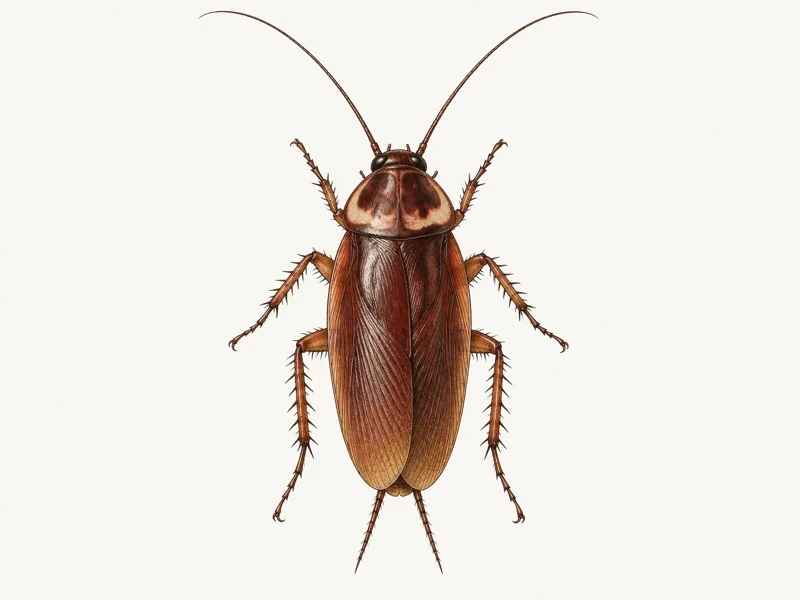
Annotated Anatomy Key (American Cockroach)
- Long whip antennae: Thread-like filiform antennae sweeping longer than the 35–50 mm reddish-brown body.
- Yellow figure-8 shield: Broad chestnut pronotum behind the head ringed by a distinctive pale yellowish halo.
- Spiny running legs: Six fast-running bristled legs built for rapid sprinting along sewer lines and basements.
- Long wings & cerci: Full-length reddish-brown wings extending past the abdomen tip with paired rear cerci.
American Cockroaches Field Checklist
- Large reddish-brown cockroach (up to 2 inches) with a pale yellow figure-8 halo around the pronotum
- Both sexes have fully developed wings and can glide/fly short distances in warm weather
- Frequently called 'water bugs' or 'palmetto bugs' in the South
- Strong association with sewers, steam tunnels, and damp crawlspaces
American Cockroaches Size at True Relative Scale
Where American Cockroaches Live in Texas
Are there American cockroaches in Texas? Yes, across the whole state. Texas spans the humid subtropical Gulf Coast, the semi-arid central plains, and the arid western desert (USDA zones 6b-10a), and Periplaneta americana turns up in all of these regions wherever it finds warmth and moisture.
Outdoors, they favor mulch beds, leaf litter, tree holes, woodpiles, meter boxes, and storm drains. Indoors, they settle in basements, crawl spaces, utility rooms, floor drains, and areas around water heaters.
Texas American Cockroach Identification
- Size: Adults are large, usually 1.5 to 2 inches long.
- Color: Reddish-brown with a pale, yellowish band around the edge of the pronotum (the shield behind the head).
- Wings: Fully developed in adults. They can glide or fly short distances, especially in warm, humid weather.
- Nymphs: Wingless and smaller, with the same general reddish-brown tone.
- Egg cases: Dark brown, purse-shaped capsules, often hidden in damp, sheltered spots.
When American Cockroaches Are Most Active in Texas
The Texas American cockroach season is long because of the mild climate. GBIF records peak in April, July, September, and October, which reflects spring warmup, summer heat, and fall movement. Observation records also reflect when people are outdoors and noticing insects, so they are a guide rather than an exact activity calendar.
Heavy rain, drought, and heat can push roaches indoors. Flooded sewers and dry outdoor conditions both send them looking for water, so sightings often rise after storms or during hot, dry spells. They are mostly nocturnal, so a daytime sighting can point to a crowded hiding spot nearby.
Look-Alikes Frequently Mistaken for American Cockroaches
Several names and species overlap in Texas, which makes identification confusing.
- Palmetto bug: A regional nickname, often applied to American cockroaches themselves. It is not a separate species.
- Water bug: Another common nickname for large cockroaches found near drains or damp areas. The name is also used for unrelated aquatic insects.
- Oriental cockroach: Darker, shiny black to dark brown, and more sluggish. It favors cool, damp spots such as drains and crawl spaces. Females have very short wing pads.
- Other cockroaches: Smaller species are often mistaken for young American cockroaches, so check size and the pale band behind the head.
If you are unsure, trap one in a jar and compare it with photos from a university extension service. Many Texas county extension offices will help identify insects.
How to Keep American Cockroaches Out of Your Texas Home
For anyone asking how to prevent American cockroaches in Texas, the answer starts with non-chemical steps. Exclusion, sanitation, and moisture control work better than spraying alone, in line with general university extension IPM guidance.
Exclusion
- Seal gaps around pipes, utility lines, and foundation cracks.
- Install door sweeps and repair damaged window and vent screens.
- Cover floor drains and sewer openings with tight-fitting screens or caps when not in use.
- Keep weatherstripping intact on garage doors.
Sanitation and Moisture
- Fix leaking pipes, faucets, and AC condensate lines.
- Store pet food in sealed containers and wash dishes promptly.
- Use trash cans with tight lids and take garbage out regularly.
- Pull mulch, firewood, and leaf piles back from the foundation.
- Run a dehumidifier in basements and crawl spaces.
Treatments
Sticky traps help monitor activity. If you use baits or insecticides, choose products labeled for American cockroaches and follow the EPA-approved label exactly, including placement and safety directions around children and pets.
When to Call a Licensed Texas Pest Professional
- You see roaches during the day or in large numbers.
- Activity continues after sanitation and sealing.
- You find many egg cases or roaches emerging from sewer lines or walls.
- Someone in the home has asthma or allergies that cockroaches may worsen.
Cockroaches can spread bacteria and trigger allergies. For health concerns, contact a doctor. For accidental ingestion of pesticides, call US Poison Control at 1-800-222-1222.
IPM Prevention Checklist for Texas Homes
- Install mesh screens over floor drains and maintain wet P-traps
- Seal exterior foundation vents and door sweeps
- Keep mulch and tree limbs trimmed away from siding
 EXCLUSION BLUEPRINT
Inspect eaves, screens, door sweeps, foundation cracks, and utility penetrations around Texas homes before peak season.
American Cockroaches in Texas: Frequently Asked Questions
Are American cockroaches common in Texas?
Yes. GBIF holds 4,093 verified Texas sightings, with Bexar, Harris, McLennan, Nueces, and Dallas counties leading the records.
Are American cockroaches dangerous?
They are a nuisance pest. They do not sting or have venom, but they can contaminate food and surfaces and aggravate allergies.
Is a palmetto bug the same as an American cockroach?
Often, yes. Palmetto bug is a regional nickname commonly used for large cockroaches, including the American cockroach.
Why do I see American cockroaches in my house after rain?
Heavy rain can flood sewers and outdoor hiding spots, driving roaches toward drains, garages, and entry gaps. Seal openings and fix moisture problems to reduce visits.
Sources & Verification
Data refreshed · Editorial & GBIF Methodology