American Cockroach vs Oriental Cockroach: How to Tell Them Apart
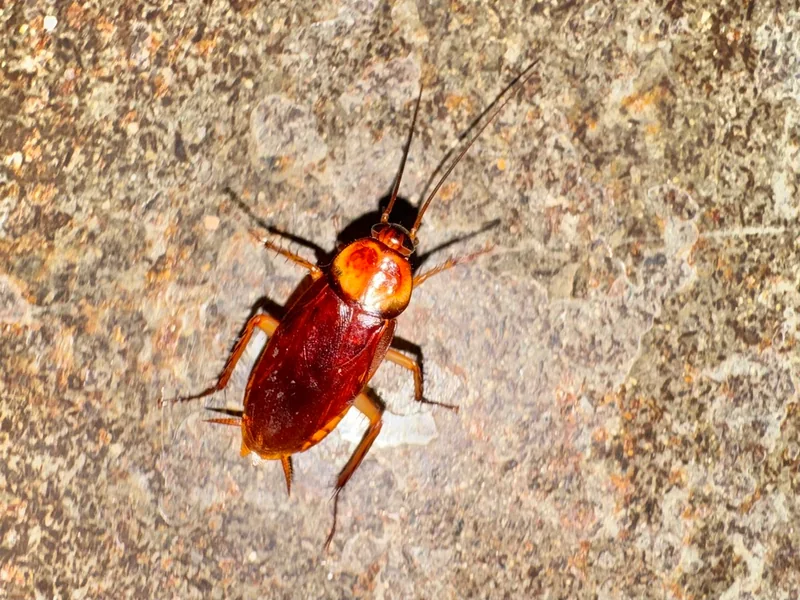
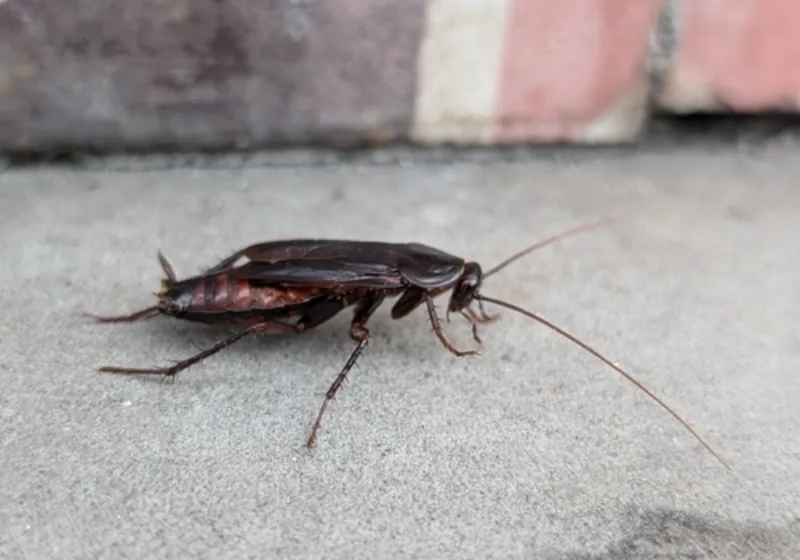
Quick ID Verdict: An American cockroach (Periplaneta americana) is large and reddish-brown, reaching 35-53 mm (up to 2 inches), with a pale yellow figure-8 halo on the shield behind its head. An Oriental cockroach (Blatta orientalis) is smaller at 22-32 mm, broad-bodied, and glossy jet-black to dark mahogany.
American Cockroach
Oriental Cockroach
Side-by-Side Comparison Table
| Trait | American Cockroach | Oriental Cockroach |
|---|---|---|
| Scientific Group | Periplaneta americana | Blatta orientalis |
| Category | Insect | Insect |
| Typical Size | 35–53 mm | 22–32 mm |
| Danger Level | Nuisance | Nuisance |
| Bites or Stings? | No | No |
| Peak US Months | April, August, September, October | May, June, July, August |
| Key ID Trait | Large reddish-brown cockroach (up to 2 inches) with a pale yellow figure-8 halo around the pronotum | Glossy jet-black to dark mahogany broad-bodied cockroach |
American Cockroach vs. Oriental Cockroach: True Size Comparison
Side-by-Side Anatomy Blueprint
Compare body segments, antennae, leg count, and key markings directly before treating or removing either species.
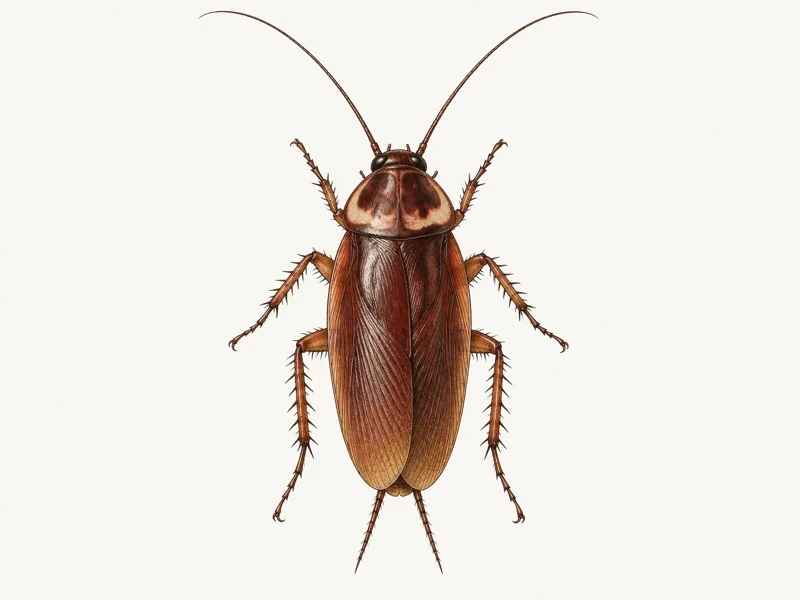
- Long whip antennae: Thread-like filiform antennae sweeping longer than the 35–50 mm reddish-brown body.
- Yellow figure-8 shield: Broad chestnut pronotum behind the head ringed by a distinctive pale yellowish halo.
- Spiny running legs: Six fast-running bristled legs built for rapid sprinting along sewer lines and basements.
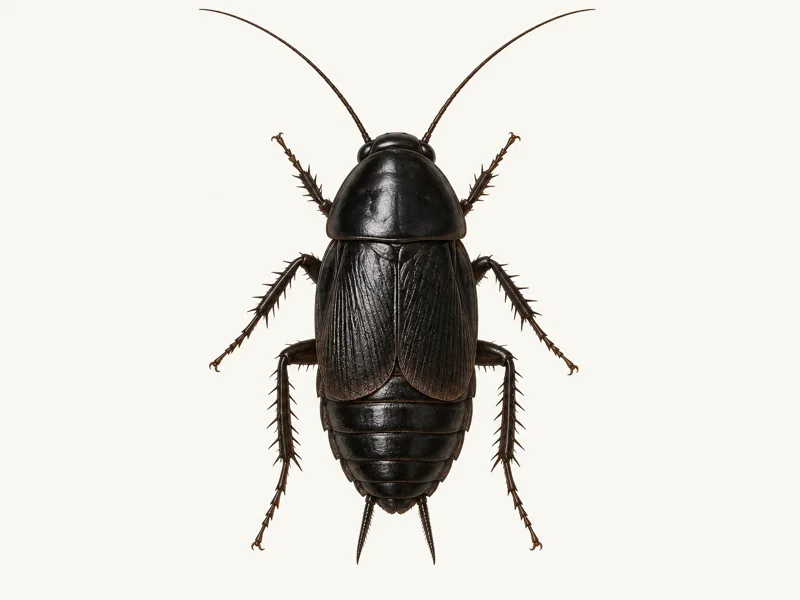
- Long thin antennae: Delicate filiform antennae detecting damp basement drafts and drain moisture.
- Solid jet-black shield: Smooth, glossy black pronotum with zero pale halos or yellow stripes.
- Short truncated wings: Stubby leathery wing covers stop short (males ~2/3 length; females tiny pads).
Quick Answer: An American cockroach (Periplaneta americana) is large and reddish-brown, reaching 35-53 mm (up to 2 inches), with a pale yellow figure-8 halo on the shield behind its head. An Oriental cockroach (Blatta orientalis) is smaller at 22-32 mm, broad-bodied, and glossy jet-black to dark mahogany. If it's big and reddish with a light-bordered "collar," it's American; if it's shorter, chunky, and nearly black, it's Oriental.
Key Visual & Physical Differences
For American cockroach vs oriental cockroach identification, color and size are the fastest clues. Most homeowners can separate the two at a glance once they know what to look for.
Size
- American cockroach: 35-53 mm long, making it one of the largest cockroaches found in US homes.
- Oriental cockroach: 22-32 mm long. It looks stout and wide rather than long and sleek.
Color and Sheen
- American cockroach: Reddish-brown overall, often with a slightly translucent, polished look.
- Oriental cockroach: Glossy jet-black to dark mahogany. Under a flashlight it can appear almost oily.
The Pronotum (Head Shield)
The pronotum is the plate covering the area just behind the head. On an American cockroach, it carries a distinctive pale yellow figure-8 halo, which is the single most reliable field mark. The Oriental cockroach has no such pattern; its pronotum is uniformly dark like the rest of its body.
Body Shape
American cockroaches are elongated, with wings extending along the length of the body in adults. Oriental cockroaches are broad and squat, and their wings are noticeably shorter than the body, especially in females, giving them a beetle-like appearance.
Behavior, Habitat & Danger Comparison
The difference between American cockroach and Oriental cockroach habits often explains where homeowners find them. Both species favor damp places, but they use them in slightly different ways.
Where They Live
- American cockroaches commonly occupy warm, humid areas such as sewers, boiler rooms, basements, steam tunnels, and floor drains. They often enter homes through plumbing and drain lines.
- Oriental cockroaches prefer cooler, wetter spots like crawl spaces, damp basements, leaf litter, mulch beds, and around foundation drains. They tolerate cooler temperatures better than many cockroaches.
Movement and Activity
Both species are mainly nocturnal and scatter when lights come on. American cockroaches are fast runners and can glide short distances in warm conditions. Oriental cockroaches move more slowly and do not fly, and they tend to stay close to ground level rather than climbing.
Danger Level
Both species are classified as nuisance pests. They do not sting, and neither is considered medically significant in the way venomous pests are. However, both travel through drains and decaying material, so they can contaminate food-prep surfaces, and their droppings and shed skins may aggravate allergies or asthma in sensitive people. Anyone with health concerns should talk with a doctor.
Which One Is Worse for Homeowners?
Neither species is more dangerous in a medical sense, since both rank as nuisance pests. The answer depends on what bothers a household most: size and visibility, or persistent moisture problems.
- American cockroaches are more alarming because of their size and occasional gliding, and they can signal plumbing or sewer connection issues.
- Oriental cockroaches often point to chronic dampness, poor drainage, or wet crawl spaces, and they can be harder to dislodge from outdoor harborage near the foundation.
Integrated Pest Management Steps
Whether the culprit is an American cockroach or Oriental cockroach, non-chemical control comes first:
- Moisture control: Fix leaks, ventilate crawl spaces, and use a dehumidifier in damp basements.
- Exclusion: Seal gaps around pipes, install door sweeps, and keep drain covers and traps in good repair.
- Sanitation: Store food in sealed containers, empty trash nightly, and clean up pet food and crumbs.
- Outdoor cleanup: Pull mulch and leaf litter several inches away from the foundation and redirect downspouts.
- Monitoring: Place sticky traps along walls and near drains to track activity.
If an infestation persists, targeted baits or treatments may help. Always read and follow the EPA product label exactly, and consider a licensed pest professional for recurring problems.
Frequently Asked Questions
What is the easiest way to tell the two species apart?
Look at color and the head shield. A reddish-brown roach with a pale yellow figure-8 halo is American; a glossy black to dark mahogany roach with no pattern is Oriental.
Can Oriental cockroaches fly?
No. Oriental cockroaches have short wings that do not support flight. American cockroaches have full wings and can glide short distances in warm conditions.
Are either of these cockroaches dangerous?
Both are considered nuisance pests and do not sting. They can contaminate surfaces and may trigger allergies, so consult a doctor if you have health concerns.
Why do I find these roaches in my basement?
Both species are drawn to moisture. Damp basements, floor drains, and crawl spaces provide the humidity and shelter they need, so reducing moisture is the most effective first step.