American Cockroach vs German Cockroach: How to Tell Them Apart and Stop an Infestation
Quick ID Verdict: A cockroach darting across the kitchen floor at midnight raises one urgent question: is it an American cockroach or a German cockroach? The answer changes everything about how a homeowner should respond.
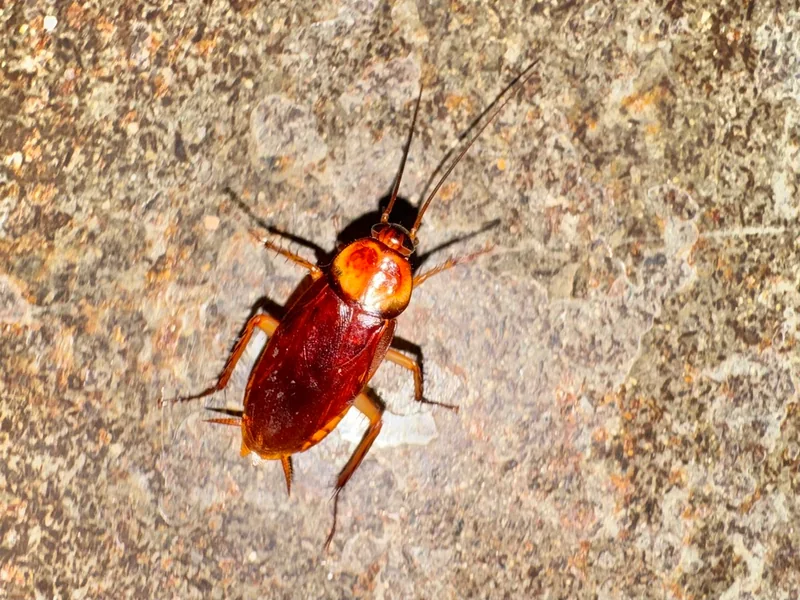
American Cockroach
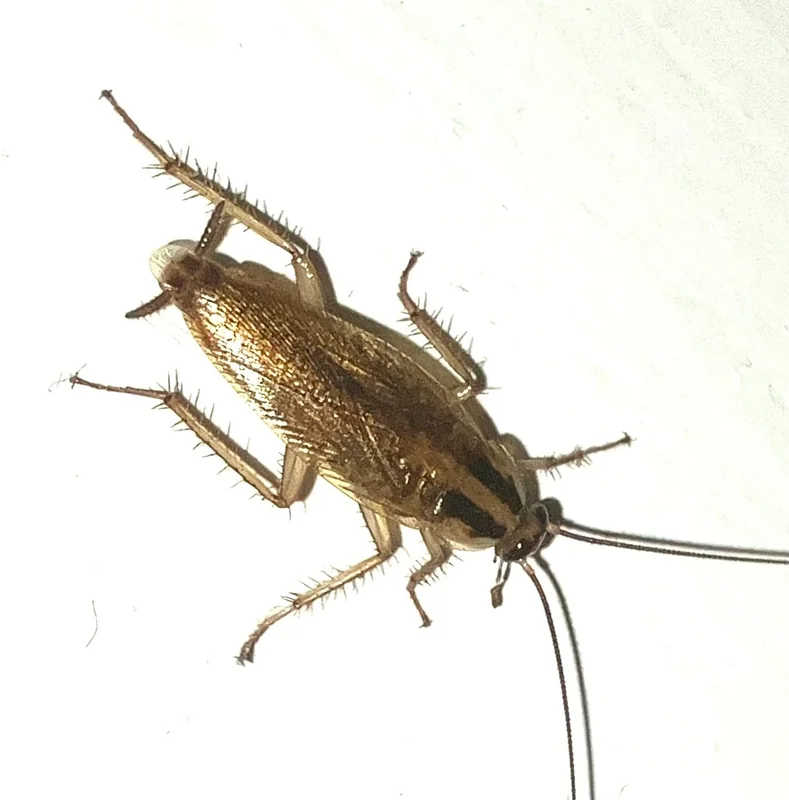
German Cockroach
Side-by-Side Comparison Table
| Trait | American Cockroach | German Cockroach |
|---|---|---|
| Scientific Group | Periplaneta americana | Blattella germanica |
| Category | Insect | Insect |
| Typical Size | 35–53 mm | 11–16 mm |
| Danger Level | Nuisance | Nuisance |
| Bites or Stings? | No | No |
| Peak US Months | April, August, September, October | July, September, October, November |
| Key ID Trait | Large reddish-brown cockroach (up to 2 inches) with a pale yellow figure-8 halo around the pronotum | Small light-tan to amber cockroach with two unmistakable dark parallel lengthwise stripes behind the head |
American Cockroach vs. German Cockroach: True Size Comparison
Side-by-Side Anatomy Blueprint
Compare body segments, antennae, leg count, and key markings directly before treating or removing either species.
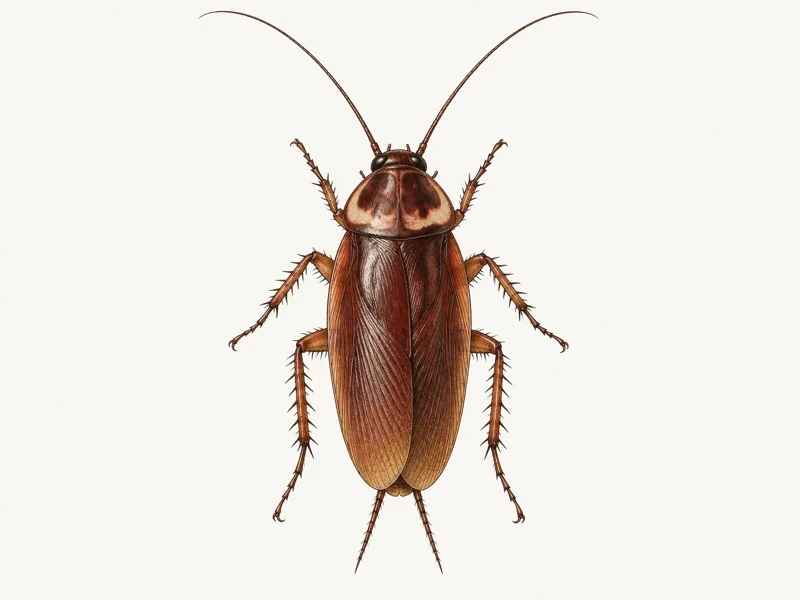
- Long whip antennae: Thread-like filiform antennae sweeping longer than the 35–50 mm reddish-brown body.
- Yellow figure-8 shield: Broad chestnut pronotum behind the head ringed by a distinctive pale yellowish halo.
- Spiny running legs: Six fast-running bristled legs built for rapid sprinting along sewer lines and basements.
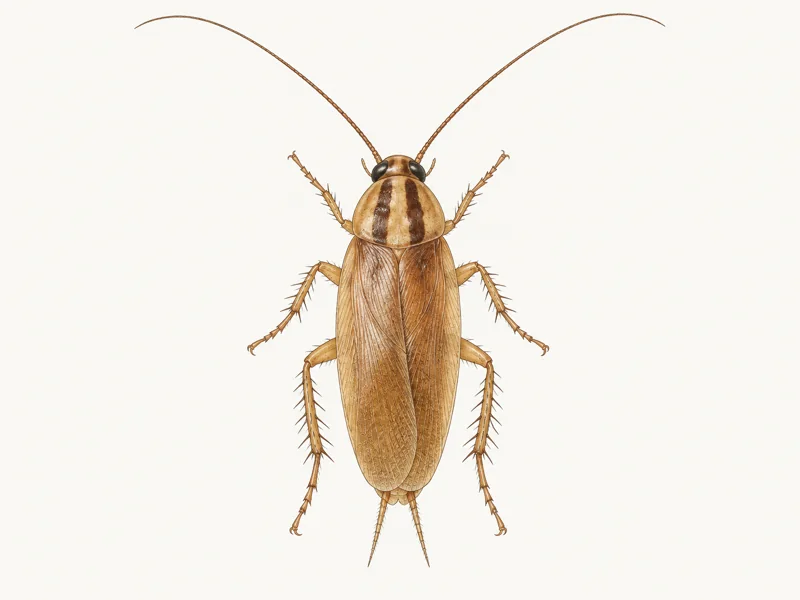
- Whip-like antennae: Very long, delicate filiform antennae sweeping forward to detect air currents and food.
- Two dark stripes: Unmistakable pair of dark parallel lengthwise bars on the tan shield (pronotum) behind the head.
- Spiny running legs: Six bristle-lined legs built for rapid sprinting into cabinet hinges and appliance voids.
Quick ID verdict: If the roach is large (up to 2 inches), reddish-brown, and has a pale yellow figure-8 halo behind its head, it's an American cockroach. If it's small, tan to amber, and shows two dark parallel stripes behind the head, it's a German cockroach.
Key Differences at a Glance
The difference between American cockroach and German cockroach starts with size, but it doesn't end there. Body markings, egg cases, and breeding speed all point to very different pests.
Size, Color, and Markings for Quick Identification
For reliable American cockroach vs German cockroach identification, homeowners can rely on these field marks:
FeatureAmerican CockroachGerman CockroachScientific namePeriplaneta americanaBlattella germanicaAdult length35–53 mm (about 1.4–2 in)11–16 mm (about 0.5 in)ColorReddish-brown, glossyLight tan to amberKey markingPale yellow figure-8 halo on the pronotumTwo dark parallel lengthwise stripes behind the headThe pronotum is the shield-like plate just behind the head. That one spot tells the story in about three seconds.
Wings, Egg Cases, and Life Cycle
Both species have wings as adults. American cockroaches can glide or fly short distances, especially in warm weather, while German cockroaches almost never fly.
Egg cases (oothecae) differ, too:
- American: The female drops or glues her egg case, holding roughly 14–16 eggs, near a food source. Development to adulthood often takes many months.
- German: The female carries her egg case, holding 30–40 eggs, until shortly before hatching. A new generation can mature in about two to three months.
That breeding speed is why German populations explode so quickly indoors.
Where Each Species Lives and When They're Most Active
American cockroaches prefer warm, damp spaces. They're common in sewers, storm drains, basements, crawl spaces, and utility tunnels, and they're especially abundant across the Gulf Coast and Southern states, where many people call them "palmetto bugs." They often wander indoors in summer or after heavy rain floods their outdoor harborage.
German cockroaches are almost entirely indoor pests and are found across all 50 states. They cling to kitchens and bathrooms, hiding near:
- Refrigerator motors and dishwashers
- Cabinet hinges and gaps behind backsplashes
- Stoves, microwaves, and small appliances
Both species are nocturnal. Seeing either one in daylight usually signals crowded hiding spots, and with German roaches, that often means a heavy infestation. Because they live indoors year-round, German activity doesn't follow the seasons the way American roach sightings do.
Health Risks and Signs of an Infestation
Both species are classified as nuisance pests. They don't bite people in any meaningful way, and they aren't venomous. Still, they can contaminate food surfaces as they move between drains, garbage, and countertops, and their droppings and shed skins can aggravate allergies and asthma in sensitive people. Anyone with persistent respiratory symptoms should talk with a doctor.
Common signs of activity include:
- Droppings: Tiny pepper-like specks (German) or larger, blunt-ended pellets (American)
- Egg cases: Empty or intact capsules in cabinets, corners, or basements
- Shed skins near cracks and appliances
- A musty, oily odor in heavily infested areas
- Smear marks along walls in damp spaces
Whether it's an American cockroach or German cockroach, these clues help pinpoint where to focus control efforts.
Safe IPM Strategies for Each Cockroach Type
Integrated Pest Management (IPM) puts non-chemical steps first. Sanitation, exclusion, and moisture control solve more roach problems than sprays alone.
For American cockroaches:
- Seal gaps around pipes, doors, and foundation cracks
- Install drain covers and keep floor drains water-filled
- Fix leaks and run a dehumidifier in basements and crawl spaces
- Clear leaf litter and mulch away from the foundation
For German cockroaches:
- Wipe crumbs and grease nightly: store food in sealed containers
- Empty trash daily and don't leave dishes or pet food out overnight
- Caulk cracks around cabinets, sinks, and backsplashes
- Inspect grocery bags, boxes, and used appliances before bringing them inside
Sticky monitoring traps help track progress. If treatment is needed, gel baits and insect growth regulators are often preferred indoors. Always read and follow the EPA-registered product label exactly, and keep products away from children and pets.
When to Call a Pest Control Professional
A licensed professional is worth calling when roaches appear in daylight, numbers keep climbing after several weeks of IPM, or German cockroaches have spread beyond the kitchen. Multi-unit buildings, restaurants, and homes with infants or asthma sufferers also benefit from expert help, since shared walls and sensitive occupants complicate treatment.
For homeowners weighing which one is worse, German cockroaches usually win that title. Their rapid breeding and indoor lifestyle make them harder to eliminate, while American roaches are often solved with good exclusion and moisture control.
Frequently Asked Questions
What is the main difference between American cockroach and German cockroach identification?
American cockroaches are large (1.4–2 inches), reddish-brown with a pale yellow figure-8 marking behind the head. German cockroaches are small (0.5 inches), tan to amber with two dark parallel stripes. Size and head markings make quick identification reliable.
Why do German cockroach populations grow faster than American cockroaches?
German cockroaches carry egg cases containing 30–40 eggs until hatching and mature in 2–3 months. American cockroaches drop eggs holding 14–16 eggs and take many months to develop. This faster breeding cycle makes German infestations harder to control.
Can American cockroaches fly?
Yes, adult American cockroaches can glide or fly short distances, especially in warm weather. German cockroaches, by contrast, almost never fly. This flying ability allows American roaches to reach higher areas more easily than German roaches.
Where do German cockroaches typically hide in homes?
German cockroaches hide near moisture and warmth sources: refrigerator motors, dishwashers, cabinet hinges, backsplashes, stoves, and small appliances. They prefer kitchens and bathrooms and rarely venture into sewers or outdoor areas like American roaches.
What health risks do cockroaches pose to humans?
Cockroaches don't bite or transmit venom, but they contaminate food surfaces moving between drains and countertops. Their droppings and shed skins can aggravate allergies and asthma in sensitive individuals.
How can I tell if I have a heavy cockroach infestation?
Signs include seeing roaches in daylight, finding pepper-like droppings (German) or larger pellets (American), discovering egg cases, noticing musty odors, and spotting shed skins or smear marks. Daylight activity typically signals crowded hiding spots and severe infestation.