American Cockroaches in California: Identification, Seasons, and Prevention
Quick Answer: American cockroaches in California are common, with 2,097 verified GBIF sightings statewide. They are a nuisance pest rather than a danger, and sightings cluster in Southern California and the Bay Area. Sanitation, moisture control, and sealing entry points are the best first steps.
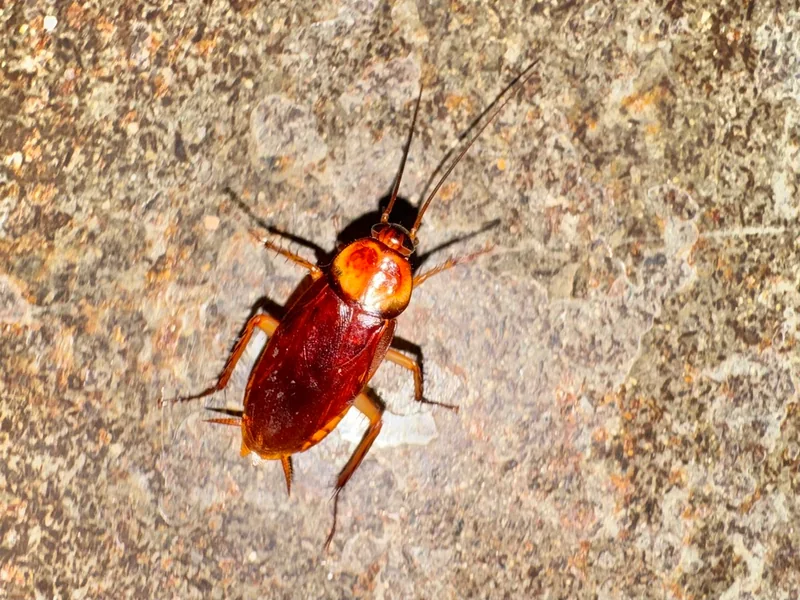
When American Cockroaches Are Most Active in California
Now (November): Moderate ActivityVerified California Counties, Species & US Range
Counties with Verified Observations
- Los Angeles
- San Diego
- Orange
- San Bernardino
- Santa Clara
- Ventura
- Kern
- Yolo
- Stanislaus
- Alameda
Species Recorded in California
| Species | Scientific Name | GBIF Records |
|---|---|---|
| American Cockroach | Periplaneta americana | 2,097 |
How California Compares to Neighboring States
Note: Wildlife does not follow state or county lines. GBIF totals reflect verified citizen and museum records, so low counts in a neighboring county do not guarantee absence.
How to Identify American Cockroaches
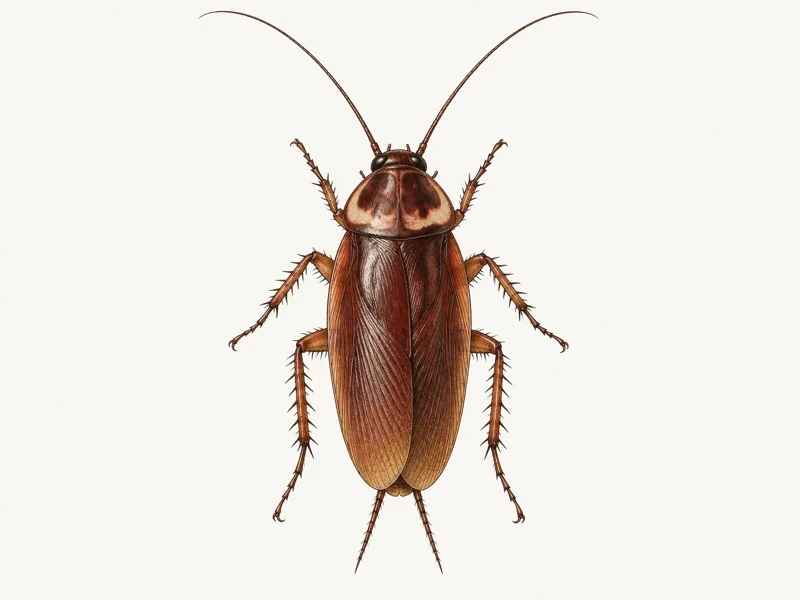
Annotated Anatomy Key (American Cockroach)
- Long whip antennae: Thread-like filiform antennae sweeping longer than the 35–50 mm reddish-brown body.
- Yellow figure-8 shield: Broad chestnut pronotum behind the head ringed by a distinctive pale yellowish halo.
- Spiny running legs: Six fast-running bristled legs built for rapid sprinting along sewer lines and basements.
- Long wings & cerci: Full-length reddish-brown wings extending past the abdomen tip with paired rear cerci.
American Cockroaches Field Checklist
- Large reddish-brown cockroach (up to 2 inches) with a pale yellow figure-8 halo around the pronotum
- Both sexes have fully developed wings and can glide/fly short distances in warm weather
- Frequently called 'water bugs' or 'palmetto bugs' in the South
- Strong association with sewers, steam tunnels, and damp crawlspaces
American Cockroaches Size at True Relative Scale
Where American Cockroaches Live in California
Anyone asking whether there are American cockroaches in California can rely on the records: Periplaneta americana is well documented across the state. The top counties by GBIF sightings are Los Angeles, San Diego, Orange, San Bernardino, and Santa Clara. Mild coastal climates and dense urban areas suit them well.
These are large, reddish-brown insects, usually 1.5 to 2 inches long. They favor warm, damp, dark places and are often found outdoors in mulch, woodpiles, and tree holes. They also thrive in infrastructure that offers constant moisture.
Common Hiding Spots
- Storm drains, sewers, and meter boxes
- Crawl spaces, basements, and garages
- Under sinks and around water heaters
- Mulch beds, planter boxes, and leaf litter
- Commercial kitchens, restaurants, and apartment utility rooms
California spans Mediterranean coasts, arid inland deserts, and alpine mountain zones (USDA 5a to 11a). Indoor and sewer-connected habitats let these roaches persist even where outdoor conditions are harsh.
When American Cockroaches Are Most Active in California
For the California American cockroach season, GBIF records peak in May, August, September, and October. Warm weather increases movement, breeding, and the chance of roaches wandering indoors. Many homeowners notice them after hot spells or heavy irrigation.
Indoor populations can stay active year-round in heated or humid spaces. A sighting in winter often points to a moisture source or a sheltered entry route.
Identification Basics
For California American cockroach identification, look for these features:
- Reddish-brown body, often 1.5 to 2 inches long
- A pale yellowish band or figure-eight pattern behind the head
- Fully developed wings on adults, which can glide short distances
- Long, active antennae and a fast, erratic run
Look-Alikes Frequently Mistaken for American Cockroaches
Several insects present in California get confused with this species. Correct identification matters because control methods differ.
- Oriental cockroaches: Darker, glossy brown to black and smaller. Females have very short wing pads, and they prefer cool, damp spots like drains and basements.
- Other cockroaches: Smaller species such as German cockroaches are often mistaken for juvenile American cockroaches. Check body size and the markings behind the head.
- "Water bugs": This is a common local nickname for large cockroaches, often used for American or Oriental roaches. True aquatic water bugs are a separate group of insects.
If you are unsure, a clear photo next to a ruler helps. Your county University of California Cooperative Extension office or a licensed professional can confirm an ID.
How to Keep American Cockroaches Out of Your California Home
For how to prevent American cockroaches in California, start with non-chemical Integrated Pest Management (IPM). General entomology guidance from US university extension programs emphasizes exclusion, sanitation, and moisture control before any pesticide.
Step-by-Step Prevention
- Seal gaps around pipes, utility lines, and foundation cracks with caulk or steel wool-backed sealant.
- Install door sweeps and repair damaged window and vent screens.
- Cap or screen floor drains and keep drain traps filled with water.
- Fix leaks, run dehumidifiers in damp crawl spaces, and improve ventilation.
- Store food in sealed containers and clean up crumbs, grease, and pet food at night.
- Keep trash in lidded bins and move mulch, firewood, and debris away from the foundation.
- Trim vegetation that touches the house.
Sticky traps help monitor activity and show where roaches travel. If you use baits or insecticides, choose products labeled for American cockroaches and follow the EPA label exactly. Keep them away from children and pets.
When to Call a Licensed California Pest Professional
- You see roaches during the day or in large numbers.
- Activity continues after sanitation and sealing.
- Roaches appear to be entering from sewers, walls, or shared building spaces.
- You manage a restaurant, rental, or multi-unit property.
- You find egg cases (oothecae) repeatedly in several rooms.
Pest control operators in California must be licensed by the state, so verify a license before hiring. American cockroaches are not considered dangerous, but they can contaminate food and may aggravate allergies or asthma. For health concerns, contact a doctor, and call US Poison Control at 1-800-222-1222 after any suspected pesticide exposure.
IPM Prevention Checklist for California Homes
- Install mesh screens over floor drains and maintain wet P-traps
- Seal exterior foundation vents and door sweeps
- Keep mulch and tree limbs trimmed away from siding
 EXCLUSION BLUEPRINT
Inspect eaves, screens, door sweeps, foundation cracks, and utility penetrations around California homes before peak season.
American Cockroaches in California: Frequently Asked Questions
Are there American cockroaches in California?
Yes. GBIF lists 2,097 verified sightings, with the most records in Los Angeles, San Diego, Orange, San Bernardino, and Santa Clara counties.
When are American cockroaches most common in California?
Records peak in May, August, September, and October. Indoor populations may remain active all year where warmth and moisture persist.
Are American cockroaches dangerous?
They are a nuisance pest. They can contaminate food and surfaces and may worsen allergies, so prompt cleanup and exclusion are worthwhile.
Is a "water bug" the same as an American cockroach?
Not always. People often use "water bug" for large cockroaches, including American and Oriental species, but true water bugs are aquatic insects. Check size, color, and markings behind the head to tell them apart.
Sources & Verification
Data refreshed · Editorial & GBIF Methodology