House Centipedes in California: Identification, Season, and Prevention
Quick Answer: Yes, house centipedes (Scutigera coleoptrata) are common in California, with 2,161 verified GBIF sightings statewide. They pose no danger to people and mostly hunt other household pests. Cutting moisture and sealing entry points is the best way to keep them out.
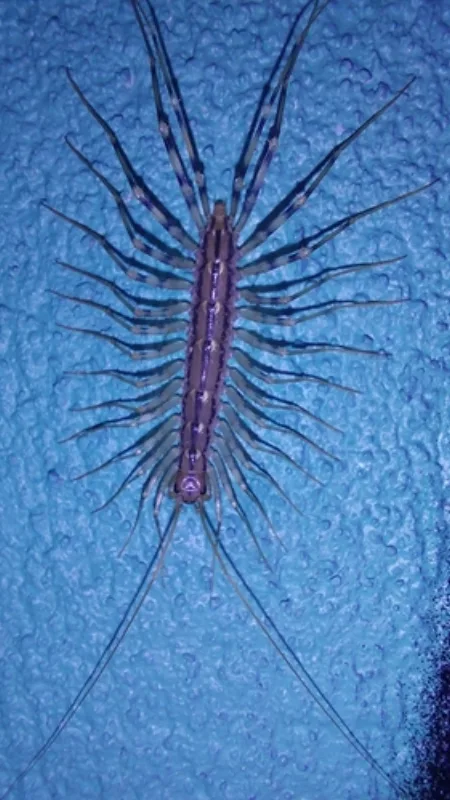
When House Centipedes Are Most Active in California
Now (November): Moderate ActivityVerified California Counties, Species & US Range
Counties with Verified Observations
- Los Angeles
- Sacramento
- San Diego
- Yolo
- Butte
- Solano
- Tehama
- Santa Barbara
- Ventura
- Amador
Species Recorded in California
| Species | Scientific Name | GBIF Records |
|---|---|---|
| House Centipede | Scutigera coleoptrata | 2,161 |
How California Compares to Neighboring States
Note: Wildlife does not follow state or county lines. GBIF totals reflect verified citizen and museum records, so low counts in a neighboring county do not guarantee absence.
How to Identify House Centipedes
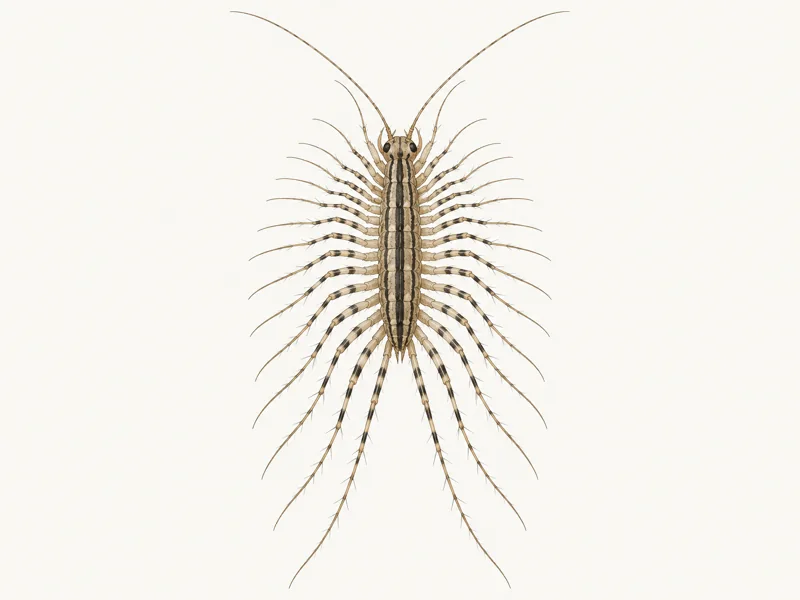
Annotated Anatomy Key (House Centipede)
- Sweeping front antennae: Extraordinarily long hair-thin antennae detect silverfish, roaches, and spiders.
- Three dark dorsal stripes: Compact yellowish-gray 25–38 mm trunk striped lengthwise in three dark bands.
- 15 pairs of wispy legs: Delicate, banded, spider-like legs fan symmetrically outward for lightning speed.
- Antenna-like rear legs: Elongated final leg pair trails behind like false antennae; beneficial indoor predator.
House Centipedes Field Checklist
- Yellowish-gray body with three dark lengthwise stripes
- 15 pairs of extraordinarily long, delicate dark-banded legs giving a feathery silhouette
- Sprints quickly across basement walls and bathtubs
- Beneficial predator that hunts silverfish, cockroaches, spiders, and flies
Side-by-Side Look-Alike Comparisons
House Centipedes Size at True Relative Scale
Quick Answer: Yes, house centipedes (Scutigera coleoptrata) are common in California, with 2,161 verified GBIF sightings statewide. They pose no danger to people and mostly hunt other household pests. Cutting moisture and sealing entry points is the best way to keep them out.
Where House Centipedes Live in California
Anyone asking whether there are house centipedes in California can look to GBIF occurrence records for the answer. The species is recorded across the state, with the most sightings in Los Angeles, Sacramento, San Diego, Yolo, and Butte counties. California's range of climates, from Mediterranean coast to arid inland desert to alpine mountain zones (USDA zones 5a-11a), gives the species plenty of options.
Outdoors, house centipedes shelter in damp, dark places such as leaf litter, mulch, woodpiles, and under stones. Indoors, they favor bathrooms, basements, crawl spaces, laundry rooms, garages, and the spaces under sinks. They are drawn to humidity and to the insects that live in those spots.
Quick Identification Guide
California house centipede identification is straightforward once you know the features:
- Body: about 1 to 1.5 inches long, yellowish-gray with three dark stripes down the back.
- Legs: 15 pairs, very long and banded, giving a spidery look.
- Antennae: long and thin, often as long as the body.
- Movement: fast and darting, often across floors and walls.
When House Centipedes Are Most Active in California
California house centipede season shows up in GBIF records as peaks in April, May, July, and October. Spring activity often follows moist weather, when centipedes and their prey move around more. Fall sightings tend to rise as cooler conditions send them looking for sheltered spots, including inside homes.
These are nocturnal hunters. Most people notice one at night or when disturbing a hiding place, such as moving boxes in a garage. They feed on spiders, cockroaches, silverfish, ants, and other small arthropods.
House centipedes can bite in rare cases, but they are not considered dangerous to people, and their danger level is listed as none. If anyone has a concerning reaction to a bite or sting from any creature, call US Poison Control at 1-800-222-1222 and contact a doctor.
Look-Alikes Frequently Mistaken for House Centipedes
Several California arthropods get confused with this species. Telling them apart helps you decide whether any action is needed.
- Other centipedes: Garden and soil centipedes are found in California too. They have shorter legs, thicker bodies, and move more slowly, usually staying outdoors under debris.
- Millipedes: These have rounded, cylindrical bodies and two pairs of short legs per segment. They move slowly, curl up when disturbed, and feed on decaying plant matter.
- Silverfish: Silvery, teardrop-shaped insects with three tail-like bristles and no long banded legs. They are common in damp closets and bathrooms, and are a frequent prey item for house centipedes.
How to Keep House Centipedes Out of Your California Home
If you want to know how to prevent house centipedes in California, start with non-chemical Integrated Pest Management (IPM). University cooperative extension IPM guidance consistently stresses exclusion, sanitation, and moisture control before any pesticide. The steps below follow that approach.
Non-Chemical Steps First
- Reduce moisture: Fix leaky pipes and faucets, run dehumidifiers in basements and crawl spaces, and vent bathrooms and laundry rooms.
- Seal entry points: Caulk cracks in foundations, repair torn window and door screens, and add door sweeps.
- Clear outdoor harborage: Move woodpiles, leaf litter, and heavy mulch away from the foundation.
- Cut off the food supply: Reducing spiders, roaches, and silverfish removes the reason centipedes stay.
- Declutter: Store items in sealed plastic bins instead of cardboard in garages and basements.
- Use sticky traps: Place them along baseboards and in corners to monitor activity and catch strays.
If You Use a Product
Residual insecticides are rarely needed. If you choose one, use a product labeled for indoor or perimeter use against centipedes, and follow all EPA-approved label directions exactly, including application sites, rates, and safety precautions for children and pets.
When to Call a Licensed California Pest Professional
- You see house centipedes daily or in large numbers, which often signals a bigger pest or moisture problem.
- Prey pests such as cockroaches or silverfish are also established in the home.
- Persistent dampness, leaks, or crawl space moisture continue after your fixes.
- You cannot find or reach the entry points yourself.
IPM Prevention Checklist for California Homes
- Run a basement dehumidifier to maintain <50% humidity
- Seal foundation cracks and fix plumbing leaks
 EXCLUSION BLUEPRINT
Inspect eaves, screens, door sweeps, foundation cracks, and utility penetrations around California homes before peak season.
House Centipedes in California: Frequently Asked Questions
Are there house centipedes in California?
Yes. GBIF records show 2,161 verified sightings of Scutigera coleoptrata in California, with the most in Los Angeles, Sacramento, San Diego, Yolo, and Butte counties.
Are house centipedes dangerous?
No. They are not considered dangerous and typically avoid people. If you have a bite reaction that worries you, call US Poison Control at 1-800-222-1222 and see a doctor.
Do house centipedes mean my home is dirty?
Not necessarily. They follow moisture and prey, so a damp area or other insects in the home is the usual draw, regardless of how clean it is.
Should I kill a house centipede I find?
It is optional. They eat other pests, so some homeowners leave single ones alone. Frequent sightings are a cue to fix moisture and entry points rather than rely on sprays.
Sources & Verification
Data refreshed · Editorial & GBIF Methodology