House Centipede vs Millipede: How to Tell Them Apart and What to Do in Your Home
Quick ID Verdict: A fast, leggy blur shoots across the bathroom floor, or a slow, curled-up worm turns up on the basement steps. Homeowners see both and ask the same question: is it a house centipede or millipede?
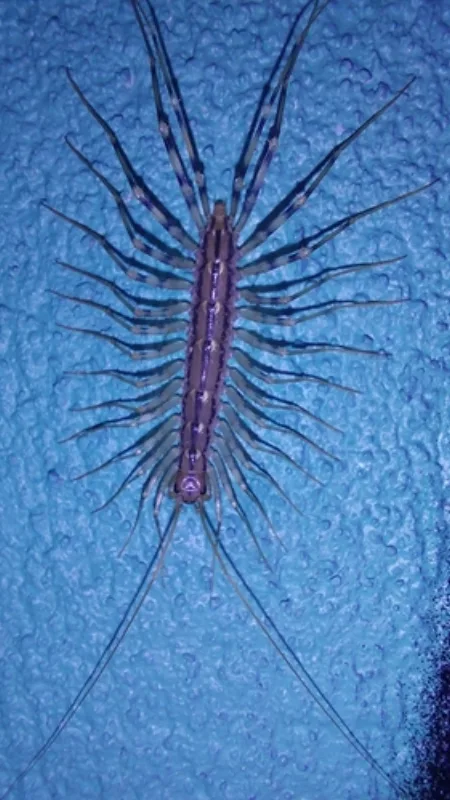
House Centipede
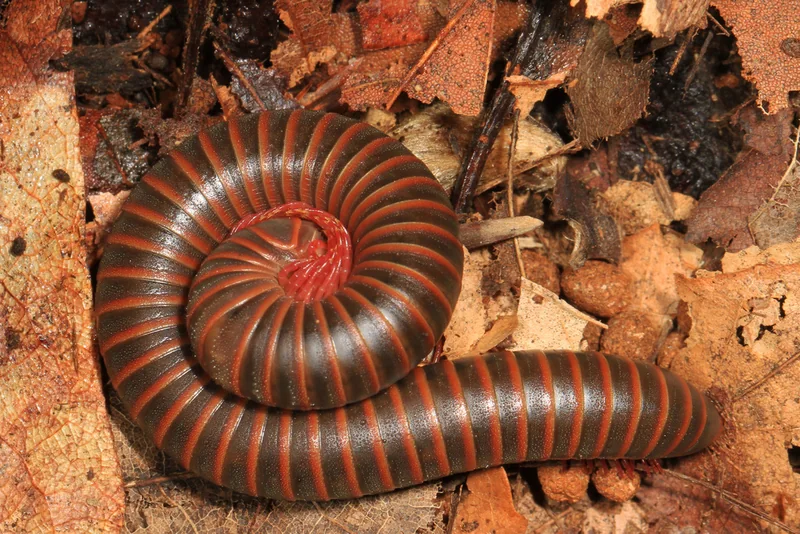
Millipede
Side-by-Side Comparison Table
| Trait | House Centipede | Millipede |
|---|---|---|
| Scientific Group | Scutigera coleoptrata | Diplopoda |
| Category | Myriapod | Myriapod |
| Typical Size | 25–40 mm | 15–100 mm |
| Danger Level | None | None |
| Bites or Stings? | No | No |
| Peak US Months | May, July, September, October | April, May, June, July |
| Key ID Trait | Yellowish-gray body with three dark lengthwise stripes | Rounded cylindrical segmented body with TWO pairs of short legs per body segment |
House Centipede vs. Millipede: True Size Comparison
Side-by-Side Anatomy Blueprint
Compare body segments, antennae, leg count, and key markings directly before treating or removing either species.
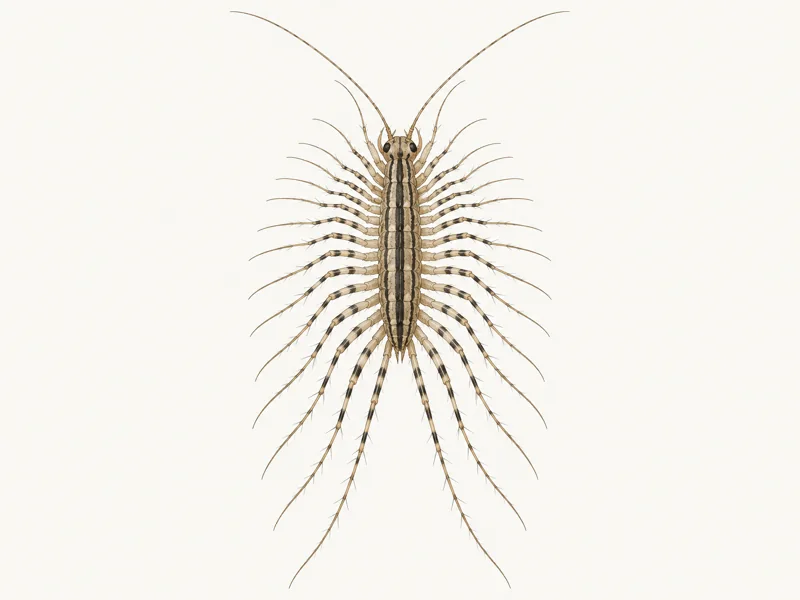
- Sweeping front antennae: Extraordinarily long hair-thin antennae detect silverfish, roaches, and spiders.
- Three dark dorsal stripes: Compact yellowish-gray 25–38 mm trunk striped lengthwise in three dark bands.
- 15 pairs of wispy legs: Delicate, banded, spider-like legs fan symmetrically outward for lightning speed.
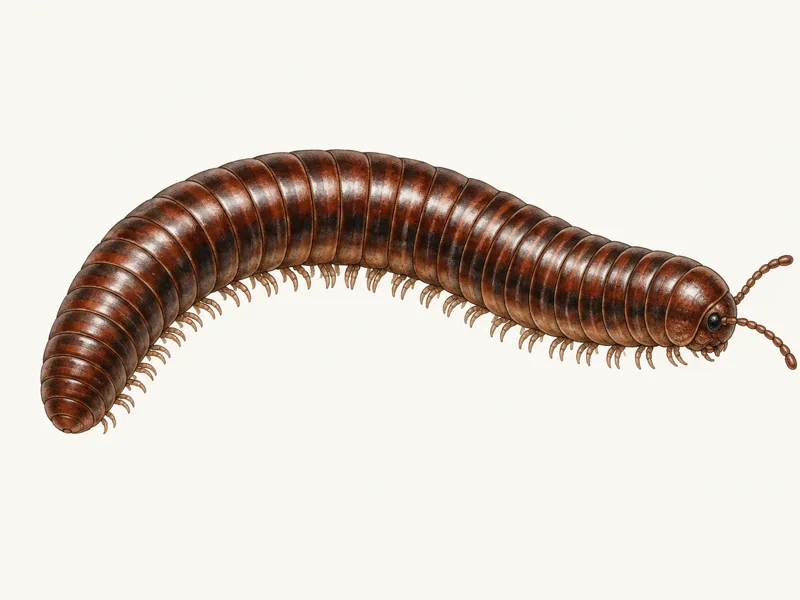
- Cylindrical armor rings: Smooth, rounded, tubular body segments (unlike flattened centipedes); curls into a tight spiral.
- Short clubbed antennae: Compact, gently bent antennae on a rounded head with NO venomous pincers or biting fangs.
- 2 leg pairs / segment: TWO pairs of very short delicate legs tucked directly underneath each trunk ring.
Quick ID verdict: A house centipede is a flattened, lightning-fast hunter with very long legs and three dark stripes down a yellowish-gray body. A millipede is a slow, rounded, cylindrical tube with two pairs of short legs on each body segment, and it often curls into a coil when disturbed.
Quick Identification: Key Physical Differences
Getting house centipede vs millipede identification right takes only a few seconds once someone knows what to look for. Body shape, legs, and speed do most of the work.
Legs, Body Shape, and Movement
The clearest difference between house centipede and millipede specimens is how their legs attach and how they move.
- House centipede (Scutigera coleoptrata): Adults have 15 pairs of extremely long, banded legs, one pair per body segment. The body is somewhat flattened, and the legs stick out so far that the insect looks fuzzy or feathery in motion. It runs fast and changes direction abruptly.
- Millipede (Diplopoda): The body is rounded and cylindrical, built from many segments, each carrying two pairs of short legs. The legs sit underneath the body and ripple in waves, so millipedes glide slowly rather than dart.
When touched, a millipede typically curls into a tight spiral. A house centipede simply runs.
Color, Size, and Antennae
FeatureHouse CentipedeMillipedeBody length25–40 mm15–100 mmColorYellowish-gray with three dark lengthwise stripesUsually brown, black, or reddish: some species have markingsAntennaeVery long and whip-like, often as long as the bodyShort and slightly clubbedOverall lookSpidery and leggyWorm-like and armoredThose long antennae, paired with long rear legs, can make it hard to tell which end of a house centipede is the head. Millipedes never have that problem.
Behavior, Diet, and Risk to Your Household
These two arthropods live very different lives. House centipedes are predators. They hunt at night for silverfish, spiders, cockroaches, carpet beetle larvae, and other small insects, which means one appearing indoors often signals that something else is living there too.
Millipedes are scavengers. They feed on decaying leaves, mulch, rotting wood, and other damp organic matter. They don't hunt, and they rarely damage anything inside a home.
Danger level: Neither species is considered dangerous to people or pets.
- House centipedes rarely bite and generally flee rather than confront a person.
- Millipedes don't bite or sting, but some release a defensive fluid that may irritate skin or stain surfaces. Handling them with bare hands isn't recommended: wash with soap and water after contact.
If someone has an unusual or severe reaction after any contact with a pest, they should call US Poison Control at 1-800-222-1222 and contact a doctor rather than relying on home remedies.
Where They Live and When They Show Up Indoors
House centipedes are found across much of the United States and can live their entire lives indoors. They favor damp, dark spaces: basements, crawl spaces, bathrooms, laundry rooms, and floor drains. They're active year-round inside heated homes, though sightings often rise in spring and fall.
Millipedes are outdoor animals. They live in leaf litter, mulch beds, compost, and under stones or boards. Large numbers sometimes migrate toward homes in late summer and fall, especially after heavy rain or during dry spells that push them to seek moisture.
Once indoors, millipedes usually die within a few days because household air is too dry. So a pile of dead, curled millipedes near a door or garage threshold is a common fall sight, and it points to an entry gap rather than an indoor infestation.
Safe IPM Strategies for Controlling Both Pests
So which one is worse for homeowners? Neither causes real harm, but house centipedes are more likely to become a lasting indoor presence, while millipedes are a seasonal nuisance that can show up in startling numbers. The good news is that the same Integrated Pest Management (IPM) approach works for both.
Moisture Control and Exclusion Tips
Moisture is the common thread. Reduce it, and both pests lose their reason to stay.
- Dry out problem areas: Run a dehumidifier in basements and crawl spaces, fix leaky pipes, and improve bathroom ventilation.
- Seal entry points: Caulk foundation cracks, install door sweeps, and repair torn window screens and weatherstripping.
- Pull back mulch and debris: Keep mulch, leaf piles, firewood, and stones at least 12–18 inches from the foundation.
- Manage gutters and drainage: Direct downspouts away from the house so soil near the walls stays drier.
- Cut the food supply: For house centipedes, controlling silverfish, spiders, and cockroaches removes their prey.
- Remove by hand: Sweep or vacuum stray millipedes and centipedes rather than reaching for a spray.
Chemical treatments should be a last resort. If a perimeter product becomes necessary, homeowners must read and follow the EPA-registered product label exactly, since the label is the law. For persistent problems, a licensed pest management professional can inspect for hidden moisture issues and recommend targeted solutions.
Frequently Asked Questions
What's the difference between a house centipede and millipede?
House centipedes have 15 pairs of long legs, a flattened body, and move fast with sudden direction changes. Millipedes have a rounded, cylindrical body with two pairs of short legs per segment and move slowly in waves. House centipedes are yellowish-gray with dark stripes; millipedes are typically brown or black.
How fast do house centipedes move compared to millipedes?
House centipedes are lightning-fast hunters that dart and change direction abruptly, while millipedes glide slowly in undulating waves. The speed difference is immediately visible—house centipedes appear as quick blurs, whereas millipedes move methodically across surfaces.
Do house centipedes or millipedes bite?
House centipedes rarely bite and typically flee from humans. Millipedes don't bite or sting but may release defensive fluid that can irritate skin or stain surfaces. Neither species is dangerous to people or pets, though bare-hand contact with millipedes isn't recommended.
What do house centipedes eat compared to millipedes?
House centipedes are predators hunting silverfish, spiders, cockroaches, and carpet beetle larvae at night. Millipedes are scavengers feeding on decaying leaves, mulch, rotting wood, and damp organic matter. Finding house centipedes indoors often signals other pest activity.
Why do millipedes curl up when disturbed?
Millipedes curl into tight spirals as a defensive mechanism to protect their soft undersides and legs when threatened. This curled posture is a distinctive behavior unique to millipedes and helps them survive predator encounters in nature.
How can you prevent house centipedes and millipedes from entering your home?
Reduce indoor moisture by running dehumidifiers and fixing leaky pipes. Seal foundation cracks, install door sweeps, and repair weatherstripping. Keep mulch 12–18 inches from the foundation and direct gutters away from the house to minimize entry points.