House Centipede vs Silverfish: How to Tell These Common Household Pests Apart
Quick ID Verdict: A flash of movement across the bathroom floor at midnight usually leaves homeowners asking one question: house centipede or silverfish? Here's the 3-second verdict. If it's long-legged, yellowish-gray, and racing on dozens of legs, it's a house centipede: if it's small, carrot-shaped, and shimmering metallic silver, it's a silverfish.
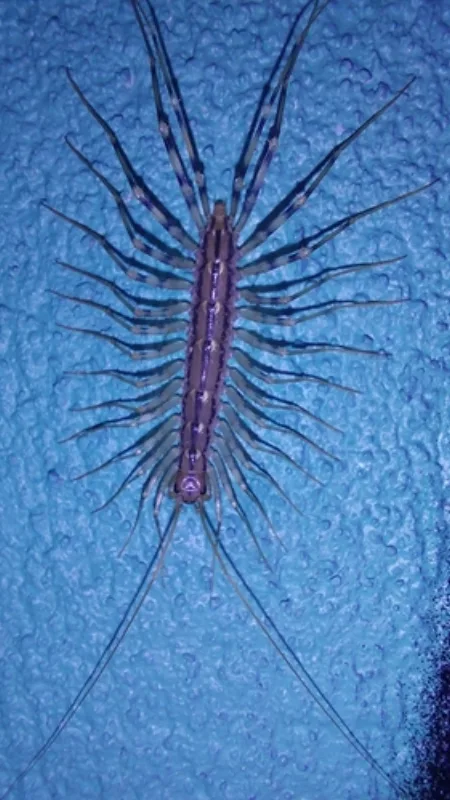
House Centipede
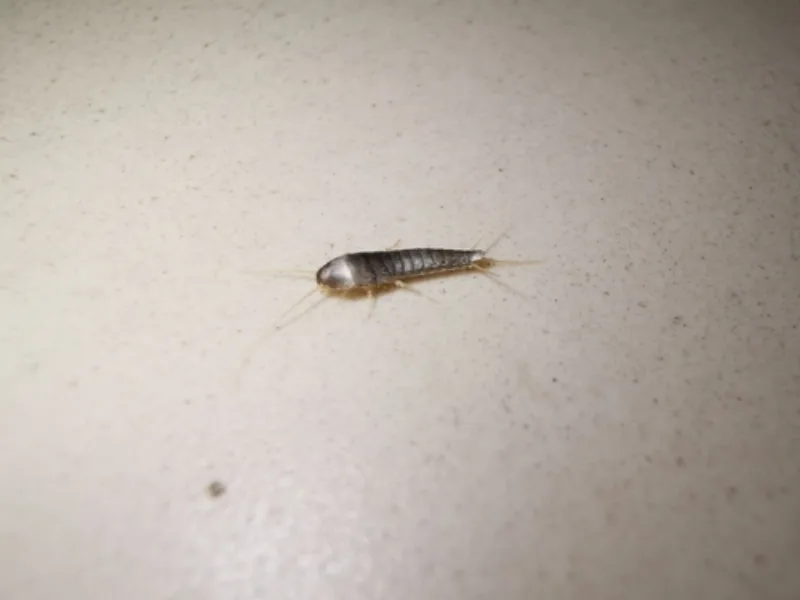
Silverfish
Side-by-Side Comparison Table
| Trait | House Centipede | Silverfish |
|---|---|---|
| Scientific Group | Scutigera coleoptrata | Lepisma saccharinum |
| Category | Myriapod | Insect |
| Typical Size | 25–40 mm | 10–19 mm |
| Danger Level | None | Nuisance |
| Bites or Stings? | No | No |
| Peak US Months | May, July, September, October | March, April, May, July |
| Key ID Trait | Yellowish-gray body with three dark lengthwise stripes | Wingless, carrot-shaped metallic silver-gray body covered in fine scales |
House Centipede vs. Silverfish: True Size Comparison
Side-by-Side Anatomy Blueprint
Compare body segments, antennae, leg count, and key markings directly before treating or removing either species.
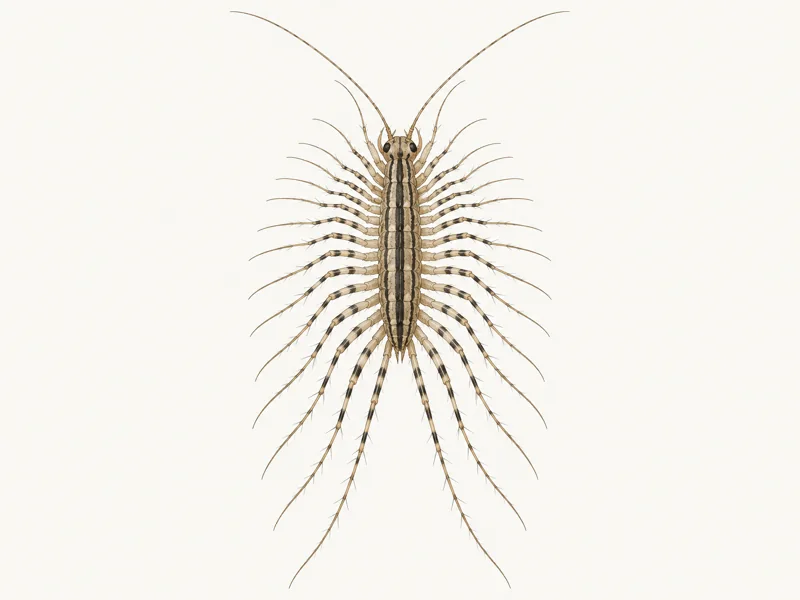
- Sweeping front antennae: Extraordinarily long hair-thin antennae detect silverfish, roaches, and spiders.
- Three dark dorsal stripes: Compact yellowish-gray 25–38 mm trunk striped lengthwise in three dark bands.
- 15 pairs of wispy legs: Delicate, banded, spider-like legs fan symmetrically outward for lightning speed.
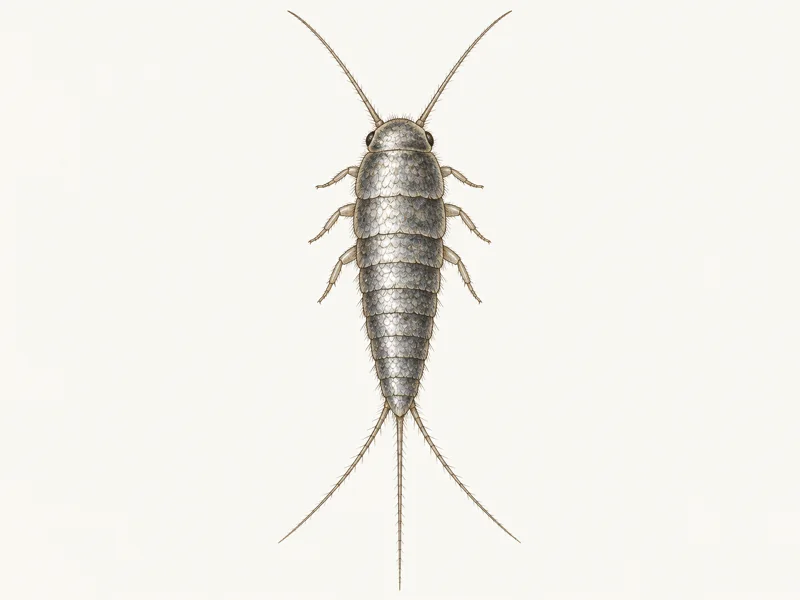
- Long thin antennae: Sweeping thread-like feelers guiding nocturnal foraging in damp paper and baths.
- Carrot-shaped body: Flat, wingless teardrop profile broad at the head and tapering smoothly backward.
- Metallic silver scales: Shimmering pewter-silver scales give a fluid, fish-like wriggling crawl.
This house centipede vs silverfish guide covers identification, habitat, risk, and safe control steps.
Key Differences Between House Centipedes and Silverfish at a Glance
Both pests love damp, dark corners, which is why they're so often confused. But the difference between house centipede and silverfish is obvious once you know what to look for.
TraitHouse CentipedeSilverfishScientific nameScutigera coleoptrataLepisma saccharinumLength25–40 mm10–19 mmColorYellowish-gray, three dark stripesMetallic silver-gray scalesDanger levelNoneNuisance
House Centipede vs Silverfish Identification by Appearance
For accurate house centipede vs silverfish identification, start with the body. House centipedes have a yellowish-gray body with three dark lengthwise stripes and 15 pairs of long, banded legs that make them look much bigger than their 25–40 mm body length.
Silverfish are wingless, carrot-shaped, and covered in fine metallic silver-gray scales. At 10–19 mm, they're noticeably smaller. Look for:
- Body tapering from a wide head to a narrow tail
- Three bristle-like tail appendages
- Short legs tucked beneath the body
- Scales that rub off as a silvery dust
Behavior, Diet, and Movement Patterns
House centipedes are fast predators. They sprint across walls and ceilings hunting silverfish, cockroaches, spiders, and other small insects, usually at night.
Silverfish move in a wiggling, fish-like dart, and they're scavengers rather than hunters. They feed on starches and cellulose: paper, book bindings, wallpaper paste, cereal, and even some fabrics. In a sense, a house centipede is partly a symptom of a silverfish problem.
Where You'll Find Each Pest in US Homes and When They're Active
Both species are established across the United States, from New England basements to Gulf Coast crawl spaces. House centipedes are especially common in the East, Midwest, and South, while silverfish turn up in nearly every state.
Typical hiding spots overlap heavily:
- House centipedes: basements, bathrooms, floor drains, crawl spaces, and under stored boxes
- Silverfish: attics, bookshelves, closets, laundry rooms, and behind baseboards
Seasonally, house centipedes are often most visible in spring and fall, when they move indoors to escape temperature swings. Silverfish stay active year-round inside, but sightings tend to climb in humid summer months. Both are nocturnal, so a quick flashlight check after dark tells a homeowner far more than a daytime search.
Are House Centipedes or Silverfish Harmful to People and Property?
Neither pest poses a serious threat to people. House centipedes are rated no danger to humans. They prefer to flee rather than confront anything larger than their prey, and bites are rare. Anyone who has an unusual reaction to any bite should contact a doctor or US Poison Control at 1-800-222-1222.
Silverfish are a nuisance pest. They don't bite or spread disease, but they can damage property over time, including:
- Yellowed or chewed paper, photos, and books
- Damaged wallpaper and cardboard boxes
- Contaminated pantry goods like flour and cereal
So which one is worse for homeowners? Silverfish, by a narrow margin. A house centipede is unsettling to see but actually eats other pests. Silverfish quietly damage belongings, and a large population signals a moisture problem worth fixing.
Safe Integrated Pest Management Strategies for Both Pests
Integrated Pest Management (IPM) works well here because both pests depend on the same conditions. Remove food, moisture, and shelter first, and populations drop on their own.
Start with non-chemical steps:
- Sanitation: Vacuum baseboards, closets, and shelves regularly to remove eggs, debris, and insect prey.
- Food storage: Keep flour, cereal, and pet food in sealed plastic or glass containers.
- Declutter: Replace cardboard boxes with lidded plastic bins and clear old newspapers or magazines.
- Monitoring: Place sticky traps along walls to confirm which pest is present and where.
Controlling silverfish often reduces house centipedes too, since it removes their food supply. If chemical treatment becomes necessary, use products labeled for indoor crawling insects and always follow the EPA product label exactly.
Moisture Control and Exclusion Tips That Work Year-Round
Humidity is the single biggest driver for both pests. Silverfish thrive in damp air, and house centipedes dry out quickly without it.
- Run a dehumidifier in basements and aim for indoor humidity below 50%.
- Fix leaky pipes, faucets, and dripping AC lines promptly.
- Use bathroom exhaust fans during and after showers.
- Seal cracks around foundations, windows, and utility lines with caulk.
- Install door sweeps and repair torn window screens.
- Keep mulch, leaf litter, and firewood a few feet from the foundation.
These habits keep a home less inviting every season, whichever pest turns up first.
Frequently Asked Questions
What's the fastest way to identify a house centipede vs silverfish?
Look at leg count and body shape. House centipedes have 15 pairs of long, banded legs and are yellowish-gray with stripes. Silverfish are small, carrot-shaped, and covered in metallic silver-gray scales. Centipedes appear in quick, dashing movements; silverfish wiggle like fish.
Are house centipedes dangerous to humans?
No, house centipedes pose no serious danger to humans. They rarely bite and prefer to flee from anything larger than their prey. Even if bitten, reactions are extremely rare. Contact US Poison Control at 1-800-222-1222 only if you experience an unusual reaction.
Can silverfish cause damage to a home?
Yes, silverfish are nuisance pests that damage property over time. They chew paper, photos, books, wallpaper, and cardboard boxes, and can contaminate pantry goods like flour and cereal. A large silverfish population also signals an underlying moisture problem.
Why do house centipedes and silverfish appear in the same places?
Both pests thrive in damp, dark environments and often hide in similar spaces like basements, bathrooms, and crawl spaces. House centipedes actually feed on silverfish and other insects, so reducing silverfish populations removes the centipedes' food source, lowering both pest counts.
What humidity level should I maintain to prevent silverfish and house centipedes?
Maintain indoor humidity below 50% using a dehumidifier, especially in basements. Both pests depend on moisture to thrive. Fix leaky pipes, use bathroom exhaust fans after showers, and seal foundation cracks to reduce damp conditions year-round.
What's the best non-chemical way to control house centipedes and silverfish?
Use Integrated Pest Management (IPM) by combining sanitation, food storage, and decluttering. Vacuum baseboards regularly, store cereals and flour in sealed containers, replace cardboard boxes with plastic bins, and use sticky traps to monitor pest locations and types.